Your Trusted Source for Home Fixes & Guides

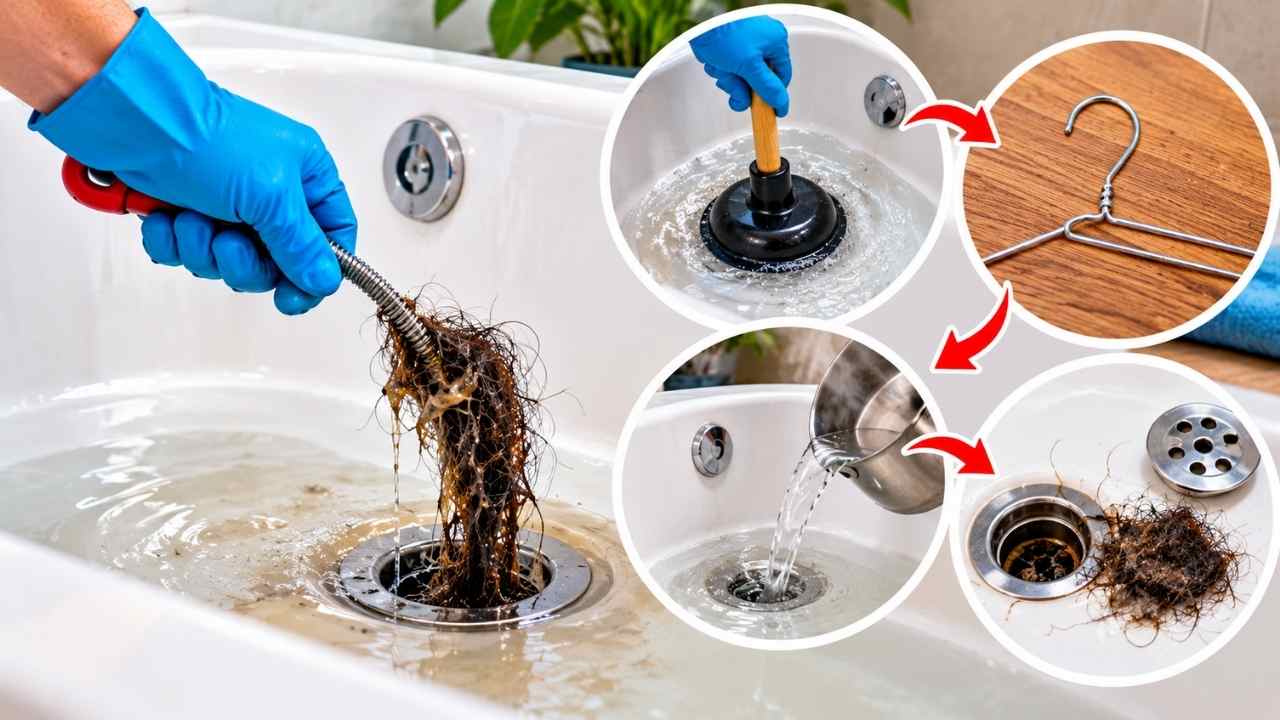
How to unclog a bathtub drain without chemicals: 4 easy tips

How to unclog a bathtub drain without chemicals is usually easier before the blockage becomes a deep, compact mass. For example, a slow drain may improve after removing visible hair by hand, while a fully blocked drain may need a plunger or drain snake. Therefore, these methods avoid harsh commercial drain cleaners and use simple tools, careful pressure, and a step-by-step approach.
For a beginner, the best starting point is the least aggressive method: remove the stopper and pull out the hair. However, if water still stands in the tub, seal the overflow opening and create strong suction with a plunger. Deeper blockages, on the other hand, call for a flexible drain snake or auger.
- Start with manual hair removal whenever possible.
- Use baking soda and vinegar only as a light residue-loosening step.
- Seal the overflow opening before plunging.
- Choose a drain snake when the blockage sits deeper in the pipe.
How to unclog a bathtub drain without chemicals
To unclog a bathtub drain without chemicals, first remove the drain cover and stopper, then pull out visible hair with a Zip-It tool or bent wire hanger. Next, use a plunger if water remains. For a deeper obstruction, feed a flexible drain snake into the pipe and turn its handle to catch or break apart the blockage.
The order matters. Hair near the stopper is common, so starting with a drain snake or forceful plunging can be unnecessary. In fact, a five-minute inspection may reveal the entire problem and prevent damage to the stopper or drain fitting.
What should you prepare first?
Gather a screwdriver, pliers, rubber gloves, a plastic Zip-It tool, a bent wire hanger, a wet towel, a cup of baking soda, vinegar, hot water, and a plunger. In addition, a drain snake or auger is useful when the blockage is too deep to reach by hand.
Protect the tub surface with a cloth while removing metal parts. Also, keep small screws in a cup rather than placing them on the floor, where they can be lost or stepped on.
Read More: Best steam mop for tile floors
Can you remove the blockage by hand?
Yes. Manual removal is often the safest first step because it targets the hair and soap residue sitting near the drain opening without pushing the blockage farther into the pipe. As a result, this approach may solve a minor clog with less effort.
Use a Zip-It tool or bent hanger
- Use a screwdriver or pliers to remove the bathtub drain cover and stopper.
- Insert a plastic Zip-It tool into the drain opening.
- Push it down gently until the barbed section reaches the trapped hair and debris.
- Pull the tool upward slowly and discard the material it catches.
- Repeat the process until the tool comes out mostly clean.
A bent wire hanger can work when a Zip-It tool is unavailable. To use it safely, bend the end into a small hook, not a sharp point. The goal is to pull out the hair, not scratch the inside of the drain pipe or force the wire through a fitting.
Reinstall the stopper temporarily and pour a small amount of water into the tub. If the water drains quickly, the blockage was probably close to the opening. Otherwise, if the flow remains slow, continue with suction or a deeper mechanical method.
Does baking soda and vinegar help?
A mixture of half a cup of baking soda followed by one cup of vinegar may loosen light residue inside a bathtub drain. However, it is not a dependable replacement for removing a dense hair clog. Therefore, use it after visible debris has been taken out rather than as the only treatment.
Pour the half cup of baking soda directly into the drain. Immediately afterward, add one cup of vinegar slowly. Allow the mixture to foam for 5 to 20 minutes, then flush the drain with boiling water or very hot water.
The foaming action may disturb soft residue, but it will not always dissolve a tightly packed hair mass. That distinction is important. Furthermore, if the tub is completely full of standing water, the mixture may sit above the blockage instead of reaching the affected section of pipe.
For a cautious household routine, use very hot water rather than water that could splash and burn you. In addition, avoid combining vinegar with commercial drain products or other cleaning substances. Guidance from the U.S. Environmental Protection Agency’s Safer Choice program can help when selecting household cleaning products.
How does plunging clear a bathtub drain?
Plunging clears a bathtub drain by creating pressure and suction around the blockage. However, the overflow opening must be sealed first; otherwise, air escapes through that opening and the plunger cannot build the strong suction needed to move the obstruction.
Follow the correct plunging sequence
- Place a wet towel or cloth over the bathtub’s overflow opening.
- Press the cloth firmly around the opening so air cannot leak out.
- Add enough water to cover the rubber cup of the plunger.
- Set the plunger directly over the main drain.
- Push and pull forcefully for more than 50 strokes.
- Pause when you hear a gurgling sound or see the water level begin to fall.
The first few strokes may only move air. Therefore, keep the plunger centered and maintain contact with the tub surface. A quick, shallow motion is usually less effective than controlled strokes that keep the rubber cup sealed.
Once the water begins to move, remove the plunger and run hot water briefly. Then test the flow in stages instead of filling the tub again. This makes it easier to tell whether the blockage has cleared fully or only shifted.
When should you use a drain snake?
Use a drain snake or auger when hand removal and plunging do not clear the tub, especially when the blockage is deep or tightly tangled. In that situation, a flexible pipe-cleaning cable can travel farther into the drain and reach material that a Zip-It tool cannot touch.
How to operate a flexible auger
- Feed the flexible cable slowly into the drain opening.
- Stop when you feel resistance from a blockage or tight bend.
- Turn the handle repeatedly while applying gentle forward pressure.
- Continue rotating the cable through the tangled material.
- Pull the cable back gradually and remove any debris it catches.
- Repeat the process until the cable moves more freely.
Do not force the cable aggressively. Excessive pressure can push debris deeper or make the cable difficult to retrieve. Instead, turn the handle steadily because controlled movement is more useful than rushing the tool forward.
For a beginner, the main sign of progress is changing resistance. When the cable starts moving past the obstruction and water begins to drain, retract it carefully. Afterward, flush with hot water and check whether the bathtub drains at a normal speed.
Which method fits the blockage?
| Situation | Best starting method | Why it fits |
|---|---|---|
| Hair is visible near the stopper | Zip-It tool or bent hanger | It removes the material directly without pushing it deeper. |
| Light residue remains after hair removal | Baking soda and vinegar | The foaming mixture may loosen soft buildup. |
| Water stands in the tub | Plunger | Sealed suction can move a nearby obstruction. |
| A deep or firm clog remains | Drain snake or auger | The flexible cable reaches farther into the pipe. |
The practical decision rule is simple: pull first, plunge second, snake third. Baking soda and vinegar can support the process, but they should not replace mechanical removal when hair is the main cause. In short, match the tool to the likely location of the blockage.
What common mistakes should you avoid?
Several small mistakes make bathtub drain cleaning slower. The most common is plunging without sealing the overflow opening. Another frequent error is pushing a hanger or snake too forcefully, which can move the clog farther into the plumbing.
- Skipping the stopper: Hair often collects directly beneath it.
- Leaving the overflow open: Air leakage weakens the plunger’s suction.
- Using too little water: The plunger cup needs water coverage to work effectively.
- Expecting foam to remove a hair mass: Baking soda and vinegar may loosen residue but may not remove a compact clog.
- Forcing a metal hanger: A sharp or rigid wire can scratch fittings or become stuck.
- Flushing too much water too soon: A partial blockage may appear clear for a moment and then slow again.
A useful beginner habit is to test the drain after every method. For example, pour a small amount of water, observe the speed, and listen for gurgling. This simple check shows whether the blockage has cleared or whether another mechanical step is still needed.
When should you stop DIY cleaning?
Stop working and seek qualified plumbing help when the drain remains blocked after careful manual removal, plunging, and snaking. Likewise, stop if several fixtures drain slowly at the same time. Multiple slow drains may indicate a problem farther along the plumbing system rather than a single bathtub clog.
Also stop if the stopper will not come out, the drain fitting begins to turn inside the tub, water backs up from another fixture, or the pipe shows signs of leaking. Otherwise, repeated force can turn a minor blockage into a repair involving the drain assembly.
For renters, report persistent drainage problems to the property manager before removing fixed plumbing components. Keep the details clear, including whether the drain is fully blocked, whether other fixtures are affected, and which non-chemical steps have already been tried.
How can you prevent another bathtub clog?
Prevention starts with keeping hair out of the drain. A removable drain screen can catch loose hair before it reaches the stopper and pipe. Therefore, clean the screen regularly rather than allowing a thick layer to form around its openings.
- Remove visible hair after bathing.
- Clean the stopper and drain cover during routine bathroom cleaning.
- Inspect the drain when water begins moving more slowly than usual.
- Use a Zip-It tool early if hair starts collecting below the stopper.
- Avoid forcing large debris into the drain.
Small maintenance checks are easier than clearing a full blockage. If a bathtub normally drains in a few minutes but begins leaving a shallow pool, treat that change as an early warning instead of waiting for complete backup.
Expert tips for first-time cleaning
Start with the method that removes material rather than merely moving it. Hair pulled out by hand is no longer inside the plumbing, while forceful plunging may only shift it temporarily.
Keep the overflow towel firmly in place during the entire plunging session. More than 50 strong strokes may be needed when the blockage is compact, but the seal matters more than using excessive physical force.
For the baking soda and vinegar step, respect the 5-to-20-minute waiting period. Then flush with boiling water or very hot water carefully. If there is no improvement, switch to a Zip-It tool, plunger, or auger instead of repeatedly adding ingredients.
Frequently asked questions
What is the first step for a clogged bathtub drain?
First, remove the drain cover and stopper, then pull out visible hair with a Zip-It tool or a carefully bent wire hanger. This is usually the simplest starting point.
Can baking soda and vinegar remove a hair clog?
They may loosen light residue, but a dense hair clog often needs physical removal with a Zip-It tool, plunger, or drain snake. Therefore, do not rely on the mixture alone.
Why must the overflow opening be covered?
The towel or cloth blocks air from escaping through the overflow opening. Without that seal, the plunger loses much of the pressure and suction needed to move the blockage.
How many times should I plunge a bathtub drain?
Use more than 50 firm strokes while keeping the plunger sealed over the drain. Stop when water drains or you hear a clear gurgling sound.
Is a bent wire hanger safe for bathtub drains?
It can help when used gently with a small hook at the end. However, do not force a sharp or rigid wire deep into the pipe.
When is a drain snake better than a Zip-It tool?
A Zip-It tool is better for hair close to the opening. By contrast, a drain snake is more suitable when the obstruction is deeper or remains after surface debris has been removed.
Can I use boiling water after baking soda and vinegar?
Boiling or very hot water can be used carefully to flush the drain. Avoid splashing, protect your skin, and use very hot water if handling boiling water would be unsafe.
What if the bathtub still will not drain?
Stop applying force and contact a qualified plumber if careful manual removal, plunging, and snaking do not work. The same applies if other fixtures also drain slowly.
Keep the drain moving
The most reliable way to unclog a bathtub drain without chemicals is to match the method to the blockage. First, remove nearby hair. Next, use baking soda and vinegar only for light residue, seal the overflow before plunging, and choose a drain snake for deeper obstructions.
Work slowly and test the drain after each step. If the problem continues or affects more than one fixture, arrange a professional inspection rather than forcing the plumbing further.