Your Trusted Source for Home Fixes & Guides

How to unclog a bathtub drain without chemicals

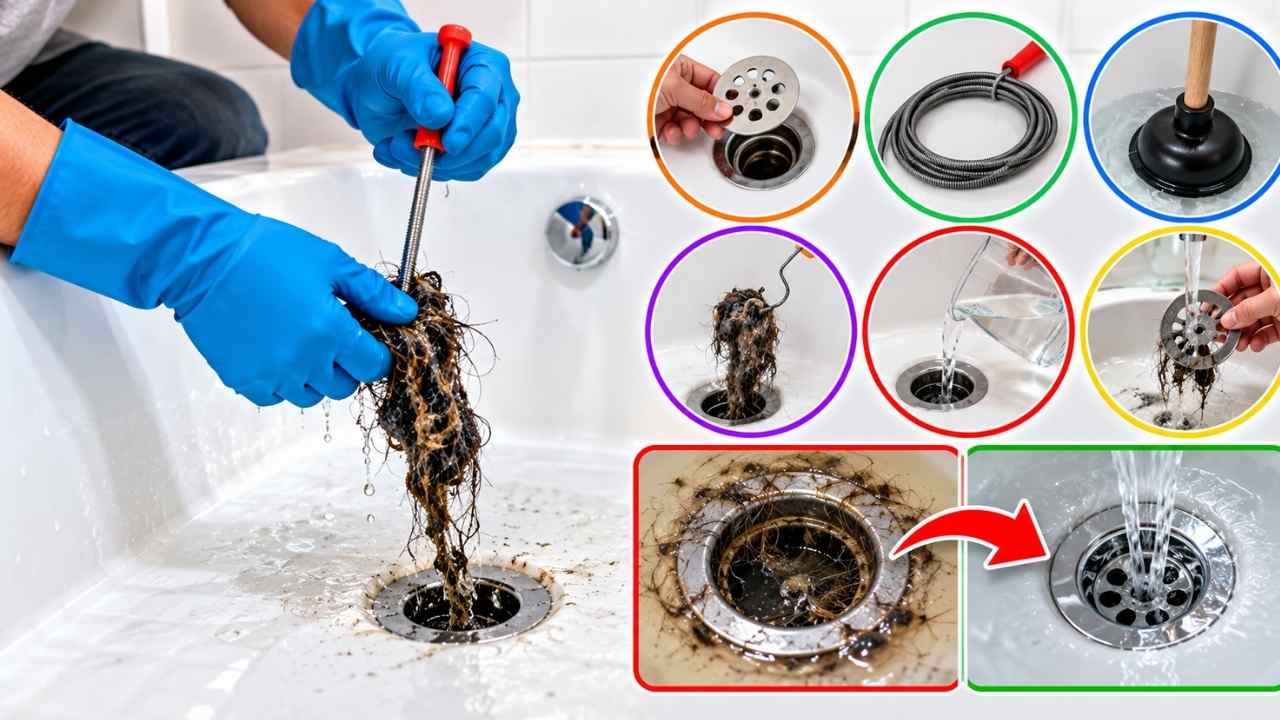
How do you clear a slow or blocked tub without reaching for harsh products? The safest starting point is physical removal. To learn how to unclog a bathtub drain without chemicals, first remove the stopper, then pull out hair and soap residue before trying a plunger. Baking soda with white vinegar can help with light buildup, while a hand auger reaches deeper blockages.
- First, check for hair near the stopper.
- In addition, a sealed overflow opening makes plunging much more effective.
- However, baking soda and vinegar suit light residue rather than dense hair clogs.
- Finally, a drain snake can reach obstructions inside the P-trap or sanitary tee.
How to unclog a bathtub drain without chemicals
Start by removing the stopper and extracting visible hair or debris. Most bathtub clogs form close to the drain opening, where hair combines with soap scum. As a result, physical removal costs little, avoids harsh drain products and often restores water flow within minutes.
Before choosing a tool, look at the symptoms. For example, water that drains slowly but does not stop usually points to a partial blockage near the top. By contrast, a completely full tub may indicate a denser obstruction deeper in the pipe.
Remove the stopper first
First, unscrew the bathtub stopper if it has a visible mechanism. Some stoppers lift out with a flathead screwdriver. Work gently so the screw head, linkage and drain fitting do not become damaged.
Before removing parts, place a small towel beside the drain. The towel can catch screws and prevent them from falling into the pipe. Also, keep the pieces together, since stopper designs vary between tubs.
Pull out hair and gunk
Use needle-nose pliers, a bent wire coat hanger, your fingers or a plastic barbed tool such as a Zip-It-style drain remover. Pull slowly instead of forcing the material farther down the pipe.
Often, hair comes out as a compact, unpleasant bundle. That is useful evidence because the blockage was probably close to the opening. Similar physical-removal methods are frequently recommended by householders, including users discussing drain zippers and custom wire hooks on Reddit.
Dispose of the debris in the bin rather than washing it into another drain. Then, run hot tap water for several minutes. If the flow improves but remains slow, move to plunging instead of repeating the same extraction attempt.
When should you use a plunger?
Use a cup plunger when the blockage sits beyond the drain opening. The tool creates pressure and suction inside the pipe. Consequently, that movement can loosen hair, soap residue and other soft material without adding a commercial drain product.
If standing water covers the tub floor, scoop out the excess with a cup. When available, a wet/dry vacuum can also remove water. Leave enough water to cover the plunger cup’s edge during use.
Seal the overflow opening
The overflow plate or opening sits below the faucet. Before plunging, cover it tightly with a wet washcloth or rag. Without that seal, air escapes through the overflow and reduces pressure at the clog.
This small step is commonly missed. In practice, a well-sealed overflow can matter more than using extra force. Next, protect the tub surface and position the cup plunger directly over the main drain.
Plunge with controlled force
- First, place the cup plunger over the drain opening.
- Next, add enough water to cover the lower edge of the cup.
- Then, push and pull vigorously between 10 and 50 times.
- Stop when you hear a gurgle or notice the water level dropping.
- Finally, remove the plunger and flush the drain with hot water.
Begin with moderate pressure. Excessive force may loosen a drain fitting or splash dirty water across the bathroom. If 10 plunges produce no change, continue in short sets and reassess after each attempt.
For a small household blockage, plunging is usually the best value option. It needs only a basic tool and a few minutes. However, it may not reach a compact mass caught inside the P-trap or sanitary tee.
Can baking soda and vinegar clear residue?
Baking soda and white vinegar can help break down light soap scum and fresh residue. However, the method is less useful for a dense hair plug. Treat it as a gentle flush after visible debris has been removed, not as a replacement for mechanical extraction.
- Pour 1/2 cup of baking soda into the drain.
- Slowly add 1/2 to 1 cup of white vinegar.
- Cover the drain with the stopper to direct the fizzing action downward.
- Wait between 15 and 30 minutes.
- Flush the pipe thoroughly with hot or boiling water.
Pour the vinegar slowly because the mixture can foam quickly. Meanwhile, keep your face away from the opening. Never combine this method with commercial drain products or other cleaners, since unknown mixtures can create hazardous fumes.
Use hot water carefully. Boiling water may damage some plastic pipe arrangements or bathroom surfaces, so very hot tap water is a sensible choice when the plumbing material is unknown. For tubs in rented homes, check the property guidance before using boiling water.
Household ingredients are inexpensive, but they are not a universal solution. Therefore, if the water remains pooled after the flush, return to a plunger or use a drain snake.
When is a drain snake the better choice?
A handheld drain snake is the better option when the clog is deeper in the P-trap or sanitary tee. When possible, feed the auger through the overflow opening. This route can give the tool a clearer path toward the obstruction.
Start by removing the overflow cover plate on the tub wall. Depending on the design, feed the handheld snake or auger through the opening, or use the main drain. Continue until you feel resistance.
Work the auger carefully
Twist and turn the handle to hook, break up or pull out the obstruction. Apply steady pressure rather than forcing the cable. Once the tip catches material, retract the snake slowly and inspect what comes out.
Several passes may be necessary. Hair can wrap around the cable without fully leaving the pipe on the first attempt. After retracting the auger, flush the drain with hot water and test the flow.
A drain snake costs more than a plunger, yet it remains useful for recurring bathtub blockages. For routine household work, choose a handheld model. If the cable will not move or the obstruction feels immovable, stop before damaging the pipe.
Which method fits the blockage?
The most economical approach is to start with the least aggressive method that matches the symptom. Physical extraction handles visible hair, plunging addresses pressure-sensitive blockages, baking soda and vinegar target light residue and an auger reaches deeper material.
| Method | Best for | Main advantage | Important limitation |
|---|---|---|---|
| Hair extraction | Visible hair near the stopper | Low cost and immediate | Cannot reach distant clogs |
| Cup plunger | Soft blockages beyond the opening | Reusable and quick | Needs a sealed overflow |
| Baking soda and vinegar | Light soap scum and fresh residue | Gentle household flush | Weak against dense hair plugs |
| Handheld drain snake | Deeper clogs in the P-trap or sanitary tee | Reaches farther into the pipe | Requires careful handling |
For example, a household trying to keep costs low can begin with a stopper inspection, then use a plunger before buying an auger. That sequence avoids paying for specialised equipment when the blockage is sitting within reach.
Common mistakes to avoid
The most common mistake is pushing debris deeper instead of removing it. A coat hanger or tool should pull material upward with care. If it repeatedly fails, switch methods rather than scraping blindly inside the drain.
- First, avoid plunging without sealing the overflow opening.
- Also, avoid adding more water to a completely full tub.
- Similarly, never force a wire through resistance that feels fixed.
- In addition, never mix vinegar with commercial cleaners.
- Likewise, avoid pouring boiling water onto a surface that may be vulnerable to thermal shock.
- Finally, do not return hair and soap residue to the drain after extraction.
Another common error is judging success too early. Therefore, run hot water for several minutes after each method. A brief improvement followed by slow drainage can mean that part of the obstruction remains in the pipe.
Household plumbing also has limits. If several fixtures drain slowly, the problem may extend beyond the bathtub branch. In that situation, repeatedly plunging one tub will not solve a wider drainage issue.
Practical tips for a cleaner drain
Regular prevention is cheaper than repeated clearing. A simple drain screen can catch much of the hair before it enters the pipe. After bathing, empty the screen into the bin and rinse it clean.
- Clean the stopper area every few weeks.
- Remove hair before it becomes a compact plug.
- Keep a cup plunger in the bathroom for early intervention.
- Store a handheld drain snake only after rinsing and drying it.
- Use gloves and wash tools after contact with dirty drain water.
A sensible maintenance routine does not need expensive products. For instance, five minutes of cleaning after a busy week can prevent a slow drain from becoming a full blockage. The goal is to keep hair and soap scum from accumulating together.
For general household product-safety information, consult the EPA’s Safer Choice guidance. It is especially useful when deciding whether a product belongs in a home with children, pets or sensitive plumbing.
When should you call a plumber?
Call a qualified plumber when the blockage returns quickly, affects multiple fixtures or resists careful snaking. These signs can point to a deeper obstruction, damaged pipework or a problem in the shared drainage line.
Stop DIY work if water backs up into another fixture, if the auger becomes stuck or if a fitting begins to leak. In such cases, a professional can inspect the drainage route without repeatedly adding pressure to an already stressed connection.
Before making the call, write down what you tried and when the problem began. That information helps the plumber identify whether the issue is a new hair blockage or a recurring plumbing defect.
Frequently asked questions
What is the first step for a bathtub clog?
Begin by removing the stopper and inspecting the opening. Then, pull out visible hair and soap residue with pliers, a plastic barbed tool or a careful wire hook before trying pressure-based methods.
How many times should I plunge a bathtub drain?
Start with 10 strong but controlled plunges. If needed, continue in short sets up to around 50 attempts, provided the overflow stays sealed and the fitting remains stable.
Does baking soda and vinegar remove hair?
Although it may loosen light residue, the mixture is not reliable for a dense hair plug. Physical extraction or a drain snake usually works better when hair is the main cause.
Why must the overflow hole be covered?
The wet cloth seals the overflow so air pressure stays near the main drain. Otherwise, air escapes through the opening and the plunger loses effectiveness.
Can I use a coat hanger to clear the drain?
A bent coat hanger can retrieve hair near the top, but use it gently. Do not force it deep into the pipe, since it may scratch fittings or push debris farther down.
Should I use boiling water after the flush?
Very hot water can help rinse residue, but plumbing materials differ. When the pipe type is unknown, hot tap water is a safer general choice than boiling water.
What if the bathtub clogs again after cleaning?
A fast recurrence may indicate a deeper obstruction or a shared drainage problem. If multiple fixtures drain slowly, stop repeated DIY attempts and arrange a professional inspection.
A sensible order of attack
Begin with the lowest-cost method: remove the stopper and pull out the hair. If the flow remains poor, seal the overflow and plunge. Use the baking soda flush for light residue, then bring in a handheld auger when the blockage feels deeper.
This sequence keeps the work practical and limits unnecessary spending. It also matches the likely location of the obstruction, from visible debris near the top to material inside the P-trap or sanitary tee.
After the drain clears, run hot water, clean the stopper and use a screen to catch future hair. If the problem returns quickly or spreads to other fixtures, arrange professional help instead of adding more force.