Your Trusted Source for Home Fixes & Guides

Patio Furniture Arrangement Ideas: Change Your Outdoor Space

Patio furniture can turn any backyard, porch, or deck into a relaxing outdoor retreat. But simply buying a table and chairs isn’t enough—how you arrange your furniture has a huge impact on comfort, flow, and style. Whether you want an outdoor dining spot, a cozy reading nook, or a place for parties, the right setup makes all the difference.
I’ve spent years remodeling outdoor spaces and helping homeowners avoid common mistakes. In this article, I’ll share practical, real-world patio furniture arrangement ideas for every size and shape of space. You’ll get expert tips, safety advice, and even a real-life case study to help you create your ideal outdoor living area.
Understanding Your Patio Space
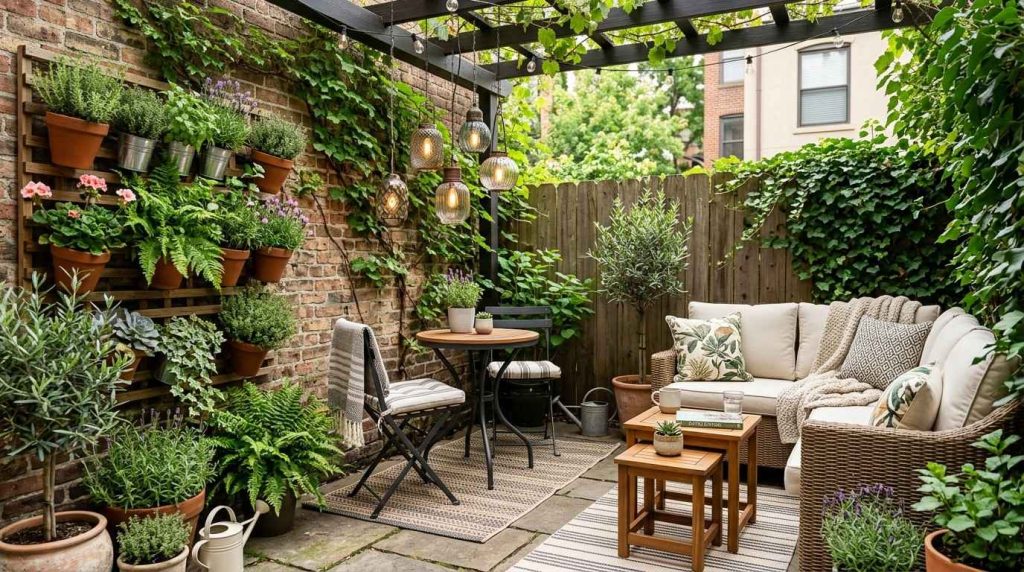
Before you start shopping or moving pieces around, get to know your patio. Measure the area. Notice sunlight, shade, wind, and how people move from inside to outside.
Even if your space is small, you have options—sometimes, less furniture is better. Overcrowding a patio can make it feel tight and uninviting. Large patios can feel empty if you don’t use zones or groupings.
Think about how you want to use your patio. Do you love to host dinner parties, or do you want a quiet place to read? Are there kids or pets who need room to play? Your goals should shape your arrangement.
Case Study: The Busy Family Patio
A family in Austin, Texas, had a 12×18-foot concrete patio. They wanted space for family dinners, plus room for the kids to play. After measuring, we realized a full dining set and a sofa would crowd the space. Instead, we chose a compact rectangular dining table with benches and a few stackable side chairs.
The benches slid under the table to save space when not in use, and the chairs could be moved for playtime. This flexible arrangement made the patio work for everyone.
Zoning Your Patio For Multiple Uses
Most patios serve more than one purpose. Zoning simply means creating different areas for different activities. You might have a dining zone, a lounge zone, and a grill station—all in one space.
You don’t need walls or barriers. Use rugs, planters, or furniture groupings to define zones. For example, a large outdoor rug can separate the dining area from the seating area. Tall plants or a small screen can provide privacy without making the space feel closed in.
Common Zoning Mistakes
- Ignoring traffic flow: If people have to walk through your dining area to get to the grill, it can feel awkward. Always leave clear walkways.
- Putting furniture too close together: Leave at least 3 feet between major pieces for easy movement.
- Over-zoning: Too many separate areas can make a small patio feel cramped.
Popular Patio Furniture Arrangement Ideas
There’s no “one size fits all” layout, but here are some tried-and-true ideas for different goals and patio shapes.
1. Conversation Circles
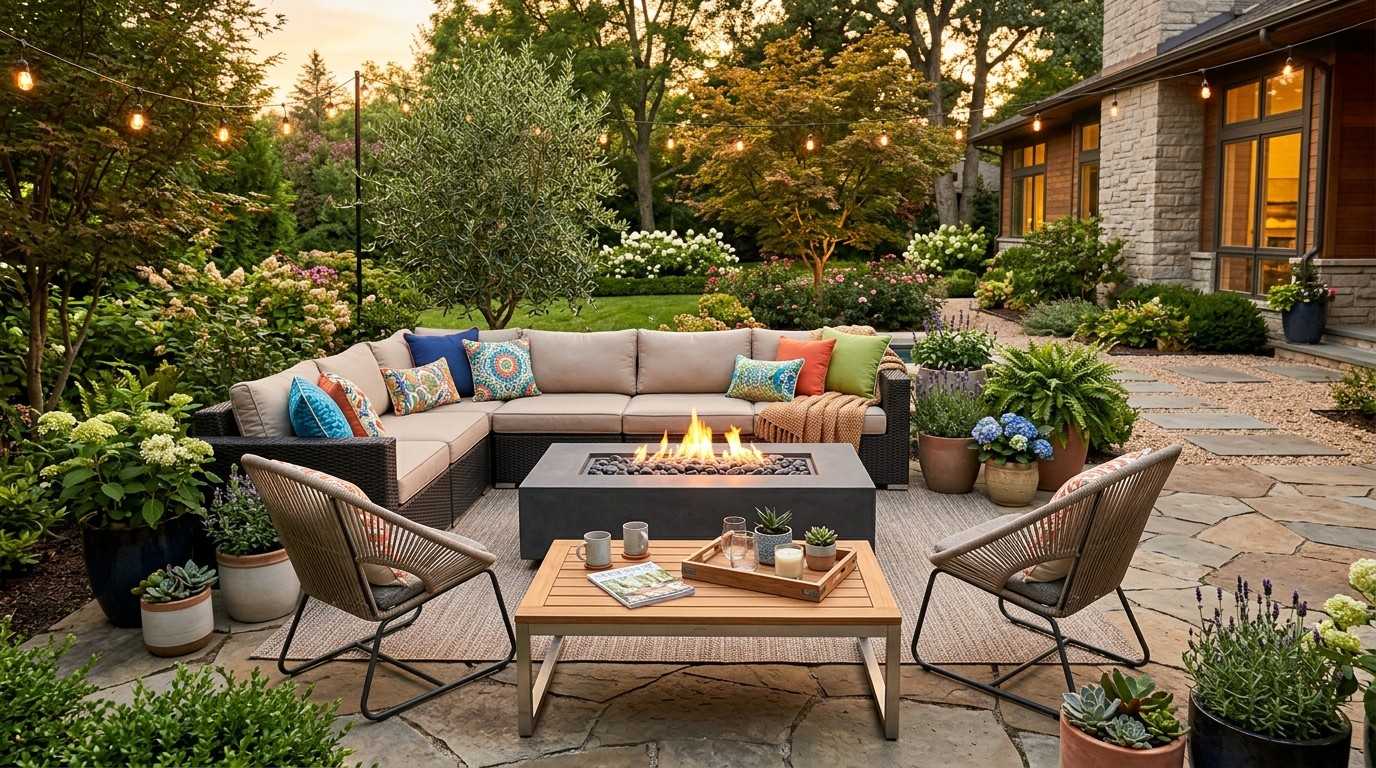
Arrange four armchairs or a small sectional in a circle around a fire pit or coffee table. This setup is perfect for relaxed chats or small parties. Make sure each seat has easy access to a table for drinks or snacks.
2. Dining Focus
Place a dining table and chairs near the house for easy kitchen access. For narrow patios, use a long rectangular table. For square spaces, a round table often fits better and allows more movement.
3. U-shaped Sofa Layout
A U-shaped sectional or sofa group encourages lounging and conversation. Place the open end facing your view, garden, or a focal point like a fountain. Add a rug and coffee table in the center.
4. Multi-zone Patio
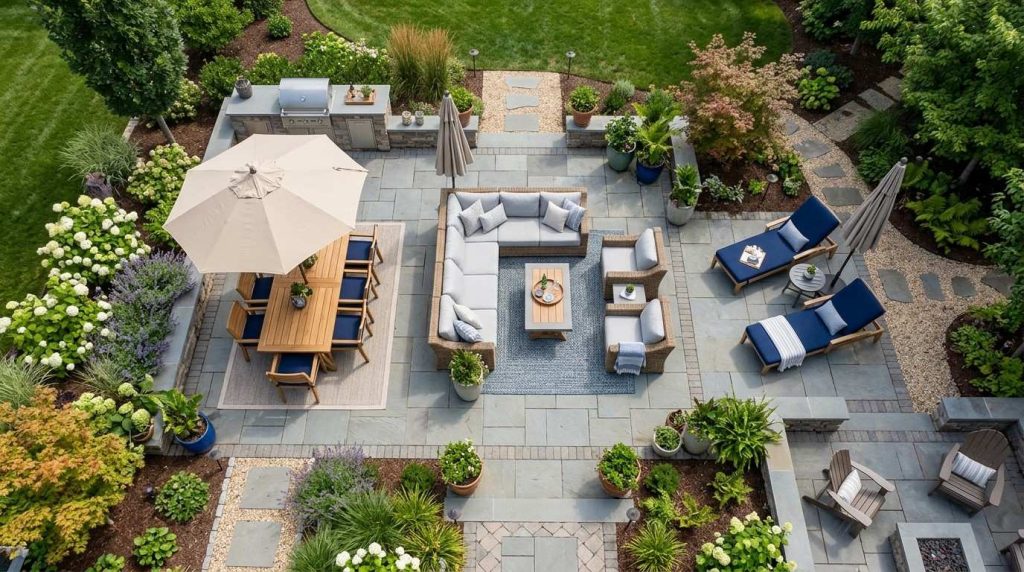
Divide a large patio into zones: one for dining, one for lounging, and maybe a smaller nook for reading or sunbathing. Use different rugs or flooring materials to define each area.
5. Bistro Set For Small Spaces
A small table and two chairs can transform a tiny balcony or porch. Choose foldable or stackable pieces to save space when not in use.
6. Daybed Or Hammock Corner
For a relaxing vibe, dedicate a corner to a daybed, hammock, or chaise lounge. Add a small table for books and drinks.
7. Built-in Benches
If your patio has a wall or fence, try built-in benches. They save space and can double as storage. Add cushions for comfort.
8. Floating Furniture Groupings
Instead of pushing everything against the wall, try floating furniture in the middle of your patio. This creates a more intimate feel and encourages conversation.
9. Grill And Prep Station
If you love to cook outdoors, create a grilling zone with space for a grill, prep table, and serving cart. Keep it separate from the main seating area for safety and convenience.
10. Flexible Seating
Use lightweight chairs, poufs, and ottomans that can be moved as needed. This is ideal for patios that host both large gatherings and quiet evenings.
Table: Patio Arrangement Ideas By Patio Size
Here’s a quick comparison to help you choose arrangements based on your patio size.
| Patio Size | Best Arrangements | Key Tips |
|---|---|---|
| Small (Under 100 sq ft) | Bistro set, foldable chairs, wall benches | Keep furniture light and compact; avoid clutter |
| Medium (100–200 sq ft) | Conversation circle, small dining set, chaise lounge | Define zones with rugs; allow walking space |
| Large (200+ sq ft) | Multi-zone (dining + lounge + grill), sectional sofa | Use planters or screens to divide areas |
Choosing The Right Furniture Pieces
The best arrangement starts with the right furniture. Here’s what matters most when selecting pieces:
- Material: Aluminum and resin wicker resist weather and rust. Wood looks classic but needs more care.
- Size: Measure before you buy. Oversized sofas can overwhelm a small patio.
- Function: Look for multi-use pieces, like storage benches or tables with built-in coolers.
- Comfort: Test chairs and cushions for comfort, especially if you’ll use the patio often.
- Weight: Lightweight furniture is easy to move but may blow over in strong winds.
- Maintenance: Some materials need more cleaning or treatment.
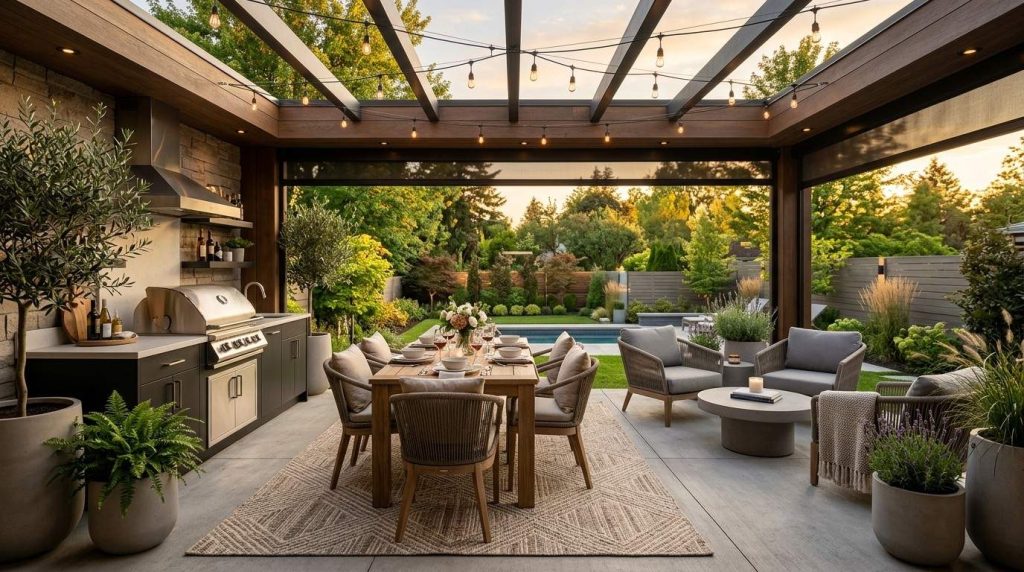
Table: Furniture Material Comparison
This quick reference helps you pick the right material for your climate and needs.
| Material | Pros | Cons | Best For |
|---|---|---|---|
| Aluminum | Rustproof, lightweight, low-maintenance | Can get hot in sun, less sturdy in high wind | All climates |
| Resin Wicker | Weather-resistant, stylish, lightweight | Cushions may fade, frame can crack over time | Covered patios |
| Teak/Hardwood | Classic look, very durable | Needs oiling, heavier, more expensive | Luxury settings |
| Plastic/Polywood | Affordable, easy to clean, many styles | Can fade, less sturdy | Budget patios |
| Steel/Iron | Very sturdy, traditional look | Can rust, heavy, gets hot | Windy areas |
Arranging Furniture For Comfort And Function
Once you have the right pieces, thoughtful arrangement is key. Here’s what to consider:
Leave Space For Movement
A patio isn’t just for sitting. People need to walk between seats, around tables, and to the door or yard. Keep at least 30–36 inches of space between large pieces. For dining tables, allow 24 inches behind each chair so guests can pull out their seats comfortably.
Face The Best View
If you have a garden, pool, or scenic view, arrange seats to face it. If your view is less inspiring, create a focal point with a fire pit, water feature, or even a large potted plant.
Anchor With Rugs
Outdoor rugs define zones and add color. They also keep furniture from sliding on tile or concrete. Make sure your rug is rated for outdoor use and dries quickly.
Shade And Shelter
If your patio gets full sun, consider a market umbrella, pergola, or shade sail. Arrange seats so at least some are shaded during peak sunlight hours. This protects your furniture and makes the space usable all day.
Table: Spacing Guide For Patio Furniture
Here’s a handy guide for comfortable spacing:
| Item | Recommended Clearance |
|---|---|
| Between seats | 18–24 inches |
| Dining chair to wall/railing | 36 inches |
| Walkway/path | 36–48 inches |
| Fire pit to seats | 30 inches minimum |
Safety Tips For Patio Arrangements
Safety often gets overlooked, but it’s just as important outdoors as indoors.
- Keep walkways clear. Don’t block exits with furniture.
- Fire features: Place fire pits at least 10 feet from the house or anything flammable. Always check local codes.
- Grill placement: Never put a grill under a roof or near curtains or cushions. Leave space for the chef to move safely.
- Sturdy surfaces: Make sure furniture sits flat. Wobbly chairs on uneven pavers can cause falls.
- Secure lightweight pieces: In windy areas, anchor or store light chairs and umbrellas when not in use.
If you’re adding electrical lighting or features outdoors, call a licensed electrician. DIY wiring can be dangerous and may not meet code.
Patio Arrangements For Special Needs
Think about who will use your patio:
- Kids: Avoid sharp corners and glass tables. Choose sturdy, washable furniture.
- Pets: Select materials that resist scratches and stains.
- Older adults: Use chairs with arms for easier sitting and standing. Avoid deep, low seats.
If you need wheelchair access, leave at least 36 inches of clear space for movement, and choose furniture with enough clearance underneath.
Adding Accessories For Comfort And Style
Accessories can make a patio feel like an extension of your home.
- Cushions and pillows: Choose outdoor-rated fabrics for durability.
- Lighting: String lights, lanterns, or solar stakes add ambiance and safety.
- Planters: Plants soften hard edges and bring color.
- Side tables: Small tables give guests a place for drinks or phones.
- Blankets: In cooler climates, keep outdoor throws handy for chilly evenings.
Don’t go overboard—too many accessories can make cleaning and storage a hassle.
Common Patio Arrangement Mistakes
- Overfilling the space: Too much furniture makes a patio feel cluttered. Less is often more.
- Ignoring scale: Large sofas dwarf small patios; tiny chairs look lost on big decks.
- No plan for storage: Outdoor cushions and accessories can mildew if left out in rain. Have a storage bin or shed nearby.
- Forgetting about weather: Uncovered furniture fades and wears faster. Use covers or store pieces when not in use.
- Blocking doors or windows: Always keep entrances clear.
Case Study: From Wasted Space To Outdoor Living Room
A couple in Denver had a large but awkward patio with no shade and little privacy. They wanted a space for both relaxing and entertaining. After discussing their needs, we zoned the area with a pergola over one half for shade, and a dining table beneath.
On the sunny side, we placed a U-shaped sectional facing a portable fire pit. Tall planters created a privacy screen from neighbors. Outdoor rugs and string lights made the space feel inviting. The couple now hosts regular BBQs and uses their patio almost year-round.
When To Call A Professional
If your patio project involves built-in seating, electrical work, or major changes to decking or concrete, it’s smart to consult a pro. Licensed contractors can help with:
- Custom benches or walls
- Outdoor kitchens
- Pergolas or gazebos
- Permanent fire pits or fireplaces
- Electrical lighting or outlets
DIY is fine for moving furniture and adding accessories, but safety comes first with any structural or electrical work.
Keeping Your Patio Arrangement Fresh
Your needs and tastes can change from season to season. Don’t be afraid to rearrange! Try swapping seating and dining zones, or changing accessories for a new look. Many homeowners find that simple updates—like a new rug or moving a planter—can make the patio feel brand new.
Real-life Data: Americans And Outdoor Living
Did you know that over 80% of U. S. homeowners use their outdoor spaces at least once a week during warm weather? According to the American Home Furnishings Alliance, spending on patio furniture and accessories has grown every year since 2014.
People want outdoor areas that feel as comfortable and functional as indoor rooms.
For more data and design ideas, the American Home Furnishings Alliance offers research and resources for homeowners.
Frequently Asked Questions
What’s The Best Way To Arrange Patio Furniture For A Small Space?
Focus on scale and flexibility. Choose compact, lightweight pieces like bistro sets or folding chairs. Arrange furniture against walls or railings to keep the center open. Avoid large sectionals or bulky tables, which can overwhelm small patios.
How Can I Create Zones On My Patio Without Building Walls?
Use outdoor rugs, planters, or different types of furniture to separate areas. For example, place a rug under your dining table and another under your lounge chairs. Tall plants or a trellis can provide privacy and define spaces without blocking light.
What’s The Ideal Distance Between A Fire Pit And Seating?
Keep at least 30 inches between the edge of the fire pit and chairs for safety. For larger fire features, check the manufacturer’s recommendations. Always follow local fire codes and never leave fires unattended.
How Do I Protect Patio Furniture From Weather?
Choose weather-resistant materials like aluminum, resin wicker, or treated wood. Use furniture covers when not in use, and store cushions indoors during rain or winter. Regular cleaning and maintenance extend the life of your pieces.
When Should I Hire A Professional For Patio Projects?
If you’re installing built-in seating, outdoor kitchens, electrical features, or permanent structures like pergolas, hire a licensed contractor. DIY is fine for arranging furniture and adding accessories, but complex projects need an expert for safety and code compliance.
Turning your patio into an outdoor haven is all about thoughtful planning and arrangement. With the right furniture, smart zoning, and a few personal touches, you’ll enjoy your outdoor space more than ever—season after season.