Your Trusted Source for Home Fixes & Guides

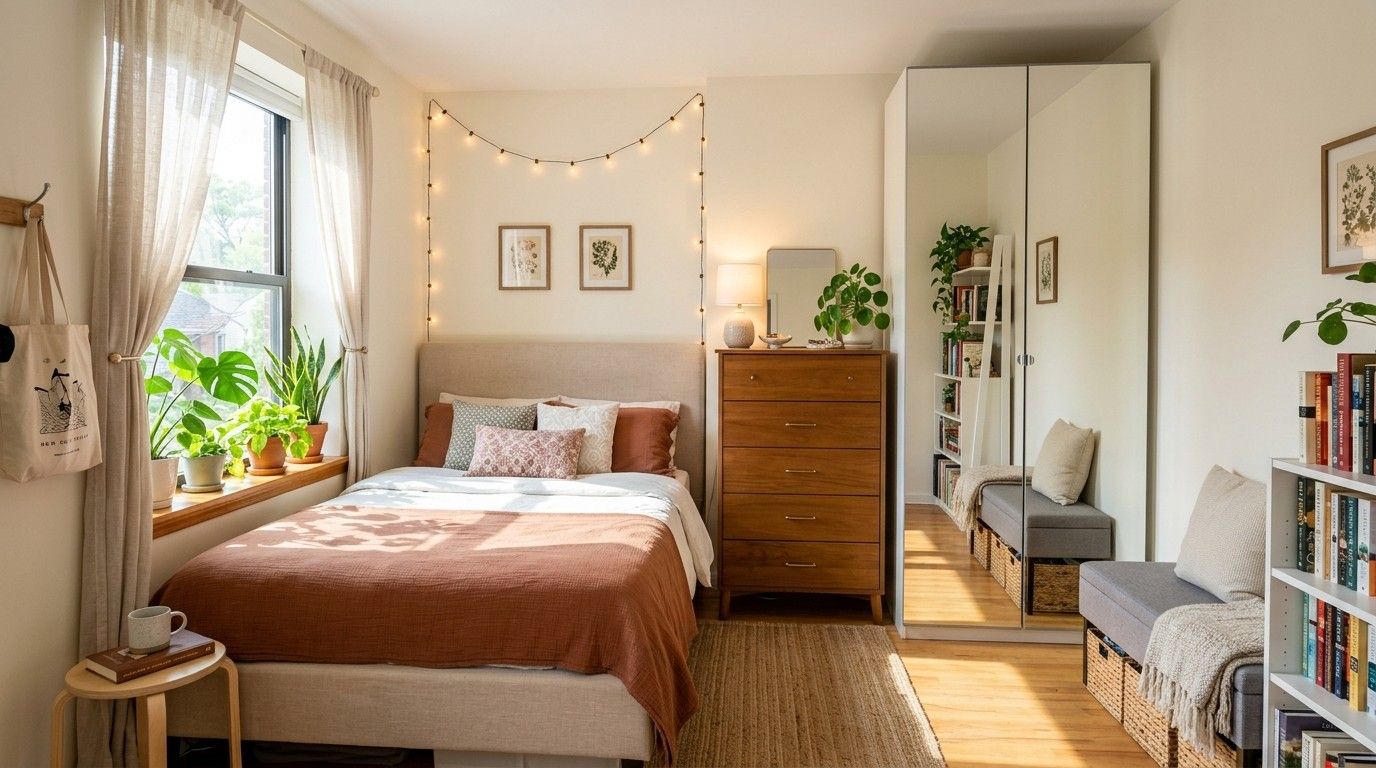
Small Space Bedroom Furniture: Maximize Style and Storage

There’s something special about making a small bedroom feel comfortable and stylish. If you live in a city apartment, a tiny home, or just have a smaller bedroom, you know the challenge: how do you fit everything you need without feeling crowded? The right furniture can make all the difference. With smart choices and clever ideas, your bedroom can be cozy, functional, and beautiful—even in limited space.
As someone who has remodeled dozens of homes and tackled tight spaces, I know firsthand how important it is to choose the right pieces. Small space bedroom furniture isn’t just about saving room; it’s about creating a place you actually enjoy.
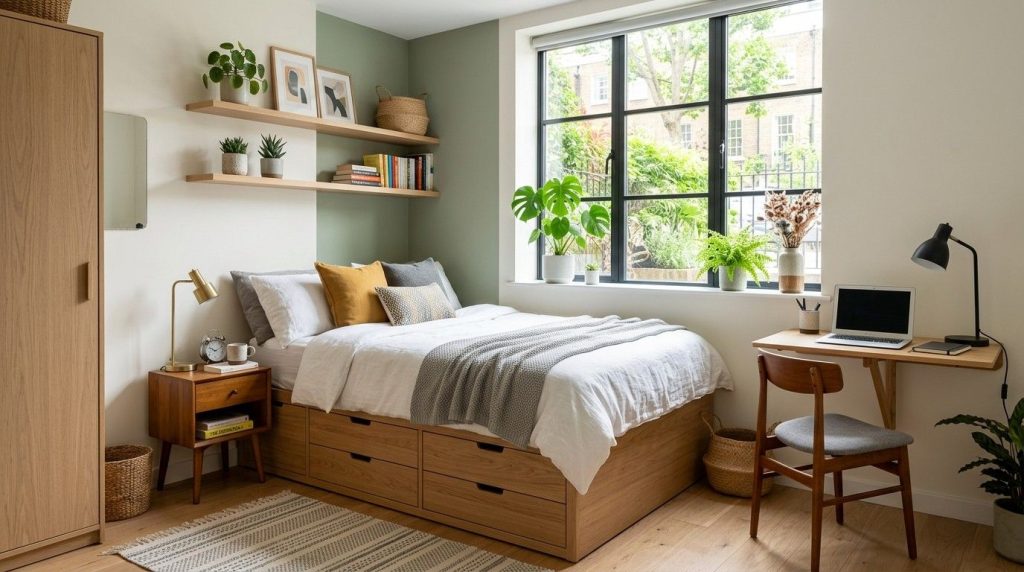
In this guide, we’ll cover what works, what doesn’t, and how you can transform your bedroom step by step. Along the way, you’ll find practical advice, helpful comparisons, and even a real-life case study.
Understanding Small Space Bedroom Needs
Every small bedroom is different. Some have awkward corners, sloped ceilings, or odd-shaped windows. Others are just plain small—maybe 8’ x 10’, which is common in older homes and city apartments. Before you shop for furniture, you need to know your exact space and what you want from it.
Measure Before You Buy
Always measure your bedroom carefully:
- Wall-to-wall length and width
- Door and window placement
- Height of ceilings
Write down these measurements. Bring them with you when you shop or browse online. If you skip this step, you risk buying furniture that doesn’t fit, which is a common mistake.
Prioritize Your Needs
Ask yourself:
- Do you need lots of storage?
- Will your bedroom double as an office?
- Is the bed for one or two people?
Knowing your needs will help you make smarter choices. For example, if storage is a big concern, focus on beds with drawers or tall dressers.
Avoid Common Mistakes
- Ignoring scale: Large furniture in a small room makes everything feel cramped.
- Overfilling: Too many pieces—even small ones—can make a space feel cluttered.
- Neglecting pathways: You need enough room to walk around the bed and open doors.
Types Of Small Space Bedroom Furniture
Not every piece is right for a compact room. Here’s a look at furniture that works best in small bedrooms.
Bed Choices For Small Rooms
Your bed is the centerpiece. In a small room, it needs to do more than just provide a place to sleep.
Platform Beds
Platform beds sit low to the ground and don’t require a bulky box spring. Many come with built-in storage drawers underneath. This saves space and adds storage without extra furniture.
Loft Beds
A loft bed lifts the sleeping area up, freeing space underneath for a desk or seating. These are ideal for kids’ rooms, studio apartments, or anyone who wants to maximize floor space.
Murphy Beds
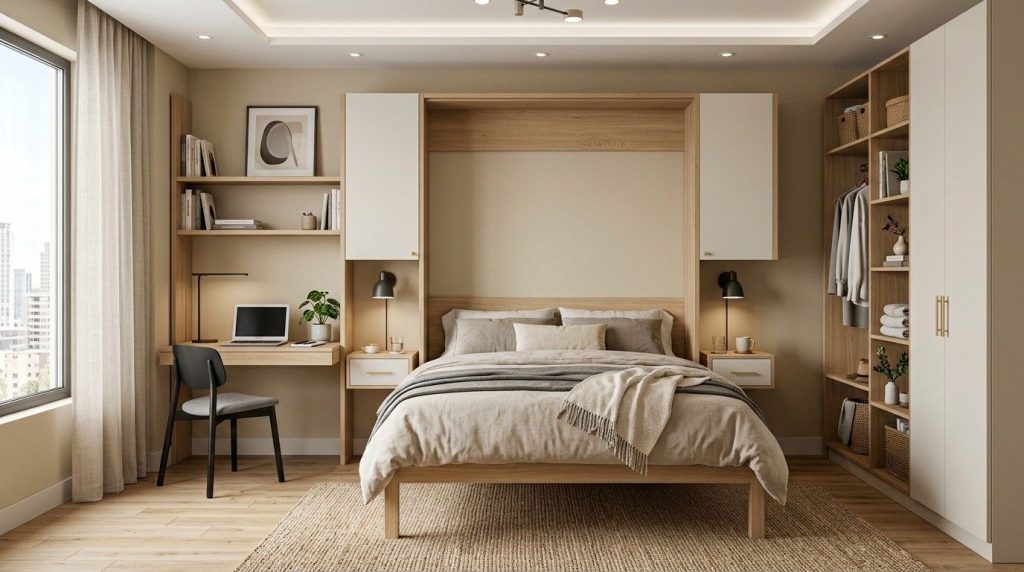
Murphy beds (wall beds) fold up into a cabinet when not in use. This is a smart option for rooms that double as offices or guest rooms.
Daybeds
A daybed works as both a couch and a bed. If you need seating during the day, this is a great choice.
Storage Solutions
Small bedrooms need smart storage. Instead of filling the room with dressers and cabinets, look for pieces that do double duty.
Under-bed Storage
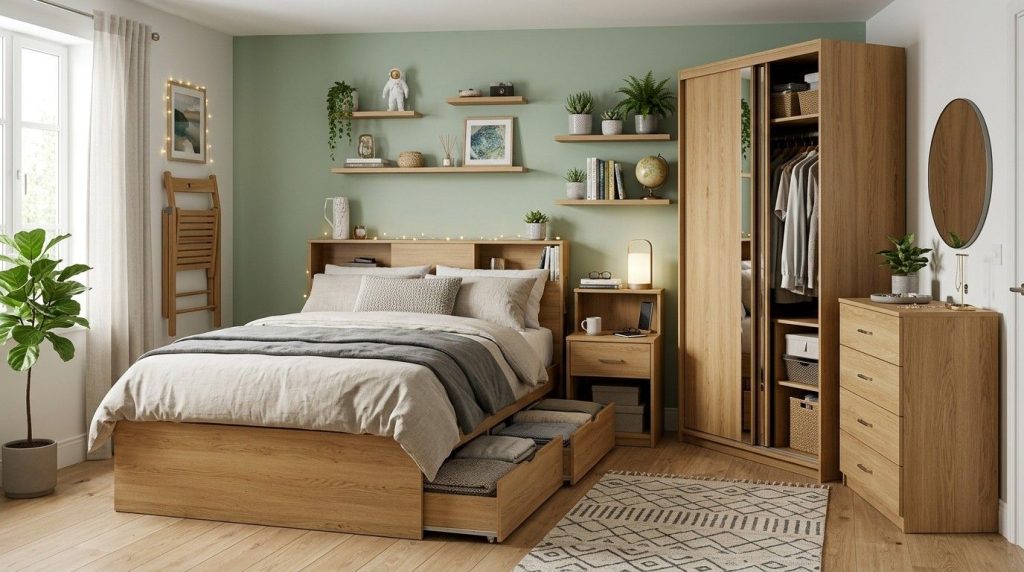
Beds with built-in drawers or space for bins underneath are essential. Use these for clothes, shoes, or seasonal items.
Tall Dressers
A tall dresser takes up less floor space but provides more vertical storage. Avoid wide, bulky dressers.
Storage Benches
Place a storage bench at the foot of the bed. It offers seating plus hidden storage for linens or toys.
Floating Shelves
Mount floating shelves on the wall. They provide storage without taking up floor space.
Multi-functional Furniture
Furniture that serves more than one purpose is perfect for small spaces.
- Fold-out desks: Attach to the wall and fold away when not in use.
- Bedside tables with drawers: Double as mini storage cabinets.
- Ottomans with storage: Use for seating, footrest, and hidden storage.
Space-saving Wardrobes
If you don’t have a closet, consider a compact wardrobe. Look for ones with sliding doors and built-in drawers. Avoid wardrobes with doors that swing out, as they take up precious space.
Comparing Small Space Bedroom Furniture
It’s easy to get overwhelmed by options. To help you decide, here’s a comparison of popular small space beds:
| Bed Type | Space Needed | Best For | Storage Options |
|---|---|---|---|
| Platform Bed | Minimal | Everyday use | Drawers or bins |
| Loft Bed | Vertical space | Kids, studios | Under-bed area |
| Murphy Bed | Wall space | Multi-use rooms | Sometimes built-in shelves |
| Daybed | Minimal | Guest rooms, seating | Trundle or drawers |
Choosing The Right Furniture Material
Materials matter more than you think in small bedrooms. Light-colored woods, metal, and glass make a room feel larger. Heavy, dark furniture can shrink the space visually.
- Wood: Choose lighter woods like maple, birch, or pine for a brighter look.
- Metal: Thin metal frames are sturdy yet take up less visual space.
- Glass: Nightstands or shelves with glass tops look lighter and airier.
Avoid furniture with thick, chunky frames. It’s tempting to buy solid wood, but in a small room, sleek designs are better.
Planning Layouts For Small Bedrooms
A good layout makes all the difference. You want to fit what you need while keeping pathways clear.
Basic Layout Tips
- Place the bed against the longest wall.
- Leave at least 24 inches of space to walk around the bed.
- Use corners for dressers or desks.
- Keep the area near doors clear.
Example Layouts
Here’s a comparison of two common layouts:
| Layout Type | Bed Placement | Other Furniture | Best For |
|---|---|---|---|
| Classic | Against wall | Dresser, nightstand | Simple needs |
| Max Storage | Centered | Under-bed drawers, tall dresser, shelves | Storage-focused |
Safety Precautions
- Make sure walkways are clear to prevent trips and falls.
- Secure heavy shelves and dressers to the wall to avoid tipping.
- If you install a loft or Murphy bed, follow manufacturer instructions exactly. For Murphy beds, hire a professional if you’re unsure.
Smart Design Tricks For Small Bedrooms
You don’t need to be a designer to make a small room feel bigger. Here are tricks I’ve used in real homes:
- Use mirrors to reflect light and make the room look larger.
- Stick to light, neutral colors for walls and furniture.
- Hang curtains high and wide to make windows look bigger.
- Choose furniture with legs (instead of solid bases) to keep the room airy.
A non-obvious tip: Place a rug under the bed that extends at least two feet on each side. This anchors the room and makes it feel more spacious.
Case Study: Transforming A Small Bedroom
Let’s look at a real-life example. I recently worked with a homeowner in Chicago who had a 9’ x 10’ bedroom. She wanted a comfortable sleeping area, extra storage, and a place to work. Here’s how we tackled it:
Step-by-step Solution
- Measured the Room: We took exact measurements, including the distance from windows and doors.
- Chose a Platform Bed with Drawers: This saved space and added hidden storage for clothes.
- Added a Floating Desk: Installed a wall-mounted desk that folded up when not in use.
- Used Tall Dresser and Floating Shelves: Provided vertical storage and freed up floor space.
- Placed a Storage Bench at the Foot of the Bed: Offered seating and extra room for linens.
- Kept Pathways Clear: Left 24 inches around the bed for easy movement.
- Used Light Colors and Mirrors: White walls, light wood furniture, and a mirror above the dresser made the room feel larger.
Results
After the changes, the homeowner had more storage, a comfortable workspace, and a room that felt open and inviting. She said, “I never thought my small bedroom could feel this spacious and organized. ”
When To Call A Professional
Some projects are simple DIY, but others need an expert. If you plan to install a Murphy bed or loft bed, hire a licensed professional. These beds need secure mounting, and mistakes can be dangerous. If you’re unsure about wall anchors or electrical outlets, call a handyman or contractor.
For built-in furniture, electrical work, or moving walls, always use licensed contractors. This keeps your home safe and up to code.
Shopping Tips For Small Space Bedroom Furniture
Buying furniture for a small bedroom isn’t just about style—it’s about fit and function. Here’s what to look for:
Check Product Dimensions
Don’t rely on photos. Always check the exact measurements of any furniture. Compare them to your room’s size.
Look For Multi-use Pieces
A nightstand with drawers, a bed with storage, or an ottoman that doubles as seating can save space.
Read Reviews
Look for feedback from other buyers with small bedrooms. They often mention whether a piece fits well or feels too bulky.
Avoid Common Buyer Mistakes
- Ignoring assembly details: Some furniture is hard to assemble in tight spaces.
- Not checking doorways: Large pieces may not fit through your door or hallway.
- Skipping safety features: For tall dressers and shelves, make sure they come with wall anchors.
Try Before You Buy
If possible, visit a showroom. Stand next to the furniture and imagine it in your room.
Comparing Storage Options
Let’s look at how storage benches, tall dressers, and under-bed drawers stack up:
| Storage Option | Space Used | Capacity | Accessibility |
|---|---|---|---|
| Storage Bench | Foot of bed | Medium | Easy to reach |
| Tall Dresser | Vertical | High | Drawers, higher shelves |
| Under-Bed Drawers | Under bed | Medium | Pull-out drawers |
Practical Advice For Homeowners
- Don’t rush. Take your time planning your space before buying anything.
- Start with one main piece (like the bed), then build around it.
- Use vertical space. Stack, hang, or mount whenever possible.
- Keep surfaces clear—too many items can make a small room feel messy.
- If you share a bedroom, divide storage areas so each person has their own spot.
A beginner’s mistake is ignoring lighting. In small bedrooms, good lighting is key. Use wall-mounted lamps, LED strips, or pendant lights to save space and brighten up the room.
Maintenance And Cleaning Tips
Small bedrooms get cluttered fast. Keep your furniture and space clean with these tips:
- Use bins or baskets for loose items.
- Dust shelves and surfaces weekly.
- Clean under the bed regularly—dust and dirt collect there.
- Organize clothes seasonally. Donate or store items you don’t wear.
If you have upholstered furniture, vacuum it monthly. For wood or metal, use a damp cloth and avoid harsh chemicals.
Frequently Asked Questions
How Can I Make A Small Bedroom Feel Larger?
Use light colors, mirrors, and furniture with legs. Keep pathways clear and avoid overfilling the room. Good lighting helps, too.
What Type Of Bed Is Best For A Small Bedroom?
A platform bed with storage drawers or a Murphy bed works best. They save space and add storage.
Is Built-in Furniture Worth It For Small Spaces?
Yes, built-in shelves or desks can save floor space and make the room feel bigger. Hire a professional for installation.
How Much Space Should I Leave Around The Bed?
Leave at least 24 inches on each side for walking and opening doors. This makes the room comfortable and safe.
Where Can I Find Reliable Small Space Furniture?
Look for furniture at trusted stores or online. Always check measurements and reviews. For expert advice, visit Architectural Digest.
Creating a comfortable and stylish small bedroom is possible with smart planning and the right furniture. Remember, every inch matters. With these tips, your small bedroom can be a relaxing, functional retreat that feels much bigger than it is.