Your Trusted Source for Home Fixes & Guides

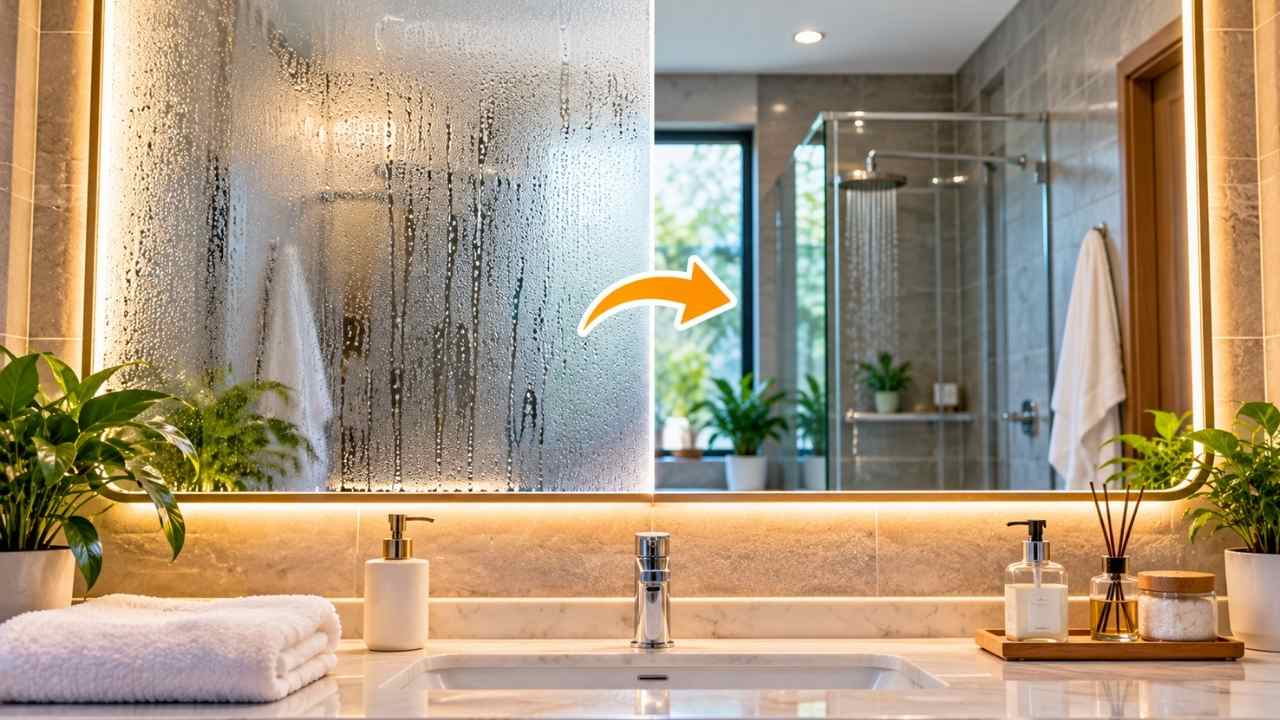
How to stop bathroom mirror from fogging

How to stop bathroom mirror from fogging becomes much easier once you deal with the thin layer of moisture that forms on cold glass. The quickest options are shaving cream, soap, shampoo or a diluted white vinegar solution. For a longer-lasting result, improve ventilation or install a heated demister pad.
Fog forms when warm, humid shower air meets a cooler mirror surface. As a result, water vapour condenses into tiny droplets. A microscopic barrier can reduce how easily those droplets stick. Meanwhile, ventilation and gentle heating address the cause more directly.
- Use shaving cream for a simple treatment that can last several weeks.
- Alternatively, try equal parts white vinegar and water when you want a low-cost option that may work for about a week.
- For longer protection, use a car anti-fog treatment that can last a month or longer.
- However, choose an extractor fan or demister pad when the mirror fogs frequently.
For general moisture control, the US Environmental Protection Agency’s indoor air quality guidance also supports ventilation as a practical way to manage excess indoor humidity.
How to stop bathroom mirror from fogging quickly
The fastest practical method is to spread a very thin layer of shaving foam over a clean dry mirror then buff the glass until it looks completely clear. Consequently, the remaining film creates a microscopic barrier that makes it harder for water droplets to cling to the surface.
Standard shaving cream is usually a convenient choice because it spreads easily and needs no complicated equipment. In practice, a small amount is enough for an average bathroom mirror. If too much product remains, the glass can look hazy rather than fog-free, so polishing matters as much as application.
Quick DIY methods
| Method | How to apply it | Typical useful period | Best suited to |
|---|---|---|---|
| Shaving cream | Spread a thin layer then buff with a dry microfiber cloth | Several weeks | Regular shower use and simple maintenance |
| Bar soap or shampoo | Rub a light film onto the glass then wipe it clean | Short-term protection | When household supplies are already available |
| Vinegar solution | Mist equal parts white vinegar and water then wipe with microfiber | About one week | Low-cost cleaning and light anti-fog protection |
| Car anti-fog spray | Apply an automotive anti-fog or water-repellent treatment as directed | A month or longer | People who want less frequent reapplication |
Bar soap, shampoo or dish soap can also work in a pinch. First, rub a very thin layer directly onto the mirror then remove the excess with a dry cloth. These products are convenient. However, they may leave streaks if the film is too thick.
For the vinegar option, combine equal parts white vinegar and water in a spray bottle. Mist the glass lightly rather than soaking the frame or edges. Next, wipe the surface with a microfiber cloth until no visible residue remains. This treatment generally keeps fog away for about a week.
Read More: How to Remove Mildew from Shower Grout
Which anti-fog method suits your budget?
The most suitable choice depends on how often the mirror fogs and whether you prefer a temporary wipe-on treatment or a permanent improvement. Shaving cream costs little and takes only a few minutes. By comparison, an extractor fan or heated demister pad costs more but can reduce repeated cleaning and improve bathroom comfort.
For a rented flat or a guest bathroom, a surface treatment is usually the least disruptive option. Conversely, a homeowner dealing with heavy condensation every morning may get better value from ventilation or a heated mirror. The cheapest method is not always the lowest-cost solution over time if it must be repeated after every shower.
Pros and limitations
- Shaving cream: Easy to apply and can last several weeks. However, overapplication may create a cloudy film.
- Soap or shampoo: Readily available in most bathrooms. Nevertheless, it can streak and usually needs more frequent touch-ups.
- Vinegar solution: Inexpensive and useful for light cleaning. Its anti-fog effect lasts about a week, while the smell may be noticeable briefly.
- Car anti-fog spray: Designed to repel moisture for a month or longer. Therefore, check the product label first to confirm that it is suitable for glass used indoors.
- Demister pad: Provides a more consistent result because it gently warms the mirror. Installation is more involved, and electrical work may require a qualified professional.
A useful budget rule is simple: choose a wipe-on method when fogging is occasional. Instead, consider ventilation or a demister pad when the same mirror becomes unusable after nearly every shower.
What permanent fixes reduce bathroom mirror fog?
The most effective long-term fix is to remove humid air before it condenses on the cold mirror. An extractor fan pulls hot moisture out of the bathroom. In contrast, a heated mirror or electric demister pad works by warming the glass slightly above the dew point, so water vapour is less likely to form droplets.
Run the bathroom exhaust fan before or during a hot shower and leave it operating long enough to clear humid air. If there is no extractor fan, improving ventilation may help. However, windows should be used safely, and privacy should also be considered.
A demister pad fits behind the existing mirror in some installations. It gently heats the surface rather than making the glass hot. Because the work involves electricity and a damp room, installation should follow the product instructions and local electrical requirements.
Adjust the shower temperature gradually
Running cold water briefly before turning on the hot shower can lower the initial temperature spike in the room. This does not replace ventilation, but it may reduce the sudden burst of warm humid air that reaches the mirror.
The practical sequence is straightforward:
- First, turn on cold water for a brief moment.
- Then, adjust the water to the desired shower temperature.
- Next, switch on the extractor fan before the room becomes heavily humid.
- Keep the bathroom door positioned according to the ventilation layout.
- Finally, allow the fan to clear moisture after the shower.
That approach is especially useful in compact urban bathrooms where a small room can become humid quickly. It also avoids relying on repeated chemical or soap-based treatments alone. As a result, the routine may reduce both cleaning effort and repeated product use.
How do you clear a mirror that is already fogged?
If the mirror is already covered in condensation, use a hairdryer on a warm or low setting and aim it directly at the glass. Moving the airflow across the surface helps evaporate moisture within seconds without requiring vigorous wiping.
For safety, keep the hairdryer away from sinks, baths and standing water. Do not use a damaged electrical appliance in a damp bathroom. A clean dry microfiber cloth is another option, although wiping can leave minor streaks when the glass has a heavy layer of condensation.
Best emergency sequence
- First, move electrical appliances away from wet surfaces.
- Use the hairdryer on warm or low rather than the hottest setting.
- Next, direct airflow across the mirror instead of holding it against one spot.
- Finish with a dry microfiber cloth if small patches remain.
- Afterwards, improve ventilation so the mirror does not fog again immediately.
For a streak-free result, avoid wiping with a damp towel or a cloth that contains soap residue. Instead, use a dry microfiber cloth because it absorbs moisture without leaving as much lint or visible marking.
Common mistakes that make fog worse
A thick layer of shaving cream is one of the most common mistakes. The treatment only needs to leave a light invisible film. Therefore, if the mirror looks greasy or cloudy after polishing, too much product was used.
Spraying vinegar solution directly around the mirror edges can also create problems. Moisture may reach the frame or backing, especially on an older mirror. Instead, spray the cloth or use a controlled mist on the glass while keeping the edges as dry as possible.
- First, clean the mirror because dust and residue can become trapped under the film.
- Never combine several cleaning products in one bottle.
- Before using a water-repellent spray, check its label for suitability.
- Keep the extractor fan uncovered so its airflow is not blocked.
- For an electric demister pad, follow bathroom electrical safety requirements during installation.
Who may need a different solution?
Surface treatments may not be enough in bathrooms with poor ventilation, persistent condensation or visible damp around walls and ceilings. In those situations, an extractor fan or professional assessment may be more useful than repeatedly polishing the mirror.
Mirrors with damaged backing, cracked edges or deteriorating frames also need care. Excess liquid can worsen damage. Consequently, keep sprays away from vulnerable edges and replace unsafe or badly damaged electrical equipment rather than trying to work around it.
Expert tips for a clearer mirror
Clean the mirror first and let it dry fully before applying any anti-fog treatment. A greasy or damp surface prevents an even barrier from forming. Additionally, use a separate dry microfiber cloth for final buffing so the treatment does not spread back across the glass unevenly.
Test any unfamiliar spray on a small inconspicuous area when the product instructions permit it. This is particularly sensible for framed mirrors, coated glass or surfaces with decorative finishes. In this way, the goal remains clear: prevent fog without damaging the finish.
The strongest overall approach combines methods. Use shaving cream or another suitable surface treatment for immediate protection, then address humid air with an extractor fan. If daily fogging continues, a heated demister pad may provide a more dependable result than repeated manual cleaning.
Bathroom mirror fogging questions
Does shaving cream really stop a bathroom mirror from fogging?
Yes, shaving cream can reduce fogging when a thin layer is spread over clean dry glass and buffed clear. The microscopic residue makes it harder for water droplets to cling to the mirror.
How often should shaving cream be reapplied?
A properly buffed shaving cream layer can last several weeks. Reapply when fogging returns or when cleaning removes the invisible barrier.
Can shampoo prevent a mirror from fogging?
Shampoo can leave a temporary moisture-resistant film on glass. Use only a thin layer and wipe it completely clean to reduce streaking.
How long does a vinegar anti-fog treatment last?
Equal parts white vinegar and water may keep fog away for about a week. Reapply when the mirror begins to mist during showers.
Is car anti-fog spray safe for a bathroom mirror?
Some automotive anti-fog or water-repellent products may work on glass. Check the label for indoor use and follow the application instructions before treating the entire mirror.
What clears bathroom mirror fog in seconds?
A hairdryer on a warm or low setting can evaporate moisture in seconds. Alternatively, a clean dry microfiber cloth also works, though it may leave minor streaks.
Why does my mirror fog even with the bathroom fan on?
The fan may be too weak, poorly positioned or unable to move enough air. In addition, a closed or blocked vent can limit moisture removal, so inspect airflow and keep the fan unobstructed.
Are heated demister pads worth considering?
A demister pad can be worthwhile when the mirror fogs frequently. It gently warms the surface above the dew point, but installation must suit the mirror and bathroom electrical requirements.
A clearer mirror with less effort
Start with the least disruptive option: clean and dry the mirror, apply a very thin layer of shaving cream or soap, then buff it until clear. Use vinegar for a short-term low-cost treatment or a suitable anti-fog spray when longer protection is more useful.
If condensation returns after almost every shower, treat the humidity rather than the mirror alone. Use the extractor fan, adjust the shower start-up sequence and consider a demister pad when repeated wiping becomes inconvenient.
Information check and update: Product directions, electrical requirements and ventilation guidance can change. Therefore, verify those details with the product manufacturer or a qualified local professional before installation. Last verified: October 2026.