Your Trusted Source for Home Fixes & Guides

What does steam cleaner do?

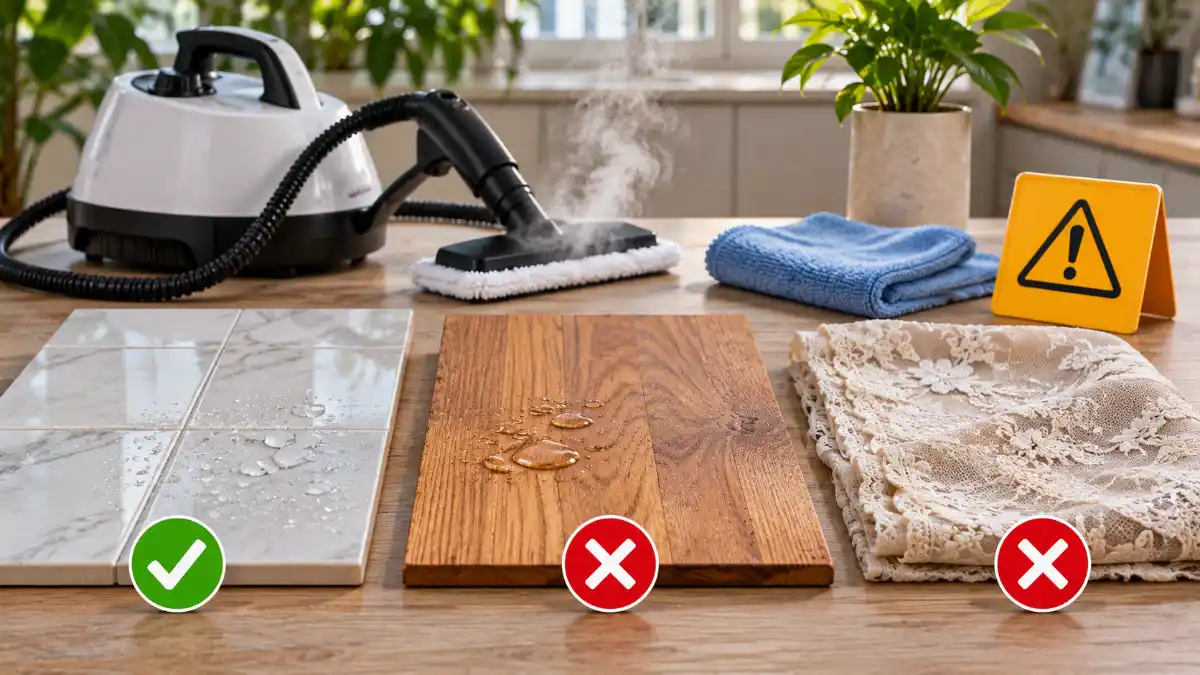
What does steam cleaner do? A steam cleaner heats water until it becomes hot vapor, then uses that vapor to loosen grease, lift dirt, and sanitize many surfaces without harsh chemicals. It works especially well on kitchen buildup, grout lines, appliance crevices, shower tracks, sealed floors, upholstery, and other hard-to-reach areas. However, steam does not remove every surface safely, and you usually need to wipe away the loosened grime afterward.
- Steam breaks down grease and grime in kitchens, bathrooms, and tight spaces.
- High heat can sanitize suitable hard surfaces and reduce some allergens.
- A microfiber cloth still matters because steam loosens dirt rather than removing all residue by itself.
- Unsealed wood, unsealed natural stone, and heat-sensitive materials can suffer damage.
What Does Steam Cleaner Do?
What does steam cleaner do? It turns water into hot vapor that softens greasy buildup, loosens embedded dirt, and helps reduce microorganisms on compatible surfaces. Unlike a conventional spray cleaner, a steam cleaner relies mainly on heat and moisture. The machine still needs correct pressure, an appropriate attachment, and enough dwell time to work effectively.
The strongest results usually appear where dirt has collected in narrow or textured areas. Grout lines, stove edges, range-hood filters, shower tracks, and appliance seams can hold residue that a flat cloth cannot reach. Steam enters those gaps, softens the buildup, and makes the remaining soil easier to wipe away.
Steam cleaning does not mean every surface becomes completely free of germs or allergens. Results depend on the machine, temperature, contact time, surface condition, and cleaning technique. For mold-related concerns, consult the U.S. Environmental Protection Agency’s mold-cleanup guidance instead of treating steam as a complete remediation method.
Where Does Steam Work Best?
Steam cleaners perform best on surfaces that can tolerate heat and limited moisture. Kitchens are a strong example because hot vapor softens cooking grease without leaving the same chemical film associated with some degreasers. A cloth or towel then collects the softened residue.
Kitchen grease and grime
Use a suitable nozzle on stovetops, oven doors, backsplash joints, and range hoods. Move the nozzle steadily rather than holding it in one place. For thick buildup, several short passes work better than one prolonged blast because excessive moisture can spread loosened grease across a wider area.
Grout and narrow gaps
A concentrated nozzle can direct vapor into grout lines, shower tracks, corners, and appliance crevices. The narrow stream helps soften soil in spaces that a sponge often skips. After steaming, wipe the area immediately so suspended dirt does not settle back into the joint.
Fabrics and sealed floors
Some steam cleaners include attachments for carpets, curtains, sofas, and mattresses. Use the lowest suitable moisture setting and avoid saturating fabric. Sealed hard floors can also respond well, but standing water and repeated heat exposure may damage seams, finishes, or adhesive layers.
| Cleaning task | Why steam helps | What to do afterward |
|---|---|---|
| Stovetop grease | Softens oily buildup | Wipe with a microfiber cloth |
| Grout lines | Reaches textured joints | Brush or wipe away loosened soil |
| Shower tracks | Enters narrow channels | Dry the track to limit moisture |
| Sealed floors | Refreshes compatible surfaces | Use light moisture and allow drying |
How Should You Use a Steam Cleaner?
The best steam-cleaning routine separates loosening from removal. Steam does the loosening, while a cloth, towel, or brush removes the residue. Skipping the second step often leaves a dull film, especially on kitchen surfaces where grease mixes with dust.
- Remove loose debris first. Vacuum, sweep, or wipe away crumbs and surface dust before adding moisture.
- Check the surface. Read the appliance and material instructions, then test an inconspicuous area.
- Select the correct attachment. Use a focused nozzle for gaps and a cloth-covered head for broader surfaces.
- Apply short passes. Keep the nozzle moving and avoid prolonged heat on one point.
- Wipe immediately. Use a clean microfiber cloth to collect softened grease and dirt.
- Dry the area. Ventilate the room and remove remaining moisture from tracks, seams, or corners.
Consider a greasy range hood as a simple example. A short steam pass can soften the sticky layer, but the vapor alone does not carry all of that residue away. Wiping the hood with a clean microfiber cloth after each small section prevents the loosened grease from spreading.
For upholstery or a mattress, use less moisture than you would on a tile floor. Work in small areas and allow each section to dry fully. A damp interior can create an unpleasant odor and may harm materials that were never designed for repeated moisture exposure.
What Are the Main Steam Cleaner Limits?
Steam cleaners are useful, but they are not universal cleaning machines. High heat and moisture can harm unsealed wood, unsealed natural stone, delicate finishes, laminate seams, some adhesives, and other heat-sensitive materials. When the material’s care instructions prohibit steam, choose a compatible low-moisture method instead.
Unsealed wood can absorb moisture and develop swelling, staining, or finish damage. Unsealed natural stone may also react poorly to moisture, heat, or pressure. A small hidden-area test is safer than treating an entire floor or countertop without checking the manufacturer’s guidance.
Steam also has practical limits. It loosens dirt, but it does not replace wiping, brushing, or ordinary debris removal. Heavy deposits may require repeated passes, a brush attachment, or a separate cleaner that the surface manufacturer approves.
| Surface or material | Risk to consider | Safer approach |
|---|---|---|
| Unsealed wood | Moisture absorption and finish damage | Follow the floor or furniture maker’s instructions |
| Unsealed natural stone | Heat or moisture may affect the surface | Use a stone-approved cleaning method |
| Delicate upholstery | Water marks, shrinkage, or slow drying | Check the care label and spot-test first |
| Sealed tile | Excess moisture may collect in joints | Use controlled passes and dry afterward |
Sanitizing claims also need context. High heat may kill or reduce bacteria, mold spores, and dust mites on suitable surfaces, but the result is not automatic. Contact time, temperature at the surface, coverage, and contamination level all matter. Steam should not replace professional remediation when a serious mold or contamination problem exists.
Does Steam Replace Chemical Cleaners?
Steam can reduce the need for harsh chemicals on many compatible surfaces, but it does not make every chemical cleaner unnecessary. The vapor loosens soil through heat and moisture, while the cloth removes the residue. Disinfecting requirements, grease thickness, surface type, and manufacturer instructions determine whether an additional product is appropriate.
The main advantage is low chemical residue. This can be helpful on sealed floors, some kitchen surfaces, and selected fabrics. Still, “chemical-free” is an inaccurate description because water itself is a chemical substance; the practical point is that steam cleaning can work with little or no added cleaning formula.
For households managing dust, the machine may refresh mattresses, upholstery, and curtains when the material allows steam. Vacuuming remains important because vapor does not collect dry dust as efficiently as a vacuum. A combined routine is usually more effective than relying on steam alone.
- Choose steam first for grease, grout, tracks, corners, and compatible sealed surfaces.
- Use vacuuming first when dry dust, crumbs, pet hair, or loose debris covers the area.
- Check product guidance when a surface needs a specific disinfectant or stone-safe cleaner.
- Use professional help when contamination, moisture damage, or extensive mold exceeds normal household cleaning.
Reports from Reddit commonly praise steam cleaners for kitchen degreasing, grout work, and tight spots. Those reports can reveal useful real-world patterns, but they remain user opinions rather than controlled testing. Surface instructions and independent safety guidance should carry more weight than a single online recommendation.
Who Should Use a Steam Cleaner?
A steam cleaner suits people who regularly deal with greasy kitchens, textured grout, shower channels, sealed hard floors, or difficult corners. It is also useful when minimizing added chemical residue matters. The best match is a home with compatible surfaces and enough ventilation to dry areas after cleaning.
It may not suit someone with mostly unsealed wood, delicate antiques, heat-sensitive finishes, or materials that cannot tolerate moisture. A machine can also be inconvenient when the main cleaning problem is dry dust, loose debris, or large amounts of absorbent fabric.
Before buying or using one, compare the attachment set with your actual cleaning tasks. A narrow nozzle helps with grout and crevices, while a fabric tool matters more for sofas, curtains, and mattresses. Tank size affects how often you need to refill, but a larger unit may be heavier and harder to store.
Simple decision checklist
- Do you need to remove kitchen grease without heavy chemical residue?
- Will you clean grout, tracks, corners, or appliance seams?
- Are your main floors sealed and approved for steam?
- Does the machine include a microfiber floor head and detail nozzle?
- Can you wipe and dry each area after steaming?
The practical test is straightforward: if the target surface tolerates heat and moisture, and the dirt responds to softening, steam may save effort. If either condition is uncertain, surface-specific instructions should decide the method.
Common Steam-Cleaning Mistakes
The most common mistake is treating steam as a one-step cleaning solution. Users may pass vapor over a dirty surface and leave without wiping. That approach often redistributes grease or allows loosened soil to dry into a thin film.
- Holding the nozzle still: Continuous heat can mark finishes or push moisture into seams.
- Skipping a hidden-area test: Heat-sensitive materials may show damage only after exposure.
- Using too much water: Saturation increases drying time and can affect fabric, wood, or adhesive layers.
- Ignoring ventilation: Humid rooms and slow-drying textiles can develop odors.
- Using a dirty cloth: A saturated towel spreads residue instead of collecting it.
One useful habit is to keep several clean microfiber cloths nearby before starting. Change the cloth when it becomes greasy or visibly dirty. That small step separates the loosening stage from the removal stage and makes the final surface noticeably cleaner.
Steam Cleaner Questions Answered
Can a steam cleaner remove grease?
Yes, hot vapor can soften grease on compatible stovetops, ovens, range hoods, and backsplashes. Wipe the loosened residue immediately with a clean microfiber cloth.
Does steam cleaning sanitize surfaces?
High heat can kill or reduce some bacteria, mold spores, and dust mites on suitable surfaces. Results depend on temperature, contact time, coverage, and the material.
Do you still need to wipe after steaming?
Usually, yes. Steam loosens dirt rather than carrying all of it away, so a microfiber cloth or towel is normally needed to remove the residue.
Can steam cleaners be used on wood floors?
Only when the flooring manufacturer specifically allows it. Unsealed wood can absorb moisture and suffer swelling, staining, or finish damage.
Can steam clean a mattress?
Some mattresses can tolerate controlled steam, but check the care instructions first. Use limited moisture, work in small areas, and let the mattress dry completely.
Is steam cleaning better than chemical cleaning?
Neither method is best for every task. Steam works well for heat-safe grease, grout, and tight spaces, while other surfaces may need an approved specialized cleaner.
Choosing the Right Cleaning Method
What does steam cleaner do best? It loosens stubborn buildup where heat, moisture, and targeted vapor can reach the soil. It is particularly practical for kitchen grease, grout, shower tracks, appliance crevices, sealed floors, and selected fabrics.
The method works best when paired with careful surface checks, controlled passes, clean microfiber cloths, and thorough drying. Before using steam on an unfamiliar material, read its care instructions and test a hidden area. For mold or moisture damage beyond routine cleaning, use official guidance or qualified professional support.
Information check: surface-care instructions, machine capabilities, and sanitation guidance can change by product and material. Verify the latest details with the appliance manufacturer and relevant official sources before use.