Your Trusted Source for Home Fixes & Guides

How to Fix Low Water Pressure and Restore Strong Flow

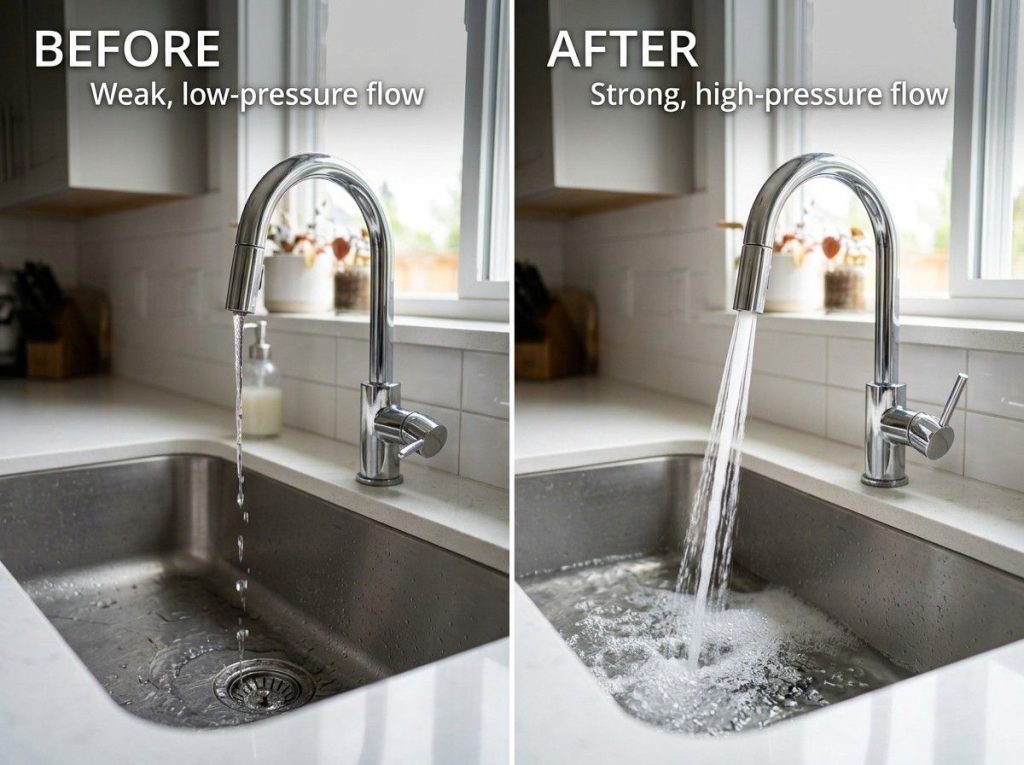
A weak shower stream can turn your morning routine into a chore. Washing dishes shouldn’t feel like a battle against a trickling faucet. Low water pressure is a common problem in many homes, but it often has a simple solution you can tackle yourself. Before you panic or assume your plumbing is failing, you need to understand where the flow is being restricted. Knowing how to fix low water pressure starts with identifying the source, which might be a clogged fixture, a closed valve, or even a system-wide issue from the city.
This guide helps you troubleshoot your plumbing and reclaim the strong water flow you expect. Whether you are dealing with a single sluggish tap or a house-wide drop, you can often find the root cause without hiring an expensive professional.
Identify the Scope of the Problem
The first step in any repair is diagnosis. You cannot fix what you do not understand. You must determine if your water pressure problems are localized to one room or if the entire house is suffering. This distinction is the most important part of your troubleshooting process.
Is It Just One Faucet or the Whole House?
Start by testing different taps throughout your home. Turn on the kitchen faucet, the bathroom sink, and the shower. If the kitchen sink has strong pressure but the bathroom shower is weak, your problem is isolated. This usually means the issue is with the fixture itself or the specific supply line to that room.
If all faucets and showers across the house show weak flow, the issue is likely in your home’s main plumbing system. You might have a problem with the main water shut-off valve, a pressure regulator issue, or a problem originating from the municipal water supply.
Check Multiple Fixtures for Consistent Readings
Do not just rely on one faucet. Test the cold water and hot water at every sink. If the cold water is strong but the hot water is weak, your water heater might be the culprit. Check the toilet fill valve as well. If it takes a long time for the toilet tank to fill, you have confirmed that your home is experiencing a widespread reduction in flow. Testing these different points helps you rule out minor clogs and points you toward a systemic plumbing concern.
Investigate Common Culprits When You Need to Know How to Fix Low Water Pressure
Many times, low pressure stems from small blockages or valves that are not fully open. These are the easiest fixes and require very few tools. Checking these areas first will save you time and frustration.
Inspect Your Main Water Shut-Off Valve
Your home has a main water shut-off valve that controls all incoming water. Sometimes, this valve is not fully open. It might have been turned partially closed during recent plumbing work and forgotten. Locate this valve, which is usually found in the basement, a crawl space, or near the street in a utility box.
If you have a gate valve with a wheel handle, turn it counter-clockwise to ensure it is fully open. If it is a ball valve with a lever handle, the lever should be parallel to the pipe. If it is perpendicular, it is closed or partially closed. Even a quarter-turn can make a difference in your home’s flow.
Examine Faucet Aerators and Showerheads for Clogs
Mineral buildup is the most common reason for low pressure at a single faucet or showerhead. Over time, calcium and other minerals from your water supply accumulate in the small mesh screens at the end of your faucet. This sediment restricts the flow of water.
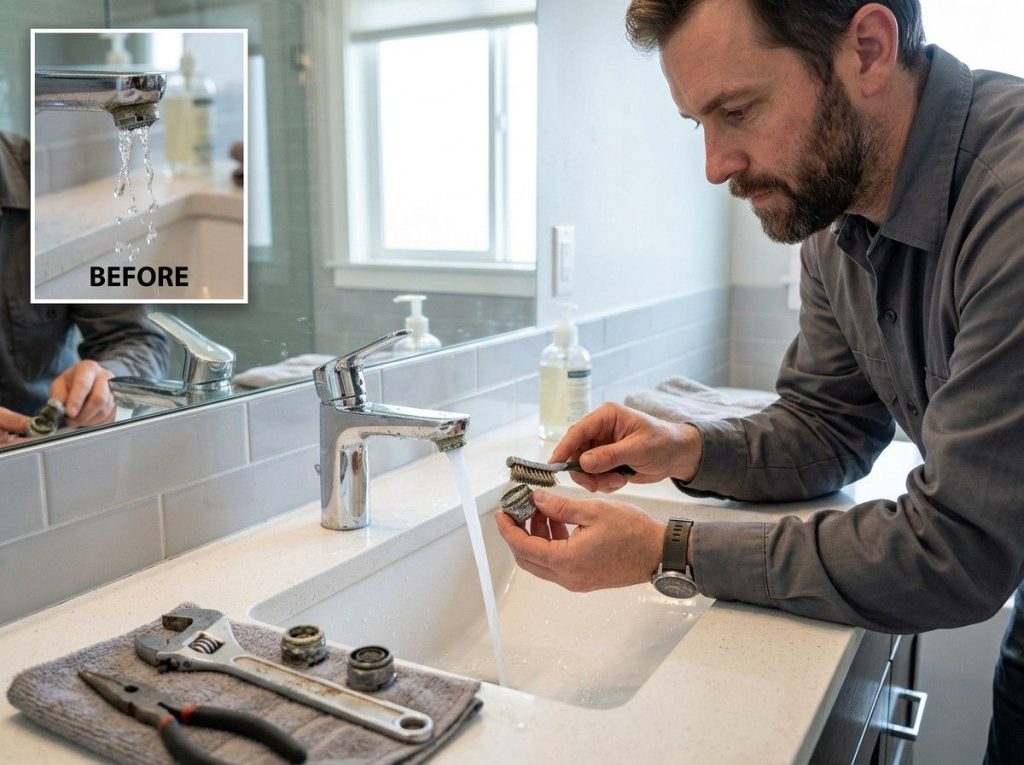
To fix this, unscrew the aerator from the end of the faucet. You can usually do this by hand or with a pair of pliers protected by a cloth to avoid scratching the finish. Once removed, check the screen for debris. You can soak the aerator in white vinegar for a few hours to dissolve mineral deposits. Scrub it with a small brush, rinse it with water, and screw it back on. Do the same for your showerhead if the spray pattern is weak or uneven.
Look for Leaks in Pipes and Fixtures
Hidden leaks can drain your water pressure before it ever reaches your tap. If you have a significant leak, your home’s pressure will drop across the board. Check your water meter. If you turn off all water-using appliances and the meter is still spinning, water is escaping somewhere.
Inspect exposed pipes in the basement or under sinks for damp spots, mold, or pooling water. Even a small, steady drip from a pipe fitting can reduce the pressure available to other fixtures. Repair any leaks immediately to restore full flow and prevent water damage to your home.
Uncover Complex Issues With How to Fix Low Water Pressure
If your simple checks do not reveal the problem, you may be looking at a more technical issue. These situations often involve parts of the plumbing system that regulate the pressure of the incoming water or the status of your hot water supply.
Understand the Role of Pressure Regulators
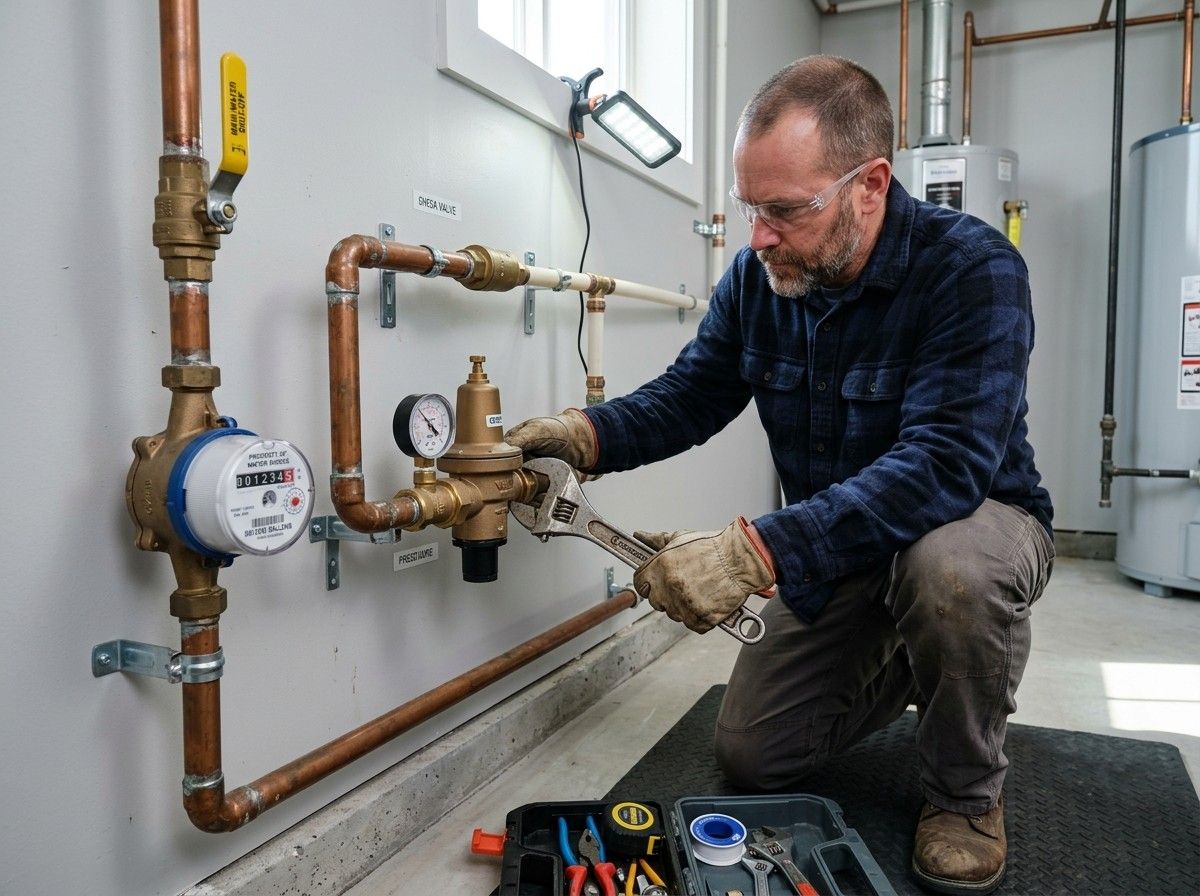
Many homes have a pressure-reducing valve (PRV). This device is typically located on the main water line where it enters your house. Its job is to lower the high pressure from the municipal line to a safe range for your home plumbing, usually between 40 and 60 PSI.
If this valve fails, it can restrict water flow significantly, leading to low pressure throughout the entire house. You might hear a hammering noise in your pipes if the PRV is malfunctioning. Replacing a PRV is often a job for a professional, but identifying it as the source of your problem is a major step forward.
Assess the Condition of Your Water Heater
If you only notice low pressure when using hot water, your water heater is the likely suspect. Over time, sediment builds up at the bottom of the tank. This sediment can block the outlet pipe. Additionally, the dip tube inside the water heater—which sends cold water to the bottom of the tank—can degrade and clog the pipes.
Flushing your water heater once a year can remove sediment and prevent this buildup. If the pressure remains low after a flush, you may need to inspect the internal valves or consider that the heater is reaching the end of its lifespan.
Evaluate Potential Problems with Your Municipal Water Supply
Sometimes, the problem is not in your house at all. Municipal water suppliers occasionally perform maintenance on main lines or experience breaks in the neighborhood. If your neighbors are also noticing low pressure, call your local water department. They can confirm if there is a known issue in your area. This saves you from tearing apart your plumbing when the solution is just a matter of waiting for the city to finish their work.
Boost Your Home’s Water Pressure
Once you have identified the source of your low pressure, you can take steps to improve it. Whether it is removing a blockage or upgrading hardware, you have options to get your water flow back to normal.
Clear Out Blockages in Pipes
If your pipes are old, they might be clogged with corrosion or buildup that cannot be removed by simple cleaning. In these cases, you might need professional intervention. Plumbers can use tools like hydro-jetting to blast debris out of pipes. In extreme cases, where pipes are heavily corroded, you may need to replace sections of the plumbing.
Repair or Replace Faulty Plumbing Components
If a specific fixture is old or broken, replacing it is often more cost-effective than trying to repair it. When shopping for replacements, look for high-quality fixtures. Avoid overly restrictive low-flow models if you are already struggling with pressure, or look for modern designs specifically engineered to maintain a strong feel despite using less water.
Consider Installing a Home Water Pressure Booster Pump
If your home has consistently low pressure due to its location—such as being at the end of a water line or on a hill—a booster pump can help. This device installs on your main water line and increases the pressure mechanically. It is an effective solution for homes that simply do not receive enough force from the municipal supply to meet the demands of modern showers and appliances.
When to Call a Professional Plumber
Not every plumbing issue is a DIY project. Recognizing when you are out of your depth is vital to protecting your home’s infrastructure.
Recognizing When DIY Isn’t Enough
If you suspect the issue involves the main supply line entering your home, or if you need to adjust or replace a PRV, it is best to call a professional. Working on these critical components can cause significant damage if done incorrectly. If you have tried all the simple fixes like cleaning aerators and checking valves, and your pressure is still weak, a professional plumber has the diagnostic tools to pinpoint hidden issues you cannot see.
Finding and Hiring a Qualified Professional
When you decide to hire a plumber, do your research. Ask friends and family for recommendations. Look for licensed professionals with a history of good work in your area. When you get a plumber on the phone, explain exactly what you have already tested. This shows you have done your homework and helps them arrive prepared. Always ask for an estimate before they begin work, and consider getting a second opinion if the proposed repair seems unusually expensive or complex.
Reclaim Your Home’s Powerful Water Flow
Low water pressure is a common headache, but it is rarely a mystery that cannot be solved. By methodically checking your fixtures, inspecting your main shut-off valve, and considering the health of your water heater, you can often restore your home’s water flow yourself.
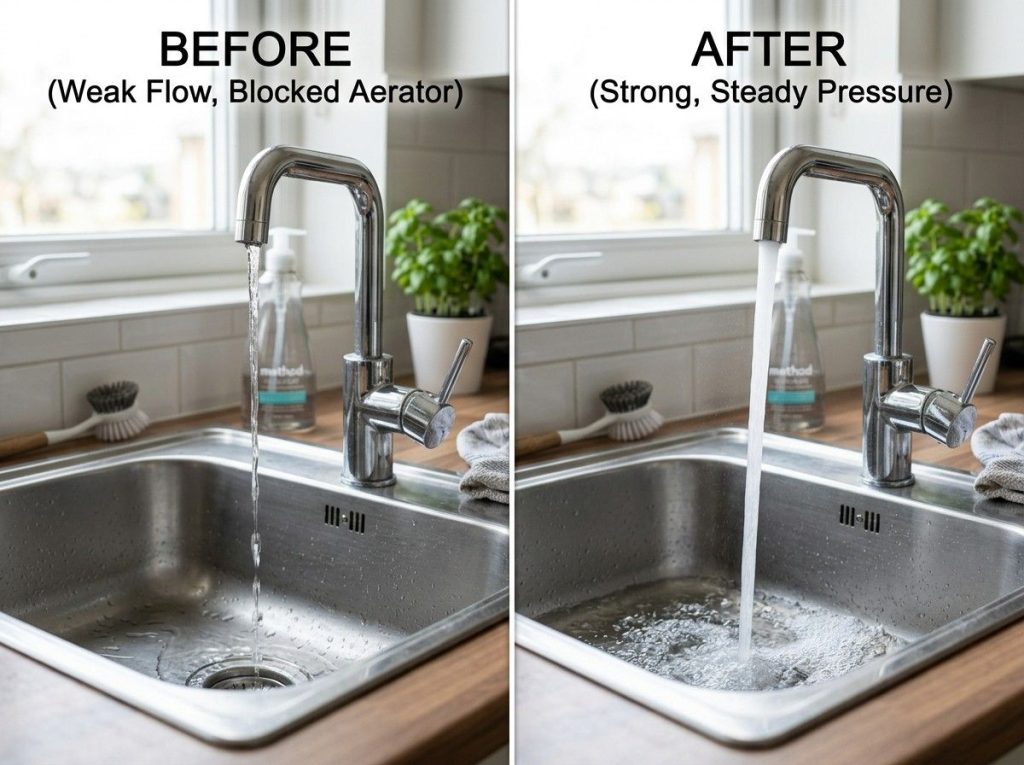
Start with the basics. A simple cleaning of an aerator is often all it takes to turn a trickle into a steady stream. When the problem is more complex, such as a failing pressure regulator or a neighborhood-wide utility issue, you have the knowledge to identify the situation and call in the right help. You do not have to settle for weak showers or slow-filling tubs. Follow these diagnostic steps to fix your water pressure and restore the convenience you deserve in your home.
What are the most common causes of low water pressure?
Low water pressure is often caused by clogged faucet aerators, mineral buildup, leaking pipes, partially closed shut-off valves, faulty pressure regulators, or problems with the municipal water supply.
How can I fix low water pressure myself?
You can start by cleaning faucet aerators and showerheads, checking that the main water valve is fully open, looking for visible leaks, and flushing out any sediment buildup in your plumbing fixtures.
Why is my water pressure low in only one faucet or shower?
If only one fixture has low pressure, the issue is usually a clogged aerator, mineral deposits, or a blockage in that fixture’s supply line rather than a whole-house plumbing problem.
Can a pressure regulator cause low water pressure?
Yes. A malfunctioning water pressure regulator can reduce pressure throughout your home. If all fixtures have weak water flow, the regulator may need adjustment or replacement.
When should I call a plumber for low water pressure?
Contact a plumber if DIY troubleshooting doesn’t solve the problem, if multiple fixtures are affected, if you suspect hidden pipe leaks, or if your water pressure suddenly drops without an obvious cause.
Learning how to fix low water pressure can help you restore strong, reliable water flow and avoid unnecessary plumbing expenses. By identifying the root cause and following the right troubleshooting steps, many pressure issues can be resolved on your own. Regular maintenance and timely repairs will keep your plumbing system working efficiently and ensure a steady water supply throughout your home.