Your Trusted Source for Home Fixes & Guides

How to Remove Soap Scum from Shower Doors: DIY or Cleaner

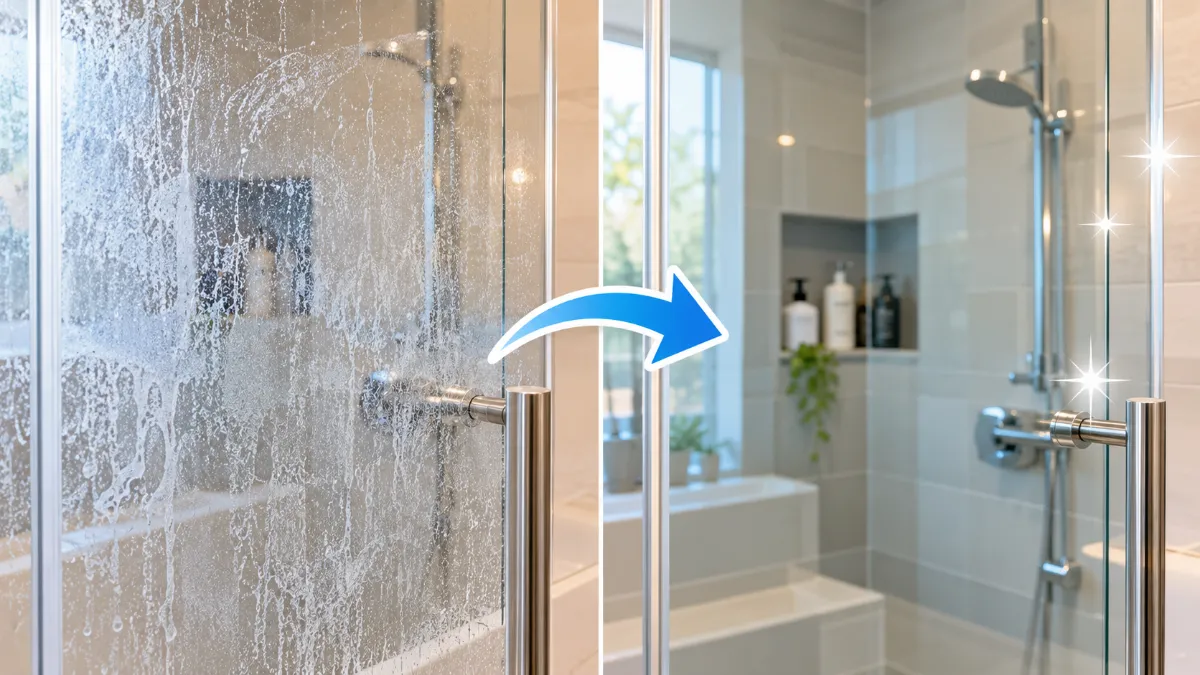
How to remove soap scum from shower doors depends on how thick the buildup is. For most glass doors, spray equal parts white vinegar and warm water with a small amount of dish soap. Then let it sit for 10 to 30 minutes, scrub gently with a non-scratch sponge, rinse well and dry the glass with a squeegee and microfiber cloth.
That simple routine targets both soap residue and mineral deposits. However, a stronger acidic cleaner such as Bar Keepers Friend may suit stubborn marks. Even so, gentle tools still matter because abrasive scrubbing can leave visible scratches on glass.
Quick cleaning plan
- First, mix 1 cup of white vinegar with 1 cup of warm water and about 1 teaspoon of dish soap.
- Next, leave the solution on the glass for 10 to 30 minutes.
- Then, scrub with a non-scratch sponge using circular motions.
- Afterward, rinse with warm water.
- Finally, use a squeegee followed by a clean microfiber cloth.
What You Need
The right supplies make the process faster and reduce the risk of cloudy streaks. A grease-cutting dish soap helps loosen oily bathroom residue. Meanwhile, white vinegar provides the acidic action needed to soften mineral and soap buildup on glass shower doors.
- White vinegar
- Dawn dish soap or a similar grease-cutting dish soap
- Warm water
- A spray bottle
- A non-scratch scrub sponge such as a Scrub Daddy
- A squeegee
- A clean microfiber cloth
Choose a clean spray bottle that has not contained another chemical product. Otherwise, residue from incompatible cleaners can create unpleasant fumes or reduce the performance of the new mixture. Also, check that the sponge is labelled non-scratch before using it on the glass.
How to Remove Soap Scum from Shower Doors
To remove soap scum from shower doors, combine the ingredients in a spray bottle. Next, apply the mixture generously and wait for the buildup to soften. Then scrub gently, rinse away the loosened residue and use a squeegee with a microfiber cloth to leave the glass clear and streak-free.
- Mix the cleaner. First, add 1 cup of white vinegar, 1 cup of warm water and about 1 teaspoon of blue Dawn dish soap to the spray bottle. Equal parts vinegar and water are the key proportions.
- Apply the solution. Spray the mixture liberally over both sides of the shower doors. In particular, cover cloudy areas thoroughly rather than using a light mist.
- Let it sit. Leave the solution on the glass for 10 to 30 minutes. As a result, the acid has more opportunity to loosen mineral deposits and soap residue.
- Scrub carefully. Use a non-scratch sponge or brush. Work in small circular motions and use light pressure, especially around door edges and handles.
- Rinse thoroughly. Wash the glass with warm water until the cleaner and loosened scum are gone. Otherwise, leftover soap can create new streaks.
- Dry and polish. Pull a squeegee down the glass to remove excess water. Finally, use a clean microfiber cloth to buff away remaining moisture.
The waiting period is often the step that makes the biggest difference. A quick spray followed by immediate scrubbing may work on a thin film. However, a 30-minute dwell time is more useful when the doors have a dull, chalky layer.
DIY Mixture or Bar Keepers Friend?
The DIY vinegar mixture is a practical first choice for routine soap scum. However, Bar Keepers Friend can be considered for tougher acidic-cleaning needs, but the product label should always be followed. In addition, test any unfamiliar cleaner on a small area first.
| Option | Best for | Main advantage | Important caution |
|---|---|---|---|
| Vinegar, water and dish soap | Light to moderate soap scum | Uses simple household supplies | Needs contact time on heavy buildup |
| Bar Keepers Friend | More persistent mineral or soap marks | Designed for stronger cleaning action | Follow the label and use a non-scratch method |
For a busy household, the homemade solution is usually easier to prepare and repeat. For example, someone with only 15 minutes before leaving can spray the doors first. Meanwhile, the solution can work while other bathroom tasks are completed.
Bar Keepers Friend may be more appropriate when several cleaning rounds have failed. Still, stronger does not mean rougher. Therefore, avoid aggressive pads and excessive pressure because the glass surface needs chemical softening rather than force.
Which Scrubbing Method Is Safest?
A non-scratch sponge or soft brush is the safest general choice for glass shower doors. Use circular motions with gentle pressure, then rinse completely. In this way, the goal is to lift softened residue without dragging grit across the surface.
Start with the least abrasive tool available. For instance, a Scrub Daddy or another non-scratch sponge can provide enough texture for ordinary buildup. If the surface still feels rough after soaking, apply another round of cleaner rather than pressing harder.
- First, work from the top of the door downward.
- Next, use small circular motions over cloudy sections.
- Also, rinse the sponge regularly so loosened grit does not spread.
- Keep metal tools and harsh scouring pads away from the glass.
- Finally, pay attention to corners where water and soap collect.
One common mistake is scrubbing a dry door. In fact, dry residue can behave like fine grit. Therefore, wetting the surface first and allowing the cleaner to sit gives the buildup time to soften.
How Can You Prevent New Soap Scum?
The easiest prevention step is to use a squeegee after every shower. Removing water before it dries limits the combination of minerals and soap that creates cloudy scale. In addition, a water-repellent coating such as Rain-X may help water bead and slide away.
Daily prevention takes less than a minute for many shower doors. After the final rinse, pull the squeegee from top to bottom. Then leave the door open when practical so trapped moisture can evaporate.
- Squeegee daily: Run the blade down the glass after every shower.
- Keep the blade clean: Rinse it regularly so residue does not transfer back to the door.
- Consider a barrier: A water-repellent coating such as Rain-X can help water bead up and slide off.
- Respond early: Clean a thin film before it becomes a hard, chalky layer.
A coating is not a replacement for cleaning. It may reduce how quickly water clings to the glass, yet regular wiping remains the more dependable habit. Therefore, always follow the coating manufacturer’s directions for application and surface suitability.
Common Mistakes to Avoid
Most poor results come from short contact time, incomplete rinsing or unsuitable tools. Correcting those details often improves the finish without requiring a stronger chemical. In practice, the glass should be wet, softened, gently scrubbed and dried in a deliberate sequence.
- Spraying and wiping immediately: Give the vinegar mixture 10 to 30 minutes to work.
- Using a rough pad: Choose a non-scratch sponge or soft brush instead.
- Skipping the rinse: Cleaner left behind can dry into fresh streaks.
- Leaving the glass wet: Use a squeegee and microfiber cloth after rinsing.
- Ignoring door edges: Soap scum often gathers near seals, handles and lower corners.
Never combine cleaning products unless the labels specifically confirm that combination is safe. For that reason, a simple mixture is easier to control. If a commercial product is chosen, read its directions and use the recommended amount.
Expert Tips for a Clearer Finish
The clearest finish usually comes from technique rather than extra product. Apply enough solution to keep the surface wet, work in sections and rinse before the cleaner dries. Finally, a microfiber pass removes the fine moisture that a squeegee may leave behind.
For a large shower, clean one door at a time. This approach prevents the solution from drying while you work elsewhere. Also, keep a second microfiber cloth nearby if the first becomes damp or picks up residue.
For routine maintenance, a short daily squeegee pass is more efficient than waiting for a thick layer to form. In practical terms, prevention reduces the need for long soaking sessions and repeated scrubbing.
Frequently Asked Questions
What is the best homemade cleaner for shower doors?
Mix equal parts white vinegar and warm water with about 1 teaspoon of dish soap per 2 cups of liquid. Then spray it on the glass and let it sit before scrubbing.
How long should vinegar stay on shower glass?
Leave the mixture on the glass for 10 to 30 minutes. Use the shorter time for light residue, while the longer time suits thicker soap scum or mineral buildup.
Can Dawn dish soap remove soap scum?
Dawn or a similar grease-cutting dish soap helps loosen oily soap residue. When mixed with vinegar and warm water, it supports a more complete cleaning process.
What should I use to scrub glass shower doors?
Use a non-scratch sponge or soft brush. For example, a Scrub Daddy can work well when used gently, while harsh scouring pads and metal tools should be avoided.
How do I stop shower doors from becoming cloudy?
Run a squeegee over the glass after every shower. Additionally, you can consider a water-repellent coating such as Rain-X to help water bead and slide away.
Is Bar Keepers Friend suitable for shower glass?
Bar Keepers Friend is an acidic cleaning option for persistent marks. Follow the product label, test a small area first and use a non-scratch cleaning method.
A Simple Routine That Works
For most glass shower doors, start with the equal-parts vinegar and warm water mixture plus a small amount of dish soap. Give it time to soften the buildup, scrub gently and rinse completely. Finally, the squeegee and microfiber step prevents a clean door from drying streaky.
Use a stronger acidic cleaner only when ordinary buildup remains after careful cleaning. Once the glass is clear, make the squeegee part of the post-shower routine. That small habit helps keep soap scum from becoming a larger cleaning job.