Your Trusted Source for Home Fixes & Guides

How to get rid of black dust in House

How to get rid of black dust in House starts with finding where the particles come from. For example, candle soot, fireplaces, heating appliances, dirty HVAC filters, air vents, and damp-area mould can all leave dark residue. Therefore, stop the likely source first, then clean with damp methods and HEPA filtration so fine particles are not pushed back into the room.
However, black dust is not always ordinary household dust. A greasy film near candles may indicate soot, while powdery residue around windowsills, bathrooms, or air-conditioning units may point to mould or accumulated muck. Therefore, the texture, location, and timing of the dust offer useful clues, but widespread growth or breathing irritation calls for professional help.
- First, stop candles, heaters, or appliances that may be producing soot.
- Next, check HVAC filters, vents, and accessible duct openings.
- Instead, use damp microfiber cleaning instead of dry dusting.
- Also, vacuum carpets and edges with a HEPA-filtered vacuum.
- Finally, arrange professional restoration when mould is extensive or irritating the airways.
How to get rid of black dust in House safely
To get rid of black dust in House safely, first identify whether the residue is soot, airborne HVAC debris, or possible mould before choosing a cleaning method. For instance, soot often feels greasy and gathers near flames or heating equipment. Meanwhile, mould-related residue is more likely near damp surfaces, condensation, bathrooms, windowsills, or air-conditioning units.
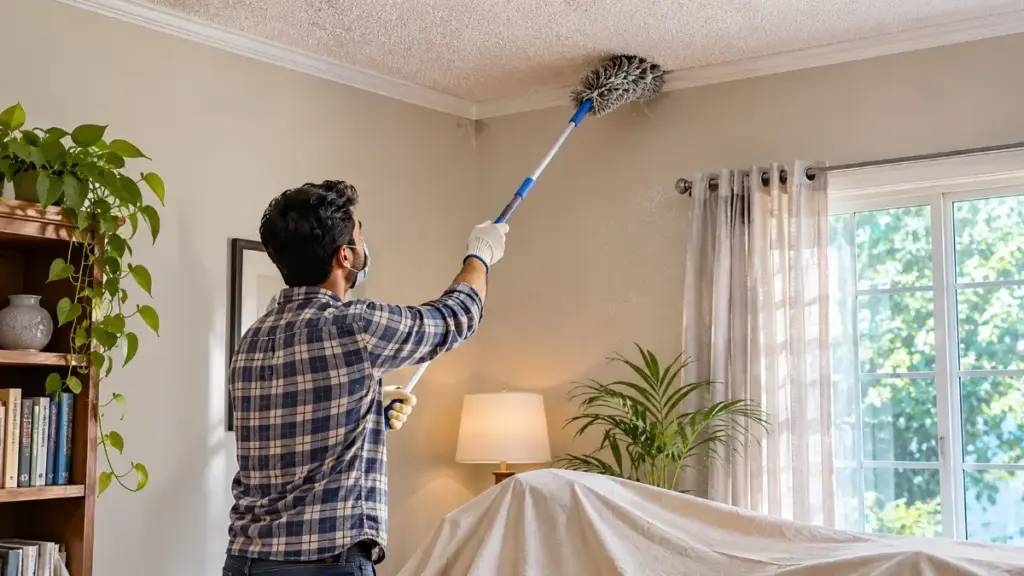
Do not begin by brushing every surface with a dry feather duster. Instead, that approach can send fine particles back into the air and spread them to clean rooms. Therefore, inspect one area at a time, note where the dust is heaviest, and look for a matching source nearby.
What does the dust look and feel like?
A simple observation can narrow the search. For example, a black, oily smear around a candle holder suggests carbon soot. Similarly, dust that repeatedly appears near supply vents may be coming from an HVAC system or dirty filter. In addition, dampness, a musty smell, or recurring dark spots around a cooling unit deserve extra caution because moisture can support mould growth.
People with asthma, allergies, or other respiratory sensitivities should avoid disturbing a questionable area. Therefore, keep children and pets away while the source is being assessed, and improve ventilation without blowing contaminated dust through the home.
Which sources create black household dust?
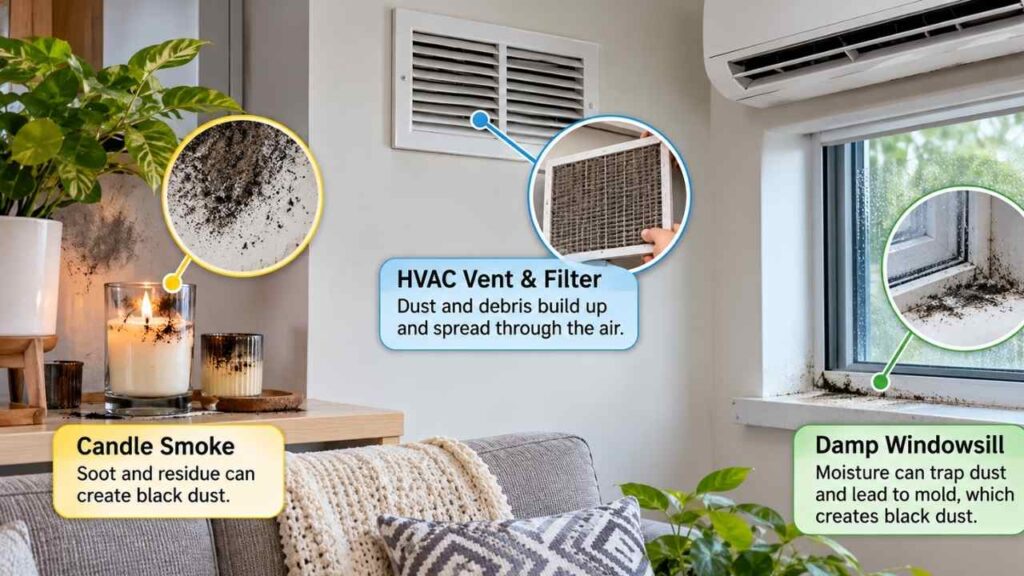
Black household dust commonly comes from combustion, air circulation, or moisture. For example, candles, fireplaces, and kerosene heaters can produce carbon soot, especially when combustion is incomplete or a flame burns unevenly. In addition, HVAC systems can distribute particles when filters are dirty, poorly fitted, or too inefficient for the household’s needs.
Mould or mildew is another possibility, particularly where condensation or leaks persist. However, colour alone cannot confirm mould. Therefore, location and moisture matter more than the shade of a mark, so avoid treating every dark particle as a mould problem without checking the surrounding conditions.
Candles, fireplaces, and heating appliances
Regular paraffin candles can release soot that settles on walls, ceilings, furniture, and nearby fabrics. Likewise, kerosene heaters and fireplaces may also create dark residue. Therefore, stop using the suspected source temporarily, then switch to LED candles or consider soy or beeswax alternatives. Gas and heating appliances should be inspected and serviced by a qualified professional.
A flame that flickers heavily, produces visible smoke, or leaves a dark ring on a nearby surface deserves attention. For that reason, never cover a soot-producing appliance and continue using it as normal. Otherwise, the residue will keep returning until the combustion source is corrected.
HVAC filters, vents, and air ducts
Dirty or low-efficiency filters can allow black particulate matter and greasy residue to circulate through rooms. First, turn off the system before inspecting the filter and vent covers. Then, replace the filter with a compatible high-efficiency or HEPA option where the manufacturer and system design allow it.
Filter fit matters. In particular, a high-efficiency filter that is too restrictive or incorrectly sized may reduce airflow or strain equipment. Therefore, check the appliance manual, filter dimensions, and manufacturer guidance. You can vacuum accessible vent covers carefully, but arrange professional duct cleaning when debris is deep inside the system or returns quickly after a filter change.
Damp rooms and possible mould
Black dust near a bathroom, windowsill, or air-conditioning unit may be linked to mould or mildew, especially when the area feels damp. In some cases, small, isolated surface contamination may respond to an appropriate mould cleaner used exactly as directed. However, do not mix cleaning chemicals, and never assume a stronger product is safer or more effective.
If the affected area is large, keeps returning, or causes coughing, wheezing, or other respiratory irritation, contact a professional restoration company. Most importantly, fixing the moisture source is essential. Cleaning visible residue without addressing condensation, leaks, or poor ventilation often leads to recurrence.
How should black dust be cleaned?
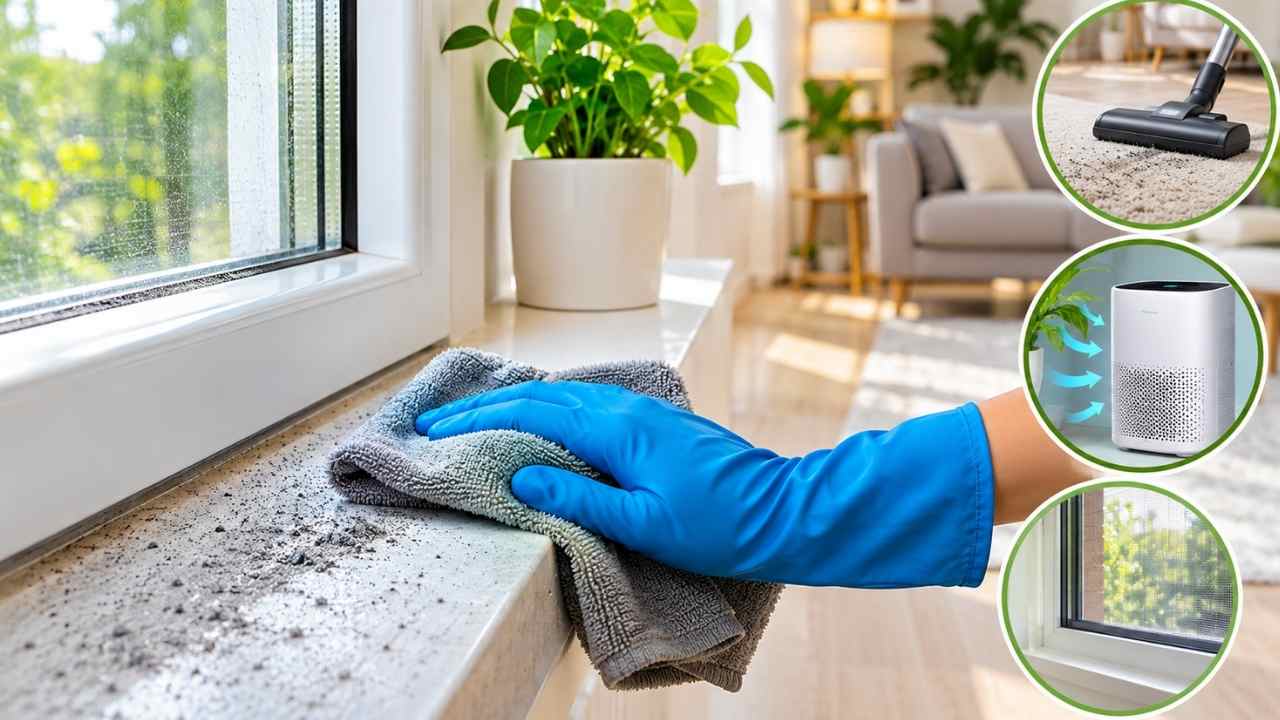
The safest general method is to work from high surfaces downwards with a damp microfiber cloth, then use HEPA vacuuming and damp mopping. As a result, damp cleaning traps soot and fine debris instead of launching it into the air. Wear suitable household gloves, avoid aggressive scrubbing, and test any cleaner on a hidden surface first.
- First, stop the suspected source and allow the room to settle.
- Next, open windows when safe and practical, without creating strong drafts that spread dust.
- Then, wipe ceilings, shelves, frames, and other surfaces from top to bottom.
- For stubborn greasy marks, use water and a few squirts of liquid dish soap.
- Afterward, vacuum carpets, rugs, baseboards, and edges with HEPA filtration.
- Next, damp-mop hard floors after loose debris has been removed.
- Finally, wash fabrics that collected residue, including curtains and bedding.
Why damp dusting works better
Dry dusting can redistribute soot across a room. Instead, a damp microfiber cloth captures more residue and reduces visible airborne movement. For best results, fold the cloth into sections and change to a clean side as it becomes dark. Also, rinse reusable cloths separately from ordinary laundry when the residue is greasy.
For walls or furniture, use diluted soapy water rather than soaking the surface. Otherwise, excess moisture can damage paint, wood, upholstery, or plaster. If a mark remains after gentle cleaning, repeated scrubbing may cause more damage than the original dust, so stop and seek advice for valuable or delicate materials.
HEPA vacuuming and floor care
A vacuum cleaner with HEPA filtration is useful for carpets, rugs, baseboards, and floor edges because it is designed to retain fine particles more effectively than a basic exhaust system. Therefore, move slowly, especially along skirting boards where soot settles. In addition, empty or maintain the vacuum according to its instructions.
Hard floors need a second step. After vacuuming, use a damp mop to collect particles that settled during cleaning. Meanwhile, rinse the mop regularly and avoid sweeping dry soot into the air. This sequence is especially practical in homes where black dust gathers along room edges rather than in thick piles.
How can indoor air stay cleaner?
Cleaner indoor air depends on source control, filtration, and moisture management. For example, an air purifier with a true HEPA filter can continuously capture airborne carbon or mould particles, but it cannot correct a faulty heater, dirty duct, candle source, or leak. Therefore, place the purifier where people spend time and follow the manufacturer’s room-size and maintenance guidance.
Keep the purifier’s intake and outlet unobstructed. Also, replace or clean filters on the stated schedule, because a loaded filter may reduce airflow. For broader indoor-air guidance, consult the U.S. Environmental Protection Agency’s indoor air quality resources.
Fabric, fan, and vent maintenance
Black particles cling to curtains, bedding, lampshades, and fan blades. Therefore, wash curtains and bedding according to their care labels, then clean fan blades with a damp cloth while the fan is switched off. Additionally, covering the blades during cleaning can prevent residue from falling onto freshly cleaned floors.
Check return-air grilles and supply vents regularly. A light layer of dust is normal, but greasy black residue or rapid reappearance suggests that the source needs investigation. In a rented home, record the location and notify the landlord or property manager when the HVAC system or building moisture may be involved.
What mistakes spread black dust?
The most common mistake is cleaning before stopping the source. Consequently, a room may look spotless after wiping, yet soot will return if a candle, fireplace, or faulty heater remains in use. Another error is using a dry duster, which can move particles from shelves to upholstery, bedding, and the breathing zone.
- Using a dry feather duster: Instead, choose a damp microfiber cloth.
- Ignoring the HVAC filter: Check fit, condition, and compatibility with the system.
- Scrubbing mould aggressively: Avoid spreading questionable material and seek professional help when the area is extensive.
- Cleaning without moisture control: Repair leaks, reduce condensation, and improve ventilation.
- Mixing cleaning products: Use one suitable product at a time and follow its label.
- Forgetting fabrics: Wash curtains and bedding because they can hold fine residue.
A useful decision rule is simple: soot near combustion points calls for source control and degreasing; recurring dust from vents calls for HVAC inspection; dark residue near dampness calls for moisture assessment. However, when the signs overlap, prioritise safety and professional evaluation rather than guessing.
When should a professional help?
Professional assistance is sensible when black dust covers a large area, returns soon after careful cleaning, comes from an appliance, or causes respiratory irritation. In addition, restoration specialists can assess moisture damage and contaminated materials. Qualified heating or HVAC technicians can inspect combustion equipment, filters, airflow, and accessible ductwork.
Do not use a household vacuum or dry brush on a large suspected mould area. Similarly, do not keep operating a heater that produces smoke or soot. Instead, the right professional depends on the suspected source: an appliance technician for combustion concerns, an HVAC professional for system-related dust, or a restoration company for extensive moisture or mould contamination.
Frequently asked questions
Is black dust always soot?
No. Instead, it may be soot from candles or heating appliances, HVAC debris, greasy residue, or particles associated with damp-area mould. The location, texture, smell, and recurrence provide better clues than colour alone.
Can candles cause black dust on walls?
Yes. Regular paraffin candles can release carbon soot that settles on nearby walls, ceilings, furniture, and fabrics. Therefore, stop using the candle and consider LED, soy, or beeswax alternatives.
Should I dry-dust black residue?
Usually, dry dusting is a poor choice because it can send fine particles back into the air. Instead, use a damp microfiber cloth and clean from higher surfaces downwards.
Will a HEPA air purifier remove black dust?
A true HEPA purifier can capture airborne fine particles, including some carbon or mould particles. However, it will not remove the source, so filters, appliances, vents, and moisture problems still need attention.
What should I do if black dust comes from air vents?
First, turn off the system, inspect the filter, and replace it with a compatible high-efficiency option if appropriate. Then, clean accessible vent covers and arrange HVAC advice if residue continues.
When is black dust a mould concern?
Concern rises when dark residue appears near dampness, condensation, bathrooms, windowsills, or air-conditioning units. Additionally, extensive coverage or respiratory irritation warrants professional restoration advice.
A cleaner home starts with source control
Removing black dust is most effective when cleaning and prevention happen together. Therefore, stop soot-producing sources, maintain HVAC filters, control moisture, use damp cleaning methods, and capture fine debris with HEPA filtration. If the residue is widespread, recurring, or irritating your breathing, avoid prolonged exposure and contact the appropriate qualified professional.
Information check and update: Filter specifications, appliance guidance, cleaning-product instructions, and professional service recommendations can change. Therefore, verify current details with the appliance manufacturer, HVAC provider, landlord, or relevant public-health authority.