Your Trusted Source for Home Fixes & Guides

How to get cobwebs off of popcorn ceilings

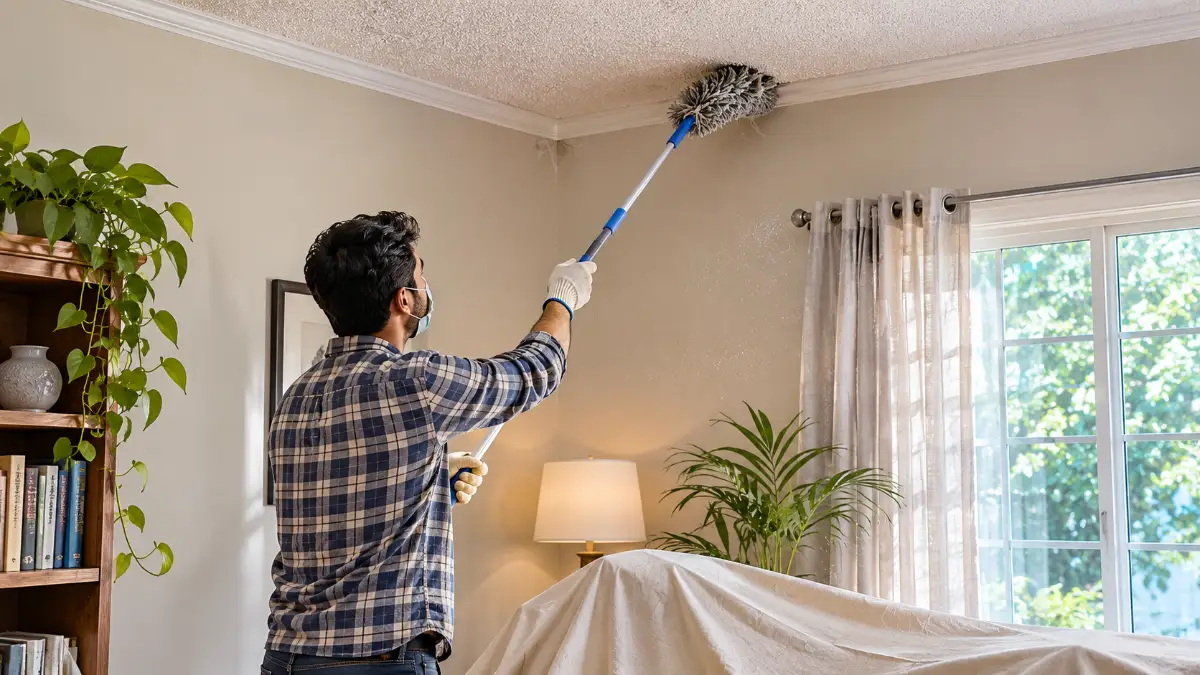
How to get cobwebs off of popcorn ceilings without damaging the texture: use a dry soft-bristle cobweb duster or a vacuum fitted with a soft brush attachment. Move the tool lightly across the surface. Do not press, scrape, sand or use a wet cloth, because popcorn texture can loosen, crumble or break away.
- Cover floors and furniture before cleaning.
- Wear safety glasses and a dust mask.
- Use gentle, dry cleaning tools.
- Test unusual tools in a hidden area first.
How to get cobwebs off of popcorn ceilings safely
How to get cobwebs off of popcorn ceilings safely depends on reducing contact and pressure. The textured coating has a rough, fragile surface that can catch on cloths, brushes or adhesive tools. A soft duster lifts the web away, while a soft vacuum brush can collect loose dust with less rubbing. Work slowly from the corners toward the center so you can see falling debris and avoid dragging webs across the ceiling.
Start by moving small furniture away from the work area. Cover anything that remains underneath with a sheet or drop cloth. Falling dust may include loose ceiling particles, old web material and household debris, so floor protection makes cleanup easier and reduces the need to sweep beneath the ceiling afterward.
Safety equipment matters even during a short cleaning job. Wear safety glasses to protect your eyes from falling dust and use a dust mask to reduce inhalation of airborne particles. If the ceiling has visible damage, water stains or loose sections, stop before brushing the area and arrange a professional assessment.
Check the ceiling before touching it
Older popcorn ceilings may contain asbestos, especially in homes built before the 1980s or 1990s. You cannot confirm its presence by appearance alone. If the age or material history is uncertain, avoid scraping, sanding, aggressive brushing and heavy dislodging. The U.S. Environmental Protection Agency’s asbestos guidance explains why disturbing suspect materials requires care.
Light dusting is different from renovation work, but uncertainty still deserves caution. Do not take samples yourself unless you understand the risks and local requirements. A qualified asbestos professional can explain testing and control options. The safest cleaning method is the one that removes the cobweb while leaving the ceiling texture undisturbed.
Which tool works best on popcorn ceilings?
The best tool for removing cobwebs from a popcorn ceiling is usually a soft-bristle cobweb duster with an extension pole. A vacuum with a soft brush attachment is another strong option when loose dust needs to be collected. Both methods work because they reduce scraping and let you clean corners without placing your body directly beneath the ceiling.
| Tool | Best use | Main caution |
|---|---|---|
| Soft-bristle cobweb duster | High corners and broad ceiling areas | Use light strokes so bristles do not snag the texture |
| Vacuum with soft brush | Dusty webs and controlled debris collection | Keep suction gentle and avoid holding the nozzle against the ceiling |
| Feather duster | Low ceilings and quick touch-ups | Do not scrub or twist the duster into the surface |
| Sticky lint roller | Small, reachable areas | Test first because adhesive may lift the texture |
Soft-bristle cobweb duster
A dome-shaped or flagged-fiber duster works well because its flexible bristles can surround a web instead of pulling directly against the ceiling. Attach the duster to an extension pole, then lightly sweep corners, ceiling edges and textured areas. Lift the tool away after each pass rather than dragging it across the surface.
An extension pole also improves control. You can stand farther from the falling dust and avoid pressing upward with your shoulder or arm. If the duster catches on a rough patch, stop and pull it away gently. Do not force it through the snag, since that movement can remove small pieces of texture.
Vacuum with a soft brush
A vacuum or shop vacuum with a soft brush attachment offers better debris control than a loose feather duster. Fit the brush to a wand extension and glide it near the cobweb. Keep the brush moving, use low suction when possible and leave a small gap if the ceiling texture looks weak or powdery.
Strong suction can pull loose chunks from a damaged popcorn ceiling. For that reason, do not hold the vacuum head tightly against the surface. A gentle pass is usually more useful than repeated cleaning. Empty or check the vacuum afterward so you can see whether the debris contains more than ordinary dust.
Feather duster or lint roller
A feather duster can handle a quick touch-up on a low ceiling, especially when the web is loose and isolated. Use short, gentle sweeps. A sticky lint roller may work on a small reachable patch, but adhesive creates a special risk: it can pull away the popcorn finish along with the web.
Test a lint roller on an inconspicuous spot before using it in a visible area. Press lightly, roll once and inspect the surface. If texture transfers to the roller or the ceiling looks smoother, stop using that method. For most popcorn ceilings, a soft duster remains the lower-risk choice.
What is the safest cleaning process?
The safest process for how to get cobwebs off of popcorn ceilings is simple: protect the room, inspect the surface, choose a dry soft tool and make one light pass at a time. This order matters because preparation prevents repeated contact with the ceiling. It also gives you a chance to notice brittle areas before a tool disturbs them.
- Move furniture away from the cleaning zone or cover it with a sheet.
- Spread a drop cloth across the floor beneath the ceiling.
- Put on safety glasses and a dust mask.
- Inspect for cracks, water damage, powdery texture or loose sections.
- Select a soft-bristle duster or a soft vacuum brush.
- Begin at one corner and use light, controlled strokes.
- Pause after each section to check for fallen texture.
- Collect the drop cloth carefully so dust does not spread through the room.
For a practical example, imagine a cobweb along the junction between a wall and ceiling. Place a drop cloth below it, attach a soft duster to an extension pole and approach from the open side of the corner. Sweep outward once, lift the tool and inspect the area. Repeating that gentle pattern is safer than scrubbing the corner until every strand disappears.
Do not use a wet cloth for routine cobweb removal. Moisture can soften or loosen some ceiling coatings, while rubbing can flatten the raised texture. Avoid stiff brooms, abrasive sponges, scraping tools and powerful air blasts for the same reason. These methods may remove the web, but they can leave a visible damaged patch that is harder to repair.
When should you stop cleaning?
Stop immediately if pieces of texture fall, the ceiling feels damp, the surface becomes powdery or a stain spreads during cleaning. A few loose particles may come from an already damaged area, but continued brushing can enlarge the spot. Photograph the condition from a safe distance and seek appropriate advice before attempting repairs or deeper cleaning.
Stop also when the ceiling’s material history is unknown and the work would require aggressive disturbance. Cobweb removal should not turn into scraping, sanding or surface testing. If the job needs those actions, it has moved beyond ordinary household dusting and may require professional handling.
What mistakes damage popcorn texture?
The most common mistake is treating a popcorn ceiling like a smooth painted ceiling. Smooth surfaces can tolerate more wiping, but raised texture catches on tools and may detach under pressure. How to get cobwebs off of popcorn ceilings is therefore less about force and more about choosing a tool that lifts webs without pulling at the coating.
- Using a wet cloth: Moisture and rubbing can weaken the finish.
- Pressing a vacuum head against the ceiling: Suction may remove loose pieces.
- Using a stiff broom: Rigid bristles can snag the texture.
- Scraping visible webs: Scraping can create a larger damaged patch.
- Skipping the hidden test: Adhesive rollers may lift texture unexpectedly.
- Working without floor protection: Dust and debris can spread through the room.
Another mistake is trying to remove every mark in one pass. A faint strand left in a fragile corner is less serious than a patch of missing texture. Make one gentle attempt, inspect the result and decide whether further cleaning is worth the risk. This approach is especially sensible when the ceiling is old, stained or already uneven.
Community cleaning discussions commonly favor soft-bristle cobweb dusters, brush-equipped vacuums and extendable dusters for popcorn ceilings. Similar advice appears in cleaning groups that recommend gentle vacuuming, high dusters and clean dry rollers. These reports are practical observations rather than a guarantee for every ceiling, so the surface test remains important.
Which method should you choose?
Choose the soft-bristle duster when the main problem is a web in a high corner. Choose a vacuum brush when loose dust must be contained or when the web is mixed with visible debris. Use a feather duster for a quick touch-up on a low ceiling. Treat a sticky lint roller as a limited option, not a default tool.
- High ceiling: Use a soft-bristle cobweb duster with an extension pole.
- Dusty or bulky web: Use a soft vacuum brush with gentle suction.
- Low ceiling: Try a feather duster with light strokes.
- Small reachable patch: Test a lint roller on a hidden area first.
- Damaged or uncertain material: Stop and seek professional guidance.
The tool should match the condition, not just the height of the ceiling. A vacuum may be convenient, but strong suction is unsuitable for loose texture. A duster may be gentle, but it will not collect every particle. Matching the method to the surface is what reduces repeat passes and limits accidental damage.
Questions about popcorn ceiling cobwebs
Can I use a regular broom on a popcorn ceiling?
A regular broom is usually too stiff for popcorn texture. Its bristles can snag raised material, so choose a soft cobweb duster or a soft brush attachment instead.
Is a vacuum safe for popcorn ceilings?
A vacuum can be safe when fitted with a soft brush and used gently. Keep suction low when possible, avoid pressing the brush against the ceiling and stop if texture begins to fall.
Should I use water to remove ceiling cobwebs?
No. A wet cloth can loosen fragile texture and may spread dust into a paste. Dry cleaning tools are generally the safer choice for ordinary cobweb removal.
How can I clean an older popcorn ceiling?
Work very gently and avoid scraping, sanding or heavy brushing. If the home is older or the material history is unclear, check asbestos guidance before disturbing the ceiling.
What if a lint roller removes the texture?
Stop using it immediately. Adhesive can lift the popcorn finish, so switch to a soft duster and avoid further contact with the affected area.
Keep the ceiling intact
The safest way to remove cobwebs from a popcorn ceiling is to use the least aggressive method that solves the problem. Protect the room, wear basic eye and dust protection, inspect the surface and use a soft dry tool with minimal pressure. If the texture is damaged or its composition is uncertain, pause instead of forcing the cleanup.
Check current product instructions and official asbestos guidance before working on an older or damaged ceiling. Information to verify includes the ceiling’s material history, local safety requirements and any professional testing recommendations.