Your Trusted Source for Home Fixes & Guides

How to Clean Corduroy Couch: Easy Steps for Spotless Results

Keeping a corduroy couch looking its best can seem like a challenge, especially if you live with kids, pets, or simply love to lounge. How to Clean Corduroy Couch is an important skill because corduroy’s soft, ribbed texture can quickly collect dirt, dust, pet hair, and stains. Whether you’re dealing with coffee spills or everyday buildup, this guide explains practical cleaning methods and care tips to help keep your corduroy couch fresh, clean, and inviting for years.
I’ve cleaned dozens of corduroy couches for clients and my own home. Each time, I see the same mistakes: people scrub too hard, use the wrong products, or ignore regular maintenance. In this guide, I’ll walk you through a proven, step-by-step process to clean your corduroy couch safely, efficiently, and thoroughly. I’ll also share tips that even experienced homeowners sometimes overlook, plus a real-life case study to show how these methods work.
Understanding Corduroy Fabric
Corduroy isn’t just any fabric—it has a unique structure that needs special care. Corduroy is made of twisted fibers that form distinctive ridges, or “wales.” These wales can range from thick to fine, depending on the style. The texture is what makes corduroy cozy and appealing, but it also means crumbs and dust get trapped easily.
Corduroy can be made from cotton, polyester, or blends. Most modern couches use a cotton-poly mix for durability. Before cleaning, check your couch’s care tag—usually found under the cushions or on the frame. This tag will show codes like W, S, SW, or X, telling you what types of cleaners are safe:
| Code | Cleaning Method | What It Means |
|---|---|---|
| W | Water-based cleaner | Safe to use water or mild soap |
| S | Solvent-based cleaner | Use dry cleaning solvents only |
| SW or WS | Water or solvent | Both water-based and solvent cleaners allowed |
| X | Vacuum only | Professional cleaning required |
If your tag says “X,” don’t risk home cleaning—call a professional upholstery cleaner.
Essential Tools And Supplies
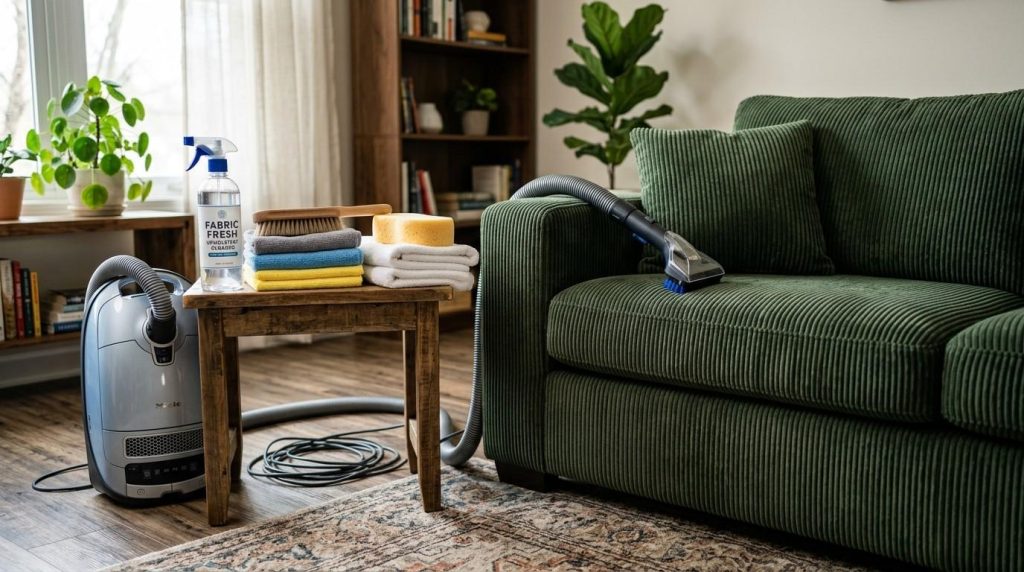
Cleaning a corduroy couch doesn’t require fancy equipment, but using the right tools makes all the difference. Here’s what I recommend:
- Vacuum cleaner with upholstery brush and crevice tool
- Lint roller or sticky tape (for pet hair)
- Soft-bristle brush (a clean toothbrush works too)
- Microfiber cloths (avoid colored ones that may bleed)
- Bowl of lukewarm water
- Mild liquid soap (no bleach or harsh detergents)
- White vinegar (for odors and tough stains)
- Rubbing alcohol (for solvent-safe fabrics)
- Spray bottle
- Dry towels
- Rubber gloves (for sensitive skin)
- Optional: Fabric protector spray
Avoid colored sponges, rough brushes, or anything that could snag the fabric.
Preparing To Clean: Safety And Setup
Before you start, take some simple precautions:
- Test any cleaner (even water) on a hidden spot first. Wait 15 minutes to check for fading or damage.
- Move the couch away from walls and cover the floor with towels or a drop cloth.
- Open windows for ventilation if using any cleaning solution.
- Remove cushions and pillows if possible. This lets you reach every spot.
Don’t skip the test patch—it’s your insurance against permanent stains or discoloration.
Step-by-step: Routine Cleaning
Routine cleaning keeps your corduroy couch from looking dingy. Here’s the method I use every month for my own sofa.
1. Vacuum Thoroughly
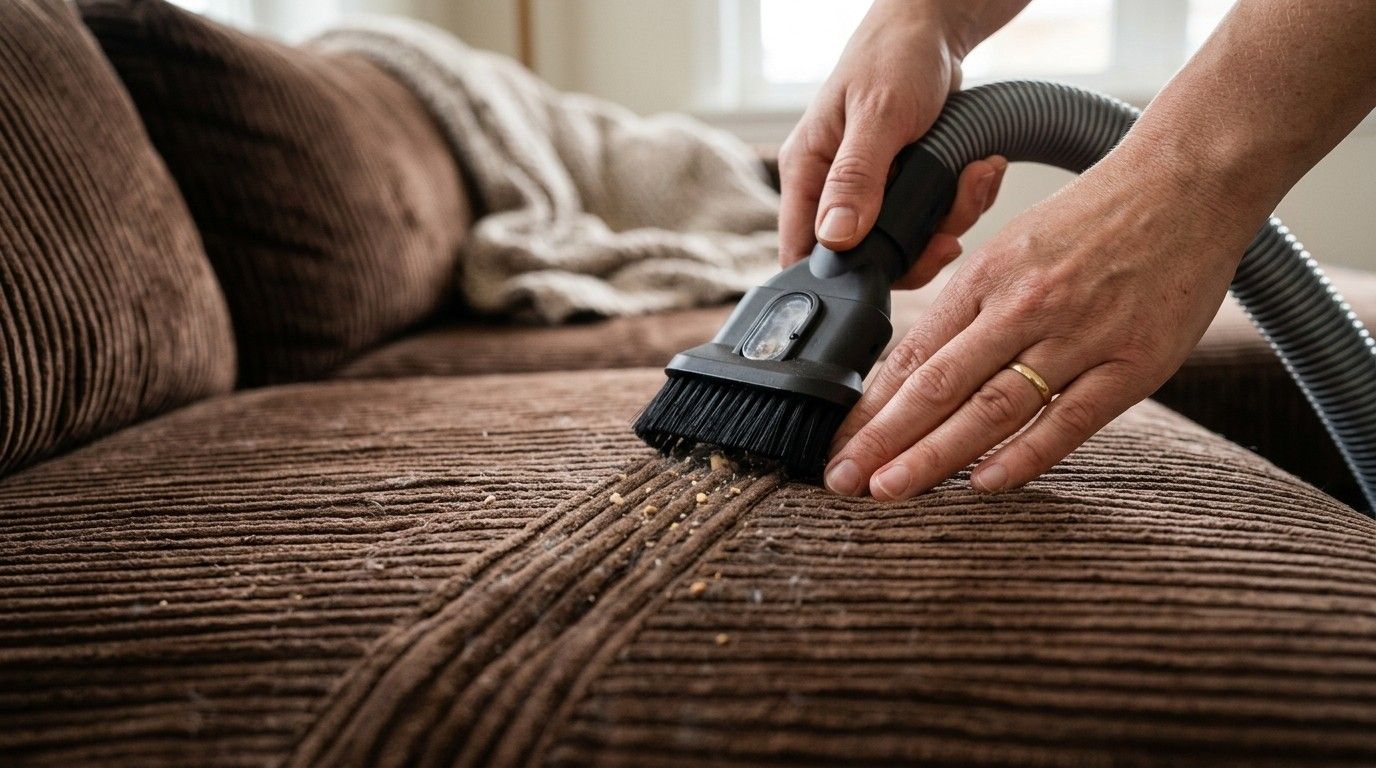
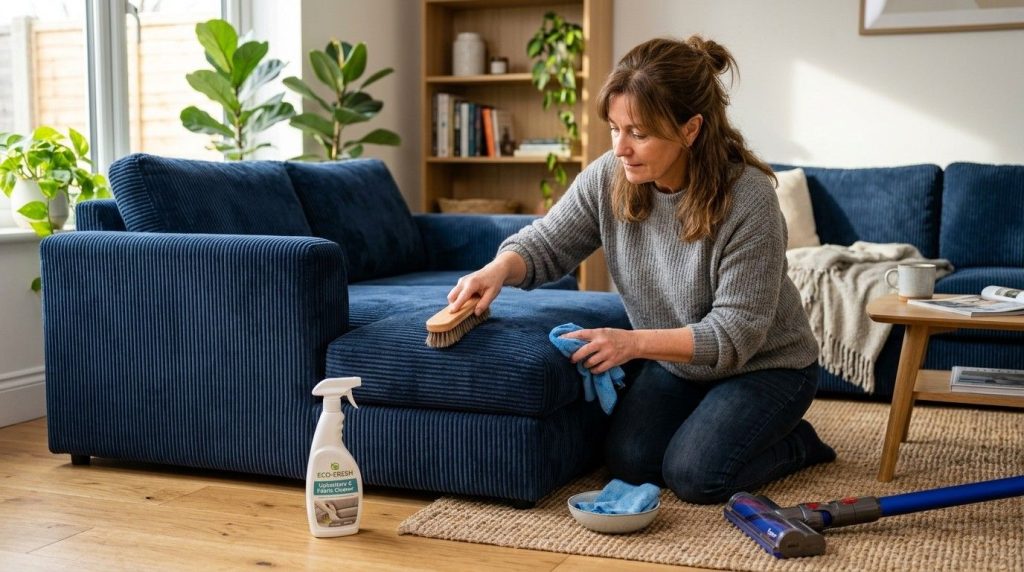
Vacuuming is the most important step. Corduroy holds onto dust, hair, and crumbs deep in the wales. Use your vacuum’s upholstery brush to gently go over every surface—seat, back, arms, and sides. Run the crevice tool along seams and between cushions.
Go with the nap (the direction the ridges run). This helps pull out debris without crushing the fabric.
2. Remove Pet Hair And Lint
Pet owners know hair gets stuck in corduroy like Velcro. Lint rollers, sticky tape, or a slightly dampened rubber glove work well. Press and lift—don’t rub.
For stubborn spots, a soft-bristle brush can help, but always brush in the direction of the fabric’s nap.
3. Spot Clean Stains
Don’t wait for stains to set. Use a clean, white cloth to blot (not rub) up as much as you can. For water-safe fabric:
- Mix a few drops of mild soap in a bowl of lukewarm water.
- Dip a cloth, wring out extra water, and gently dab the stain.
- Rinse with another damp cloth and blot dry.
For solvent-safe fabric, lightly spray rubbing alcohol on the spot, dab with a cloth, and let air dry.
If you’re unsure, stick with plain water first. Some stain removers can bleach or darken corduroy if used incorrectly.
Deep Cleaning Your Corduroy Couch
Every 3–6 months, or after spills, a deeper clean will revive your couch and keep it looking like new.
1. Mix Your Cleaning Solution
For water-safe corduroy, mix:
- 2 cups lukewarm water
- 1 teaspoon mild liquid soap
If odors are a problem, add a splash of white vinegar.
Put the solution in a spray bottle or use a clean cloth to apply.
2. Clean Small Sections
Spray a light mist on a small section (never soak the fabric). Use a microfiber cloth to gently wipe, always following the nap. Work from one end to the other, overlapping slightly to avoid streaks.
3. Rinse And Dry
Wipe with a clean, damp cloth to remove any soap residue. Blot with dry towels. Open windows or use a fan to speed up drying. Never use heat—corduroy can shrink or warp if it dries too quickly.
4. Fluff The Fabric
Once dry, brush the fabric gently with a soft-bristle brush. This lifts the nap, making your couch look plush again.

When To Call A Professional
If your couch has a care tag marked “X,” is antique, or the stains won’t come out, contact a certified upholstery cleaner. Some stains—like ink, red wine, or oil—can set permanently if not treated correctly. Professional cleaners have the right solvents and tools for delicate fabrics.
Removing Common Stains From Corduroy
Different stains need different strategies. Here’s how to handle the most common ones:
| Stain Type | Cleaning Method | Extra Tips |
|---|---|---|
| Food & Drink | Blot, mild soap and water | Act fast for best results |
| Ink | Rubbing alcohol dab | Test first, don’t rub |
| Pet Urine | White vinegar solution | Neutralizes odor and bacteria |
| Grease | Cornstarch, then vacuum | Let sit 20 min before vacuuming |
| Red Wine | Club soda, blot, repeat | Don’t use hot water |
The trick is to blot, not scrub. Rubbing can force stains deeper into the ridges. For tough stains, repeat the process or consult a pro.
Preventing Damage And Wear
Corduroy is durable, but certain habits will keep it looking new longer:
- Rotate cushions every month to distribute wear.
- Don’t sit in the same spot every time.
- Keep the couch out of direct sunlight to prevent fading.
- Use armrest covers if possible.
- Clean spills immediately—corduroy stains quickly if left untreated.
- Apply a fabric protector spray after cleaning (test first).
Never use bleach, ammonia, or abrasive cleaners. These can discolor or weaken the fabric.
Case Study: Real-life Corduroy Couch Rescue
In one recent job, I was called to a client’s house in Seattle. Their golden-brown corduroy couch had survived three kids, a Labrador, and an accidental smoothie spill. The fabric looked dull, with dark patches and flattened ridges.
Here’s what worked:
- First, I vacuumed thoroughly using a brush attachment, making several passes in the direction of the nap. The vacuum pulled out a shocking amount of dust and pet hair.
- Next, I spot-treated the smoothie stain with mild soap and lukewarm water, blotting gently until the color faded.
- For pet odor, I lightly sprayed a mix of water and white vinegar, then blotted dry.
- I cleaned the entire couch in small sections, making sure not to soak the fabric.
- After air drying, I brushed the nap using a clean, soft-bristle brush. The fabric’s original luster returned, and the client was amazed at the transformation.
Key lesson: Patience and the right technique saved the couch from needing expensive professional cleaning. The client now sticks to a simple monthly vacuuming routine and treats stains immediately.
Common Mistakes To Avoid
Even experienced homeowners sometimes make these errors:
- Scrubbing stains: This damages the nap and drives stains deeper.
- Using too much water: Over-wetting can cause mildew or shrinkage.
- Skipping the test patch: Always check new cleaners on a hidden spot.
- Not rinsing soap: Leftover soap attracts dirt and leaves marks.
- Using colored towels: These can bleed dye onto your couch.
- Forgetting to dry properly: Always let the couch dry completely before using.
- Applying heat: Never use a hair dryer or heater.
Taking shortcuts often leads to bigger problems. If you’re unsure, ask a pro.
How Corduroy Compares To Other Couch Fabrics
Wondering how corduroy stacks up for cleaning and durability? Here’s a quick comparison:
| Fabric | Cleaning Difficulty | Durability | Pet Hair Resistance |
|---|---|---|---|
| Corduroy | Medium | High | Low |
| Microfiber | Easy | High | Medium |
| Velvet | Hard | Medium | Low |
| Leather | Easy | Very high | High |
| Linen | Hard | Medium | Medium |
Corduroy is a great choice for comfort and durability, but it does require a bit more care than microfiber or leather—especially if you have pets.
Special Tips For Pet Owners
Pets add joy to life, but they also add hair and sometimes messes. Here’s how to keep your corduroy couch pet-friendly:
- Use a pet-friendly throw blanket on favorite spots and wash it weekly.
- Keep your pet’s nails trimmed to prevent snags.
- Brush your pets regularly—less hair on them means less on your couch.
- Treat accidents immediately with a white vinegar solution to prevent odors.
- Consider a handheld vacuum for quick touch-ups.
Even the best-trained pets have accidents. Having supplies on hand—like a lint roller and enzyme cleaner—makes cleanup less stressful.
When To Replace Or Reupholster
No couch lasts forever. If your corduroy sofa has:
- Deep stains that won’t budge
- Torn or worn-down fabric
- Persistent smells despite cleaning
- Broken springs or sagging cushions
…it may be time to call a professional reupholsterer or consider replacing the couch. In some cases, a slipcover can give you extra years of use.
Eco-friendly Cleaning Options
More homeowners want to avoid harsh chemicals. Here are safe, effective alternatives:
- Baking soda: Sprinkle on cushions, wait 20 minutes, then vacuum to freshen and deodorize.
- White vinegar: Mix with water for a gentle, natural cleaner.
- Castile soap: Works well for spot-cleaning.
Always test on a hidden spot and use sparingly. Many eco-friendly cleaners work as well as store-bought options, with less impact on indoor air quality.
Frequently Asked Questions
How Often Should I Clean My Corduroy Couch?
Routine vacuuming should happen every week, with deeper cleaning every 3–6 months. Spot clean spills as soon as they occur. High-traffic homes or pet owners may need to clean more often.
What’s The Best Way To Remove Pet Hair From Corduroy?
A lint roller, sticky tape, or a dampened rubber glove works best. Brush gently in the direction of the nap. For heavy shedding, a vacuum with a pet hair attachment can help.
Can I Use A Steam Cleaner On Corduroy?
Usually, no. Most corduroy fabrics aren’t designed for steam cleaning, which can flatten the wales and cause shrinkage. Check your care tag and, if in doubt, ask a professional.
How Do I Keep My Corduroy Couch From Fading?
Keep it out of direct sunlight, rotate cushions, and use armrest covers. After cleaning, you can apply a fabric protector spray (test first) to help preserve color.
Where Can I Find More Information On Fabric Care?
The American Cleaning Institute offers guidelines for upholstery care. For more details, see their official advice.
A corduroy couch brings warmth and texture to any room, but it does need the right care. With these tips, you can keep your sofa looking great and feeling comfortable for years. Remember—regular maintenance is easier than fixing big problems later.
If you ever feel in over your head, don’t hesitate to call in a pro. Your living room (and your couch) will thank you.