Your Trusted Source for Home Fixes & Guides


How to Clean Prefinished Hardwood Floors for Lasting Shine

How to Clean Prefinished Hardwood Floors is essential for preserving their beauty, durability, and long-term value. If you’re wondering how to clean prefinished hardwood floors, using the right cleaning methods and products will help protect the factory-applied finish while preventing scratches, dullness, and moisture damage. This guide covers simple daily care, deep-cleaning techniques, and expert maintenance tips to keep your floors looking like new for years.

What Makes Prefinished Hardwood Different?
Understanding what sets prefinished hardwood apart helps you care for it properly. Unlike site-finished floors (which are sanded and sealed after installation), prefinished planks come with a hard, factory-applied finish. This finish is often made of aluminum oxide or ceramic compounds, making it tougher and more resistant to scratches than site-applied polyurethane. You’ll notice the edges of each plank are beveled or micro-beveled, which means there are tiny grooves between boards. These grooves can trap dust and debris if not cleaned regularly.
Because the finish is applied in a controlled environment, it’s more uniform and durable. However, the top layer is thinner than you might expect, so aggressive cleaning or sanding can quickly wear it away. Manufacturers often warn that using the wrong products or too much water can void your warranty or cause permanent damage.
Tools And Supplies: What You Really Need
The right tools make all the difference when cleaning prefinished hardwood. Here’s a quick look at what works—and what to avoid.
| Recommended Tools | Why They’re Good |
|---|---|
| Microfiber dust mop | Traps dust without scratching |
| Vacuum (with hardwood setting) | Picks up debris from grooves |
| Damp mop | Cleans without soaking wood |
| pH-neutral hardwood cleaner | Safe for factory finishes |
Avoid brooms with stiff bristles—they can scratch the finish. Steam mops are a common mistake: their high heat and moisture can warp boards and damage the finish. Also, skip waxes, oil soaps, and ammonia-based cleaners, which can leave residue or dull the shine.
Daily And Weekly Cleaning Routines
Daily: Keep Dust At Bay
Dust, grit, and pet hair act like sandpaper on your floors. The best way to prevent scratches is to remove debris frequently.
- Use a microfiber dust mop every day, especially in high-traffic areas like entryways or kitchens.
- If you prefer a vacuum, choose one with a “hard floor” setting that turns off the beater bar. Standard vacuums can scratch wood if the rotating brush is left on.
- Clean under furniture and along baseboards, where grit collects.
Weekly: Go Deeper
Once a week, go beyond dusting.
- Vacuum with the right attachment to get into grooves and corners.
- Lightly dampen a microfiber mop with a pH-neutral hardwood floor cleaner. Never soak the mop; wring out excess liquid until it’s just barely damp.
- Mop in the direction of the wood grain. This helps pick up debris from the beveled edges.
Pro tip: Always dry the floor with a clean towel or dry mop if you see any moisture left behind.
Safe Spot Cleaning: Spills, Stains, And Pet Accidents
Spills happen—what matters is how quickly you react. Water, juice, and pet urine can damage both the wood and the finish if left too long.
- Blot spills immediately with a clean, absorbent cloth.
- For sticky spots (like food or drinks), use a slightly damp microfiber cloth with a bit of pH-neutral cleaner.
- Avoid scrubbing with abrasive pads.
Dealing With Common Stains
Some stains need special attention:
- Grease or oil: Sprinkle a little baking soda on the spot. Let it sit for a few minutes, then wipe with a damp cloth.
- Pet accidents: Wipe up as soon as possible. Use a cleaner made for pet stains that is safe for hardwood floors.
- Scuffs: A dry tennis ball or soft eraser can sometimes rub out black marks.
Never use harsh chemicals like bleach or vinegar. They can break down the finish and leave dull spots.
Deep Cleaning: When And How To Do It
Even with regular care, grime builds up over time. A deep clean every 1-2 months helps restore shine and hygiene.
Steps For Deep Cleaning
- Remove all furniture and rugs from the room.
- Sweep or vacuum thoroughly, including corners and under baseboards.
- Mix a small amount of pH-neutral hardwood cleaner with water, following the label instructions.
- Dampen a microfiber mop—never use a soaking-wet mop.
- Mop with the grain, working in small sections.
- Immediately dry each section with a clean towel.
For stubborn spots, apply the cleaner directly to a cloth rather than the floor. Repeat as needed.
What About Steam Mops?
Many manufacturers warn against using steam mops on prefinished hardwood. The heat and moisture can cause warping, delamination, and cloudy finishes. Always check your floor’s warranty and manufacturer guidelines.
Protecting Your Floor: Preventive Tips
Keeping your prefinished hardwood looking new is just as much about prevention as cleaning.
- Place floor mats at entryways to catch dirt and moisture.
- Use felt pads under furniture legs to prevent scratches.
- Avoid walking on floors with high heels or cleats.
- Keep pet nails trimmed to reduce scratching.
- Use area rugs in high-traffic zones, but avoid rubber-backed mats—they can trap moisture.
Extra insight: Changing your HVAC filters regularly reduces airborne dust, which can settle on floors.

Common Mistakes (and How To Avoid Them)
Even well-meaning homeowners make mistakes that lead to dull or damaged floors.
- Using too much water: Excess moisture can seep into seams and cause swelling.
- Cleaning with vinegar or ammonia: These can dull or etch the finish.
- Using wax or oil soap: They leave residues that attract dirt and make future refinishing harder.
- Letting spills sit: Moisture can stain or warp the wood if not wiped up promptly.
If you’re unsure about a product, test it in a hidden area or contact the floor manufacturer.
Case Study: Real-world Results From A Busy Family Home
Let’s look at the Johnson family, who installed prefinished hardwood throughout their first floor. With two kids and a dog, their home sees heavy use. At first, they used a steam mop and generic floor cleaner. After a year, the finish became dull and cloudy, especially near the kitchen and entryway.
They also noticed small scratches where grit had built up.
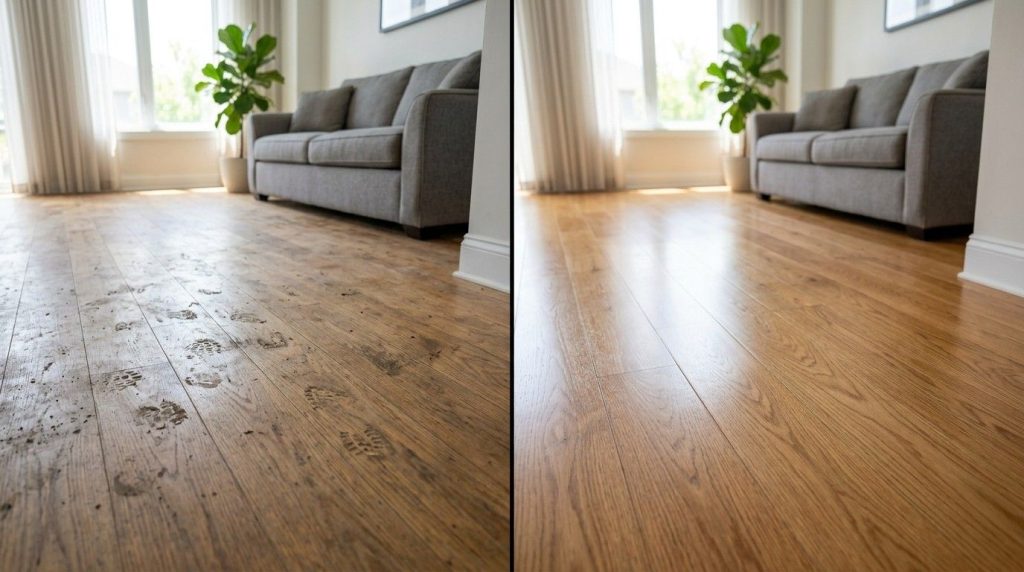
After consulting with a flooring pro, they switched to a daily dust mop routine and a weekly damp mop with a pH-neutral cleaner. They added mats at every entrance and used felt pads under furniture. Within a few months, the shine returned, and new scratches were rare. The most dramatic change: the finish near the kitchen no longer looked gray or cloudy. Their experience shows how a few simple changes can protect your investment for years.
The Science Of Safe Cleaners: What Works, What Doesn’t
Many products claim to be safe for hardwood, but not all are created equal. Let’s break down the most common types.
| Cleaner Type | Safe for Prefinished Hardwood? | Notes |
|---|---|---|
| pH-neutral hardwood cleaner | Yes | Best choice for regular cleaning |
| Vinegar/water mixture | No | Can dull the finish over time |
| Ammonia-based cleaner | No | Too harsh; damages finish |
| Steam mop | No | Moisture and heat can warp wood |
| Wax or oil soap | No | Leaves residue; voids most warranties |
Always check your manufacturer’s recommendations. Some brands specify which products are allowed to keep your warranty valid.
When To Call A Professional
Most routine cleaning and minor stain removal can be handled by a homeowner. But there are times when a licensed flooring professional is your best bet.
- Deep scratches or gouges: Professionals can repair or replace damaged boards.
- Water damage: Warped or cupped boards need expert assessment.
- Recoating or refinishing: If the floor loses its shine or develops bare spots, a pro can apply a new finish without sanding.
Safety note: Never try to sand or strip the factory finish yourself. These finishes are much harder than site-applied polyurethane and require special tools.
If you’re ever unsure, reach out to the manufacturer or a certified hardwood flooring contractor.
How To Handle Beveled Edges And Grooves
Prefinished floors often have micro-beveled edges, which look great but collect dust. Here’s how to deal with them:
- Use a vacuum with a crevice tool to get into grooves.
- Run a microfiber cloth along the seams if you notice buildup.
- Avoid using too much moisture, which can seep into grooves.
For stubborn dirt, a soft toothbrush lightly dampened with cleaner works wonders. Be gentle to avoid scratching.
Comparing Prefinished Hardwood To Other Floor Types
It’s helpful to see how prefinished hardwood stacks up against other popular flooring options.
| Floor Type | Cleaning Difficulty | Water Resistance | Durability |
|---|---|---|---|
| Prefinished Hardwood | Moderate | Low | High (finish-dependent) |
| Laminate | Easy | Medium | Medium |
| Tile | Easy | High | High |
| Site-Finished Hardwood | Moderate | Low | Medium |
| Vinyl Plank | Easy | High | Medium |
As you can see, prefinished hardwood is tougher than most wood options but more sensitive to moisture than tile or vinyl.
Advanced Tips For Long-term Care
- Rotate rugs and furniture every few months to avoid uneven fading.
- Maintain indoor humidity between 35% and 55% to prevent boards from shrinking or swelling. Use a humidifier or dehumidifier as needed.
- Clean up after pets quickly. Pet urine is especially damaging if left sitting.
- Avoid rubber or latex mats, which can react with the finish.
- If you move heavy furniture, lift—don’t drag—to prevent gouges.
Non-obvious insight: Many homeowners forget about sunlight. Direct UV rays can fade wood over time. Use curtains or blinds in rooms with intense sunlight.
Frequently Asked Questions
How Often Should I Clean My Prefinished Hardwood Floors?
Clean high-traffic areas daily with a dust mop or vacuum. Damp mop once a week in busy rooms, less often in low-traffic areas. Deep clean every 1-2 months or as needed.
Can I Use Vinegar To Clean My Floors If I Dilute It?
No. Even diluted vinegar is acidic and can dull the factory finish over time. Stick to pH-neutral hardwood floor cleaners for best results.
What Should I Do If My Floor Gets Scratched?
For light surface scratches, use a manufacturer-approved touch-up kit. For deep gouges, contact a flooring professional. Never try to sand or refinish prefinished wood yourself.
Are Steam Mops Safe For Prefinished Hardwood?
Steam mops are not recommended. The heat and moisture can cause long-term damage and often void your warranty. Stick to a lightly damp mop and manufacturer-approved cleaners.
Where Can I Find More Information About Maintaining Hardwood Floors?
Check with your floor’s manufacturer or trusted sources like the National Wood Flooring Association for detailed guidelines and tips.
Prefinished hardwood floors combine beauty with durability, but only if you care for them properly. With the right routine, safe products, and a little preventive maintenance, you’ll keep your floors looking great for years—and avoid costly mistakes. If you ever feel unsure or face significant damage, don’t hesitate to call a professional.
Your floors are an investment worth protecting.