Your Trusted Source for Home Fixes & Guides

How Do I Get Wood Stain Out of Carpet: Easily for Beginner

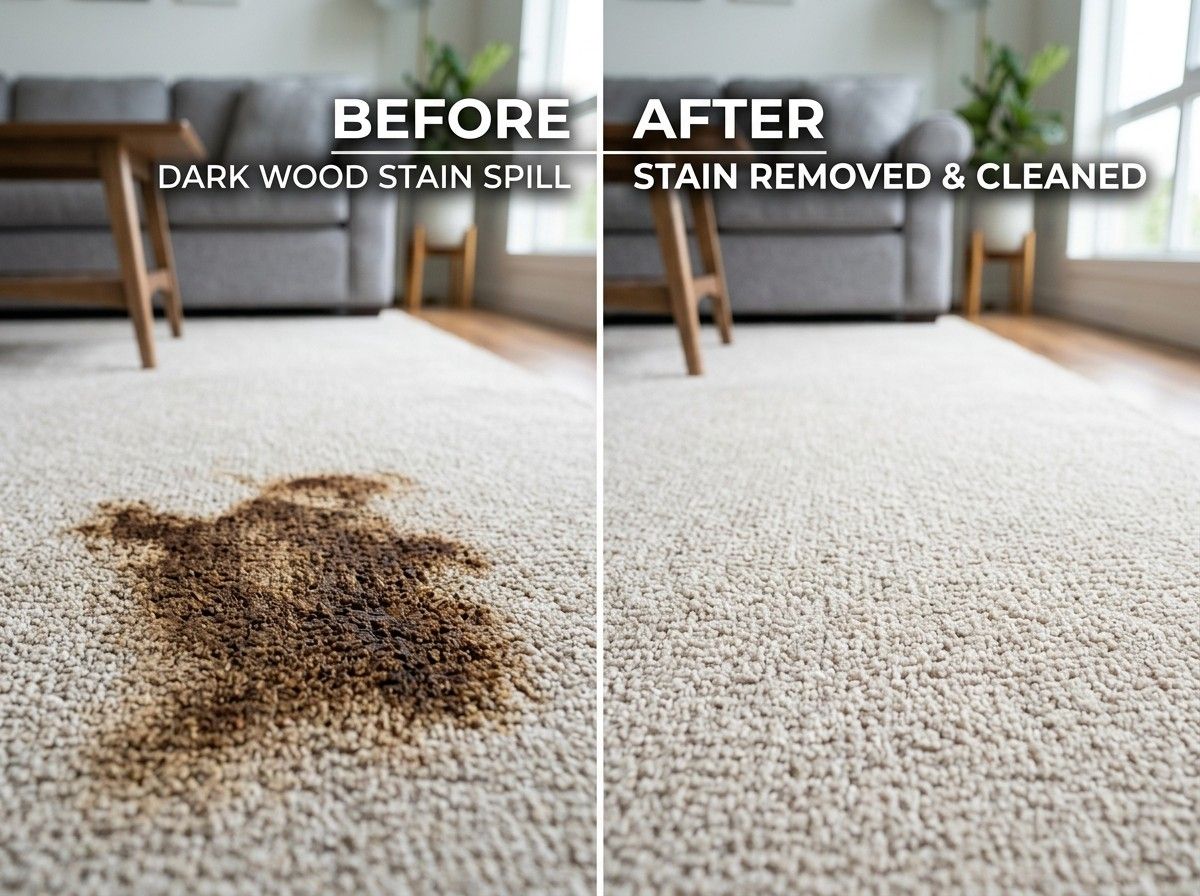
How Do I Get Wood Stain Out of Carpet is a common question after an accidental spill during a home improvement project. A spill of wood stain on your carpet can feel like a permanent disaster, leaving you worried that the stain will never come out. Fortunately, if you’re wondering how do I get wood stain out of carpet, quick action and the right cleaning method can often remove the stain without damaging the carpet fibers.
This guide walks you through effective step-by-step techniques to restore your carpet and prevent lasting damage.Understanding the nature of the spill is the first step. Wood stains come in oil-based or water-based formulas. The type of stain dictates the solvent you need for cleanup. Using the wrong product can set the color or damage your carpet backing. Follow this roadmap to tackle the mess with confidence.
Identify the Stain Type for Targeted Removal
You cannot clean what you do not understand. A water-based stain reacts differently than an oil-based one. Using the wrong solvent might cause the stain to bleed deeper into the fabric. Before you start, check the can or label of the wood stain you spilled.
Water-Based Wood Stain Characteristics
Water-based stains, often labeled as latex, are common for interior DIY projects. These formulas dry fast and use water as the primary solvent. You can usually identify these by looking at the label for water-cleanup instructions. If the spill is fresh, it is likely still soft or tacky to the touch. These are easier to remove because they have not cured into a hard resin yet.
Oil-Based Wood Stain Characteristics
Oil-based stains, such as varnishes or exterior deck stains, contain harsh resins. These products often have a strong chemical smell. Check the can for labels that warn about mineral spirits or paint thinner for cleanup. These stains are much harder to remove from carpet fibers. They bond quickly, making them a more difficult challenge than their water-based counterparts.
The Art of Immediate Action: Blotting and Containment
Speed is your best friend when dealing with wood stain. The longer the liquid sits on the carpet, the deeper it sinks into the padding below. You must act fast to prevent the stain from becoming a permanent mark. Preparation is important, so keep paper towels and a clean cloth ready for accidents.
Act Fast: The Golden Rule of Stain Removal
If you spill, you should grab supplies immediately. A stain that sits for an hour is much harder to treat than a spill that is only minutes old. Your goal is to capture as much of the liquid as possible before it dries. Even a delay of ten minutes can change the outcome of your cleaning project.
Blot, Don’t Rub: Preserving Carpet Fibers
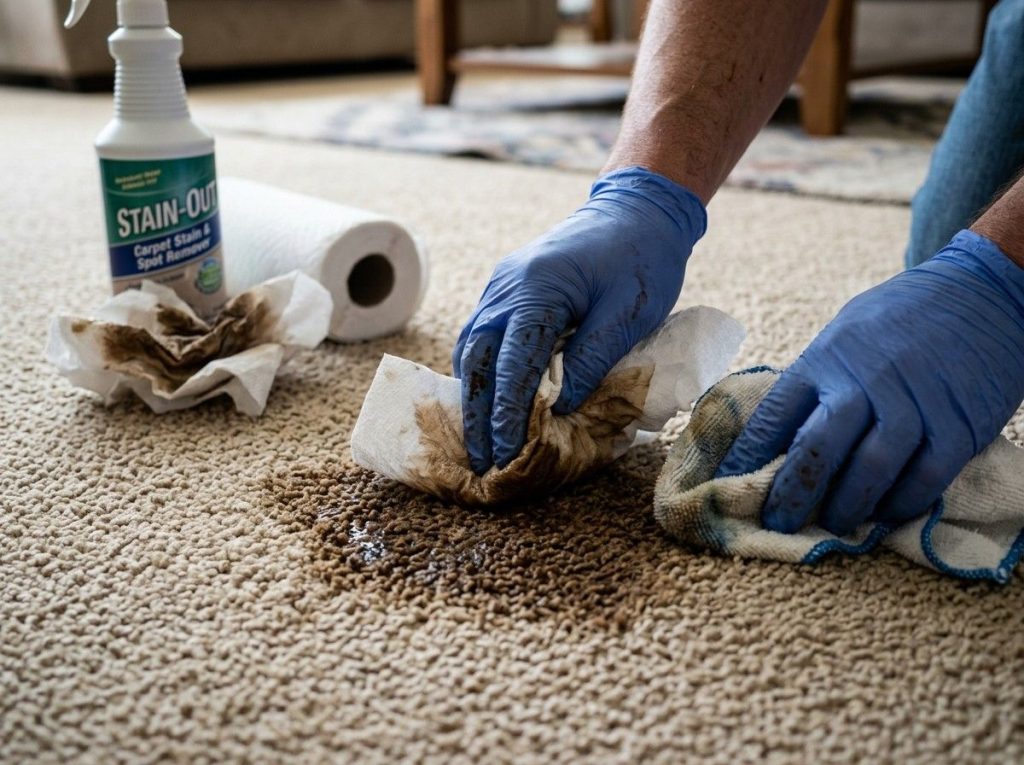
Many people make the mistake of scrubbing the stain aggressively. Scrubbing pushes the color deeper into the fibers and twists the carpet strands. This damage can ruin the texture of the area permanently. Instead, use a clean, white cloth or paper towel to blot the spill. Press down firmly to lift the liquid up. Use a fresh section of the towel with every press until no more color transfers.
Water-Based Stain Removal Techniques
Water-based stains respond well to simple household solutions. You do not always need harsh chemicals to pull the pigment out of the fibers. Always start with the gentlest method first to protect your carpet.
Mild Detergent and Water Solution
Mix one teaspoon of clear dish soap into one cup of lukewarm water. Do not use soap with bleach or heavy dyes. Dip a clean white cloth into the mixture and dab the stain. Do not soak the carpet, as too much moisture can damage the padding. Blot until the soap lifts the color, then rinse with a damp cloth.
Vinegar and Water as a Natural Alternative
White vinegar is an effective tool for breaking down latex stains. Mix one part white vinegar with two parts water in a small bowl. The acidity of the vinegar helps lift the pigment from the nylon or polyester fibers. Gently blot the area with this solution and let it sit for a few minutes. Follow this with a cold water rinse to remove the vinegar smell.
Ammonia Solution for Tougher Water-Based Stains
If the stain refuses to budge, you can use a stronger solution. Mix one tablespoon of household ammonia with a half-cup of warm water. Always test this on a hidden spot of your carpet, such as inside a closet, to ensure it does not fade the color. Work in a well-ventilated room by opening windows. Blot the spot, rinse thoroughly with water, and dry the area quickly.
Oil-Based Stain Removal Strategies
Oil-based stains require solvents to break down the resins. These cleaners are powerful and require careful handling. Safety should remain your priority while working with these substances.
Using Mineral Spirits or Paint Thinner
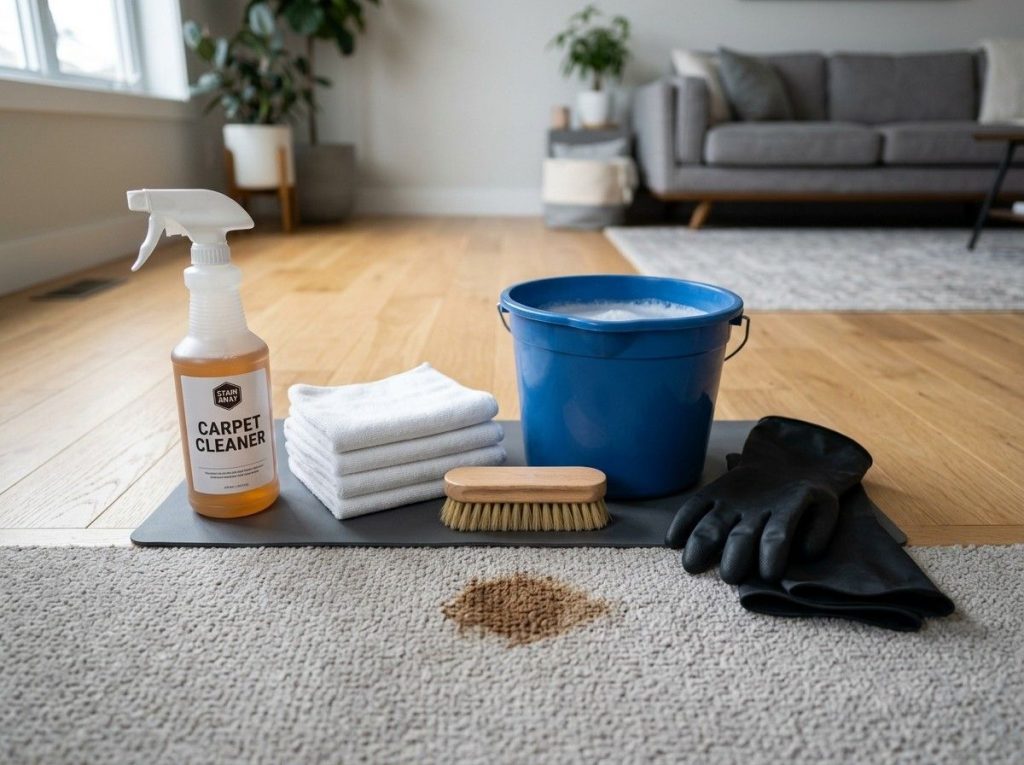
Solvents like mineral spirits are very effective against oil-based wood finishes. You must use these with extreme caution to avoid damaging the carpet backing or glue. Wear gloves to protect your skin and ensure the room has plenty of airflow. Dampen a white cloth with a small amount of the solvent. Do not pour it directly onto the carpet. Blot the stain carefully, moving from the outside toward the center. This prevents the stain from spreading to clean areas.
Rubbing Alcohol as a Solvent
Rubbing alcohol is often less aggressive than paint thinner but still works well on many oil stains. Dampen a cotton cloth with isopropyl alcohol and gently blot the affected area. The alcohol helps dissolve the oil, making it easier to lift. You may need to repeat this several times to see results. Always rinse the area with a damp cloth afterward to remove any solvent residue.
Commercial Carpet Stain Removers for Oil-Based Stains
If you prefer a pre-made solution, look for a carpet cleaner labeled for oil or grease removal. These products are often enzyme-based or use specialized solvents to target tough polymers. Read the instructions on the bottle carefully. Follow the recommended wait times to ensure the product has enough time to react with the stain. Many commercial products require a thorough water rinse after application.
Rinsing and Drying: Completing the Stain Removal Process
You cannot skip the final steps of rinsing and drying. Cleaning solutions leave behind sticky residues if they are not removed. This residue acts like a magnet for dirt, which will quickly turn your clean spot into a dark, grimy patch.
The Importance of Thorough Rinsing
After you finish the cleaning process, you must remove the leftover soap or solvent. Use a cloth dipped in clean, cool water to blot the area. Repeat this step several times. If you used ammonia or vinegar, make sure the smell is gone. A clean rinse ensures the carpet fibers stay soft and free of trapped debris.
Proper Drying Techniques
Drying the carpet quickly helps prevent mold or mildew growth. Place a clean, dry towel over the damp area and step on it to press out excess moisture. Afterward, use a fan to blow air directly over the spot. You can also open nearby windows to improve air circulation. Keep pets and family members off the wet patch until it is completely dry.
When to Call a Professional
Sometimes, a DIY approach is not enough to fix the damage. Knowing when to quit is just as important as knowing how to clean. A professional knows how to handle extreme cases without causing more harm.
Large or Old, Set-In Stains
If you spill a large amount of stain or the puddle has already dried, the task might be too big for home cleaning. Old, cured wood stain is very hard to dissolve without professional equipment. If you have tried several methods and the stain remains, call a carpet cleaning service. They have access to commercial-grade solvents and extractors that are far more effective than home tools.
Delicate or Valuable Carpeting
Antique rugs, wool carpets, or silk blends require special care. These materials can react poorly to harsh solvents like mineral spirits. If you try to clean an expensive carpet on your own, you risk bleaching the fibers or melting the backing. Professional cleaners have the expertise to identify the fiber type and use safe, effective techniques to preserve your investment.
Restoring Your Carpet with Confidence
Removing wood stain from your carpet is a task that requires patience and the right supplies. Start by identifying the type of stain, then act quickly with the appropriate solvent. Follow the process of blotting, cleaning, and rinsing to lift the pigment away from the fibers. While accidents happen, you can often restore your carpet to its former appearance with these steps. Take your time, test your products first, and your carpet will look clean again.
How do I get wood stain out of carpet without damaging it?
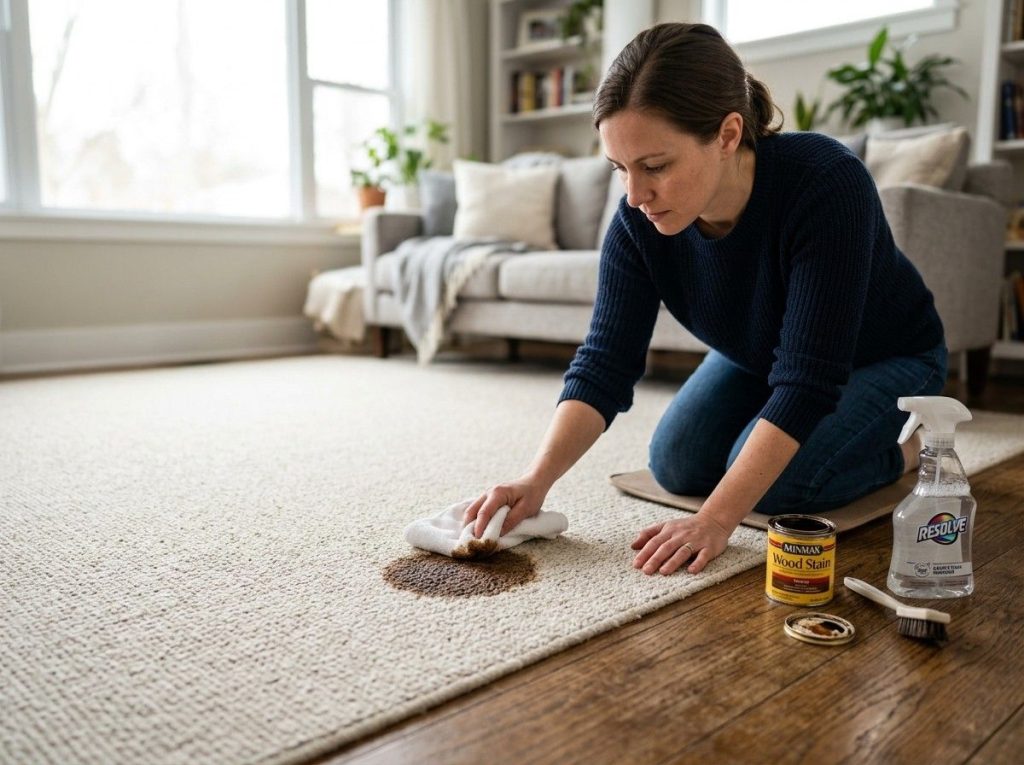
Blot the stain immediately, avoid rubbing, and use a carpet-safe cleaner or a mild dish soap solution. Always test any cleaning product on a hidden area first.
Can dried wood stain be removed from carpet?
Yes, dried wood stain can often be removed by softening it with the appropriate cleaner and gently blotting the area. Older stains may require multiple treatments or a commercial stain remover.
Does vinegar remove wood stain from carpet?
Vinegar may help with some water-based stains, but it is usually not effective on oil-based wood stains. Use a cleaner designed for the type of stain you’re dealing with.
What should I avoid when removing wood stain from carpet?
Avoid scrubbing aggressively, using excessive water, or mixing cleaning chemicals like bleach and ammonia. These can damage carpet fibers or set the stain permanently.
When should I hire a professional carpet cleaner?
If the stain is large, has been sitting for a long time, or doesn’t come out after several cleaning attempts, a professional carpet cleaning service may be the best option to prevent permanent damage.
Knowing how do I get wood stain out of carpet can save you from costly carpet replacement and restore your flooring’s appearance. Acting quickly and using the right cleaning method gives you the best chance of removing both fresh and dried wood stains. With proper care and patience, you can keep your carpet looking clean, fresh, and stain-free for years to come.