Your Trusted Source for Home Fixes & Guides


How Much Does It Cost to Remodel a Small Kitchen in 2026?

Remodeling a small kitchen can be a big decision. Most homeowners want a fresh, modern look without breaking the bank. But the real question is: how much does it cost to remodel a small kitchen in the U.S.? The answer isn’t simple. Costs can vary widely depending on your goals, choices, and the condition of your kitchen. As someone who’s managed kitchen projects and seen homeowners go from “just a little update” to “wow, that’s expensive,” I’ll help you understand every step. You’ll find real examples, practical advice, and tips to avoid common mistakes. By the end, you’ll have a clear idea of what to expect, whether you want a basic upgrade or a full makeover.

What Counts As A Small Kitchen?
In the remodeling world, a small kitchen usually means a space less than 100 square feet. That’s about 10 feet by 10 feet, though sizes vary. Many apartments, condos, and older homes have kitchens in this range. The smaller size often means lower total costs, but it also brings unique challenges. Every inch matters, and smart design can make the space feel much bigger.
For example, in a galley kitchen, you might only have one wall for appliances and storage, so you need to plan carefully. U-shaped kitchens can feel tight, but with the right choices, you can maximize counter space and keep things within easy reach. Small kitchens also have less room for error: a poorly placed fridge or oven door can block pathways or make cooking uncomfortable.
It’s important to measure your space before starting. Sometimes, what feels “small” to a homeowner is larger or smaller than average. Draw a rough floor plan and note where every door, window, and appliance sits. This simple step helps you and your contractor avoid surprises later.
What Drives The Cost Of Remodeling?
Remodeling a small kitchen isn’t just about swapping cabinets or buying new appliances. Several factors shape the total price:
- Scope of work: Are you making cosmetic changes, or gutting the space?
- Materials chosen: Quality, durability, and brand make a big difference.
- Labor costs: Skilled contractors charge more, but mistakes cost even more.
- Location: Prices in New York differ from prices in rural Iowa.
- Permits and inspections: Required for electrical and plumbing work.
- Unexpected issues: Older kitchens often have hidden problems.
If you live in a historic home, you may run into problems like outdated wiring or walls that aren’t square. These issues can add days—and dollars—to your project. For example, when opening a wall, you might find old pipes or damaged studs that need replacing before you continue.
Another factor is accessibility. If you live in a high-rise building, contractors may charge more for bringing in materials and tools. Tight workspaces can also increase labor time. Even weather can matter—remodeling in winter sometimes costs more because of slower deliveries or higher demand for contractors.
I’ve seen kitchen remodels run from $5,000 for a basic facelift to $30,000+ for high-end finishes. Most small kitchen projects fall somewhere in between.
Typical Cost Ranges For A Small Kitchen Remodel
To help you plan, here’s a look at common cost ranges:
| Remodel Type | Estimated Cost (Small Kitchen) | Description |
|---|---|---|
| Cosmetic Refresh | $5,000 – $10,000 | Paint, new hardware, minor upgrades, no major changes |
| Mid-Range Remodel | $12,000 – $20,000 | New cabinets, countertops, appliances, some layout changes |
| High-End Remodel | $20,000 – $30,000+ | Premium materials, custom work, major layout changes |
Most small kitchen projects land in the mid-range remodel category. You’ll get new cabinets, countertops, appliances, and maybe change the layout a bit. Labor usually makes up about 50–60% of the total cost.
When you’re comparing costs, remember that “cosmetic refresh” usually means keeping everything in the same place and just updating surfaces. A “mid-range” remodel often includes changing the look and function—like adding more drawers or upgrading lighting. High-end projects may involve moving walls, adding windows, or custom cabinetry made for unusual shapes.
Some homeowners try to mix categories, like installing a premium countertop but using budget cabinets. This can work, but make sure the final design looks balanced. High-end materials next to cheap finishes can make the kitchen feel mismatched.
Breaking Down The Major Costs
Let’s look closer at the main parts of a small kitchen remodel:
Cabinets
Cabinets are often the biggest expense. For a small kitchen, expect to spend:
- Stock cabinets: $1,500 – $4,000
- Semi-custom: $4,000 – $8,000
- Custom: $8,000 – $15,000+
You can save money by refacing (adding new doors and fronts) instead of replacing. Painting old cabinets is another budget-friendly option. Don’t forget installation costs—often $1,000 to $3,000.
Cabinet quality matters. Stock cabinets come in set sizes and colors, which limits your options but keeps costs down. Semi-custom lets you pick sizes, materials, and finishes, fitting your space better. Custom cabinets are made for your kitchen, solving tricky problems like uneven walls or odd corners, but they cost much more.
Cabinet hardware, like handles and pulls, also adds up. A set of stylish handles can cost $5–$20 each—multiplied by every door and drawer.
Countertops
Countertops range from affordable to luxury. For small kitchens:
- Laminate: $800 – $1,500
- Quartz: $1,800 – $3,000
- Granite: $2,000 – $4,000
- Butcher block: $1,200 – $2,500
Installation is usually included, but complex cuts or shapes can cost extra. Avoid sharp corners if you have kids.
Countertops set the tone of your kitchen. Laminate is affordable and comes in many colors, but may scratch or chip over time. Quartz and granite are durable and stylish. Butcher block gives a warm, natural look, but needs regular sealing to prevent stains.
Some homeowners overlook the cost of countertop removal and disposal. Old countertops, especially tile or heavy stone, may need special handling. Ask your contractor if this is included.
Appliances
For a small space, you don’t need massive appliances. A basic package (fridge, stove, microwave, dishwasher):
- Budget: $1,500 – $3,000
- Mid-range: $3,000 – $6,000
- High-end: $6,000+
Energy-efficient models cost more upfront but save on bills. Measure carefully—don’t buy appliances that won’t fit.
Think about your real cooking habits. If you rarely bake, a simple oven may be fine. If you love to cook, investing in a quality range makes sense. Modern appliances often include smart features—like app controls or air-fry ovens. These can be helpful, but only if you’ll use them.
Delivery and installation fees can be hidden costs. Some retailers charge extra to remove your old appliances. Also, make sure your electrical system can handle newer, more powerful models.
Flooring
Flooring can transform the look and feel. Common choices:
- Vinyl: $600 – $1,200
- Tile: $1,000 – $2,500
- Hardwood: $2,000 – $3,500
Always check for water resistance. Kitchens get spills and splashes.
Vinyl is affordable, easy to clean, and comes in many styles. Modern luxury vinyl can look like wood or stone for less money. Tile is durable and resists water, but can be cold underfoot—consider radiant heating for comfort. Hardwood adds warmth but needs more care to avoid water damage.
Floor prep is a hidden cost. Old floors may need leveling, or subfloors may need repair. Skipping prep can lead to cracks or squeaks later.
Plumbing And Electrical
Moving sinks or adding outlets increases costs. Typical prices:
- Minor plumbing: $500 – $1,500
- Major plumbing: $2,000 – $3,500
- Electrical upgrades: $800 – $2,000
Never DIY plumbing or electrical unless you’re trained. A licensed pro is required for safety and code compliance.
Even small changes, like adding a garbage disposal or moving a dishwasher, can require new wiring or pipes. Older kitchens often have outdated outlets or not enough circuits for modern appliances. Fixing these now prevents trouble later.
Lighting
Good lighting makes a small kitchen feel bigger. Costs include:
- Basic fixtures: $200 – $500
- Recessed lighting: $800 – $1,500
- Under-cabinet lights: $300 – $800
LED lights save energy and last longer.
A mix of lighting works best: ceiling lights for general use, task lighting under cabinets, and accent lights for style. Dimmable switches let you adjust brightness for cooking or entertaining. Some LEDs have color-changing features, which can create a cozy or modern mood.
Paint And Backsplash
Painting walls and adding a backsplash is an affordable upgrade:
- Paint: $300 – $800
- Backsplash: $600 – $1,200
Choose light colors to make the kitchen feel open. Glass or ceramic tiles are easiest to clean.
Paint is a quick way to refresh the space. Semi-gloss finishes resist stains and are easy to wipe down. For backsplashes, mosaic tiles add style without much extra cost. Peel-and-stick options exist, but they may not last as long as real tile.
Real-life Case Study: A Small Kitchen Remodel In Chicago
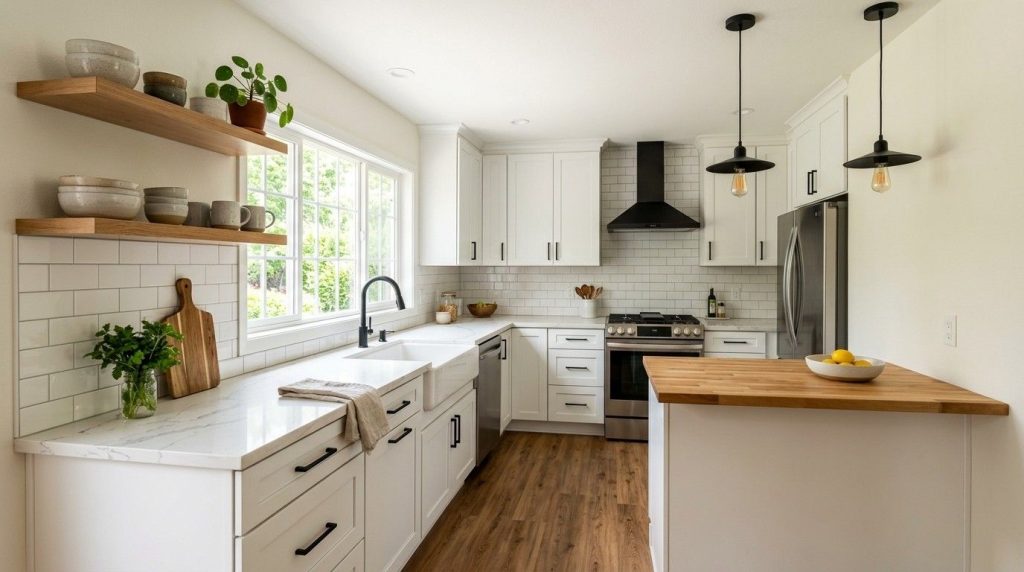
Let’s look at a real project. Maria, a homeowner in Chicago, wanted to update her 9×10 kitchen. She had old cabinets, laminate counters, and outdated appliances.
Her goals:
- Replace cabinets with semi-custom
- Install quartz counters
- Upgrade appliances to energy-efficient
- Add tile backsplash
- New vinyl flooring
Maria hired a licensed contractor and did some painting herself. Here’s how her budget broke down:
| Item | Cost | Notes |
|---|---|---|
| Semi-custom cabinets | $6,200 | Includes install |
| Quartz countertops | $2,700 | Includes sink cutout |
| Appliances | $3,800 | Energy Star models |
| Tile backsplash | $900 | Installed by contractor |
| Vinyl flooring | $950 | DIY install |
| Paint & supplies | $350 | DIY |
| Permit fees | $250 | City of Chicago |
| Miscellaneous | $400 | Unexpected repairs |
Total cost: $15,550
Maria saved money by installing flooring and painting herself. She spent more on cabinets and countertops but chose mid-range appliances. This case shows you can mix DIY and professional work to control costs.
Maria’s story also shows the value of planning. She got three bids from contractors, checked references, and made a list of must-haves. Her only regret? Not budgeting more for extra outlets—she uses lots of small appliances and wishes she’d added more during the remodel.
How To Plan Your Small Kitchen Remodel Budget
Setting a realistic budget is crucial. Here’s how to get started:
- Decide on priorities. What matters most—storage, style, appliances?
- Set a maximum budget. Don’t spend more than you can afford.
- Get multiple quotes. Contractors’ prices can vary widely.
- Factor in contingency. Add 10–20% for surprises (hidden leaks, mold, wiring).
- List must-haves and nice-to-haves. Focus money on essentials.
A common mistake is “scope creep. ” You start with simple upgrades, then add more features. Stick to your plan unless you’re ready for extra costs.
Use a spreadsheet or notebook to track expenses. Include everything—permits, delivery fees, even meals out if your kitchen will be closed. Many homeowners forget these “soft costs,” and they can add up.
Don’t be afraid to negotiate with suppliers or ask about discounts. Some showrooms offer package deals or seasonal sales. Also, consider timing: prices for materials sometimes drop during winter or holiday sales.
Diy Vs. Hiring Pros: What Should You Do Yourself?
You can save by doing some work yourself. Painting, installing vinyl flooring, or changing cabinet hardware are good DIY tasks. However:
- Don’t attempt electrical or plumbing unless you’re qualified.
- Cabinet installation is tricky—mistakes can ruin the look.
- Always follow safety guidelines. Wear gloves, goggles, and masks when needed.
Call a licensed contractor for:
- Major plumbing/electrical changes
- Gas line work
- Permits and code compliance
If you’re unsure, ask your local building department. Safety and quality are worth the price.
Remember, mistakes can be more expensive than hiring a pro in the first place. For example, a poorly installed backsplash can leak and cause wall damage. If you want to learn, start with low-risk tasks and watch tutorials from trusted sources.
Some home improvement stores offer weekend classes.
Cost Comparison: Diy Vs. Professional Remodel
To help you decide, here’s a comparison of costs for a small kitchen:
| Project Part | DIY Cost | Professional Cost | Risks/Challenges |
|---|---|---|---|
| Painting | $300 – $600 | $600 – $1,200 | Mess, uneven finish |
| Flooring (vinyl) | $600 – $1,000 | $1,200 – $2,000 | Wrong cuts, poor adhesion |
| Backsplash | $400 – $800 | $800 – $1,500 | Tile alignment, grout issues |
| Cabinet install | $0 (if refacing/painting) | $1,000 – $3,000 | Misalignment, damage |
| Plumbing/electrical | N/A | $1,000 – $3,500 | Code violations, leaks, hazards |
If you’re handy, DIY can save thousands. But mistakes are costly and often require fixing by a pro.
One thing beginners often miss: city codes. For example, electrical outlets in kitchens must be a certain distance apart and have GFCI protection. Missing these details means failed inspections or even fire hazards.
Common Mistakes To Avoid
Many homeowners make mistakes that cost time and money. Here are the big ones:
- Underestimating budget: Don’t forget labor and hidden repairs.
- Choosing trendy over practical: Some styles age fast or don’t fit your needs.
- Ignoring function: Pretty kitchens aren’t always efficient.
- Buying oversized appliances: Measure twice before purchasing.
- Skipping permits: Unpermitted work can cause legal trouble and lower home value.
- Hiring unlicensed contractors: Always check credentials and references.
I’ve seen kitchens torn apart because the fridge didn’t fit, or cabinets blocked the dishwasher. Double-check everything!
Another common mistake: not thinking about workflow. The “kitchen triangle” (sink, stove, fridge) should be easy to move between. For example, don’t put the dishwasher too far from the sink or the microwave above the stove if you’re short. Small details make daily life easier.
How To Save Money Without Sacrificing Quality
You don’t need to spend a fortune for a great kitchen. Here’s how to keep costs down:
- Reface or paint cabinets instead of replacing.
- Shop sales for appliances and fixtures.
- Choose durable, mid-range materials. Avoid ultra-cheap options.
- Do simple tasks yourself (painting, hardware).
- Keep the layout. Moving plumbing or walls adds big costs.
- Get multiple bids from contractors.
- Avoid custom work unless necessary.
Smart choices now prevent costly repairs later. For example, quartz countertops cost more than laminate but last much longer.
Another tip: buy “open box” or last year’s models for appliances. These are often new or lightly used, but much cheaper. Also, consider gently used items from local salvage stores—sometimes you can find high-quality sinks or fixtures for less.
Permits And Inspections: Why They Matter
If your remodel involves plumbing, electrical, or structural changes, you’ll likely need permits. These protect you and ensure work meets safety codes.
Permits usually cost $200–$500 for a small kitchen, but skipping them is risky. Inspectors check wiring, plumbing, and structure. If you sell your home, unpermitted work can reduce value or even force costly fixes.
Always ask your contractor about permits. Some cities require them for even minor changes. You can check requirements at your local government site or U.S. Department of Housing and Urban Development.
If your kitchen is part of a condo or co-op, check with your building management too. They may have extra rules or require insurance during renovations.
Choosing The Right Contractor
Finding the right contractor is key. Here’s what to look for:
- Licensed and insured
- Good references and reviews
- Clear contracts with detailed scope and payment terms
- Experience with kitchen remodels
- Communication—easy to reach, answers questions
Interview at least three contractors. Ask about their process, timeline, and how they handle unexpected issues. Don’t just pick the lowest bid—quality matters.
Ask to see photos of past work. Visit a current job site if possible. Notice how clean and organized they are. A good contractor won’t rush you or pressure you to sign quickly. Check their insurance, and ask who will actually be working in your home.
Value And Return On Investment
A remodeled small kitchen can increase your home’s value. According to Remodeling Magazine’s Cost vs. Value report, a mid-range kitchen remodel can return about 65–80% of the cost when you sell.
But ROI depends on your market and choices. Don’t overspend if you plan to move soon. Focus on practical upgrades—buyers look for good appliances, smart storage, and clean, modern finishes.
Appraisal experts say kitchens are a “make or break” feature for home sales. Even if you don’t recoup every dollar, a fresh, functional kitchen can help your home sell faster and for a better price.
Safety Tips During Remodeling
Remodeling can be messy and even dangerous. Protect yourself and your family:
- Keep tools and supplies away from children and pets.
- Wear gloves, eye protection, and masks when handling chemicals or dust.
- Turn off power and water when working.
- Ventilate the area—paint and adhesives release fumes.
- Clean up daily to avoid tripping hazards.
If you find mold, asbestos, or structural damage, stop work and call a professional.
Keep a fire extinguisher nearby, especially if you’re using power tools or working near gas lines. Make sure smoke and carbon monoxide detectors are working before you start.
Timeline: How Long Does A Small Kitchen Remodel Take?
Most small kitchen projects last 3–6 weeks. Here’s a typical timeline:
- Planning and design: 1–2 weeks
- Ordering materials: 1–2 weeks
- Demolition: 2–3 days
- Installation (cabinets, counters, appliances): 2–3 weeks
- Final touches (paint, backsplash, hardware): 2–4 days
Delays happen—materials arrive late, or hidden problems appear. Build in extra time if you need permits.
If you’re living at home during the remodel, set up a temporary kitchen. Use a microwave, mini-fridge, and portable cooktop in another room. Plan simple meals or eat out more often.
Hidden Costs You Should Expect
Remodels often cost more than planned. Common surprises include:
- Old plumbing or wiring needing replacement
- Water damage under floors or behind walls
- Mold or pest issues
- Structural repairs
- Upgrades to meet current codes
Set aside at least 10–20% of your budget for surprises.
For example, I once worked on a kitchen where a simple cabinet replacement turned into a major repair because we found termites in the walls. Another project needed a new electrical panel because the old one couldn’t handle modern appliances.
Maximizing Space In A Small Kitchen
Small kitchens demand smart design. Use these tricks:
- Install pull-out shelves and lazy Susans for better storage.
- Choose compact appliances—they save space and energy.
- Add under-cabinet lighting to brighten work areas.
- Use light colors on walls and cabinets to make the room feel bigger.
- Hang pots and pans on racks to free up cabinets.
A fold-down table or wall-mounted spice rack can add function without using floor space. Consider open shelving for dishes you use every day—it feels airy and keeps essentials within reach.
Another pro tip: use the insides of cabinet doors for extra hooks or small racks. Even a few extra inches make a big difference.
Eco-friendly And Energy-saving Upgrades
Saving energy is good for your wallet and the planet. Consider:
- LED lighting
- Energy Star appliances
- Low-VOC paint
- Water-saving faucets
These upgrades cost more upfront but pay off over time. You may qualify for rebates—check with your utility company.
Recycling your old appliances and cabinets is another green step. Some companies will pick up old items for free and reuse or recycle them.
When Should You Remodel Your Small Kitchen?
Remodel if:
- Cabinets or appliances are failing
- The layout makes cooking difficult
- You want to boost home value before selling
- You need better storage or lighting
Don’t remodel just for looks unless you can afford it. Function always comes first.
If you’re planning to stay in your home for many years, invest in quality materials and a layout that fits your lifestyle. If you’ll move soon, focus on fresh paint, new hardware, and clean finishes.
Frequently Asked Questions
How Much Should I Budget For A Small Kitchen Remodel?
Most homeowners spend $12,000–$20,000 for a mid-range remodel. Set aside 10–20% extra for unexpected costs. Your choices in materials and labor make the biggest difference.
Can I Remodel My Small Kitchen Myself?
You can DIY painting, hardware, or basic flooring. For plumbing, electrical, or cabinet installation, hire a licensed pro. Mistakes can be dangerous and expensive.
How Do I Choose Between Cabinet Refacing And Replacing?
Refacing costs less and works if your cabinets are solid but outdated. Replacing is better if cabinets are damaged, poorly designed, or need layout changes.
Will A Small Kitchen Remodel Increase My Home’s Value?
Yes, especially if you focus on practical upgrades. Expect about 65–80% return on investment, but don’t overspend. A clean, functional kitchen appeals to buyers.
What Is The Most Expensive Part Of A Small Kitchen Remodel?
Cabinets are usually the biggest cost, followed by countertops and appliances. Custom work and layout changes drive up the price.
Remodeling your small kitchen is an investment in your home and lifestyle. With careful planning, smart choices, and the right help, you can create a space that’s beautiful, efficient, and built to last. Don’t rush—take time to plan, ask questions, and focus on what matters most.
If you’re ready to start, get quotes, check references, and set your budget. A great kitchen is closer than you think.