Your Trusted Source for Home Fixes & Guides

How to Clean Fiberglass Shower Floor: Step by Step Guide

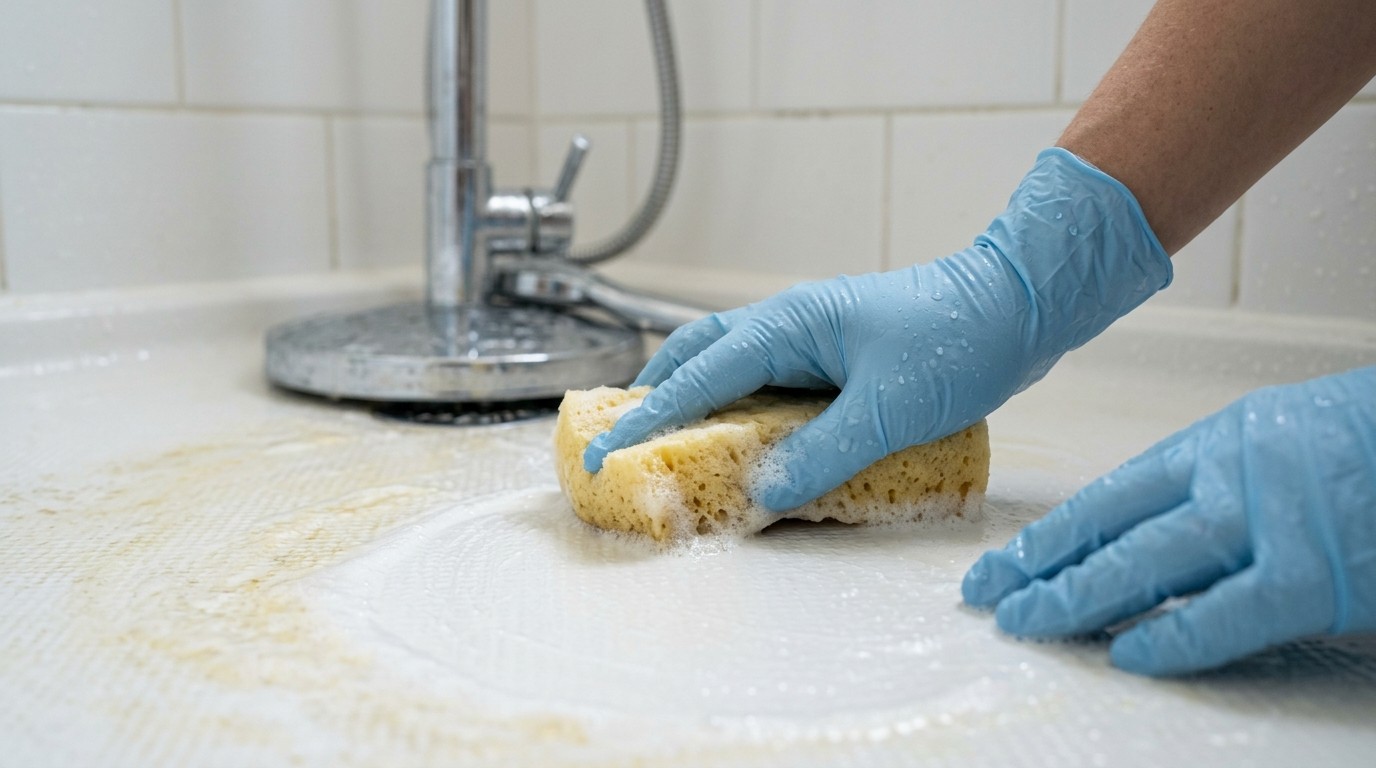
Keeping your fiberglass shower floor clean isn’t just about making it look fresh. It’s also about protecting your bathroom investment and maintaining a hygienic space. How to Clean Fiberglass Shower Floor properly requires using gentle cleaning methods because fiberglass can be sensitive to harsh chemicals and rough scrubbing. Over time, soap scum, hard water stains, and mildew can build up, making the shower floor slippery and dull. This guide shares simple, safe steps to keep your fiberglass shower floor clean and looking its best.
As someone who’s worked on many bathroom remodels and helped homeowners fix cleaning mistakes, I know the right method saves both time and money. In this guide, I’ll walk you through the best way to clean a fiberglass shower floor—sharing practical tips, safety advice, and a few things even experienced DIYers sometimes overlook.
You’ll also find real-life examples and clear instructions to help you get the job done safely and efficiently.
Why Fiberglass Shower Floors Need Special Care
Fiberglass is popular because it’s affordable, lightweight, and has a smooth, glossy finish. But that finish is easy to scratch or dull if you use the wrong products or techniques. Tiny scratches hold dirt and mildew, making your floor look dirty even after you clean it.
Harsh chemicals like bleach or abrasive powders can cause permanent damage. Some people don’t realize that even everyday items like scouring pads or rough brushes can leave marks. Treating your fiberglass floor gently will keep it looking new for years.
Tools And Supplies You’ll Need
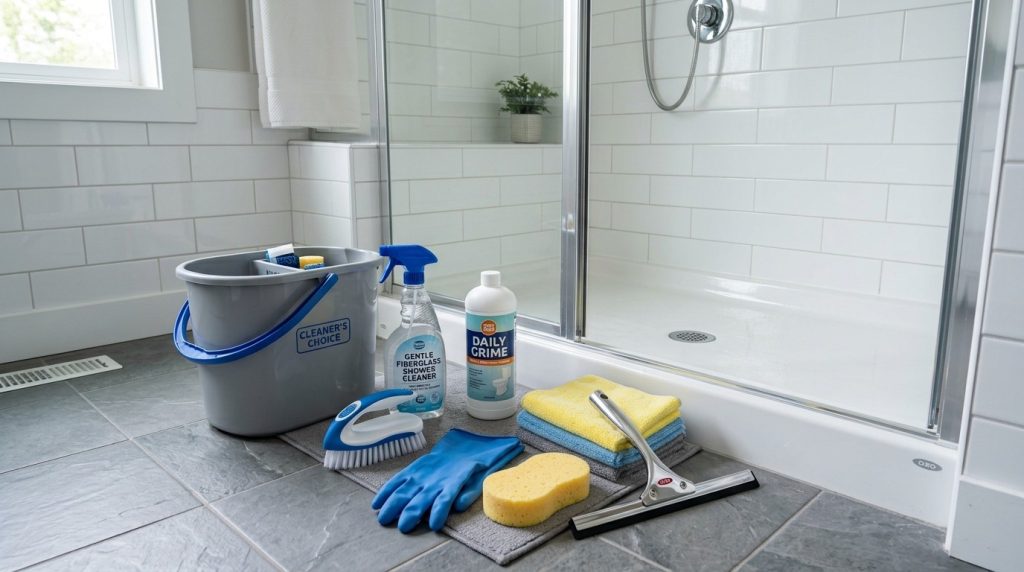
Before you start, gather these essential cleaning tools:
- Soft sponge or microfiber cloth
- Non-abrasive nylon brush
- Spray bottle
- Bucket
- Mild dish soap or specialized fiberglass shower cleaner
- Baking soda
- White vinegar
- Rubber gloves
- Old toothbrush (for corners and grout lines)
- Squeegee or clean towels
If you have hard water or tough stains, you may need hydrogen peroxide and a plastic scraper.
What To Avoid
Never use steel wool, scouring pads, or powdered cleaners like Comet or Ajax. Skip any cleaner with bleach or ammonia—these can dull or discolor fiberglass. If you’re unsure, test a small hidden area first.
Step-by-step: How To Clean A Fiberglass Shower Floor
1. Rinse Away Loose Dirt
Start by rinsing the shower floor with warm water. Use a detachable shower head or a large plastic cup. This removes loose hair, dirt, and soap residue. You’ll get better results if you don’t skip this step.
2. Apply A Gentle Cleaning Solution
Mix a few drops of mild dish soap with warm water in a spray bottle. Spray this evenly over the floor. For most stains, this gentle solution is enough. If you want something stronger but still safe, use a commercial fiberglass shower cleaner—just check the label to make sure it’s non-abrasive.
Let the solution sit for 5–10 minutes. This allows it to break down soap scum and body oils.
3. Scrub With Care
Using a soft sponge or nylon brush, gently scrub the surface in a circular motion. Pay special attention to textured areas and corners, where grime builds up. If you find stubborn spots, sprinkle a little baking soda on the sponge—its mild abrasiveness helps lift stains without scratching.
Don’t press too hard. Let the cleaner do most of the work. For grout lines or seams, use the old toothbrush.
4. Tackle Tough Stains And Mildew
For hard water spots or mildew, spray white vinegar directly on the affected area. Let it sit for 10–15 minutes. Vinegar dissolves mineral deposits and kills most mold spores.
If stains remain, make a paste with baking soda and water, or use hydrogen peroxide for darker mildew spots. Apply the paste, let it work for another 10 minutes, then scrub gently and rinse well.
Case Study Example:
One homeowner I worked with had a fiberglass shower that looked permanently stained. The floor had yellow rings from hard water and pink mildew in the corners. She’d been using a “bathroom scrubber” with rough pads, which left tiny scratches.
We switched to a baking soda paste and soft sponge. After two careful cleanings and switching to distilled white vinegar for maintenance, the floor’s shine returned—and the pink stains never came back.
5. Rinse Thoroughly
Rinse the shower floor with warm water until all cleaner and residue are gone. Any leftover soap or baking soda can leave a film that attracts dirt.
6. Dry The Surface
Use a squeegee or a clean towel to dry the floor completely. This prevents water spots and helps you spot any areas you missed.
Dealing With Common Issues
Soap Scum Buildup
Soap scum looks like a cloudy film. It forms when soap mixes with minerals in hard water. To remove it:
- Spray vinegar on the scum and let it sit for 10 minutes.
- Wipe with a microfiber cloth.
- Rinse and dry.
If the problem keeps coming back, consider switching to liquid body wash instead of bar soap and wiping the floor after each shower.
Hard Water Stains
Hard water leaves white or gray spots. These are tougher to remove if ignored. Use vinegar or a store-bought hard water remover that’s safe for fiberglass. Never use lime or rust removers unless they specifically say “safe for fiberglass. ”
Mold And Mildew
Mildew shows up as black, pink, or green patches. It’s common in corners where water sits. Regular vinegar sprays and keeping the shower dry after use help prevent it.
If you see dark spots that don’t wipe away, you might be dealing with mold inside the shower structure. In that case, call a licensed professional to check for water leaks or hidden damage.
Homemade Vs. Store-bought Cleaners
Some people prefer natural cleaning products, while others want the convenience of commercial cleaners. Here’s a quick comparison:
| Type | Pros | Cons | Best Use |
|---|---|---|---|
| Homemade (vinegar, baking soda, dish soap) | Safe, inexpensive, eco-friendly | May need more scrubbing | Regular cleaning, light stains |
| Store-bought (fiberglass cleaner) | Fast, convenient, strong formulas | More expensive, check labels for safety | Tough stains, heavy buildup |
Both work well if used correctly. Avoid “all-purpose” bathroom cleaners that don’t mention fiberglass. Many contain abrasives or acids that can harm your shower floor.

How Often Should You Clean A Fiberglass Shower Floor?
Regular cleaning prevents most stains and mildew. For best results:
- Wipe dry after every shower with a towel or squeegee
- Deep clean once a week using mild cleaner and soft tools
- Inspect monthly for cracks, chips, or signs of mold
Skipping regular cleaning makes future cleaning harder and increases the risk of permanent damage.
Safety Tips And Precautions
- Always wear rubber gloves to protect your hands from cleaners, even mild ones.
- Open a window or run the bathroom fan to avoid breathing in fumes.
- Never mix cleaning products—especially ammonia and bleach, which create toxic gases.
- Use only plastic scrapers if you need to remove stuck-on gunk.
- Test cleaners on a small, hidden spot before using them on the whole floor.
Common Mistakes To Avoid
Even experienced homeowners sometimes make these errors:
- Using rough pads or brushes. These scratch the surface, making it harder to clean in the future.
- Using too much cleaner. More isn’t better—excess soap leaves a sticky residue.
- Letting water pool. Standing water encourages mildew and can weaken the fiberglass over time.
- Ignoring the corners. Mildew loves the edges and seams.
- Using colored cleaners. Some blue or green cleaners can stain white fiberglass if not rinsed properly.
When To Call A Professional
Most cleaning jobs are DIY-friendly, but call a licensed bathroom contractor or plumber if:
- You see cracks, chips, or soft spots in the shower floor.
- Mildew keeps returning, even after proper cleaning.
- There’s a strong musty odor that won’t go away.
- The floor feels spongy (possible water damage below).
A pro can check for leaks, hidden mold, or structural problems. Fixing these early saves money and keeps your bathroom safe.
Preventing Future Buildup
You can keep your fiberglass shower floor cleaner, longer, with these habits:
- Install a shower squeegee and use it after each shower.
- Keep the bathroom fan on during and after showers to reduce humidity.
- Use a daily spray made from one part vinegar and three parts water.
- Avoid bathmats with rubber backs—they can discolor fiberglass over time.
- Address leaks or drips promptly.
Over time, these small actions make cleaning easier and extend the life of your shower floor.
Real-life Cleaning Scenario
Let’s look at a real-world case.
Amy, a homeowner in Ohio, struggled with stubborn yellow stains on her fiberglass shower floor. She tried bleach-based cleaners for weeks, but the stains kept returning. After some research and a call to a local remodeling expert, she switched to a gentle approach: dish soap, white vinegar, and a microfiber cloth. She also started wiping the floor dry after each shower. Within two weeks, the stains faded, and the floor’s shine returned. Amy avoided expensive repairs—and learned that less is often more when it comes to fiberglass.
Comparing Popular Fiberglass Shower Cleaners
Many products claim to be safe for fiberglass, but not all deliver the same results. Here’s a look at three common options:
| Product | Type | Safe for Fiberglass? | Approx. Cost | Notes |
|---|---|---|---|---|
| Soft Scrub with Lemon | Cream cleaner | Yes | $5/24 oz | Check label for “non-abrasive” |
| Bar Keepers Friend Soft Cleanser | Liquid cleanser | Yes (not powder) | $3/13 oz | Do not use powdered version |
| Method Bathroom Cleaner | Spray | Yes | $4/28 oz | Plant-based, gentle formula |
Always read the label and follow the instructions. If in doubt, stick with the mildest option and test a small area first.
The Difference Between Fiberglass And Other Shower Materials
It’s important to know whether your shower floor is really fiberglass. Many homeowners mistake acrylic or porcelain for fiberglass. Here’s how to tell the difference:
| Material | Feel | Weight | Common Problems |
|---|---|---|---|
| Fiberglass | Slightly textured, lightweight | Light | Scratches, dullness, stains |
| Acrylic | Smoother, warm to touch | Medium | Cracking, fading |
| Porcelain | Very hard, cold | Heavy | Chipping, stubborn stains |
If you’re not sure, check your manufacturer’s paperwork or ask a bathroom professional before cleaning.
Extra Tips For A Sparkling Shower Floor
- Clean your shower drain cover regularly—hair and soap can trap bacteria and odors.
- For extra shine, buff the floor with a dry microfiber cloth after cleaning.
- If you have kids or pets, rinse off muddy feet outside before using the shower. Dirt particles can scratch the floor.
- If you travel, ask family members to keep up with wiping and airing out the shower. Neglecting these simple steps for even a week can lead to stains.
Environmental And Health Considerations
Many homeowners are concerned about the impact of cleaning products. The good news: vinegar, baking soda, and mild dish soap are not only safe for your shower, but also for your family and pets. They break down quickly in water and don’t add strong odors to your home.
If you have allergies or asthma, avoid scented cleaners and always ventilate the bathroom during and after cleaning.
Frequently Asked Questions
How Can I Remove Yellow Stains From My Fiberglass Shower Floor?
Yellow stains usually come from hard water or old soap scum. Spray white vinegar, let it sit, then scrub gently with baking soda and a soft sponge. If stains persist, try a hydrogen peroxide solution or a commercial fiberglass-safe cleaner.
Is It Safe To Use Bleach On Fiberglass Showers?
No, bleach can dull the finish and cause discoloration. Use white vinegar, baking soda, or a cleaner that specifically says “safe for fiberglass. ” Always avoid mixing bleach with other cleaners.
What’s The Best Way To Keep My Shower Floor From Getting Slippery?
Rinse away soap after every shower and wipe the floor dry. Regular cleaning removes residue that can make the surface slick. For extra grip, consider a non-slip mat designed for fiberglass, but avoid mats with suction cups that could damage the floor.
Can I Use A Steam Cleaner On A Fiberglass Shower Floor?
It’s not recommended. High heat can weaken the fiberglass resin and cause warping or cracking. Stick to gentle, manual cleaning methods to protect your floor.
How Do I Know When It’s Time To Refinish Or Replace My Fiberglass Shower Floor?
If you see deep scratches, chips, or if the surface feels spongy underfoot, it’s time to call a bathroom professional. These are signs of structural damage or worn-out finish. Refinishing can restore the shine, but replacement may be needed for severe damage.
For more on cleaning and caring for fiberglass showers, see this helpful resource from the Family Handyman.
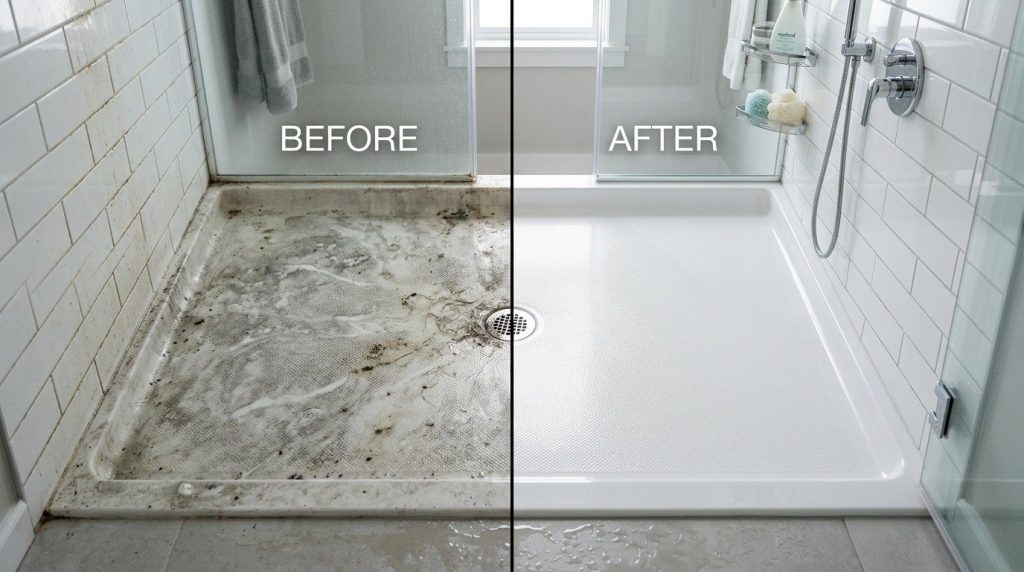
Keeping your fiberglass shower floor clean doesn’t have to be a struggle. With the right tools, gentle cleaners, and a few smart habits, you can protect your investment and enjoy a sparkling, safe bathroom for years to come. If you ever feel unsure or notice damage, don’t hesitate to call in a pro.
Your bathroom is one place where a little care goes a long way.