Your Trusted Source for Home Fixes & Guides

How to Clean Stone Floors: Expert Tips for a Spotless Shine

Keeping your stone floors looking beautiful is not just about appearances—it’s also about protecting your investment. Stone floors, whether made of marble, granite, slate, travertine, or limestone, add natural charm and durability to any home. But they need special care to stay in top shape. As someone who’s remodeled dozens of bathrooms and kitchens, I’ve seen the good, the bad, and the ugly when it comes to stone floor maintenance. This guide will walk you through how to clean stone floors safely and effectively, share real-world tips, and help you avoid common mistakes that can ruin your floor’s finish.
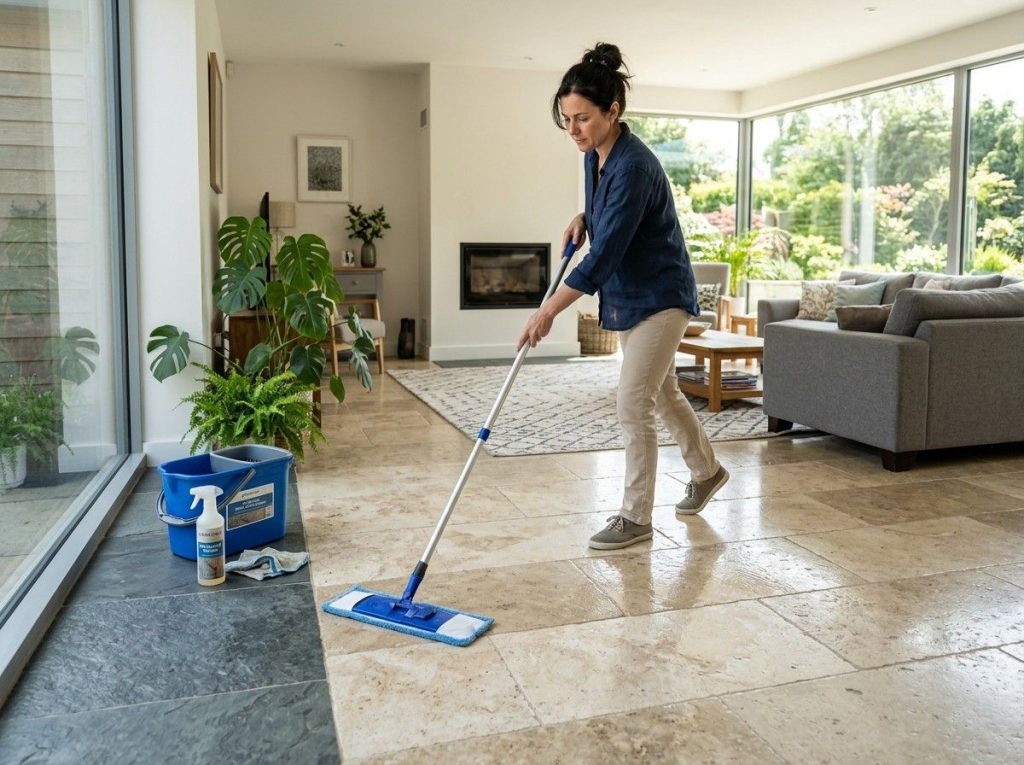
Why Stone Floors Need Special Care
Stone is tough, but it’s not invincible. Most natural stones are porous, which means they can absorb liquids and stains if not properly sealed or cleaned. Some stones, like marble and limestone, are acid-sensitive and can be etched by vinegar, lemon juice, or even some household cleaners. Using the wrong cleaning method can lead to scratches, dullness, or permanent stains.
Many homeowners make the mistake of using regular floor cleaners or scrubbing with abrasive pads, thinking stone can handle anything. In reality, harsh cleaners can break down sealants and damage the surface. Understanding your specific stone type is key to giving it the right care.
Types Of Stone Floors And Their Cleaning Needs
Let’s look at the most popular types of stone floors and what makes each one unique:
| Stone Type | Main Features | Care Level |
|---|---|---|
| Marble | Soft, elegant, acid-sensitive | High |
| Granite | Hard, stain-resistant, less porous | Medium |
| Travertine | Textured, porous, acid-sensitive | High |
| Slate | Textured, durable, layered | Medium |
| Limestone | Soft, light color, porous | High |
Quick tip: Always check with your stone supplier or installer for the exact type of stone you have. If you don’t know, a stone specialist can help you identify it.
Essential Tools And Supplies
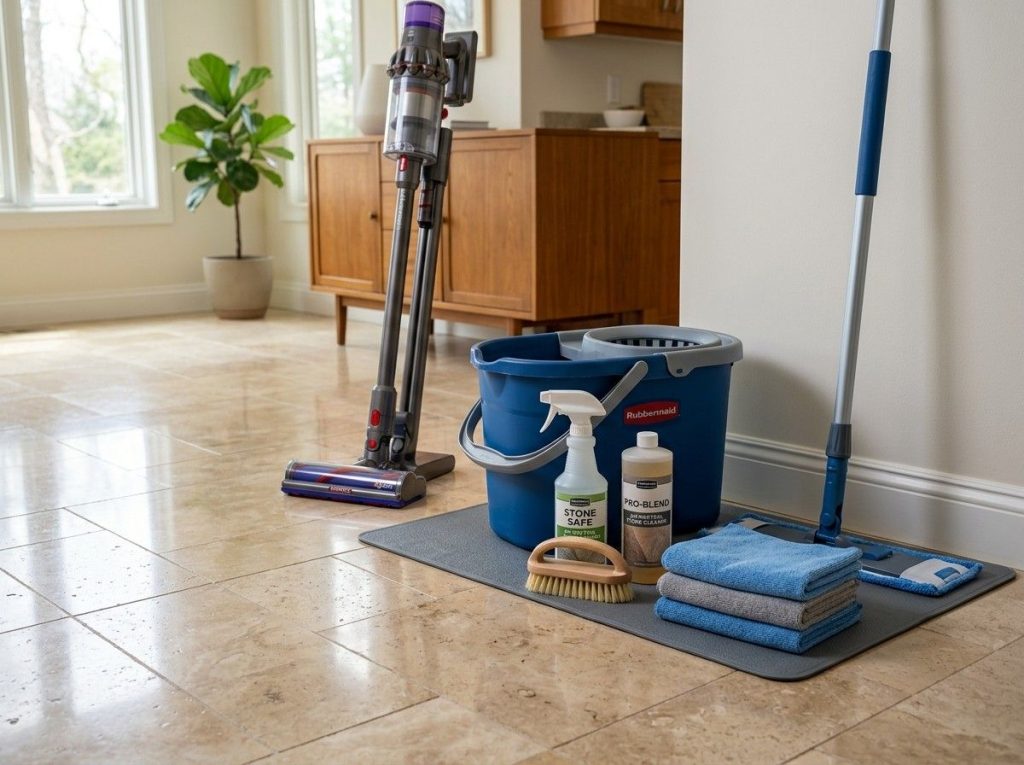
Before you get started, gather the right supplies. Using the wrong tools can scratch or dull the stone’s surface.
- Soft-bristle broom or dust mop
- PH-neutral stone cleaner (never acidic or abrasive cleaners)
- Microfiber mop or cloths
- Bucket
- Warm water
- Wet/dry vacuum (optional, for deep cleaning)
- Non-abrasive sponge
- Stone sealer (as recommended for your stone type)
- Gloves (for handling cleaner and sealer)
- Knee pads (if working on large areas)
Many people skip the pH-neutral cleaner and grab whatever’s under the sink. This is a big mistake—using vinegar, bleach, or ammonia can permanently damage the stone.
Step-by-step: How To Clean Stone Floors
1. Dry Dusting Or Sweeping
Always start with a dry clean to pick up dirt, sand, and grit. Even small particles can scratch the stone over time.
- Use a soft-bristle broom or a microfiber dust mop.
- Sweep the entire area, paying attention to corners and under furniture.
- Avoid using vacuums with worn brushes or plastic wheels, as they can scratch the surface.
2. Wet Mopping
Once the loose dirt is gone, it’s time to mop.
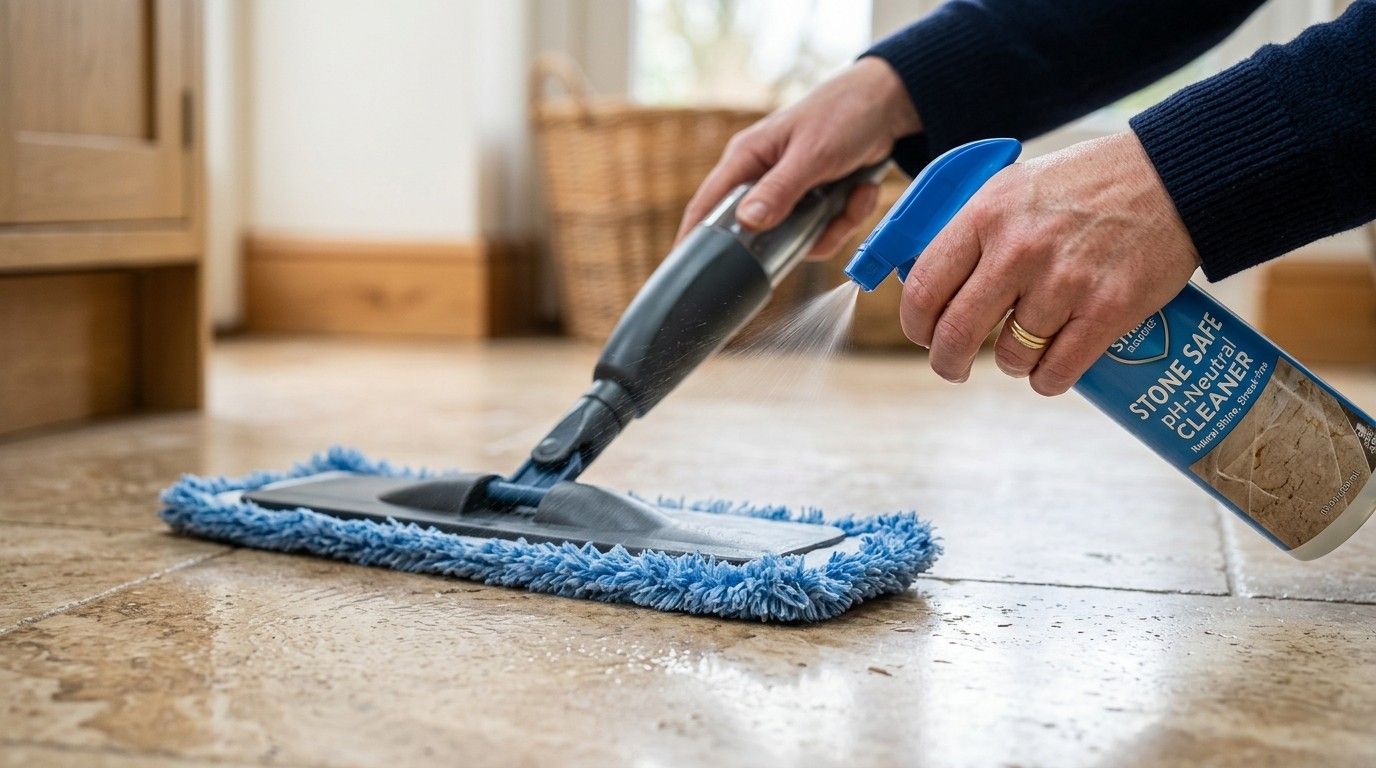
- Fill a bucket with warm water and add a small amount of pH-neutral stone cleaner (follow label directions).
- Dip a microfiber mop in the solution, wring it out well (stone doesn’t like too much water).
- Mop the floor in small sections, rinsing the mop frequently.
- For stubborn spots, use a non-abrasive sponge dampened with the cleaning solution.
Never flood the stone with water. Excess moisture can seep into the stone or grout, leading to stains or damage.
3. Drying
Water left sitting on the floor can create streaks or lead to mineral deposits.
- Dry the floor with a clean microfiber cloth or a dry mop.
- Open windows or turn on fans for faster drying.
4. Spot Cleaning Spills And Stains
Act fast when something spills, especially on light or porous stones.
- Blot (don’t wipe) spills immediately with a soft cloth.
- For sticky or oily stains, use a specialty stone poultice or cleaner as recommended by your installer.
- Avoid colored cleaning cloths, which may bleed dye onto the stone.
5. Sealing Stone Floors
Most stone floors need regular sealing to block stains and moisture. The frequency depends on stone type and usage.
- Clean the floor as above and let it dry completely (at least 24 hours).
- Apply a stone sealer using a clean mop, cloth, or applicator pad.
- Follow the product instructions for drying time and number of coats.
- Buff the surface with a soft cloth to remove any haze.
Not all stones need sealing—granite and slate are less porous, while marble and travertine usually require it. Test your floor by dropping a bit of water on the surface; if it darkens quickly, it’s time to reseal.
How Often Should You Clean Stone Floors?
How often you clean depends on foot traffic, pets, and the room’s use. Here’s a simple maintenance schedule:
| Task | Frequency | Notes |
|---|---|---|
| Dusting/Sweeping | Daily or as needed | Prevents scratches from grit |
| Wet Mopping | Weekly | Use pH-neutral cleaner |
| Spot Cleaning | As needed | Act quickly on spills |
| Sealing | Every 6-24 months | Check with water test |
Kitchens and entryways may need more frequent cleaning than bedrooms or low-traffic areas.
Dealing With Common Stone Floor Problems
No stone floor is immune to issues. Here’s how to handle the most common ones:
Etching
Etching looks like dull spots or rings, often caused by acids (like lemon juice or wine) on marble or limestone.
- Light etching can sometimes be buffed out with a marble polishing powder.
- Deeper etching usually requires a professional stone restoration service.
Stains
If you notice a dark spot that won’t come out with regular cleaning, it’s likely a stain.
- For organic stains (food, coffee), use a stone poultice.
- For oil-based stains (grease, lotion), apply a poultice made for oil removal.
- Rust stains are tough—these often need a pro.
Scratches
Minor scratches can sometimes be polished out with a stone-safe polishing compound. Deep scratches, especially in marble or travertine, need expert attention.
Grout Haze Or Build-up
Grout lines attract dirt and can look dingy.
- Clean grout with a soft brush and stone-safe cleaner.
- Avoid bleach or harsh chemicals, which can damage both grout and stone.
Real-world Example: Case Study
In one recent bathroom remodel, the homeowner had installed polished marble floors. Within months, the surface began to lose its shine, especially near the tub and sink. After inspection, I found several mistakes:
- The cleaning crew used regular bathroom tile cleaner (acidic).
- They used a standard mop that left too much water.
- The floor was not sealed after installation.
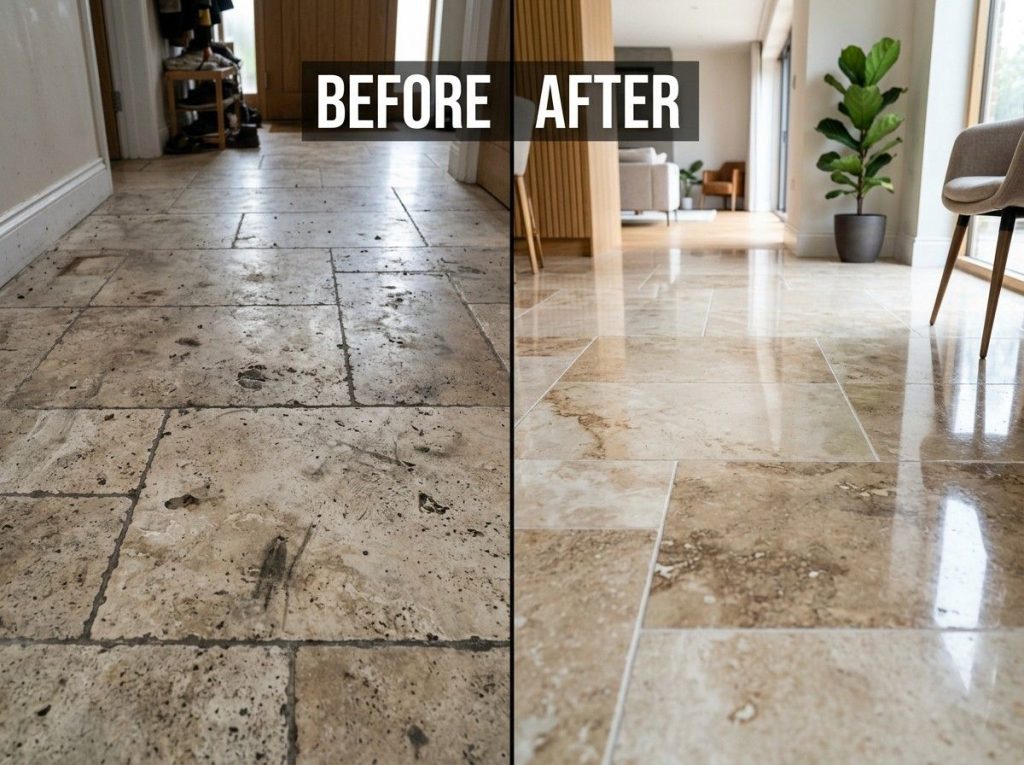
To fix the problem, we deep-cleaned the marble with a pH-neutral cleaner, dried the surface thoroughly, and applied a high-quality marble sealer. We also trained the homeowner’s cleaning staff on the right products and tools. Within a week, the shine returned, and stains stopped appearing.
This case shows how small mistakes can lead to big (and costly) problems, but the right approach can restore stone’s beauty.
Mistakes To Avoid When Cleaning Stone Floors
Many homeowners mean well but end up hurting their stone floors. Here are the most common errors:
- Using acidic or abrasive cleaners: Even “natural” options like vinegar or lemon can dull and etch stone.
- Letting water pool: Water can seep into grout or stone, causing stains or mold.
- Skipping regular sealing: An unsealed floor is open to stains and water damage.
- Scrubbing with abrasive pads: Steel wool or hard-bristle brushes will scratch the surface.
- Using dirty mop water: Always use clean water to avoid spreading dirt around.
A non-obvious mistake is using “all-in-one” floor cleaners—they often contain chemicals that are not safe for stone and can cause gradual damage.
Safety And Health Precautions
Cleaning stone floors is generally safe, but there are a few things to keep in mind:
- Wear gloves when using cleaners or sealers to protect your skin.
- Ventilate the area when sealing or using any chemical products.
- Test cleaners on a small, hidden area first to be sure they won’t damage or discolor the stone.
- Keep pets and children away from freshly cleaned or sealed floors until dry.
If you notice strong fumes, headaches, or allergic reactions, stop and call your installer or a professional for help.
When To Call A Professional
Some jobs require an expert touch. Call a licensed stone floor professional if:
- You have deep stains, cracks, or chips.
- The floor looks dull or etched despite proper cleaning.
- You need to grind or resurface the stone.
- You’re unsure of the stone type or correct cleaner.
Professional stone cleaning and restoration can be expensive, but it’s usually worth it to save a valuable floor. A pro can also reseal and polish the surface to a like-new finish.
Eco-friendly Cleaning For Stone Floors
Many homeowners want to avoid harsh chemicals. You can keep your stone floors clean with eco-friendly methods—just follow these guidelines:
- Use a pH-neutral, biodegradable stone cleaner.
- Plain warm water and a microfiber mop work well for regular cleaning.
- Avoid “green” cleaners with vinegar, citrus, or acids—they’re natural but not safe for stone.
- Reusable microfiber pads reduce waste.
Comparing Popular Stone Floor Cleaners
There are dozens of stone floor cleaners on the market. Here’s how a few popular options compare:
| Brand | pH Level | Safe for All Stone? | Eco-Friendly |
|---|---|---|---|
| StoneTech Revitalizer | Neutral | Yes | Yes |
| Granite Gold Daily Cleaner | Neutral | Yes | No |
| Method Daily Granite Cleaner | Neutral | Yes | Yes |
| Lysol Multi-Surface Cleaner | Acidic | No | No |
Always read the label before buying or using a cleaner on your stone floor.
Caring For Stone Floors In High-traffic Areas
Entryways, kitchens, and bathrooms see more dirt and moisture. Here’s how to keep stone looking good in busy spaces:
- Place doormats at entrances to catch grit and sand.
- Use area rugs in high-traffic zones (make sure rugs have a non-slip backing that’s safe for stone).
- Remove shoes before walking on stone floors, especially high heels or cleats.
- Clean up spills and tracked-in dirt promptly.
Preventive Maintenance Tips
A little prevention goes a long way. These habits help extend the life of your stone floors:
- Seal grout lines as well as the stone itself; grout can be even more porous than stone.
- Rotate rugs and mats regularly to prevent uneven wear or fading.
- Trim pet nails to avoid scratching.
- Use furniture pads under table and chair legs.
One tip many miss: Check the manufacturer’s recommendations for furniture pads or rug backings. Some materials, like rubber, can discolor light-colored stone.
Stone Floor Cleaning: Quick Reference Chart
To make things easy, here’s a quick guide for the most common stone types:
| Stone Type | What to Use | What to Avoid | Seal? |
|---|---|---|---|
| Marble | pH-neutral cleaner, soft mop | Vinegar, bleach, abrasive pads | Yes |
| Granite | pH-neutral cleaner, microfiber | Acids, ammonia | Usually |
| Travertine | pH-neutral cleaner, dry mop | Vinegar, citrus | Yes |
| Slate | pH-neutral cleaner, gentle brush | Strong chemicals | Sometimes |
| Limestone | pH-neutral cleaner, soft mop | Acids, bleach | Yes |
Frequently Asked Questions
What Is The Safest Cleaner For Stone Floors?
The safest option is a pH-neutral stone floor cleaner designed for natural stone. These cleaners gently lift dirt without harming the finish or breaking down sealers. Brands like StoneTech and Granite Gold are good choices. Avoid anything acidic or with harsh chemicals.
How Can I Tell If My Stone Floor Needs Sealing?
Do a simple water drop test. Place a few drops of water on the stone and wait 15 minutes. If the water beads up, the seal is still good. If it darkens or soaks in, it’s time to reseal.
Can I Use A Steam Mop On Stone Floors?
It’s best to avoid steam mops on natural stone. The heat and moisture can break down sealers, damage grout, and even crack softer stones. Stick with a damp (not wet) microfiber mop and the right cleaner.
How Do I Remove A Stain From Stone Floors?
For most stains, use a stone poultice that matches the stain type (oil, organic, rust). Follow the instructions and allow it to sit for several hours. For tough stains, or if you’re unsure, contact a stone care professional.
Where Can I Find More Information On Stone Care?
A trusted resource is the National Park Service’s stone care guide, which covers preservation and cleaning techniques for natural stone.
Stone floors are a timeless, elegant feature in any home. With the right care, they can last for generations—adding value, beauty, and comfort. Remember, a little knowledge and the right products go a long way toward keeping your stone floors looking their best.
If you ever feel unsure, don’t hesitate to reach out to a professional. Your stone floor is worth the extra care.