Your Trusted Source for Home Fixes & Guides

How to Clean Teak Wood Outdoor Furniture: Expert Tips 2026

How to Clean Teak Wood Outdoor Furniture is essential for keeping your patio furniture looking beautiful and lasting for years. Teak wood is a favorite for outdoor furniture because it’s durable, naturally weather-resistant, and attractive, but it still requires regular care. If you’re wondering how to clean teak wood outdoor furniture, this guide will show you safe, effective cleaning methods to remove dirt, stains, mildew, and weathering while preserving the wood’s natural beauty and extending its lifespan.
Cleaning teak wood isn’t hard, but doing it right helps your furniture last longer and keeps it safe for your family. This article gives you a complete guide—step-by-step instructions, helpful advice, and safety tips—based on real homeowner experience.
Why Teak Wood Is Popular For Outdoor Furniture
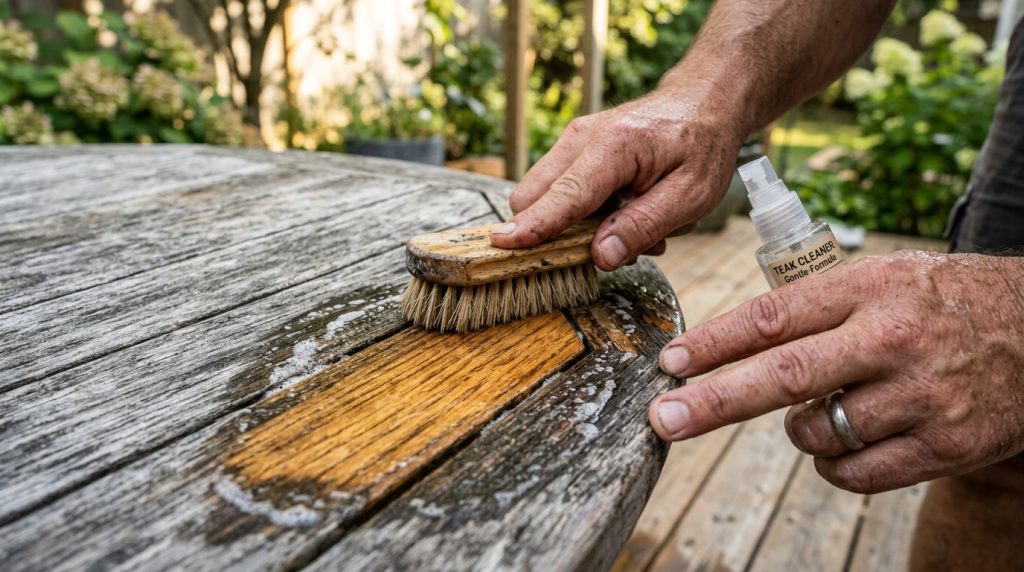
Teak is famous for its natural oils and tight grain. These features make it resist water, bugs, and rot better than most woods. That’s why people choose it for patios, gardens, and poolside. Teak furniture can last decades with proper care. But without cleaning, dirt, mold, and even bird droppings can dull its shine or cause damage.
Many homeowners like the aged, silver-gray patina that teak develops outdoors. Others prefer the rich golden-brown color when it’s new. Cleaning keeps both looks fresh and prevents early wear.
Another advantage is that teak doesn’t splinter easily, so it’s comfortable to touch. This makes it a smart choice for families with kids or anyone who enjoys relaxing outdoors without worrying about getting a splinter. Teak is also heavy, so it won’t blow away easily in strong winds—a practical benefit if you live in a stormy or coastal area.
What Makes Teak Cleaning Different?
Unlike softer woods, teak doesn’t soak up water easily. Its oils protect it but also mean you shouldn’t use harsh cleaners or power washers. Over-cleaning or scrubbing too hard can damage the grain and remove the natural oils.
Teak’s unique traits:
- Natural resistance: It resists mold but isn’t immune.
- Low maintenance: Doesn’t need to be sealed, but can benefit from oiling.
- Weathering: Turns gray over time, which is normal.
Knowing these points helps you avoid common mistakes, like using bleach or sanding too hard.
Teak’s density means it’s less likely to warp or crack compared to other woods, but it still needs gentle handling. For example, using a wire brush may leave scratches that are hard to fix. It’s also important not to let water sit on the surface for long periods, as pooling can sometimes cause uneven color changes or even foster mold growth in extreme humidity.
Essential Tools And Supplies
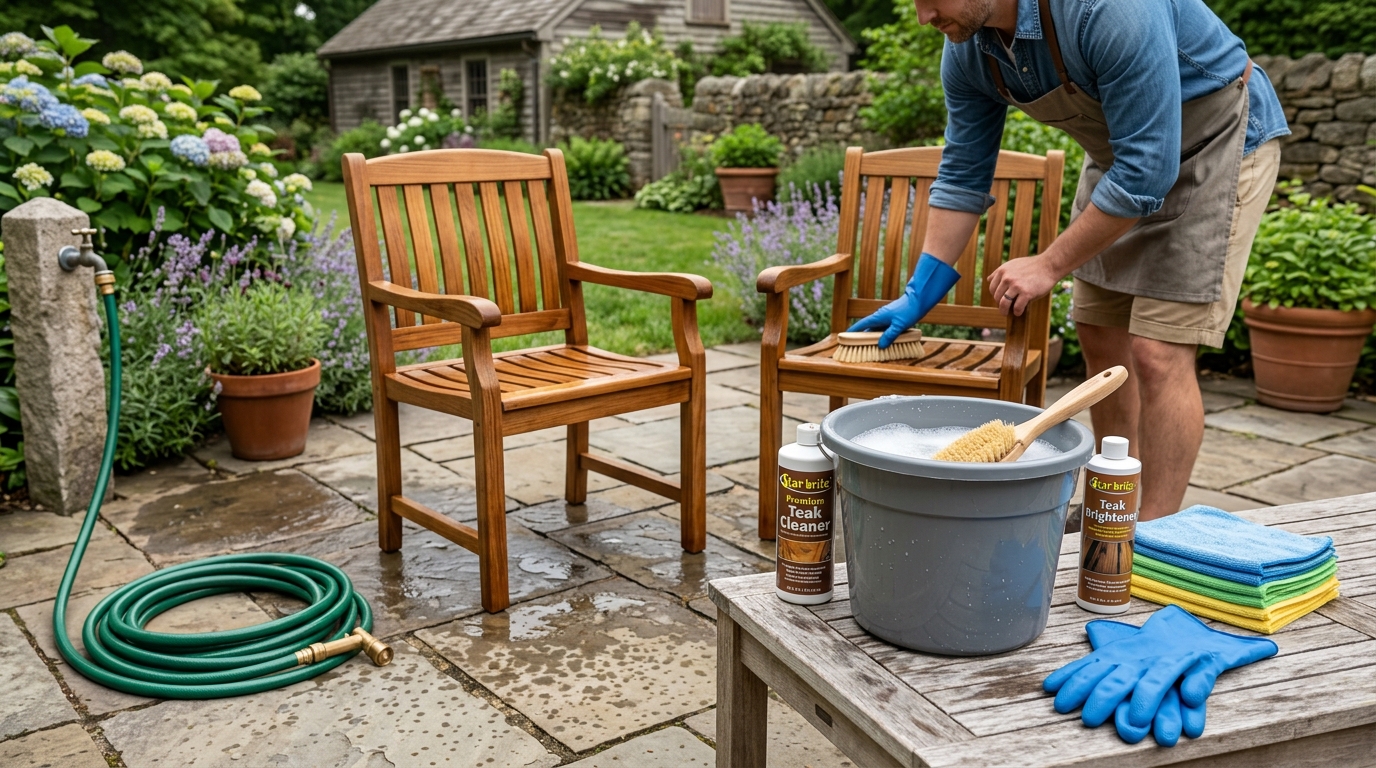
Before you start, gather these items:
- Soft-bristle brush or sponge
- Bucket
- Mild dish soap (no harsh chemicals)
- Garden hose
- Teak cleaner (optional, for deep stains)
- Gloves (protects your hands)
- Towels or rags
- Teak oil or sealer (optional, for finishing)
Safety tip: Always wear gloves and eye protection if using commercial cleaners. Avoid mixing cleaners; stick to one product at a time.
If your furniture has a lot of tight spaces or carvings, a soft toothbrush can help clean small details without scratching. For large tables, having extra towels ready will speed up drying and prevent water spots. Many people overlook the importance of using clean water—if your water is hard or has a lot of minerals, consider rinsing with distilled water for the final rinse to avoid mineral deposits.
Step-by-step Guide: Cleaning Teak Wood Outdoor Furniture
Follow these steps for the best results:
1. Remove Loose Dirt And Debris
Start by brushing off leaves, dust, and cobwebs. Use a dry soft-bristle brush or towel. Don’t use metal brushes or anything rough.
Take your time with this step, as removing surface debris first makes the rest of the cleaning much easier. If your furniture has slats or open spaces, turn it upside down to shake out trapped dirt. Many people skip the underside, but cleaning all sides helps prevent insect nests and mildew from forming in hidden spots.
2. Prepare A Cleaning Solution
Fill a bucket with warm water and add a few drops of mild dish soap. Stir to create suds. Don’t use bleach or ammonia—they can damage teak.
You only need a small amount of soap. Too much can leave a sticky film that attracts more dirt. If you want a natural option, a few drops of pure Castile soap or a mix of white vinegar and water (one part vinegar to ten parts water) can also work for routine cleaning.
Always mix the solution well before use.
3. Scrub The Surface Gently
Dip your brush or sponge in the soapy water. Gently scrub the furniture, working with the grain. Pay special attention to corners and joints where dirt collects. For stubborn spots, let the suds sit for a few minutes.
Don’t rush. Use circular motions for flat areas and dab gently on stained spots. If your furniture is very dirty, you may need to repeat this step with fresh water. Never use steel wool or abrasive pads. They can scratch or damage the teak’s surface, making it more vulnerable to weather.
4. Rinse Thoroughly
Rinse off all soap using a garden hose. Avoid pressure washers; they can strip away teak’s natural oils and roughen the wood.
Make sure to rinse every part, including the underside and legs. Soap left behind can cause discoloration or make the surface sticky. If you notice suds sticking in crevices, use a damp rag to wipe them away. Take extra care with older furniture, as harsh water flow can weaken joints.
5. Dry Completely
Wipe the furniture with clean towels. Let it air dry fully in a shaded spot. Direct sunlight can cause uneven drying and cracks.
Position the furniture so air circulates around all sides. On humid days, allow extra drying time. Never put cushions or covers back on while teak is still damp. Trapped moisture encourages mildew growth and can lead to musty smells.
6. Treat Stains And Mold
For stains or mildew, use a teak-specific cleaner. Apply according to the label. Scrub gently, rinse well, and dry. Never use bleach; it weakens teak fibers.
If the stain is old or very deep, you may need to repeat the process or let the cleaner sit a little longer (always follow the instructions). For mildew, cleaning on a dry, sunny day helps prevent spores from spreading.
If you notice dark spots coming back quickly, check for drainage problems under or around your furniture.
7. Restore Color (optional)
If you prefer teak’s original golden tone, you can apply teak oil or sealer. Always follow the product instructions and test on a small area first.
Some products may darken teak slightly, so testing helps you avoid surprises. Use a lint-free cloth and apply oil or sealer evenly. Allow enough time for the finish to dry before using the furniture. For best results, lightly sand rough spots before oiling, but never sand aggressively.
Here’s a comparison of cleaning solutions for teak:
| Cleaning Solution | Effectiveness | Safety for Teak | Recommended Use |
|---|---|---|---|
| Dish Soap & Water | Good for light dirt | Very safe | Routine cleaning |
| Teak Cleaner | Excellent for stains | Safe if used as directed | Deep cleaning |
| Bleach | Removes mold | Unsafe for teak | Not recommended |
| Pressure Washer | Removes surface dirt | Unsafe for teak | Never recommended |
Tackling Common Problems: Stains, Mold, And Weathering
Outdoor teak faces several challenges. Here’s how to handle them:
Stains
Food, drinks, or leaves can leave marks. For small stains, use soapy water and a soft brush. For tough stains, try a teak cleaner. Always rinse well.
Non-obvious tip: If you spill wine or coffee, clean it immediately. The longer you wait, the deeper the stain goes.
For oil-based stains (like salad dressing or sunscreen), sprinkle cornstarch on the spot and let it sit for an hour before brushing off and cleaning with soap and water. This absorbs extra oil and makes cleaning easier.
Mold And Mildew
Teak resists mold, but humid climates can cause spots. Use a teak cleaner formulated for mold. Don’t use bleach—it harms the wood.
Safety tip: Mold spores can cause allergies. Wear gloves and a mask if you see visible mold.
If you spot mold in grooves or seams, use a toothbrush with your cleaner for better reach. After cleaning, let the furniture dry in the sun if possible, as sunlight naturally helps kill remaining mold spores.
Weathering
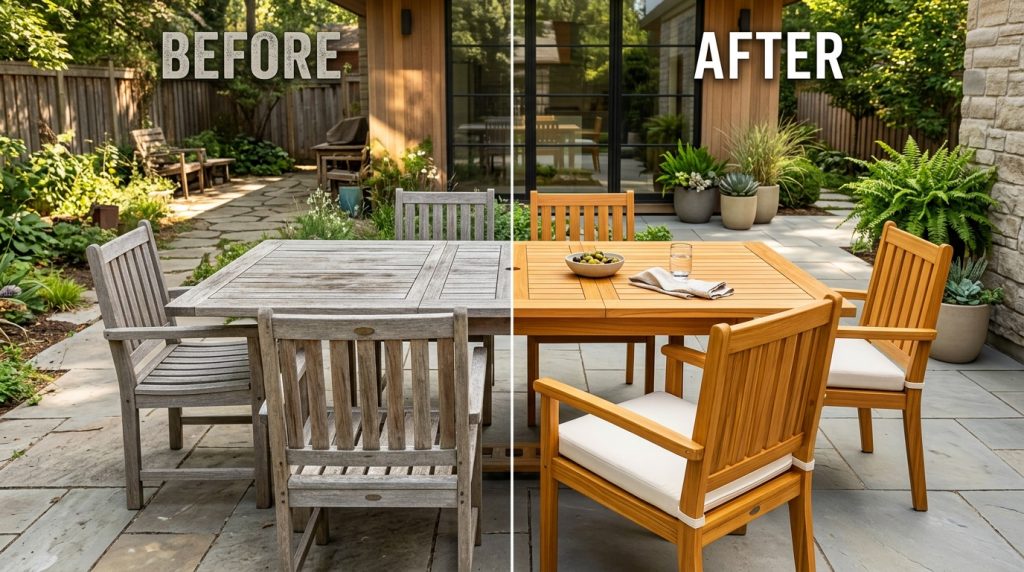
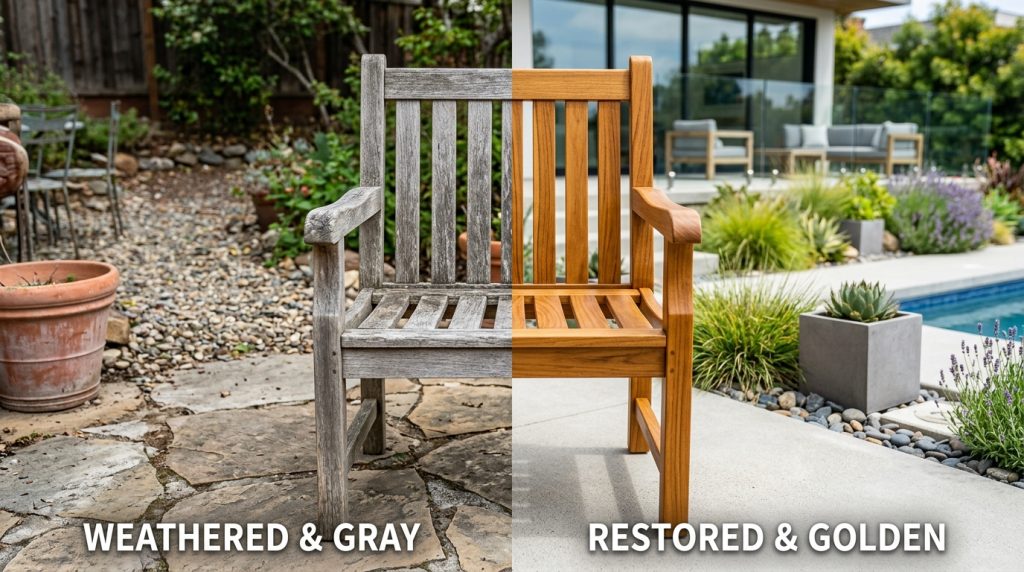
Teak naturally turns gray. If you want to restore the golden color, use teak oil after cleaning. If you prefer the silvery look, just clean regularly.
Here’s a quick look at weathering effects:
| Weathering Stage | Appearance | Care Needed |
|---|---|---|
| New | Golden brown | Clean every 1-2 months |
| Aged (6–12 months) | Light silver-gray | Clean and remove stains as needed |
| Heavily Weathered | Deep gray, rougher texture | Deep cleaning, optional oiling |
If you decide to keep the silver-gray look, be aware it is only on the surface. Underneath, the wood is still strong and healthy. You can always sand lightly to reveal fresh wood if you change your mind.
Deep Cleaning Vs. Routine Maintenance
Routine cleaning keeps teak looking good, but deep cleaning is needed for stains, mold, or heavy weathering.
Routine Maintenance
- Clean every 1–2 months during outdoor season
- Brush off debris weekly
- Wipe spills right away
Routine maintenance also means checking for loose screws or joints. Tightening hardware once a season prevents wobbles and extends the life of your furniture.
Deep Cleaning
- Needed once or twice a year
- Use teak cleaner for heavy stains
- Consider sanding lightly for rough spots (only if necessary)
Common mistake: Sanding too often removes teak’s protective oils and shortens its lifespan. Sand only when the surface feels rough or splintered.
If your furniture is near trees or under a covered patio, you may need deep cleaning more often because of pollen or sap buildup. Always clean on a dry day to let the wood dry thoroughly afterward.
Preventing Damage: Practical Tips
Keeping teak furniture clean is just one part of care. Preventing damage saves money and extends life.
- Cover furniture during bad weather or winter. Use breathable covers to prevent moisture buildup.
- Place furniture on level surfaces to avoid wobbling and stress on joints.
- Avoid placing hot pans or dishes directly on teak. Use pads or coasters.
- Don’t drag furniture—lift when moving to prevent joint damage.
- Check hardware every spring. Tighten screws and bolts as needed.
Non-obvious insight: Using non-slip rubber pads under legs reduces moisture absorption from wet patios.
If your furniture is on grass or soil, move it occasionally to prevent the legs from absorbing moisture and rotting. For tables, always use a tablecloth or placemats during meals to protect the surface from food stains and heat.
When To Apply Teak Oil Or Sealer
Many homeowners want to keep the fresh, golden look of teak. Oiling or sealing helps, but it’s not always necessary.
Applying Teak Oil
- Clean furniture first
- Apply oil with a cloth, working with the grain
- Wipe excess oil after 15–20 minutes
- Let dry overnight
Note: Over-oiling can cause sticky residue and attract dirt. Apply only once or twice a year.
Choose a day with low humidity for best results, as oil dries faster and more evenly. If the weather is damp, the oil can stay tacky for days.
Using Teak Sealer
- Sealer lasts longer than oil
- Protects against stains and moisture
- Apply with a brush or cloth
- Let dry completely before use
Common mistake: Applying oil or sealer to dirty or wet furniture traps moisture and causes mold.
Always check product labels for drying times. If you’re unsure, wait a full day before using the furniture. Some sealers add UV protection, which helps prevent sun fading.
Safety Precautions For Homeowners
Cleaning teak is safe, but a few precautions help:
- Wear gloves for protection, especially with cleaners
- Avoid inhaling dust if sanding
- Don’t use power tools unless you’re experienced
- Keep children and pets away during cleaning
If you find deep cracks, loose joints, or suspect structural damage, call a licensed furniture repair professional. Trying to fix major problems yourself can make them worse.
It’s also wise to keep your cleaning supplies out of direct sunlight and away from open flames, especially if you use oil-based products. Store leftover oil or sealer tightly sealed to prevent accidents.
Case Study: Restoring Weathered Teak Patio Set
Let’s look at a real example. A homeowner in Florida had a 5-year-old teak patio set turned almost completely gray and had mildew stains. They followed this process:
- Removed cushions and brushed off debris
- Mixed dish soap with warm water and scrubbed gently
- Used a teak cleaner for mildew spots, following label directions
- Rinsed thoroughly and let the furniture dry two days in shade
- Applied teak oil to restore color
Result: The patio set regained its golden tone and looked nearly new. The homeowner noticed fewer mildew spots after regular cleaning and oiling.
Practical tip: Regular care prevents deep stains and reduces the need for heavy restoration.
One thing they learned: cleaning after pollen season (not during) made the results last longer. Timing your maintenance can make a big difference, especially if you live in an area with lots of trees.
How To Clean Teak Furniture Cushions
Outdoor cushions often sit on teak chairs or benches. Cleaning them helps keep your teak clean too.
- Remove cushions before cleaning wood
- Vacuum cushions to remove dust
- Spot-clean stains with mild soap and water
- Let dry completely before putting back
Common mistake: Washing cushions with bleach damages fabric and can drip onto teak.
If your cushions have removable covers, check washing instructions. Air drying is usually best. For mildew, use a gentle cleaner and scrub outdoors, allowing fresh air to help remove odors.
Comparing Teak With Other Outdoor Furniture Materials
It’s helpful to see how teak stacks up against other materials:
| Material | Durability | Maintenance | Weather Resistance |
|---|---|---|---|
| Teak | High (20+ years) | Low to moderate | Excellent |
| Metal (aluminum) | Medium (10–15 years) | Low | Good (rust-resistant) |
| Plastic | Low (5–10 years) | Low | Varies (can crack) |
| Softwood | Low (5–8 years) | High | Poor |
Unlike plastic, teak won’t become brittle in the sun or cold. And compared to softwoods, teak doesn’t need painting or constant sealing. This makes it a cost-effective choice over time, even if the initial price is higher.
Eco-friendly Cleaning Choices
Teak is a sustainable wood, but cleaning it responsibly matters. Choose biodegradable soaps and avoid harsh chemicals. Dispose of dirty water away from gardens and storm drains.
If you want more on sustainable teak, visit Wikipedia.
If you’re interested in making your own cleaner, mix one cup of white vinegar with a gallon of warm water. This solution is safe for most finishes and won’t harm your garden if spilled. Always check labels to make sure products are safe for outdoor use and the environment.
When To Call A Professional
Some problems need expert help:
- Deep cracks or splits
- Loose or broken joints
- Heavy mold infestation
- Restoration after fire or flood
If your furniture has these issues, contact a licensed furniture restorer or woodworker. Trying to fix structural damage yourself can cause injuries or ruin expensive furniture.
Professional refinishers can also remove old finishes, sand surfaces evenly, and apply sealers in a way that lasts longer. This is especially helpful for antique or heirloom pieces where keeping value is important.
Frequently Asked Questions
How Often Should I Clean Teak Wood Outdoor Furniture?
Clean your teak furniture every 1–2 months during outdoor season. If you live in a rainy or humid area, clean more often. Quick action after spills prevents stains. For homes near the ocean, salt can build up on surfaces. Rinse with fresh water after storms to prevent salt damage.
Can I Use A Pressure Washer On Teak Wood?
No, it’s not recommended. Pressure washers strip natural oils and roughen the wood. Stick to a garden hose and soft brush for rinsing. Even at low settings, pressure washers can force water deep into the wood, causing swelling or later cracks.
Is It Safe To Use Bleach Or Harsh Chemicals?
Avoid bleach or strong chemicals. They damage teak fibers and cause fading. Use mild dish soap or a teak-specific cleaner for tough stains. Always check labels, as some “wood cleaners” are actually too harsh for teak.
Should I Oil Teak Furniture Every Year?
Oiling is optional. If you want to keep the golden-brown color, oil once or twice a year. Too much oil attracts dirt and causes sticky residue. If you like the weathered look, you don’t need to oil at all—just clean regularly.
What Should I Do If My Teak Furniture Has Deep Cracks?
Don’t try to repair deep cracks yourself. Call a licensed furniture repair expert. DIY fixes can make cracks worse or cause injuries. Cracks that go all the way through a piece can signal deeper problems, so get them checked before using the furniture again.
Keeping your teak furniture clean isn’t just about looks—it’s about protecting your investment and keeping your outdoor space safe and inviting. With the right care, your teak chairs, benches, and tables will last for decades and stay beautiful through every season.
Remember, a little routine maintenance goes a long way, and professional help is always available for bigger repairs.