Your Trusted Source for Home Fixes & Guides


How to Clean Terrazzo Floors: Tips for a Gleaming Shine

Terrazzo floors are a classic choice in American homes, especially in bathrooms, kitchens, and entryways. Their beautiful, speckled look comes from a blend of marble, quartz, granite, or glass chips set in cement or resin. While terrazzo is famous for its durability and unique style, it does need special care to stay looking its best.
Many homeowners are unsure how to clean terrazzo floors without damaging the surface, causing stains, or making them lose their shine. The good news? With the right approach, you can keep your terrazzo floors sparkling for decades.
As someone who has remodeled dozens of bathrooms and tackled countless cleaning jobs, I’ve seen both the best and worst of terrazzo floor care. I’ve witnessed floors ruined by harsh chemicals, and others that look brand new after 50 years because of smart maintenance.
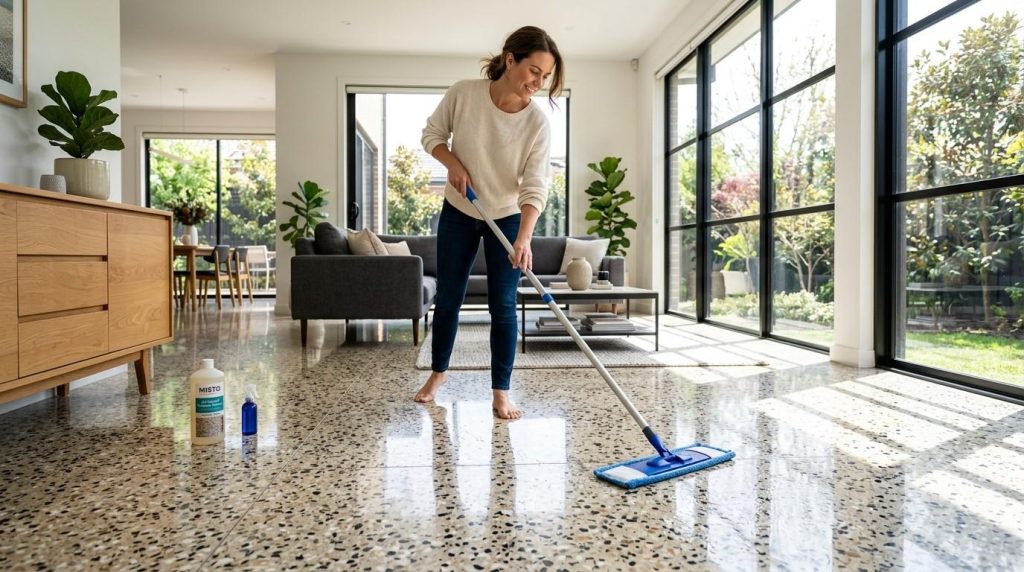
This guide will give you clear, step-by-step advice to clean your terrazzo floors safely and effectively—using expert tips, easy-to-understand instructions, and real-life examples.
What Makes Terrazzo Floors Different?
Before you start cleaning, it’s important to know what you’re working with. Terrazzo is not like tile, vinyl, or hardwood. The chips in terrazzo can be hard, but the binder (cement or resin) can be more sensitive. This means strong chemicals, acids, or rough scrubbing can cause permanent damage.
There are two main types of terrazzo floors:
- Cement-based terrazzo: The classic style, often found in older homes. It’s thick, heavy, and porous. Cement terrazzo is more sensitive to acids and can stain if spills are not cleaned quickly.
- Epoxy-based terrazzo: A newer, thinner type with a resin binder. This style is less porous and more stain-resistant, but still needs gentle care.
Knowing which type you have helps you choose the right cleaning products and methods.
Essential Tools And Products For Cleaning Terrazzo
Using the right tools protects your floors and makes cleaning easier. Here’s what you’ll need for routine and deep cleaning:
- Soft-bristle broom or a microfiber dust mop
- PH-neutral floor cleaner (never acidic or alkaline)
- Bucket with clean, warm water
- Soft mop (microfiber or cotton)
- Non-abrasive sponge
- Soft, dry towels
- Wet/dry vacuum (optional but helpful for large areas)
- Plastic putty knife (for removing sticky spots)
- Spray bottle (for spot cleaning)
Avoid: Steel wool, rough scrub pads, vinegar, bleach, ammonia, or any acidic cleaner.
Daily And Weekly Terrazzo Floor Maintenance
Regular care keeps your terrazzo floors looking their best and prevents stubborn stains or scratches.
Daily Dusting
Dirt and grit are the enemy of terrazzo. Small particles can scratch the surface and dull its shine. I recommend:
- Sweep with a soft-bristle broom or use a dry microfiber mop every day, especially in high-traffic areas.
- If you have pets or kids, you may need to dust more often.
Weekly Damp Mopping
Once or twice a week, give your floors a damp mop. Here’s how:
- Mix a pH-neutral cleaner with warm water, following the label directions.
- Dip your mop, wring out extra water (the mop should be damp, not soaking).
- Mop the floor in small sections.
- Rinse the mop often in clean water.
- Dry the floor with a soft towel to prevent water spots.
Pro tip: Never let water pool on the floor. Terrazzo is porous, and standing water can cause stains or even damage the subfloor if it seeps through cracks.
Deep Cleaning Terrazzo Floors
Sometimes, regular maintenance isn’t enough. If your terrazzo floors look dull, have stubborn stains, or just need a refresh, follow these steps for a deep clean.
Step 1: Remove Surface Dirt
Start by sweeping or vacuuming to remove all loose dirt and debris. Any grit left on the floor will scratch the surface during cleaning.
Step 2: Prepare A Cleaning Solution
- Use a pH-neutral terrazzo floor cleaner (never use vinegar, lemon juice, or any acid-based product).
- Mix according to the manufacturer’s instructions. Too much cleaner can leave residue.
Step 3: Mop The Floor
- Use a microfiber or soft cotton mop.
- Work in sections, rinsing the mop frequently in clean water.
Step 4: Tackle Stubborn Stains
For tough spots (like grease or dried spills):
- Spray a small amount of pH-neutral cleaner directly on the stain.
- Let it sit for a minute or two.
- Gently scrub with a non-abrasive sponge.
- Wipe with a clean, damp cloth.
If you notice rust stains, try a terrazzo-safe rust remover. Always test in a hidden spot first.
Step 5: Rinse And Dry
- Mop the floor again with clean water to remove any leftover cleaner.
- Dry the area thoroughly with soft towels.
Case Study:
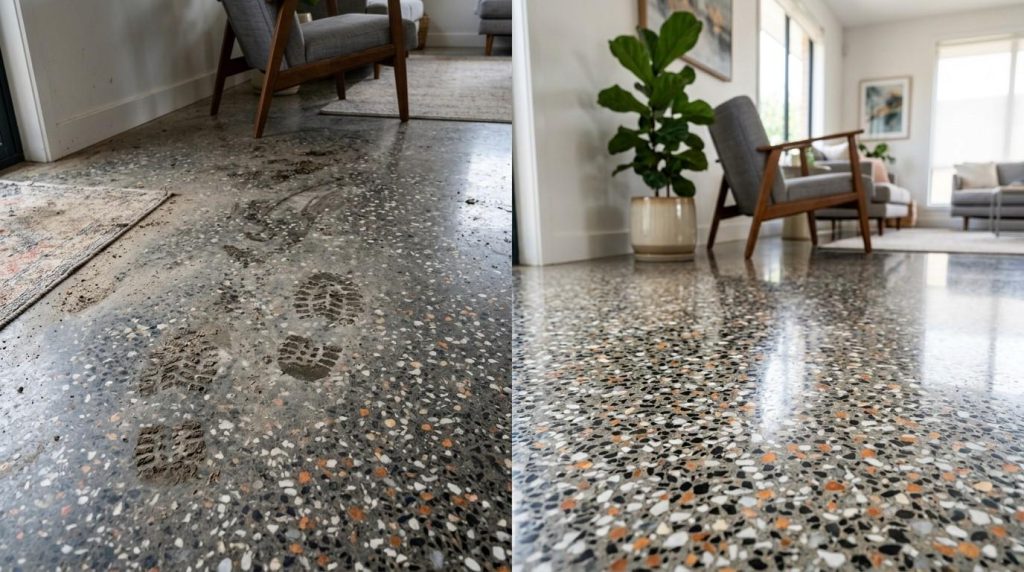
A homeowner in Tampa, Florida had terrazzo floors that looked gray and cloudy after years of using a popular all-purpose cleaner. When I visited, I tested a small area using a pH-neutral terrazzo cleaner and a microfiber mop. Within minutes, the original shine returned.
After a full deep clean, the floor looked almost new. The key was switching to the right cleaning product—avoiding harsh chemicals that leave a residue.
Removing Common Terrazzo Floor Stains
Even with great care, spills happen. Here’s how to handle some of the most common stains:
| Stain Type | How to Clean | What to Avoid |
|---|---|---|
| Coffee, Juice, Wine | Blot spill, use pH-neutral cleaner, rinse and dry. | No vinegar or lemon juice. |
| Oil & Grease | Use a small amount of mild dish soap, rinse well. | No abrasive pads. |
| Rust | Terrazzo-safe rust remover (test first). | No bleach or acid. |
| Paint | Scrape gently with plastic putty knife; for dried paint, try a little rubbing alcohol on a cloth (test first). | No paint thinner or harsh solvents. |
| Ink | Dab with isopropyl alcohol; rinse and dry. | No strong solvents. |
Important: Always clean spills right away. The longer they sit, the harder they are to remove.
Polishing Terrazzo Floors For A Lasting Shine
After cleaning, you may want to restore the glossy finish that makes terrazzo so attractive. Polishing can be done by hand or with a machine, depending on the size of the area.
Diy Polishing (small Areas)
- Use a terrazzo polishing powder (available at home improvement stores).
- Sprinkle a small amount on the floor.
- Dampen a soft cloth and rub in a circular motion.
- Buff with a dry microfiber cloth until shiny.
Machine Polishing (large Areas)
For bigger jobs, renting a low-speed floor buffer with a felt or microfiber pad works well.
- Make sure the pad is clean and soft.
- Use only terrazzo-safe polishing compounds.
- Work in small sections, moving the buffer slowly.
Safety Tip: Always wear eye protection and gloves when working with polishing compounds.

When To Call A Professional
If your terrazzo floors are heavily scratched, have deep stains, or have lost their shine completely, it might be time to call a terrazzo restoration pro. Professionals use diamond abrasives and advanced sealers that aren’t available to homeowners. This can bring even the oldest floors back to life.
Sealing Terrazzo Floors: Do You Need To?
Sealing helps protect terrazzo from stains and moisture, but it’s not always necessary. Epoxy terrazzo usually doesn’t need sealing, but cement-based terrazzo does.
How To Seal Terrazzo Floors
- Clean the floor thoroughly and let it dry completely.
- Choose a terrazzo-approved sealer (never use tile or stone sealer that isn’t labeled for terrazzo).
- Apply with a clean, soft mop or applicator pad.
- Allow to dry as directed on the product label (usually 30–60 minutes).
- Apply a second coat if recommended.
Pro tip: Always test the sealer in a small, hidden spot first to make sure it doesn’t change the color of your floor.
How Often Should You Seal?
- Cement terrazzo: Every 1–2 years, or as needed.
- Epoxy terrazzo: Rarely needs sealing—check with your installer.
Mistakes To Avoid When Cleaning Terrazzo Floors
Many homeowners unintentionally damage terrazzo by making these common mistakes:
- Using vinegar, bleach, or ammonia: These can etch or dull the surface.
- Using abrasive scrubbers: Steel wool and rough pads cause scratches.
- Letting water sit: Standing water can stain or damage the subfloor.
- Skipping regular maintenance: Dirt buildup is hard to remove and can permanently dull terrazzo.
- Using the wrong sealer: Some sealers trap moisture or change the floor’s color.
Avoiding these mistakes will help your terrazzo floors stay beautiful for years.
Comparing Terrazzo To Other Flooring Types
Many homeowners ask how terrazzo compares to other popular flooring materials when it comes to cleaning and maintenance. Here’s a quick look:
| Flooring Type | Durability | Cleaning Difficulty | Stain Resistance |
|---|---|---|---|
| Terrazzo | Very High | Moderate (needs correct products) | Good (if sealed) |
| Tile (Ceramic/Porcelain) | High | Easy | Very Good |
| Marble | Medium | Difficult (sensitive to acids) | Poor (stains easily) |
| Vinyl | Medium | Easy | Good |
| Hardwood | Medium | Moderate | Fair |
Terrazzo offers excellent durability and style but does require slightly more care than simple tile or vinyl.
Safety Tips For Cleaning Terrazzo
While terrazzo is tough, always follow these safety steps:
- Wear gloves when using any cleaning chemicals.
- Ventilate the room if using sealers or polishing compounds.
- Test cleaners in a small, hidden area before using on the entire floor.
- Keep floors dry to avoid slips and falls.
- Store cleaning products safely away from children and pets.
If you feel uncomfortable using chemicals or a floor buffer, or if your floor is very old and valuable, it’s wise to consult a professional.
Eco-friendly Cleaning For Terrazzo Floors
Many homeowners today want green cleaning options. Here’s how to clean terrazzo without harsh chemicals:
- Use a microfiber mop and warm water for daily cleaning.
- Choose plant-based, pH-neutral floor cleaners (check the label for terrazzo compatibility).
- Avoid DIY “natural” cleaners with vinegar or citrus—they are acidic and will damage terrazzo.
Real-life Example: Restoring A 1960s Terrazzo Floor
In a mid-century home in Orlando, a family wanted to restore their original terrazzo floor, which had been hidden under carpet for decades. The floor was dull and covered in glue residue. Instead of tearing it out, I suggested a careful deep cleaning and professional polishing.
After several rounds of cleaning with a pH-neutral solution and a buffer, most stains were gone. A terrazzo pro finished the job with diamond polishing and a quality sealer. The family was thrilled—the floor looked almost new, and it became a key feature of their home remodel.
When To Call A Professional
DIY cleaning is fine for routine care and minor stains, but there are times when you should hire a licensed terrazzo expert:
- Deep scratches, chips, or cracks
- Stains that don’t come out with safe cleaning methods
- Dull, etched, or uneven surfaces
- Restoration after water damage
Professional terrazzo restoration is an investment, but it can add significant value and beauty to your home.
Key Maintenance Tips For Long-lasting Terrazzo Floors
- Wipe up spills quickly to prevent stains.
- Dust or sweep daily—grit can scratch the finish.
- Use mats or rugs in entryways to catch dirt and moisture.
- Avoid dragging heavy furniture across the floor.
- Have your terrazzo professionally polished every few years for a showroom shine.
Frequently Asked Questions
What Is The Best Cleaner For Terrazzo Floors?
The best cleaner for terrazzo is a pH-neutral floor cleaner that is labeled safe for terrazzo. Avoid anything acidic or alkaline, like vinegar, bleach, or ammonia.
Can I Use A Steam Mop On Terrazzo Floors?
It’s not recommended. Steam mops use high heat and moisture, which can damage the binder in terrazzo, especially if there are cracks or if your floor is not well sealed.
How Do I Remove Scratches From Terrazzo?
Minor scratches can be polished out with a terrazzo polishing powder and a soft cloth. Deep scratches usually need professional restoration with diamond pads.
Do Terrazzo Floors Need Waxing?
Modern terrazzo floors do not need wax. In fact, wax can attract dirt and create a yellowish film. Instead, maintain shine with proper cleaning and polishing.
Are Terrazzo Floors Slippery When Wet?
Yes, terrazzo can be slippery if water or cleaning solution is left on the surface. Always dry the floor after mopping, and use non-slip mats in wet areas like bathrooms.
Terrazzo floors are a long-lasting, beautiful investment—if you care for them properly. With a little regular attention and the right products, you can keep them bright and elegant for decades. If you’re ever unsure about a cleaner or technique, consult a terrazzo pro or check reputable resources like the Wikipedia page on terrazzo. A small effort goes a long way to protect your floors and your home’s value.