Your Trusted Source for Home Fixes & Guides

How to Get a Stain Out of a Wool Carpet:Expert Cleaning Tips

How to Get a Stain Out of a Wool Carpet is a common concern for homeowners who want to protect their investment without damaging delicate fibers. If you’re wondering how to get a stain out of a wool carpet, using the right cleaning methods and gentle products is essential to remove stains safely while preserving the carpet’s natural texture and appearance. This guide covers effective stain removal techniques, common mistakes to avoid, and expert tips for keeping your wool carpet looking its best.
This guide will show you exactly how to remove stains from wool carpet—step by step. We’ll cover everything from emergency spill response to deep stain removal, the best cleaning solutions, and when you should bring in a pro. You’ll also find common mistakes, safety tips, and a real-life case study to help you avoid costly errors.
By the end, you’ll feel confident handling stains while protecting your investment.
Why Wool Carpets Need Special Care
Wool is a natural protein fiber, just like your hair. It’s soft, resilient, and naturally resistant to dirt—but it’s also more sensitive than synthetic fibers like nylon or polyester. Using hot water, strong chemicals, or aggressive scrubbing can easily ruin the texture or cause color loss.
Wool is also absorbent, which means it can hold onto spills or stains if they aren’t treated quickly. Yet, with the right approach, wool carpets can look beautiful for decades. This is why understanding the science behind wool helps you make smarter cleaning choices.
Key Characteristics Of Wool Carpets
- Absorbency: Wool can soak up to 30% of its weight in moisture without feeling wet.
- PH Sensitivity: Wool is happiest with neutral or slightly acidic cleaners (pH 5-7). Alkaline products (like ammonia or bleach) will break down the fibers.
- Stain Resistance: Wool naturally repels some dirt, but protein-based stains (milk, blood, eggs) and colored liquids (wine, juice) can set fast.
First Response: What To Do Immediately After A Spill
Acting quickly is the secret to saving your wool carpet. Here’s what you should do the moment something hits the floor.
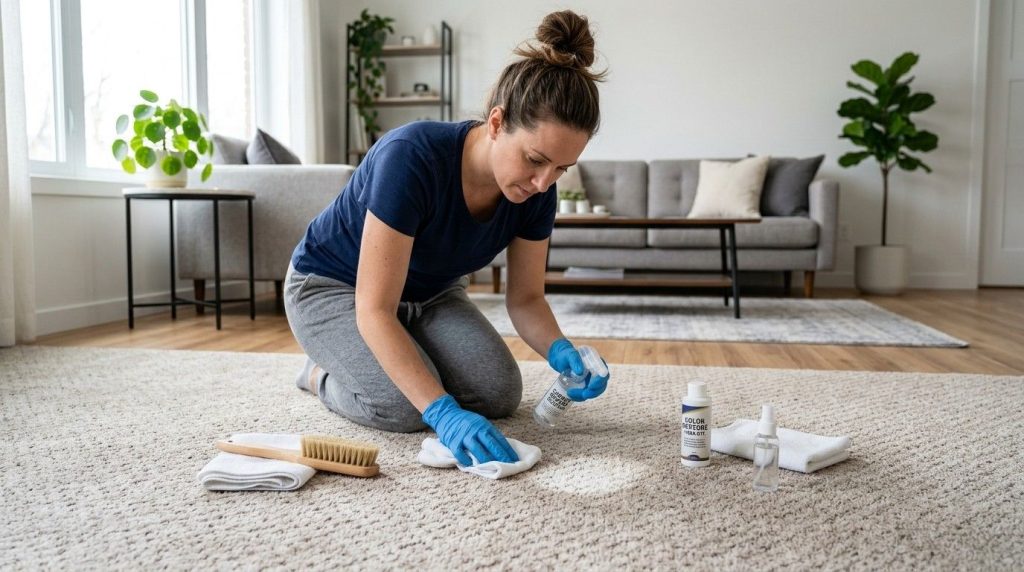
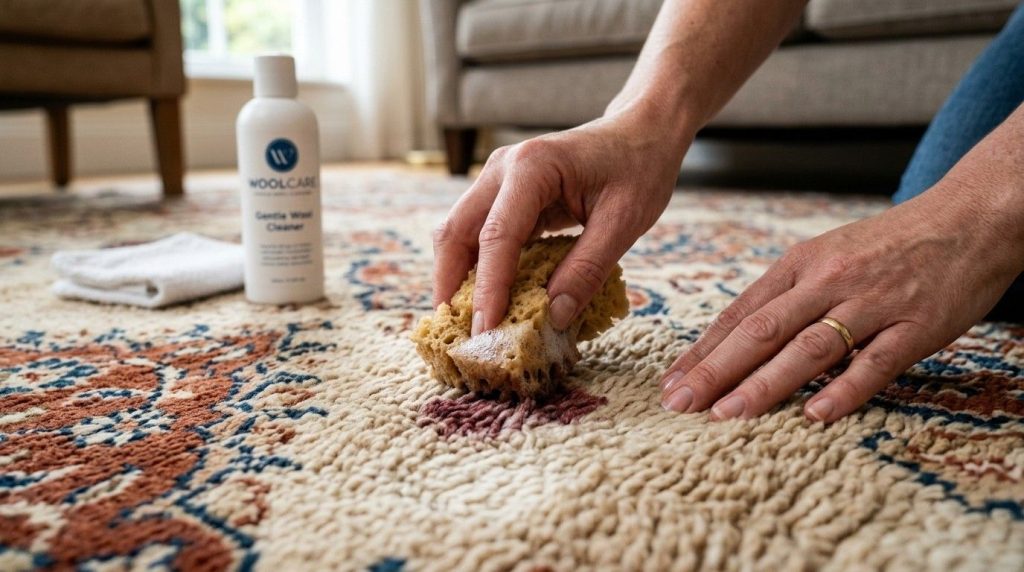
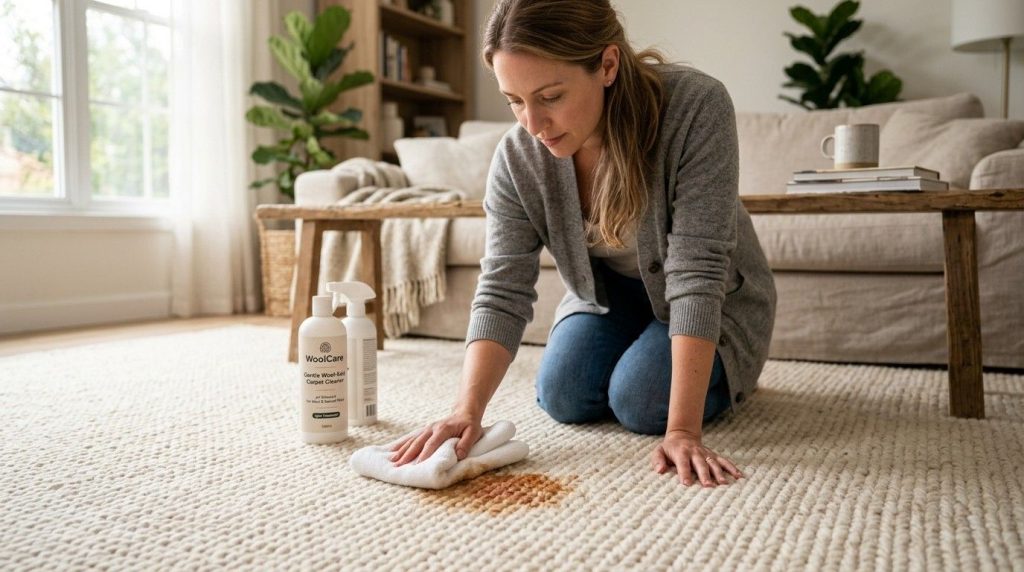
- Blot, Don’t Rub: Use a clean, white cloth or paper towel to gently blot up as much of the spill as possible. Press down firmly but avoid rubbing—rubbing pushes the stain deeper and can fuzz up the fibers.
- Work From the Outside In: Always blot from the edge of the spill toward the center. This keeps the stain from spreading.
- Remove Solids Gently: If there’s food or debris, lift it off with a spoon or dull knife. Don’t mash it into the carpet.
- Keep It Damp, Not Soaked: Wool hates being over-wet. Lightly mist with water if needed, but don’t pour or flood the area.
Pro Tip: Always use white towels. Colored towels can bleed dye onto your carpet, making the problem worse.
Choosing The Right Cleaning Solution For Wool
The cleaning product you use is just as important as your technique. Wool is picky—common household cleaners may be too harsh.
Safe Cleaning Solutions For Wool Carpets
- Cool Water: Sometimes plain water is enough, especially for fresh stains.
- Mild Dish Soap: Mix 1 teaspoon of clear, unscented dishwashing liquid in 1 cup of cool water. Avoid anything with bleach, ammonia, or strong fragrances.
- White Vinegar Solution: Mix 1 part white vinegar to 3 parts water. This is safe for most stains and can help neutralize odors.
- Commercial Wool Carpet Cleaner: Check that it’s labeled “wool-safe” or “approved by The WoolSafe Organization.”
Never use strong alkaline cleaners, oxygen bleach, or enzyme-based cleaners unless the label says they’re safe for wool.
How Ph Affects Cleaning
Here’s a quick comparison of common cleaning solutions and their pH levels, showing which are safe for wool:
| Cleaning Solution | pH Level | Safe for Wool? |
|---|---|---|
| Distilled Water | 7 (neutral) | Yes |
| White Vinegar Solution | ~4-5 (acidic) | Yes |
| Ammonia | 11 (alkaline) | No |
| Bleach | 12-13 (alkaline) | No |
| Mild Dish Soap Solution | 6-7 | Yes |
Step-by-step Guide: Removing Common Stains From Wool Carpet
Every stain is a little different, but these general steps work for most spills—coffee, wine, juice, mud, or pet accidents.
1. Prepare Your Tools
You’ll need:
- White cotton cloths or paper towels
- A small bowl or spray bottle for your cleaning solution
- A spoon or dull knife for solids
- A vacuum (optional, for dry stains)
- Wool-safe carpet cleaner (optional)
2. Blot Up Excess
As described above, blot (don’t rub) to soak up as much liquid as possible.
3. Test Your Cleaner
Pick a hidden spot of carpet (like in a closet) and dab your cleaning solution on it. Wait 5 minutes. If the color changes or you see fuzzing, stop and call a professional.
4. Apply The Cleaning Solution
Lightly moisten a cloth with your chosen cleaner. Dab—don’t soak—the stained area. Work gently, and avoid over-wetting the carpet.
5. Blot Again
Use a fresh dry cloth to lift the stain. Repeat applying the cleaning solution and blotting until the stain stops transferring to your towel.
6. Rinse (if Needed)
Dab with a cloth moistened with clean water to remove leftover soap or cleaner. Leaving residue can attract new dirt.
7. Dry The Area
Press with a dry towel to absorb moisture. If possible, place a fan nearby to speed up drying. Avoid walking on the area until it’s completely dry.
Safety Tip: Open windows for ventilation if using any cleaner with a scent. Wool can hold onto odors.
Dealing With Specific Types Of Stains
Some stains need special handling. Here’s how to tackle the most common ones:
Food And Drink Stains (wine, Coffee, Juice)
- Blot up as much as possible right away.
- Mix a wool-safe dish soap solution.
- Dab the stain, rinse with water, and blot dry.
- For red wine, a vinegar solution can help reduce the color.
Pet Urine And Feces
- Remove solids carefully (use gloves).
- Blot up liquid.
- Use a white vinegar solution to neutralize odor and bacteria.
- Rinse and dry thoroughly.
Insight: Never use enzyme-based pet stain removers unless the label says “wool safe.” Enzymes break down protein fibers like wool.
Mud And Dirt
- Let mud dry completely. Don’t try to clean wet mud—it will smear.
- Vacuum up the dry soil.
- If a stain remains, use a mild soap solution and blot.
Grease Or Oil
- Sprinkle a small amount of baking soda or cornstarch on the spot. Let sit 10–15 minutes to absorb oil, then vacuum up.
- Use a wool-safe cleaner to blot the remaining stain.
Blood
- Use only cold water—never hot, which sets the stain.
- Blot, then dab with a mild soap solution.
- Rinse thoroughly and blot dry.
Case Study: A Homeowner’s Battle With Red Wine Stain
Let’s look at a real situation from a recent bathroom remodel I managed. The homeowner had cream-colored wool carpet just outside the bathroom. One evening, a guest spilled red wine and panicked—rubbing the stain with a towel and pouring club soda directly on it.
What Went Wrong:
- Rubbing spread the stain and damaged the fibers.
- Over-wetting caused brown discoloration around the spot (a “water ring”).
- Using club soda was not harmful, but the area was left too wet for too long.
How We Fixed It:
- First, we blotted up all excess moisture.
- We applied a wool-safe vinegar solution, gently dabbing and blotting.
- Once the color lifted, we rinsed with a damp cloth and dried the area with a fan.
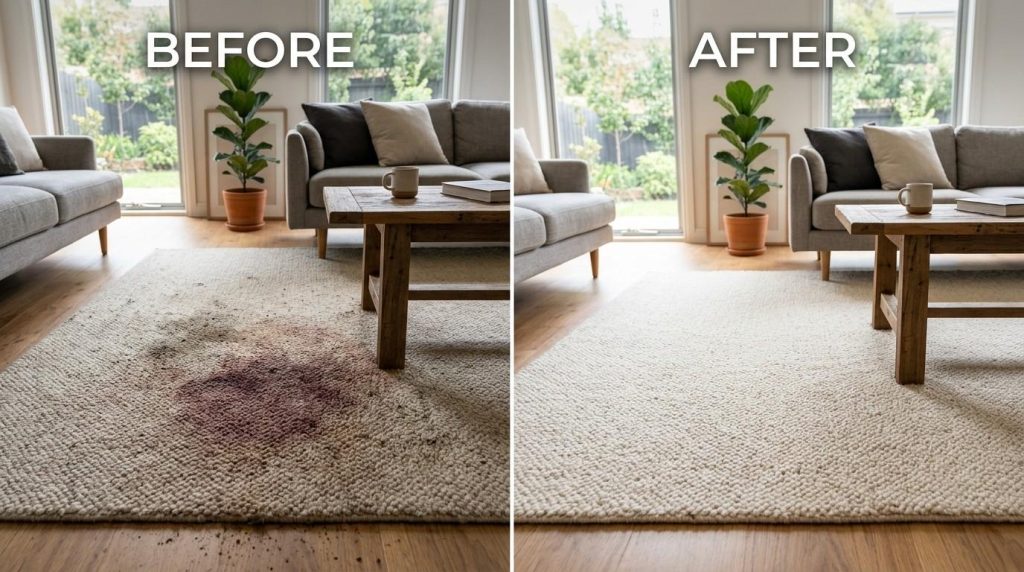
- The water ring faded after a day, and the carpet pile was revived with gentle brushing.
Lesson: Always blot and use as little liquid as possible. If you see fuzzy fibers or a water ring forming, stop and let the area dry completely before trying again.
Mistakes To Avoid When Cleaning Wool Carpets
Even experienced homeowners make these errors. Avoiding them can save your carpet—and your budget.
- Scrubbing: This untwists wool fibers, leaving a fuzzy or matted spot.
- Using Hot Water: Heat can shrink or distort wool.
- Using Harsh Cleaners: Bleach, ammonia, and strong stain removers break down wool’s structure.
- Over-Wetting: Wool absorbs water deeply, which can lead to mold, mildew, and brown “water marks.”
- Skipping the Test Patch: Always test your cleaner in a hidden area.
- Not Drying Quickly: Use fans and open windows to speed up drying.
- Ignoring Persistent Stains: If the stain won’t budge after two attempts, call a professional.
When To Call A Professional Carpet Cleaner
Some stains are beyond the scope of DIY solutions. If you run into these situations, it’s best to get help:
- Large or Old Stains: Anything bigger than a dinner plate or that’s been there for weeks.
- Dye or Ink Spills: These can permanently change the carpet color if not treated professionally.
- Repeated Pet Accidents: Urine that soaks into the padding needs deep extraction.
- Visible Fiber Damage: If the pile looks fuzzy, matted, or there’s color loss, a pro can often restore the look.
Look for cleaners certified by organizations like the Institute of Inspection Cleaning and Restoration Certification (IICRC) or the WoolSafe Organization. Check reviews and ask about their experience with wool carpets.
Diy Vs. Professional Cleaning: A Comparison
The table below highlights when it’s best to clean a wool carpet yourself and when to hire a professional.
| Situation | DIY Cleaning | Professional Cleaning |
|---|---|---|
| Fresh, Small Stains | Effective | Not needed |
| Large/Deep Stains | Risk of spreading | Recommended |
| Pet Accidents | Works for surface stains | Best for soaked-in stains |
| Delicate Antique Carpets | Not advised | Strongly recommended |
How To Prevent Future Stains On Wool Carpet
Keeping stains away is often easier than removing them. Here’s how homeowners can protect their investment:
- Use Mats and Runners: Place mats at entryways and runners in high-traffic areas.
- No Shoes Indoors: This simple rule keeps dirt and oils off your carpet.
- Act Fast: The quicker you address a spill, the better your results.
- Regular Vacuuming: Wool hides dirt well, so vacuum at least weekly.
- Apply Wool-Safe Protectant: Some products add an invisible barrier against stains. Follow manufacturer instructions.
- Annual Professional Cleaning: A deep clean once a year keeps wool looking its best.
Insight: Sunlight can fade wool colors over time. Consider curtains or UV-filtering window film in very sunny rooms.
Dealing With Odors In Wool Carpets
Odors from spills or pets can linger in wool. Here’s how to tackle them safely:
- Blot up any moisture first.
- Sprinkle a light layer of baking soda (not too much) and let sit for 15–30 minutes.
- Vacuum thoroughly.
- For stubborn odors, a white vinegar solution can neutralize smells without harming wool.
Never saturate the carpet with liquid deodorizer—wool holds moisture, which can lead to mildew.
What To Do If The Stain Reappears
Sometimes a stain seems gone but returns after a few days. This is called wicking—when the liquid deep in the carpet rises back to the surface as it dries.
If this happens:
- Re-blot the area with a dry towel and apply gentle pressure.
- Repeat the cleaning process, but use less liquid.
- Make sure the area dries completely—use a fan if needed.
Caring For Wool Carpet After Cleaning
After you’ve cleaned a stain, give your carpet a little extra care:
- Gently fluff the fibers with your fingers or a soft brush while the spot is still slightly damp.
- Avoid heavy foot traffic until the area is fully dry.
- If you notice any roughness, matting, or color change, consult a carpet professional.
Expert Tip: Never use a steam cleaner or hot water extractor on wool unless it’s labeled as safe for wool carpets.
Recommended Products And Where To Find Them
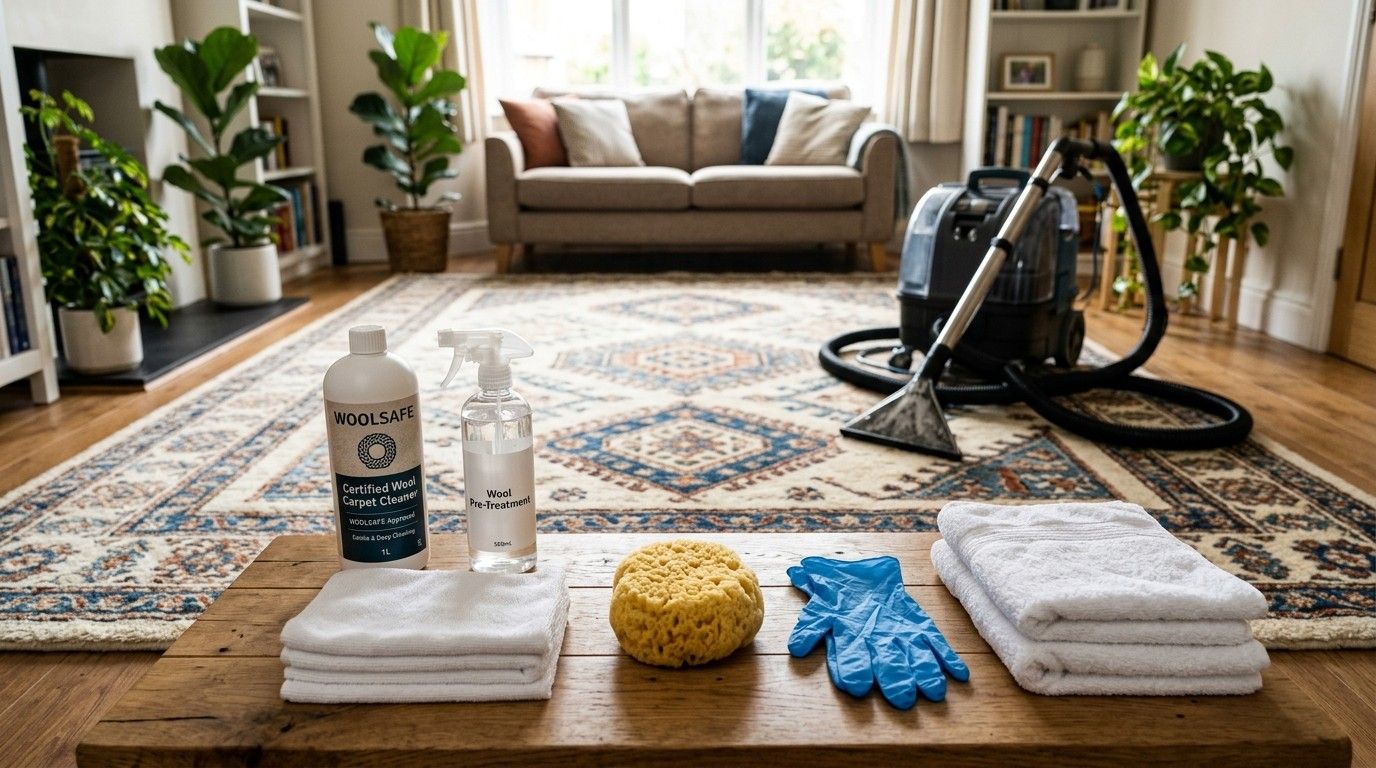
If you want to keep your wool carpet looking its best, these products are worth having on hand:
- Wool-safe carpet cleaner: Look for the WoolSafe logo.
- White vinegar: Regular household vinegar (not cleaning vinegar).
- Clear dishwashing liquid: Unscented and free of dyes.
- White cotton towels: For blotting.
- Soft-bristle brush: For gentle pile restoration.
You can find wool-safe cleaning products at most hardware stores, home improvement retailers, or online. For an official list, visit the WoolSafe Organization.
Frequently Asked Questions
What’s The Best Way To Dry A Wool Carpet After Cleaning?
Use a dry towel to blot up as much moisture as possible. Then, set up a fan to blow air across the damp area. Open windows if weather allows. Avoid walking on the spot until it’s fully dry—this prevents matting and new stains.
Can I Use Baking Soda On Wool Carpet?
Yes, but only in small amounts for odor control. Sprinkle lightly and vacuum after 15–30 minutes. Don’t use baking soda as a scrubbing agent or leave it on for hours—it can be hard to remove from dense wool fibers.
Is It Safe To Use A Carpet Cleaning Machine On Wool?
Only if the machine and cleaning solution are specifically labeled as safe for wool. Many rental carpet cleaners use high heat or strong chemicals that can shrink or damage wool. When in doubt, call a professional.
How Do I Remove An Old, Set-in Stain From A Wool Carpet?
Old stains are much harder to remove from wool. Try the gentle blotting method with a wool-safe cleaner, but don’t over-wet the area. If the stain remains after two attempts, hire a professional with wool carpet experience.
What Should I Do If My Carpet Changes Color After Cleaning?
This could be a sign of color loss, over-wetting, or chemical damage. Stop cleaning and let the area dry completely. If the color difference remains, consult a certified carpet professional. They may be able to restore the color or texture.
Taking care of a wool carpet means acting quickly, using the right cleaning solutions, and never cutting corners. With a little patience and the right know-how, you can handle most stains yourself and keep your carpet looking great for years to come.
If you ever feel unsure or the stain is stubborn, don’t hesitate to reach out to a professional—you’ll protect both your carpet and your peace of mind.