Your Trusted Source for Home Fixes & Guides

How to Recycle a Mini Fridge: Eco-Friendly Disposal Tips

How to Recycle a Mini Fridge is an important guide for disposing of old appliances safely and responsibly. If you’re wondering how to recycle a mini fridge, it’s essential to handle refrigerants, metals, and electronic components properly rather than throwing the appliance away. This guide explains eco-friendly recycling options, local disposal programs, and practical steps to help you recycle your mini fridge while protecting the environment.
In this article, I’ll guide you step-by-step through recycling a mini fridge, share practical homeowner advice, highlight common mistakes, and even include a real-life case study. By the end, you’ll know exactly what to do and why it matters.

Why Mini Fridges Need Special Recycling
Mini fridges aren’t like regular household trash. They contain refrigerants such as Freon, insulation foam, and electronics. All these materials can be hazardous if they leak or break down in landfills.
- Refrigerants can damage the ozone layer and contribute to climate change.
- Insulation foam often contains chemicals harmful to water and soil.
- Electronic waste is full of heavy metals that can pollute the environment.
According to the Environmental Protection Agency (EPA), improper disposal of appliances like mini fridges leads to over 1 million pounds of refrigerant released into the atmosphere each year. That’s a serious problem.
Another reason for special recycling is that mini fridges are often made with a mix of materials that don’t break down easily. For example, plastics and metals inside the fridge can take hundreds of years to decompose, and in the meantime, they can leach toxins into the ground.
Also, the compact size of a mini fridge means all these materials are densely packed, so when dumped in landfills, there’s a higher risk that harmful substances will escape over time.
Many people don’t realize that even a small leak from a mini fridge can have big consequences. For example, one ounce of leaked refrigerant can cause as much environmental damage as hundreds of pounds of carbon dioxide emissions. That’s why simply leaving an old mini fridge behind a building or in a dumpster is not just irresponsible—it’s potentially illegal and very damaging to the environment.
Understanding Mini Fridge Components
Before recycling, it helps to know what’s inside a mini fridge:
| Component | Description | Environmental Impact |
|---|---|---|
| Refrigerant | Chemical used for cooling (often Freon) | Ozone depletion, greenhouse gas |
| Compressor | Metal motor that circulates refrigerant | Contains oil and metals, recyclable |
| Insulation Foam | Keeps fridge cold | Can contain harmful chemicals |
| Plastic & Metal | Exterior, shelving, wiring | Can be recycled or reused |
| Electronics | Controls, lights, thermostat | Contains heavy metals, recyclable |
Knowing these parts helps you understand why recycling is important and what steps must be taken.
A common beginner mistake is underestimating the complexity of a mini fridge’s construction. For instance, the insulation foam is usually sealed inside the walls and can’t be separated easily without the right tools. This foam may contain chlorofluorocarbons (CFCs), which were banned in many countries but can still be found in older models.
If not handled correctly, breaking the foam releases these harmful chemicals.
Another detail: the compressor is heavier than most people expect, even in a small fridge. It’s the heart of the cooling system and is filled with oil, which is considered hazardous waste in many states. This is why recycling centers separate compressors from other metal parts for special processing.
Step-by-step Guide: How To Recycle A Mini Fridge
Here’s a clear, detailed process for safe mini fridge recycling. I’ll also point out mistakes to avoid and when to call a professional.
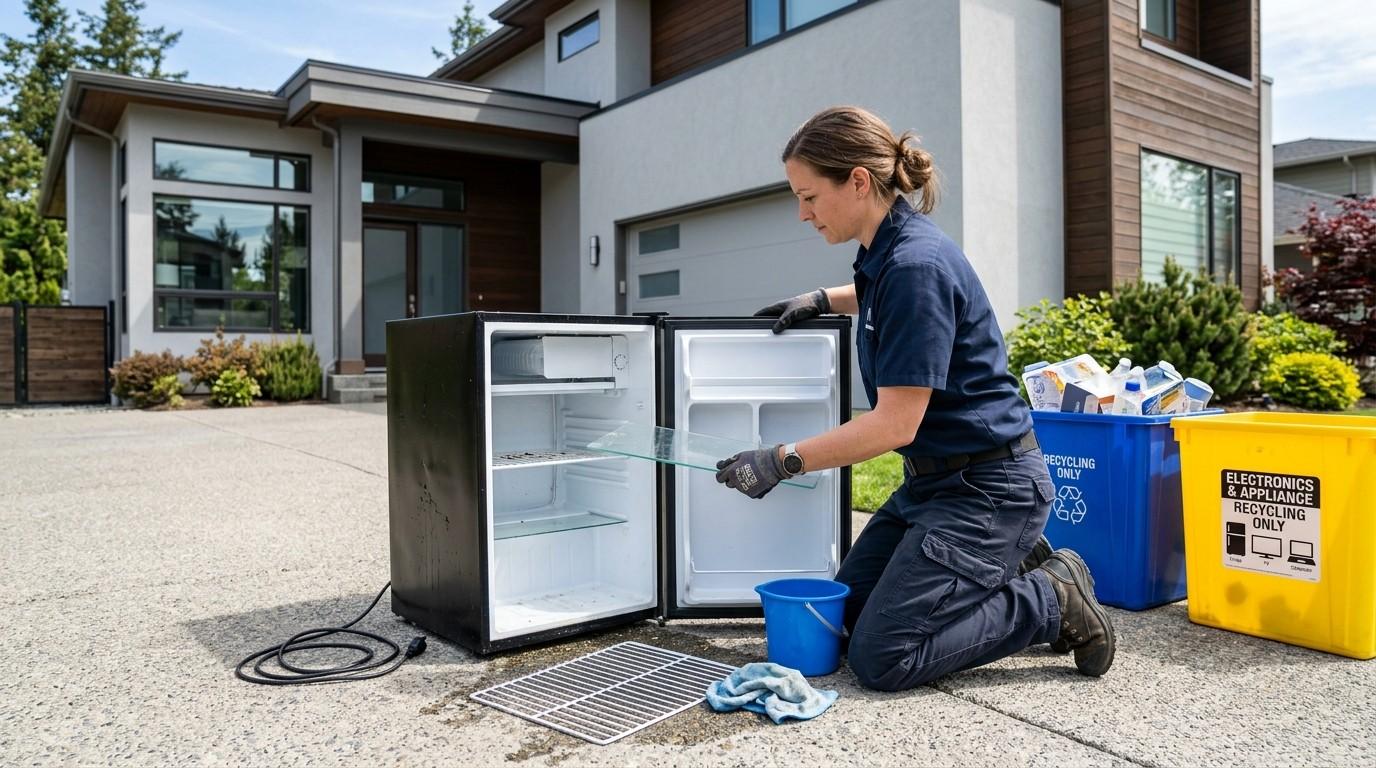
1. Unplug And Prepare Your Mini Fridge
First, unplug the fridge and let it sit for at least 24 hours. This allows the coolant to settle and minimizes risk during handling.
- Clean the inside: Remove all food, shelves, and drawers.
- Check for leaks: Look for oil or fluid under the fridge. If you see any, don’t try to clean it yourself—call a professional.
Safety tip: Always wear gloves when handling old appliances. Some surfaces may be sharp or contaminated.
For extra safety, consider wrapping the cord around the fridge or taping it to the back. This prevents tripping while moving it. If the fridge has been stored in a damp place, check for mold or pests before handling. Mold spores can be harmful, and pests may have nested inside.
2. Remove Doors And Shelves
Taking off the doors and shelves makes the fridge lighter and easier to move. It also helps recycling centers process parts more efficiently.
- Use a screwdriver to loosen hinges.
- Remove glass shelves and plastic drawers separately.
Common mistake: People often forget to remove doors, which can trap children and animals if left outside. Always detach doors before recycling.
Another important detail: removing the doors also prevents the fridge from accidentally closing on your fingers or hands while moving it. Some local regulations require the doors to be removed before putting any fridge or freezer out for pickup, even if you leave it in your yard for a few hours. This is a safety measure, especially in neighborhoods with kids.
If you plan to donate or sell the fridge, keep the doors and shelves in good condition. Take care not to crack any plastic parts, as replacements are hard to find for older models.
3. Decide Where To Recycle
You have several options. Choose the one that fits your needs and local regulations.
A. Curbside Pickup
Some cities offer curbside appliance recycling. Check your local waste management website or call them.
- Place the fridge curbside on the scheduled day.
- Some cities require you to tape a note stating “Freon Removed” if you’ve had a technician remove the refrigerant.
Common mistake: Don’t leave the fridge out without checking local rules. Illegal dumping is fined in most areas.
In some communities, you may have to schedule a special bulky item pickup—regular trash collectors won’t take appliances. You might need to pay a small fee or show proof that refrigerant has been removed. If you’re not sure, call your city’s sanitation department before setting your fridge at the curb.
B. Drop-off At A Recycling Center
Most recycling centers accept mini fridges, but you must check if they are certified to handle appliances with refrigerants.
- Search for “appliance recycling center near me.”
- Ask if they handle refrigerant removal or if you need to do it first.
Not all centers can legally process refrigerants or hazardous materials. Some may ask for a small fee, while others recycle appliances for free as part of city or county programs. If you live in a rural area, you may need to drive farther to find a qualified center.
C. Utility Company Takeback Programs
Some electric utility companies offer appliance recycling programs. They may pick up old fridges for free or offer a cash incentive.
- Contact your utility provider to see if they participate.
- They typically ensure safe refrigerant removal.
These programs are designed to encourage energy savings and environmental protection. Some utilities even provide rebates or gift cards if your fridge is still working. The upside is that utility companies use certified contractors to handle removal, so you don’t have to worry about compliance.
D. Retailer Recycling Programs
If buying a new fridge, many retailers (like Best Buy or Home Depot) will take your old mini fridge for recycling when they deliver the new one.
- Ask about their appliance recycling policy when shopping.
Retailer programs are convenient because they pick up your old fridge when delivering the new one. However, not all stores offer this for mini fridges, so check before you buy. Some stores only accept appliances of a similar type (e.
g. , fridge-for-fridge), and there may be a fee if you’re not making a purchase.
E. Professional Junk Removal Services
Companies like 1-800-GOT-JUNK or Junk King will pick up and recycle your mini fridge for a fee. They handle refrigerant removal safely.
- Choose licensed and insured providers.
- Confirm they recycle, not just landfill.
A tip: always ask the junk removal company for proof of proper recycling. Reputable companies will give you a receipt or documentation showing where your appliance was processed. This helps protect you from liability if local authorities check for illegal dumping.
4. Refrigerant Removal: Why It Matters
Mini fridges contain Freon or other refrigerants. Removing these chemicals is regulated by federal law. Only certified technicians should do this.
- Never try to remove refrigerant yourself. It’s dangerous and illegal.
- Contact a local appliance repair shop or recycling center for removal.
EPA data: Improper refrigerant handling releases chemicals that can be up to 1,000 times more potent than carbon dioxide as greenhouse gases.
Common mistake: Some homeowners try to cut refrigerant lines themselves. This can cause injury, environmental harm, and fines.
If you’re worried about cost, some cities offer low-cost or free refrigerant removal as part of their environmental programs. It’s also worth asking recycling centers if the fee includes this service. Attempting removal yourself not only risks your health but can also damage the fridge, making it impossible to recycle certain parts.
Certified technicians use special equipment to capture and store refrigerants safely for disposal or reuse.
5. Transporting Your Mini Fridge
Once the refrigerant is removed, transport the fridge safely:
- Use a dolly or cart if possible.
- Secure the fridge so it doesn’t tip during transit.
- Never lay it on its side for long periods; oil from the compressor can leak and cause damage.
Case study: In Seattle, a homeowner recycled a mini fridge by scheduling curbside pickup, but the fridge tipped over during transport, causing a refrigerant leak. The city fined the homeowner for not having the refrigerant removed first. Always double-check local rules and handle with care.
If you must lay the fridge on its side, stand it upright for several hours before recycling or reusing to let compressor oil settle. Avoid transporting fridges with food, water, or ice inside, as this adds weight and can cause spills.
For apartment dwellers, use an elevator if possible and get help moving the fridge to avoid injury.
6. Recycling The Parts
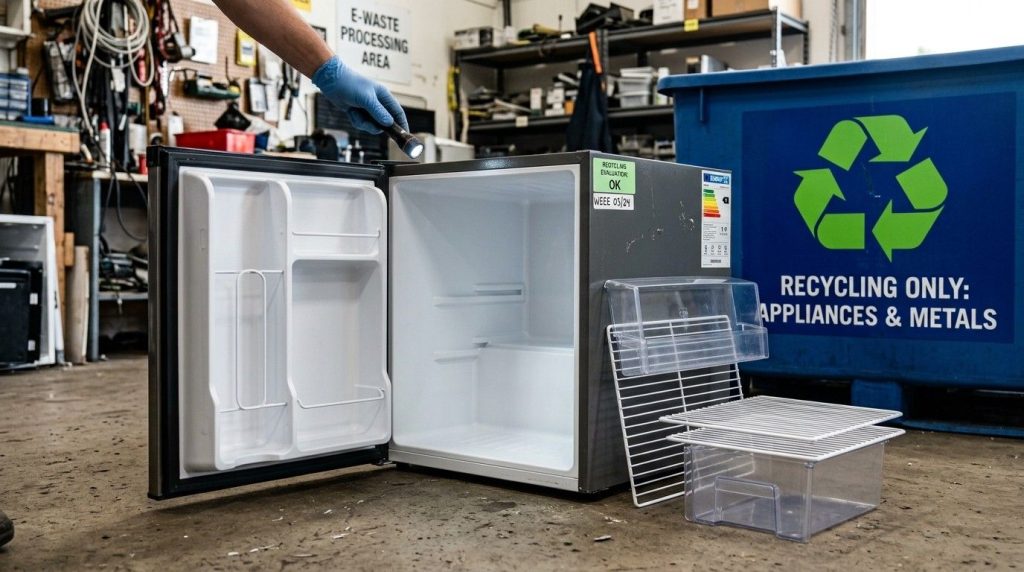
At the center, your mini fridge will be broken down into:
- Metal and plastic: Sorted and melted for reuse.
- Glass: Recycled separately.
- Electronics: Sent to e-waste processors.
- Insulation and foam: Sometimes burned or disposed of as hazardous waste.
| Mini Fridge Part | Recycling Process | Reuse Potential |
|---|---|---|
| Metal | Shredded, melted, reformed | Car parts, appliances |
| Plastic | Sorted by type, melted | Containers, new products |
| Glass | Cleansed, melted | Bottles, fiberglass |
| Electronics | Dismantled, metals extracted | Circuit boards, wiring |
| Insulation Foam | Special disposal or incineration | Rarely reused |
Many people are surprised to learn that even the smallest parts, like the lightbulb or thermostat, are recycled for valuable metals. While insulation foam is rarely reused, some advanced recycling centers use special processes to destroy hazardous chemicals safely, preventing them from entering the air or water.
Alternatives To Recycling: Donation And Repurposing
If your mini fridge still works, consider alternatives to recycling. This can help reduce waste and support your community.
Donate To Charity
Many charities, shelters, or schools accept working mini fridges. Before donating:
- Clean and disinfect the fridge.
- Check if the charity accepts appliances.
- Arrange for drop-off or pick-up.
Example: Goodwill and Salvation Army sometimes accept small appliances. Call ahead to confirm.
Some universities and community centers also accept mini fridges for use in break rooms or dorms. Donating is a great way to extend the life of your appliance and help someone in need.
Sell Or Give Away Locally
Use platforms like Craigslist, Facebook Marketplace, or Nextdoor to give away or sell your mini fridge. Specify its condition and include photos.
- Freecycle is another option for donating unwanted appliances.
When listing your fridge, be honest about its condition. Mention any issues, like broken shelves or missing parts. Including measurements helps buyers know if the fridge will fit their space. Free local pickup is usually more attractive than delivery.
Repurpose For Home Use
Some homeowners turn old mini fridges into:
- Tool storage: Remove shelves and use the fridge for tools in the garage.
- Fermentation chamber: With a temperature controller, you can use it for brewing beer or fermenting foods.
- Pet food storage: Use the fridge to keep pet food fresh.
Non-obvious insight: If you repurpose a fridge, make sure to unplug it when not in use. Even idle fridges can use electricity and pose safety risks.
Other ideas include using a fridge as a planter (after removing wiring and insulation) or as a small pantry for non-perishable food. Some creative people paint the exterior to match their decor or use the door as a bulletin board.
The Legal And Environmental Side
Federal And State Laws
The EPA regulates refrigerant removal and disposal. Many states also have strict rules for appliance recycling.
- Only certified professionals can remove refrigerants.
- Illegal dumping is heavily fined—up to $10,000 in some states.
- Check your city’s website for appliance recycling rules.
A detail many people miss: in some states, you must keep paperwork proving the refrigerant was removed properly. If you sell or transfer the fridge, ask for a copy of this certificate. Also, rental properties and apartment complexes may have their own recycling policies—check with your landlord before disposing of a mini fridge.
Environmental Impact Data
According to the EPA, recycling a single mini fridge prevents up to 0. 3 metric tons of CO2 emissions. That’s equal to driving 750 miles in a typical car. Proper recycling also keeps hundreds of pounds of metal and plastic out of landfills.
When you multiply this by the millions of mini fridges in use, it’s clear that responsible recycling makes a big difference. Additionally, recycling metals and plastics saves energy compared to making new materials. For example, recycling aluminum uses 95% less energy than producing it from raw ore.
Comparing Appliance Recycling Options
Here’s a comparison of main appliance recycling methods:
| Option | Cost | Convenience | Environmental Safety |
|---|---|---|---|
| Curbside Pickup | Usually free | Easy, scheduled | High if refrigerant removed |
| Recycling Center | Often free, sometimes $10–$30 | Requires transport | High, regulated |
| Utility Program | Free, sometimes rebates | Very easy | Very high, certified |
| Retailer Program | Free with purchase | Easy if buying new | High, regulated |
| Junk Removal Service | $50–$100 | Very easy | Varies, ask for certification |
When choosing a method, consider your time, cost, and environmental priorities. Utility programs are usually the best for both convenience and environmental safety, but not everyone qualifies. If you have to pay, remember that the fee covers safe handling of chemicals and proper recycling.
When To Call A Licensed Professional
Some steps are best left to the experts:
- Refrigerant removal: Always call a certified technician.
- Electrical issues: If the fridge has exposed wires or sparks.
- Oil leaks: These can be toxic and require special handling.
If you’re unsure, it’s safer to call a pro than risk injury or environmental harm.
Also, call a professional if your fridge was involved in a flood or fire. Damaged appliances may contain hidden hazards like mold or burnt wiring. Professionals have the right safety gear and training to handle these risks.
Safety Precautions For Homeowners
Handling a mini fridge can be risky. Keep these tips in mind:
- Always unplug before moving or dismantling.
- Wear gloves and closed-toe shoes.
- Avoid cutting refrigerant lines or foam.
- Don’t lift heavy fridges alone—use a dolly and get help.
Non-obvious insight: Many people forget that mini fridges are heavier than they look. They can weigh up to 60 pounds. Always lift with your legs, not your back.
If you have to move the fridge downstairs, use straps and take your time. Never rush or try to carry it in a way that blocks your view. If you feel resistance or pain while lifting, stop immediately and ask for help.
Another tip: after unplugging, secure the cord so it doesn’t drag or snag on anything. If the fridge has sharp edges or broken parts, cover them with duct tape to prevent cuts. Always wash your hands after handling old appliances, especially if they’ve been stored in dusty or dirty environments.
Case Study: Responsible Mini Fridge Recycling In Action
Let’s look at a real-life example.
Sarah, a homeowner in Austin, Texas, had an old mini fridge from her college days. It stopped working, so she decided to recycle it responsibly.
- Sarah unplugged the fridge and let it sit for 48 hours.
- She cleaned it thoroughly and removed all shelves and doors.
- She called her local recycling center to ask about refrigerant removal. They recommended a licensed technician.
- The technician removed the refrigerant and gave her a certificate stating it was handled safely.
- Sarah transported the fridge to the recycling center. Staff broke it down and recycled the parts.
- She received a tax deduction for recycling through her city’s appliance program.
Sarah avoided common mistakes, followed safety tips, and protected the environment. Her experience shows that recycling a mini fridge can be easy and beneficial if you plan ahead.
A detail worth noting: Sarah took photos of the fridge before and after recycling. This documentation helped her claim the tax deduction and proved she disposed of the appliance responsibly. If you have a homeowners’ association or need to show proof for insurance or tax reasons, taking photos is a simple but helpful step.

Frequently Asked Questions
What Happens If I Throw A Mini Fridge In The Landfill?
Mini fridges in landfills can leak refrigerants and heavy metals, polluting soil and water. This is illegal in many states and can lead to fines.
Can I Recycle A Mini Fridge Myself?
You can remove shelves and doors, but only certified technicians should handle refrigerant removal. Take the fridge to a proper recycling center afterward.
How Much Does It Cost To Recycle A Mini Fridge?
Costs vary. Curbside programs are often free. Recycling centers may charge $10–$30. Junk removal services cost more. Utility programs may even pay you for recycling.
Is It Safe To Dismantle A Mini Fridge At Home?
It’s safe to remove shelves and doors, but not to cut refrigerant lines or foam. Always unplug the fridge first. For anything involving chemicals or electronics, call a pro.
What Are The Environmental Benefits Of Recycling A Mini Fridge?
Recycling keeps harmful chemicals out of landfills, saves energy, and prevents greenhouse gas emissions. It also recovers valuable metals and plastics for reuse. For more details, visit the EPA RAD Program.
Proper mini fridge recycling protects your home, your community, and the planet. If you follow the steps above, you’ll stay safe, avoid fines, and help make a difference. Whether you recycle, donate, or repurpose, responsible disposal is always the right choice.