Your Trusted Source for Home Fixes & Guides


How to Change Water Pressure in Shower: Guide for Success

How to Change Water Pressure in Shower is a practical guide for improving both comfort and performance in your bathroom. If you’re wondering how to change water pressure in shower systems, the solution may involve adjusting the showerhead, cleaning mineral buildup, checking the pressure regulator, or addressing plumbing issues. This guide explains the common causes of pressure problems and provides step-by-step solutions to help you achieve the ideal shower experience.
Learning how to change water pressure in your shower lets you create a comfortable experience, save water, and protect your home.
Many people think adjusting shower pressure is complicated or expensive. In reality, most solutions are simple, affordable, and safe for DIY. However, safety and knowing your limits are important. I’ll guide you through practical steps, common mistakes, and when to call a pro.
Whether you want a stronger spray or need to lower pressure, you’ll find answers here.
What Causes Low Or High Water Pressure In Showers?
Shower water pressure depends on several factors. Understanding these helps you fix issues faster and avoid wasting money on the wrong solutions.
- Municipal supply: Your city or town controls the main water pressure. If it’s low, all homes may experience weak showers. Sometimes, cities lower pressure during repairs or droughts, affecting entire neighborhoods.
- Home plumbing: Old pipes, leaks, or blockages reduce pressure. Newer homes usually have fewer issues. In older homes, pipes can corrode inside, narrowing water flow over time.
- Showerhead design: Some showerheads restrict flow to save water. Others offer strong pressure but use more water. The type and age of your showerhead makes a big difference.
- Pressure regulators: Many homes have a pressure reducing valve (PRV). This device controls the maximum water pressure. If set too low or too high, shower pressure suffers.
- Water heater settings: If your shower uses hot water, low heater output or small tank size can affect pressure and flow. Sometimes, the hot water line is partially blocked by sediment, not just the showerhead.
For most homeowners, the problem is either a weak spray or a shower that’s too strong—both can be fixed. Remember, it’s important to look at the whole system, not just the showerhead.
Diagnosing Your Shower Water Pressure
Before making changes, you should find out what’s causing your pressure issue. Guessing wastes time and money. Here are steps to diagnose:
- Test other faucets: Check bathroom and kitchen sinks. If pressure is low everywhere, the issue is likely with your home’s main supply. If only the shower is weak, it’s probably a local problem.
- Measure pressure: Use a water pressure gauge. Attach it to an outdoor spigot or washing machine tap. Ideal home water pressure is 40–60 psi (pounds per square inch). Gauges cost under $20 and give instant, accurate readings.
- Check showerhead: Remove the showerhead and turn on the water. If pressure increases, your showerhead is restricting flow. Sometimes, you’ll notice a big difference even before you clean it.
- Inspect pipes: Look for leaks, corrosion, or mineral buildup. These block water and lower pressure. A damp spot on a wall or ceiling may be a clue.
- Check for PRV: Locate your pressure reducing valve, usually near the main water line. If you have one, it might need adjusting. Not all homes have a PRV, especially older ones.
Common Mistakes In Diagnosing
- Not testing pressure at different taps. This is the most overlooked step and can save hours of work.
- Ignoring slow leaks in walls or ceilings. Even small leaks can cause big pressure drops over time.
- Forgetting to check both hot and cold water. Sometimes, only one line is blocked or restricted.
Taking time to diagnose saves money and prevents unnecessary repairs. If you skip these steps, you might replace a showerhead when the real problem is a valve or pipe.
How To Increase Water Pressure In Your Shower
If your shower feels weak, there are several safe ways to boost pressure. Most require basic tools and minimal plumbing knowledge.
1. Clean Or Replace The Showerhead
Mineral deposits and debris block tiny holes in your showerhead. This is the most common cause of low pressure. Hard water areas are especially prone to this problem, and cleaning can make a dramatic difference.
How to clean:
- Remove the showerhead. Usually, you just twist it off by hand or with a wrench.
- Soak it in vinegar for 1–2 hours. For stubborn buildup, leave it overnight.
- Scrub with a soft brush. An old toothbrush works well.
- Rinse and reinstall.
If cleaning doesn’t help, consider a high-pressure showerhead. Choose models labeled as “high flow” or “power spray.” Some showerheads have self-cleaning nozzles, which are useful if you have hard water.
Extra tip: Some people notice better results by combining vinegar with a little baking soda—this can help loosen tougher mineral buildup.
2. Remove Flow Restrictors
Many showerheads sold in the US include flow restrictors to save water. These devices limit spray, sometimes too much.
How to remove:
- Unscrew the showerhead.
- Find the small plastic disk inside (the restrictor).
- Use tweezers to carefully remove it.
- Reattach the showerhead.
Note: Removing restrictors increases water use. You may pay more for water and energy. In some areas, removing restrictors may violate water conservation rules, so check local guidelines.
3. Check For Pipe Blockages
Older homes often have pipes clogged with sediment or rust. This blocks water flow. In some cases, the buildup is so severe that only replacing the pipe will restore full pressure.
- Inspect visible pipes for leaks or corrosion. If you see green or white crust, it may mean minerals are building up inside.
- If you suspect buildup, call a plumber. DIY pipe cleaning is risky and often requires special tools. For example, hydro-jetting is effective but should only be done by pros.
4. Adjust Pressure Reducing Valve
Most homes have a PRV to prevent damage from high pressure.
How to adjust:
- Locate the PRV (usually near the main water shutoff).
- Use a wrench to turn the adjusting screw clockwise (to increase pressure).
- Re-test pressure with a gauge.
Safety Tip: Never set pressure above 80 psi. High pressure can burst pipes and cause leaks. Small adjustments are best—move the screw a quarter-turn and test again.
5. Check Water Heater Output
If pressure drops only when using hot water, your heater may be the issue.
- Check for leaks or sediment buildup. If you hear popping noises from your heater, it likely needs flushing.
- Flush the heater to clear deposits. This can restore both pressure and efficiency.
- If the heater is old, consider replacing it. Older heaters may have narrow, clogged pipes inside.
6. Inspect Shutoff Valves
Sometimes, partially closed valves restrict water.
- Check main shutoff and bathroom shutoff valves. Even a slightly closed valve can reduce pressure.
- Ensure they’re fully open. Some valves stick over time, so gently wiggle the handle before opening fully.
Practical Homeowner Advice
- Always turn off water before removing showerheads or adjusting valves. This prevents spills and protects your fixtures.
- Use Teflon tape when reinstalling showerheads to prevent leaks. Wrap the tape clockwise around the threads.
- Keep a towel handy to catch drips.
- If your showerhead leaks after cleaning or reinstalling, check the rubber washer. Replace it if it’s worn.
Non-obvious tip: If your home has a water softener, check it too. Sometimes softeners can restrict flow when they need maintenance.
Case Study: Boosting Pressure In A 1970s Home
A homeowner in Ohio noticed weak showers after moving into a house built in 1974. After cleaning the showerhead and removing the flow restrictor, pressure improved slightly. Using a pressure gauge, the homeowner found the PRV was set to 35 psi—too low.
Adjusting it to 50 psi made the shower feel brand new. This fix cost under $25 and took less than an hour.
Extra detail: The homeowner also found that the bathroom shutoff valve was partially closed from a past repair. Opening it fully added a final boost. This shows why checking every step is important.
How To Decrease Water Pressure In Your Shower
Too much pressure can waste water, damage pipes, and make showers uncomfortable. If your shower feels harsh or you hear pipes banging (“water hammer”), lowering pressure is wise.
1. Install A Low-flow Showerhead
Low-flow showerheads limit water use and pressure. They’re easy to install and can cut water bills.
Steps:
- Buy a low-flow model (look for WaterSense label).
- Unscrew the old showerhead.
- Apply Teflon tape to threads.
- Screw on the new showerhead.
- Test for leaks and adjust as needed.
Some low-flow heads have adjustable settings, letting you choose a gentle mist or a focused stream.

2. Adjust Pressure Reducing Valve
If your home’s pressure is over 60 psi, turn the PRV screw counterclockwise to decrease.
Tip: Test pressure after each adjustment. Don’t reduce below 40 psi—showers may become too weak. Lowering pressure also helps protect dishwashers and washing machines.
3. Add Flow Restrictors
If you removed restrictors before, reinstall them. Most hardware stores sell universal restrictors. They’re simple to push in and can reduce pressure by up to 30%.
4. Install Inline Pressure Regulators
For stubborn high pressure, install an inline regulator between the showerhead and pipe.
- These devices are small, affordable, and easy to fit.
- They work by narrowing the pipe, reducing pressure.
- Some models let you adjust the flow with a small screw.
5. Fix Water Hammer
High pressure causes banging pipes. Install a water hammer arrestor or lower pressure with the PRV.
- Arrestors are shock absorbers for your pipes.
- If you hear loud noises when turning taps on or off, you may need both a pressure adjustment and an arrestor.
Safety Precautions
- Don’t overtighten showerheads or valves—this can crack fittings.
- Wear gloves and eye protection when working with plumbing.
- If adjusting the PRV, go slowly and test often.
- If you’re unsure, ask a hardware store expert or call a plumber.
Case Study: Solving High Pressure In A New Build
A California homeowner noticed that their new shower was too strong and wasted water. Testing showed the home’s pressure at 80 psi—above recommended levels. Adjusting the PRV to 55 psi and installing a WaterSense showerhead fixed the issue. Water bills dropped by 15% in three months.
Extra insight: The homeowner also stopped hearing “water hammer” noises at night after lowering the pressure, showing how one fix can solve multiple problems.
Comparing Showerhead Types And Pressure Solutions
Choosing the right showerhead is key for controlling pressure. Here’s a quick comparison.
| Showerhead Type | Pressure Effect | Water Usage | Best For |
|---|---|---|---|
| Standard | Moderate | 2.5+ gpm | Balanced spray |
| High-Pressure | Strong | 2.5–3.5 gpm | Weak supply, larger families |
| Low-Flow | Gentle | 1.5–2.0 gpm | Water saving, high pressure homes |
| Rainfall | Soft, wide | 2.0–2.5 gpm | Luxury feel, large showers |
gpm = gallons per minute
Helpful tip: Some rainfall showerheads need higher pressure to work well. If your supply is weak, choose a pressurized model instead.
Diy Vs Professional Help: When To Call A Plumber
Changing shower pressure is safe and easy for most people. However, some issues require a licensed plumber:
- Major leaks: If you see water stains, hear dripping behind walls, or notice mold, call a pro.
- Pipe corrosion: Old, rusty pipes can burst if pressure is increased.
- Adjusting main PRV: If you’re unsure, have a plumber set your home’s pressure.
- Unusual noises: Banging, whistling, or rattling may mean serious plumbing issues.
- Water heater issues: If flushing the heater doesn’t restore hot water pressure, a professional can check for internal problems.
DIY is fine for cleaning showerheads, replacing restrictors, and installing new showerheads. Anything involving pipes or main valves is best left to experts.
Non-obvious insight: If your home insurance requires professional repairs on plumbing, always call a plumber for main line work to avoid denied claims.
How Water Pressure Affects Home And Health
Water pressure isn’t just about comfort. It impacts your home’s plumbing and your health.
- Low pressure: Makes cleaning hard, slows down showers, and can leave soap residue. It can also mean your appliances, like dishwashers, take longer to run.
- High pressure: Wastes water, stresses pipes, and increases risk of leaks. Over time, it can lead to mold or water damage from hidden leaks.
- Optimal pressure: Saves water, protects pipes, and creates a pleasant shower. It also helps extend the life of your plumbing system.
According to the Environmental Protection Agency (EPA), homes with high pressure use up to 30% more water. Adjusting pressure saves money and helps the environment.
Extra detail: High pressure isn’t always obvious. Even if your shower feels great, check your home’s pressure yearly to prevent future problems.
Step-by-step Guide To Changing Shower Water Pressure
Let’s walk through the most common DIY method: adjusting pressure at the showerhead.
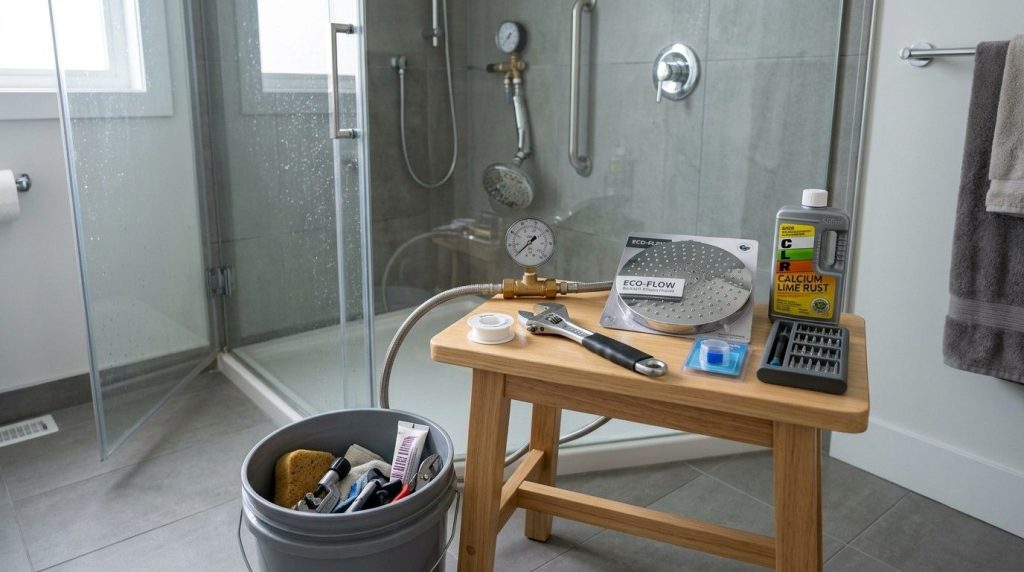
Tools Needed
- Adjustable wrench
- Teflon tape
- Water pressure gauge (optional)
- Vinegar (for cleaning)
- Gloves
- Soft brush (for scrubbing showerhead)
- Old towel (to protect tub or floor)
Steps
- Turn off water supply to the bathroom. This prevents spills and makes removal easier.
- Remove showerhead using the wrench. Place a towel under the area to catch drips.
- Clean showerhead in vinegar for 1–2 hours. For heavy buildup, soak overnight.
- Check for restrictor and remove if desired. Use tweezers and keep the part in case you want to reinstall.
- Apply Teflon tape to shower arm threads. Wrap 2–3 times for a tight seal.
- Reinstall showerhead and tighten gently. Don’t overtighten—hand tight is usually enough.
- Turn water on and test pressure. Watch for leaks or drips.
- Adjust PRV if needed (for whole-home changes). Make small adjustments and test after each.
- Test again with a gauge or at the shower. Repeat as needed until satisfied.
Common Mistakes
- Forgetting to turn off water, causing spills.
- Overtightening fittings, cracking pipes.
- Removing restrictors without understanding water use.
- Skipping PRV adjustment when needed.
- Not checking for leaks after reassembly.
Pro tip: If you’re not sure about a step, watch a short video tutorial before starting.
Comparing Pressure Reducing Valve Settings
Here’s a look at how different PRV settings affect home water flow.
| PRV Setting (psi) | Shower Feel | Risk to Pipes | Water Usage |
|---|---|---|---|
| 30–40 | Weak | Low | Low |
| 40–60 | Balanced | Minimal | Normal |
| 60–80 | Strong | High | High |
| 80+ | Very strong | Extreme | Very high |
Best practice is to keep pressure between 40–60 psi. This protects pipes and ensures a comfortable shower.
Non-obvious fact: Some appliances, like ice makers or washing machines, may have their own pressure limits. Check manuals if you adjust your PRV.
Maintaining Shower Pressure Long-term
Once you fix your shower pressure, keep it steady with regular maintenance.
- Clean showerheads every 6 months. This prevents mineral buildup and keeps pressure strong.
- Check shutoff valves yearly. Make sure they open and close smoothly.
- Flush water heater annually. This removes sediment and improves both flow and heater life.
- Inspect pipes for leaks or buildup. Early detection saves money and prevents damage.
- Replace old showerheads every 5–7 years. Newer models are more efficient and less likely to clog.
- If you have hard water, consider a water softener or install a filter at the showerhead.
These habits prevent sudden changes and expensive repairs. Schedule reminders or do maintenance when you change clocks for daylight saving time.
Water Pressure: Myths Vs Facts
Many myths surround shower water pressure. Let’s clear up a few.
- Myth: Stronger pressure means cleaner showers.
- Fact: Too much pressure can irritate skin and waste water. The right temperature and soap matter more.
- Myth: All low pressure is caused by showerheads.
- Fact: Main supply, PRV, and plumbing issues are common causes. Always check the whole system.
- Myth: Adjusting PRV is dangerous.
- Fact: It’s safe if done slowly and kept between 40–60 psi. Go slowly and check for leaks.
- Myth: Low-flow showerheads are weak and unpleasant.
- Fact: Modern low-flow heads can feel just as strong due to improved design.
Data On Water Usage And Pressure
According to the EPA, the average American shower uses 17 gallons per session. High-pressure showers can use up to 25 gallons, while low-flow models drop usage to 12 gallons. Over a year, switching to a low-flow head can save 2,900 gallons for a family of four.
Extra insight: Reducing shower time by even one minute per person per day saves hundreds of gallons per year.
Case Study: A Family’s Year-long Pressure Adjustment
The Martinez family in Texas struggled with low shower pressure in their 1980s home. After cleaning showerheads, replacing old plumbing, and adjusting the PRV to 45 psi, their showers improved and water bills dropped by 20%. No leaks or water hammer occurred.
The family recommends testing pressure at all taps before making changes.
Added detail: The family also found that regular cleaning every few months kept pressure steady and prevented new problems.

Frequently Asked Questions
What Is The Ideal Water Pressure For A Shower?
Most experts recommend 40–60 psi for showers. This gives a comfortable spray without stressing pipes. If your home’s pressure is higher, adjust the PRV or install a low-flow showerhead.
How Do I Measure Shower Water Pressure?
Use a water pressure gauge. Attach it to a hose bib or washing machine tap. Turn water on and read the gauge. You can buy gauges at most hardware stores. Testing takes less than five minutes.
Is It Safe To Remove The Flow Restrictor?
Yes, but removing restrictors increases water use. If your area has water restrictions or high bills, consider a high-pressure showerhead instead. Always check for leaks after removing restrictors.
Can High Water Pressure Damage My Plumbing?
Absolutely. Pressure above 80 psi can burst pipes, cause leaks, and wear out appliances. If you hear banging pipes, lower your PRV or call a plumber.
Should I Call A Plumber Or Do It Myself?
DIY is safe for cleaning showerheads, replacing heads, and adjusting restrictors. For pipe repairs, leaks, or main PRV adjustment, call a licensed plumber. It’s better to pay a pro than risk expensive damage.
For more in-depth tips and technical details, you can check the EPA’s official water conservation resources at EPA WaterSense.
Changing your shower water pressure is one of the simplest ways to improve your bathroom experience. With the right tools and knowledge, most fixes are fast and affordable. Remember, safety and prevention are key—never push your plumbing beyond safe limits.
If you’re unsure, trust a professional. Happy showering!