Your Trusted Source for Home Fixes & Guides

How to Make Bathroom Smell Good: Tips for Lasting Fragrance

Few things ruin the feeling of a clean home faster than a bad-smelling bathroom. No matter how spotless your tiles or shiny your faucets, lingering odors can make guests uncomfortable and leave you frustrated. Learning How to Make Bathroom Smell Good isn’t just about masking unpleasant odors. It’s about understanding where smells come from, addressing the source, and using simple strategies to keep the space fresh every day.
As someone who’s remodeled, repaired, and maintained dozens of bathrooms across the U. S. , I’ve learned that even small changes can make a huge difference. Whether you live in a big house or a small apartment, these practical tips will help you create a bathroom that always smells clean and inviting.
We’ll cover everything from deep cleaning and ventilation to DIY tricks, scents, and expert advice. Let’s dive in.
Why Do Bathrooms Smell Bad?
Bathrooms are a perfect storm for odors. There’s water, humidity, organic waste, and cleaning products—all in a small space. Some common causes include:
- Poor ventilation: Moisture gets trapped, leading to mildew and mold.
- Plumbing issues: Leaks, clogged drains, or faulty traps can release sewer gases.
- Dirty surfaces: Grime, soap scum, and hair hold onto smells.
- Toilet problems: Unflushed toilets, dirty bowls, or bad wax rings let odors escape.
- Trash bins: Diapers, wipes, and feminine products cause strong smells.
- Damp towels: Wet fabrics breed bacteria and mustiness.
You might also notice that some bathroom products, like certain soaps or cleaning sprays, can leave behind their own odd chemical smells. In small spaces, these can mix with other odors, making things worse. Surprisingly, many homeowners focus only on air fresheners.
But lasting freshness requires fixing these root causes first.
One insight many people miss: bacteria and mold can grow even in places you don’t see, like under the toilet base or inside wall cavities behind sinks. That’s why a bathroom might smell bad even if it looks clean. Regularly checking less visible areas helps prevent surprise odors.
Deep Cleaning: The Foundation Of A Fresh Bathroom
A truly good-smelling bathroom starts with thorough cleaning. Even expensive air fresheners won’t work if you skip this step.
What To Clean (and How Often)
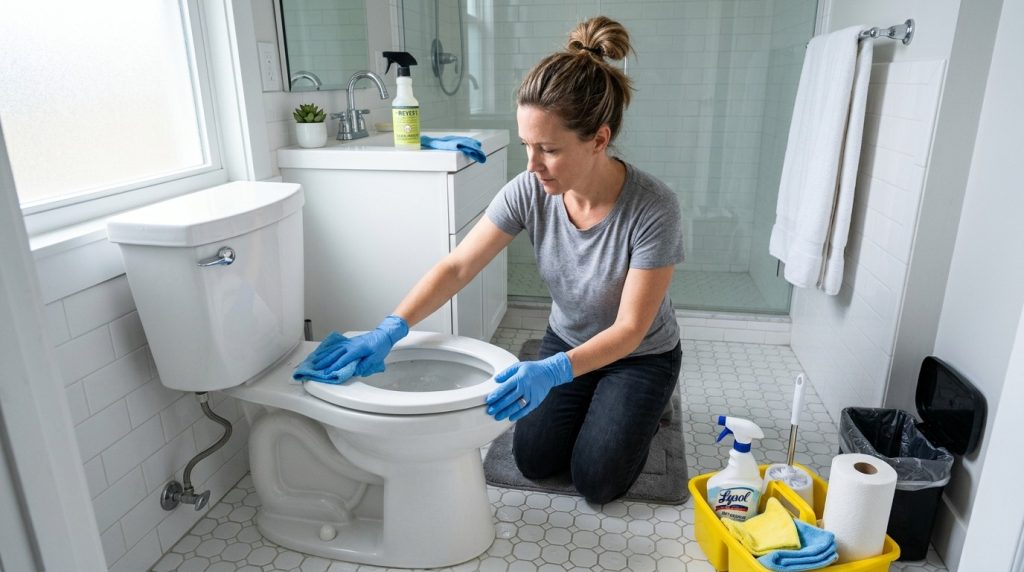
- Toilet bowl and seat: Scrub at least once a week. Use a disinfectant cleaner and a toilet brush. Don’t forget the seat hinges—urine can collect underneath.
- Sink and faucet: Wipe daily. Toothpaste and soap build up quickly.
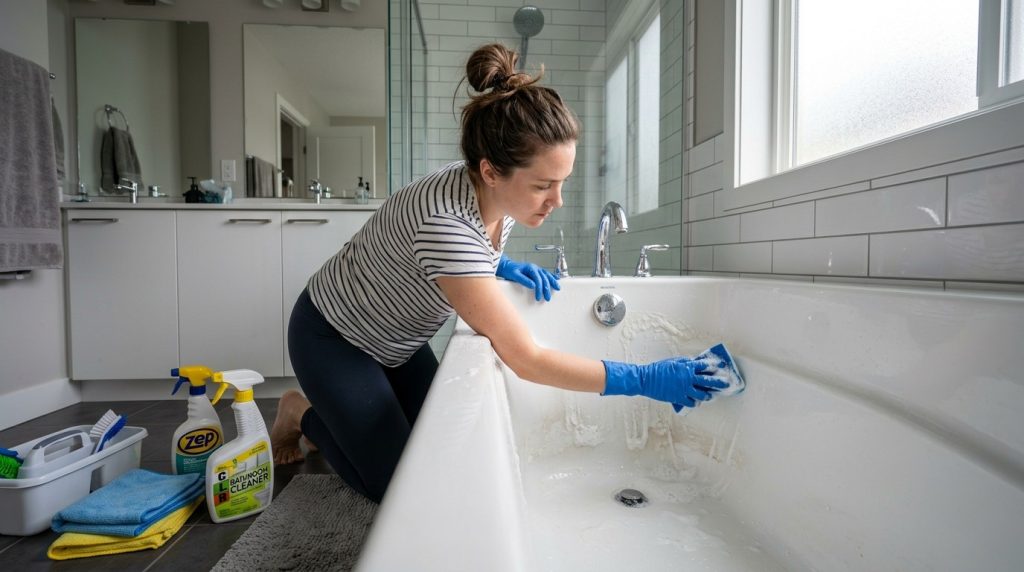
- Shower/tub: Clean weekly. Remove hair from drains, scrub tiles, and rinse off shampoo residue.
- Floor and grout: Mop weekly, and spot-clean spills. Grout can hold odors if mold grows.
- Trash bin: Empty daily. Wipe with disinfectant every week.
- Mirror and fixtures: Clean monthly to remove fingerprints and smudges.
Even the shower curtain or glass door needs attention. For plastic curtains, wash or replace every few months—soap scum and bacteria love to stick there. Glass doors can develop hard water spots that trap odor-causing germs.
Pro Cleaning Tips
- Use baking soda and vinegar for tough stains. They neutralize smells and kill bacteria.
- A toothbrush can reach small crevices, like under toilet rims or sink edges.
- For grout, use hydrogen peroxide mixed with baking soda. Let it sit 10 minutes before scrubbing.
- Don’t forget the light switches and door handles. These are high-touch points that can harbor germs.
- For persistent odors, try cleaning your bathroom fan cover and the area around it—dust and moisture buildup here can cause mustiness.
Common Mistakes
- Many people use too much water, which can seep into cracks and feed mold.
- Forgetting to clean behind toilets, under sinks, or inside drain covers allows smells to linger.
- Using harsh chemicals without ventilation risks respiratory issues.
- Skipping regular cleaning of shower drains can allow hair and soap to clog and decompose, producing strong odors.
- Not drying surfaces after cleaning leaves moisture for mold to grow.
Safety Precautions
- Wear gloves when cleaning toilets or using strong chemicals.
- Always open a window or turn on the exhaust fan to avoid fumes.
- Never mix bleach and ammonia—they produce toxic gas.
- Store cleaning supplies safely, especially if you have kids or pets.
- If using a new cleaner, test on a small area to make sure it doesn’t damage surfaces.
Ventilation: Fresh Air Is Essential
Odors build up when air is stagnant. Good ventilation is your secret weapon.
Types Of Bathroom Ventilation
| Ventilation Method | Effectiveness | Cost | Common Mistakes |
|---|---|---|---|
| Exhaust fan | High | $60–$200 | Not running long enough after shower |
| Open window | Medium | Free | Leaving closed during humid weather |
| Door left ajar | Low | Free | Doesn’t remove moisture quickly |
Practical Advice
- Always run the exhaust fan for 15–30 minutes after showers.
- If you don’t have a fan, crack open the window—even in winter. Moist air escapes faster.
- Leave the bathroom door open when not in use.
- Clean exhaust fan grills every 6 months. Dust buildup reduces airflow.
- Consider upgrading to a fan with a humidity sensor. It turns on and off automatically as needed.
- If your bathroom is windowless, a dehumidifier is a smart addition to keep air fresh and dry.
One thing many people forget: leave the shower door or curtain open after use. This lets air flow inside, drying wet surfaces and reducing mold.
When To Call A Pro
If your bathroom smells like mold or sewer gas, and ventilation doesn’t help, call a licensed plumber. You may have leaks, broken vent stacks, or faulty traps that need repair. Odors that return quickly after cleaning usually mean a hidden problem.
Targeting Odor Sources: Fixing What’s Really Smelly
Masking odors only works for a short time. To make your bathroom smell good all the time, fix the real sources.
Toilet Odors
- Replace the wax ring if you notice a sewer smell. This seal under the toilet prevents gases from escaping.
- Check for leaks at the base. Wet floors mean the ring is failing.
- Clean under the rim and hinges. These spots collect urine and bacteria.
- Use a pumice stone for tough mineral stains under the rim, but test gently so you don’t scratch the porcelain.
- Flush twice after heavy use to clear lingering waste.
Drain And Sink Smells
- Pour boiling water down drains weekly. It melts soap and hair buildup.
- Use a mix of vinegar and baking soda to flush out bacteria.
- Install a drain trap if you smell sewer gas—missing traps allow odors to come up.
- Clean pop-up stoppers in sinks monthly—they often hide hair and soap scum.
- If you notice gurgling sounds, you may have a venting issue, which can let sewer smells inside.
Trash And Diaper Smells
- Use a trash bin with a tight lid.
- Line bins with scented bags.
- Sprinkle baking soda at the bottom to absorb odors.
- Empty trash before it’s full—compressed waste releases stronger smells.
- Wash the bin with soapy water at least once a month to prevent buildup.
Towel And Fabric Odors
- Wash towels every 3–4 days. Don’t let them stay damp.
- Hang towels on bars, not hooks. They dry faster and smell less.
- If you smell mildew, wash with hot water and a cup of vinegar.
- Rotate bathmats and wash them weekly.
- For a quick refresh, toss towels in the dryer with a dryer sheet between washes.
Quick Fixes For A Fresh Bathroom
Sometimes you need your bathroom to smell good fast—maybe guests are coming, or you just finished cleaning. Here are smart tricks:
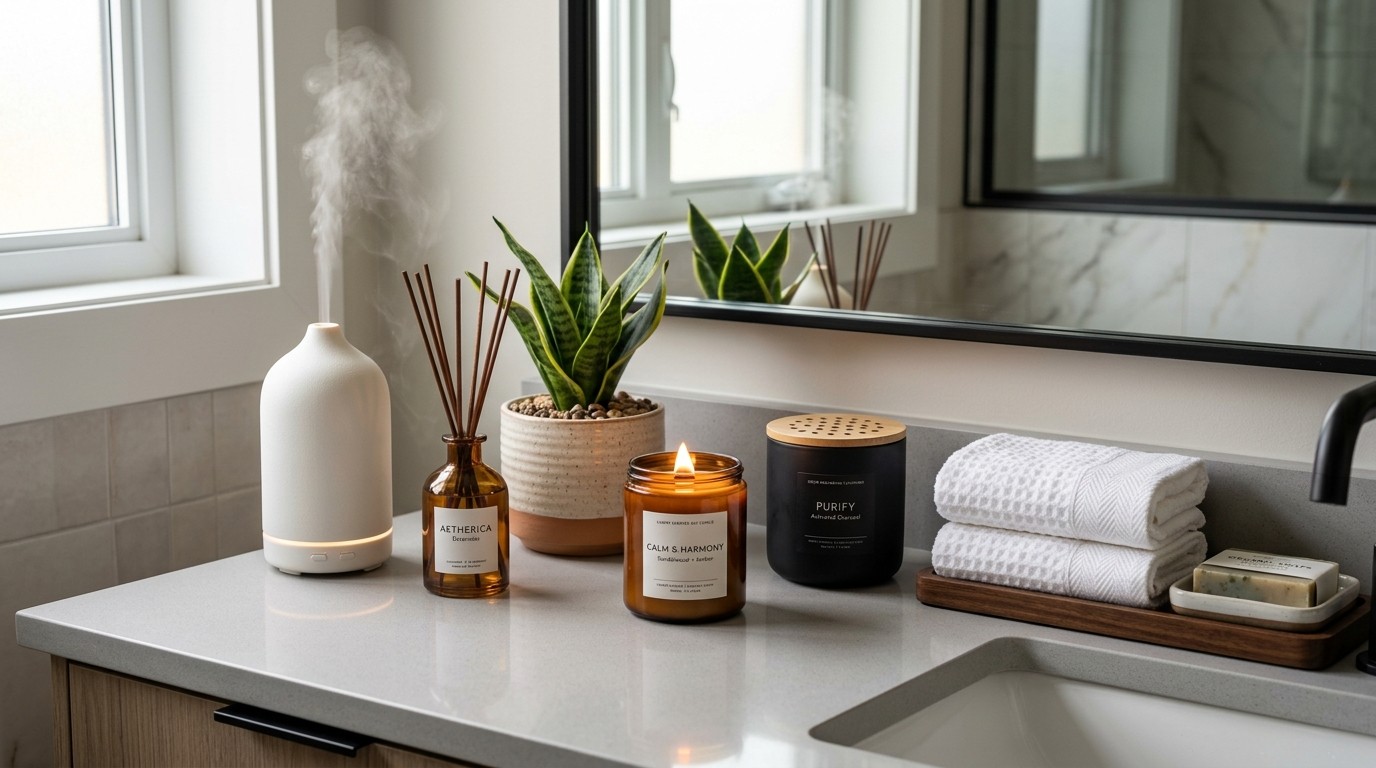
- Light a scented candle: Great for masking smells and adding warmth.
- Spray air freshener: Choose neutral scents (like linen or citrus) for wide appeal.
- Use essential oil diffusers: Lavender, peppermint, and eucalyptus are popular.
- Place dryer sheets: Tuck behind the toilet or trash bin for subtle freshness.
- Open the window: Let natural air clear out odors quickly.
- Flush with hot water: Flush the toilet, then pour hot water into the bowl to remove lingering smells.
- Place a cup of coffee grounds: Set it on a shelf; coffee naturally absorbs odors and adds a gentle scent.
- Use a fabric spray: Lightly mist shower curtains or towels with fabric freshener for an instant lift.
If you have a pet, clean the litter box (if it’s in the bathroom) right before guests arrive. Pet odors can be especially strong in small spaces.
Long-term Strategies To Keep Bathroom Smelling Good
Freshness isn’t just about cleaning. Smart homeowners use ongoing tactics for lasting results.
Choosing The Right Air Freshener
| Type | Duration | Cost | Best For |
|---|---|---|---|
| Scented candle | 2–4 hours | $5–$20 | Quick fixes, ambiance |
| Plug-in diffuser | 30 days | $8–$15 | Consistent scent |
| Essential oil spray | 1 hour | $5–$10 | Natural, allergy concerns |
| Gel beads | 2–4 weeks | $4–$10 | Low maintenance |
Practical Homeowner Advice
- Don’t overdo fragrance. Strong scents can make people uncomfortable or trigger allergies.
- Switch up scents seasonally. Fresh linen for spring, cinnamon for winter.
- Place air fresheners away from vents, so scent spreads evenly.
- For natural freshness, grow a small plant (like aloe or spider plant).
- Store backup air freshener refills—running out means odors can build up before you restock.
- If you share a bathroom, ask others about scent preferences to avoid clashes.
Mistakes To Avoid
- Plug-ins near water can short out or cause fire hazards.
- Scented products on wet surfaces lose effectiveness quickly.
- Mixing too many scents creates confusing smells.
- Using only one type of odor control (like just candles) often isn’t enough for tough bathrooms.
Diy Solutions For Bathroom Odor Control
You don’t need expensive products to keep your bathroom smelling good. Many fixes are easy and cheap.
Homemade Air Fresheners
- Baking soda jar: Fill a small jar with baking soda and poke holes in the lid. Place near toilet or trash.
- Citrus spray: Mix 1 cup water, 2 tbsp lemon juice, and 10 drops essential oil in a spray bottle.
- Vinegar bowl: Place a bowl of white vinegar overnight to absorb smells (remove in morning).
- Herb sachets: Fill small fabric bags with dried lavender or mint and hang from towel bars.
- Simmer pot: Simmer water with orange peels and cloves on the stove, then let the steam fill the bathroom for a few minutes.
Odor-absorbing Materials
- Charcoal bags are great for absorbing humidity and odors. Place behind the toilet or under the sink.
- Cotton balls dipped in vanilla extract can add a pleasant scent for several hours.
- Place a handful of dried coffee grounds in a bowl to absorb tough odors.
- Use old newspapers in the trash bin to soak up smells and moisture.
Safe Practices
- Keep homemade sprays away from children and pets.
- Don’t use essential oils near open flames (like candles).
- Test DIY solutions on a small area to ensure they don’t stain.
Bathroom Remodeling For Odor Prevention
Sometimes, persistent smells come from old materials or poor layout. Remodeling can solve these issues.
What Makes A Bathroom Smell Bad Long-term?
- Old tile grout absorbs moisture and bacteria.
- Poorly placed vents don’t remove steam.
- Cheap flooring traps smells.
- Old wallpaper can also harbor mildew behind it, especially if not moisture-resistant.
Upgrading Materials
- Use porcelain tile—it doesn’t hold odors.
- Install vent fans with humidity sensors.
- Replace old caulk and grout with mold-resistant types.
- Upgrade to water-resistant paint or wall panels to block moisture.
Plumbing Upgrades
- Replace old pipes with PVC or PEX. They don’t rust or smell.
- Install new traps under sinks to block sewer gases.
- If possible, move the toilet further from the door for better airflow.
Case Study: Remodel Success
An Ohio homeowner struggled with a musty bathroom for years. After replacing old grout, installing a vent fan, and upgrading the toilet wax ring, the smell disappeared. Even basic upgrades can make a huge impact.
Another example: a friend in Florida found that switching from carpet (yes, some old homes have it in the bathroom) to tile instantly improved air quality and made cleaning easier.
When To Call A Pro
Major plumbing changes (like moving drains or replacing pipes) require a licensed plumber. DIY mistakes can lead to leaks and worse odors. Always get expert advice if you’re unsure about the source of a persistent smell.
Scented Products And Their Pros & Cons
Everyone loves a scented bathroom, but not all products work the same. Here’s a quick comparison.
| Product | Pros | Cons | Average Price |
|---|---|---|---|
| Air freshener spray | Fast, easy | Temporary, may irritate allergies | $4–$8 |
| Candle | Long-lasting, cozy | Fire risk, scent fades if not burned | $10–$20 |
| Essential oil diffuser | Natural, customizable | Needs regular refills | $15–$40 |
| Gel beads | Low maintenance | Can dry out fast | $4–$10 |
| Charcoal bag | Absorbs odors, eco-friendly | Doesn’t add scent, needs replacement | $8–$15 |
Tips
- For sensitive noses, choose unscented odor absorbers like charcoal.
- Try different products until you find one that fits your needs and style.
- Store scented items in sealed bags when not in use to keep them fresh longer.
- Consider using a combination—like a charcoal bag for odor and a small diffuser for scent.
Preventing Odors: Simple Habits That Work
The best-smelling bathrooms are kept fresh by daily habits.
Good Habits
- Flush immediately after use.
- Wipe counters after brushing teeth.
- Hang towels neatly and let them dry.
- Empty trash every day.
- Run exhaust fan after showers.
- Clean drains once a week.
- Replace or wash bath mats regularly.
- Keep the toilet lid closed to contain smells.
- Keep a squeegee in the shower and use it after each use to prevent water spots and mildew.
Mistakes To Avoid
- Letting wet towels pile up.
- Ignoring trash bins.
- Using old, damp bath mats.
- Leaving personal care products open—spilled liquids can sour and add to odors.
When Bad Odors Mean A Bigger Problem
Some smells can’t be fixed with cleaning or air fresheners. If your bathroom smells like rotten eggs, sewage, or strong mustiness, you may have:
- A broken toilet seal
- A clogged or dry drain trap
- Hidden water leaks
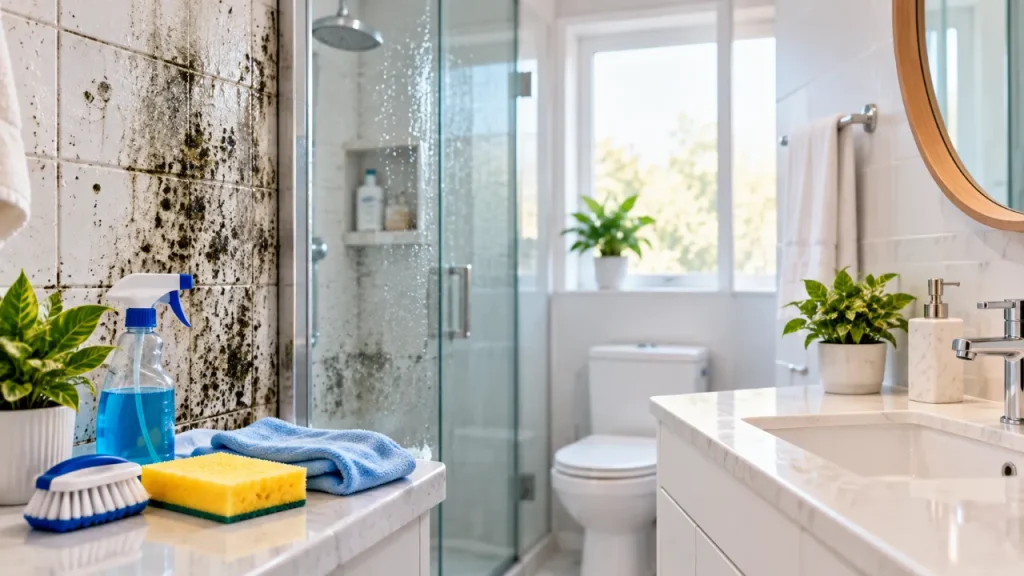
- Mold behind walls or under floors
Signs You Need A Professional
- Smell returns quickly after cleaning
- Water stains on ceilings or floors
- Visible mold, even after cleaning
- Soft or warped flooring near the tub or toilet, which can signal water damage
Don’t try to fix plumbing leaks or electrical fans yourself unless you have experience. Licensed pros can diagnose and repair safely. Ignoring leaks can lead to bigger, more expensive problems later.
Case Study: Real Homeowner Experience
A New Jersey family noticed their bathroom always smelled musty, even after cleaning. They tried air fresheners, scented candles, and homemade sprays. Nothing worked. After calling a plumber, they discovered a leaking toilet wax ring and mold under the flooring.
Fixing the leak and replacing the floor solved the odor problem for good. The lesson? Sometimes, hidden issues are the real cause.
I’ve also seen apartments where tenants discovered the source of odor was a slow leak behind the sink, only visible after removing the vanity. Once fixed, the whole apartment smelled fresher.
Scientific Insight: Why Odors Stick Around
Bathroom smells are tough because they cling to porous surfaces and multiply in moisture. Bacteria and fungi thrive in damp spots, producing gases like hydrogen sulfide (rotten egg smell) and ammonia (sharp urine smell). According to the EPA, controlling humidity and cleaning regularly reduces bacteria and odor. Ventilation keeps air moving, so smells don’t settle on surfaces.
Many cleaning products kill surface germs but don’t reach into grout or caulk, where bacteria can hide. That’s why deep cleaning is so important. Also, warm bathrooms speed up bacteria growth, so using cooler water for cleaning and rinsing can help slow it down.
Eco-friendly Ways To Make Bathroom Smell Good
Many homeowners want to avoid strong chemicals and synthetic fragrances. Here are safer, greener options:
- Use baking soda to absorb and neutralize smells.
- Grow a small indoor plant—they filter air naturally.
- Choose essential oil diffusers instead of plug-ins.
- Clean with vinegar and lemon for natural freshness.
- Avoid products with phthalates or heavy artificial scents.
- Try wool dryer balls with a drop of essential oil in the linen closet for gentle scent.
- Switch to reusable cleaning cloths instead of disposable wipes to reduce waste.
You can find more eco-friendly bathroom tips from the EPA Indoor Air Quality site.
Frequently Asked Questions
Why Does My Bathroom Smell Bad Even After Cleaning?
Odors can linger if there’s hidden mold, plumbing leaks, or dry drain traps. Sometimes, cleaning only removes surface smells, not the source. Check for leaks, run the exhaust fan, and clean drains with baking soda and vinegar. If the problem returns quickly, you may have a hidden leak or mold growth.
What Is The Safest Way To Keep My Bathroom Smelling Good?
Use natural odor absorbers like baking soda or charcoal bags. Clean regularly, ventilate well, and avoid mixing strong chemicals. Essential oil diffusers are safe if kept away from open flames. Make sure to choose scents that don’t irritate allergies.
How Often Should I Clean My Bathroom To Prevent Odors?
Clean high-traffic areas (toilet, sink, trash) every week. Wipe surfaces daily, mop floors weekly, and deep-clean grout monthly. Wash towels every 3–4 days and empty trash daily. Don’t forget to clean drains and air out the bathroom after every shower.
Can I Use Scented Candles In The Bathroom?
Yes, but always keep candles away from towels and curtains. Never leave burning candles unattended. Choose soy or beeswax candles for cleaner burning and less soot. Trim the wick before lighting to prevent excessive smoke.
When Should I Call A Professional For Bathroom Odors?
If you notice sewage smells, persistent mold, or water stains, call a licensed plumber or mold specialist. DIY fixes can’t solve structural or plumbing issues, and ignoring them may lead to damage or health risks. If you see signs of water damage or the smell gets worse over time, professional help is needed.
Bringing It All Together
A good-smelling bathroom is more than a luxury—it’s a sign of a healthy, well-maintained home. From deep cleaning and smart ventilation to scent choices and eco-friendly habits, you have many tools to keep your bathroom fresh. Don’t forget to fix real odor sources, build daily habits, and call a professional when needed. With the right approach, your bathroom can be a place that feels clean and welcoming, every single day.
Whether you’re preparing for guests or just want to relax in a fresh space, these strategies will help you transform your bathroom. Remember: solving the root causes is always better than just covering up bad smells. With a little care and the right habits, you’ll enjoy a bathroom that smells as good as it looks.