Your Trusted Source for Home Fixes & Guides


How to Clean Granite Composite Sink: Easy Steps for Beginner

Cleaning a granite composite sink is not as simple as wiping down a stainless steel basin. Granite composite, a mix of natural stone and resin, is valued for its durability and style, but it can show water spots, stains, and grime differently. Learning How to Clean Granite Composite Sink properly is important because the wrong cleaners or techniques can damage the finish and reduce its deep, elegant appearance.
With the right approach, you can keep your sink looking clean for years. This guide covers day-to-day cleaning, deep cleaning, tough stains, and what to do when problems arise.
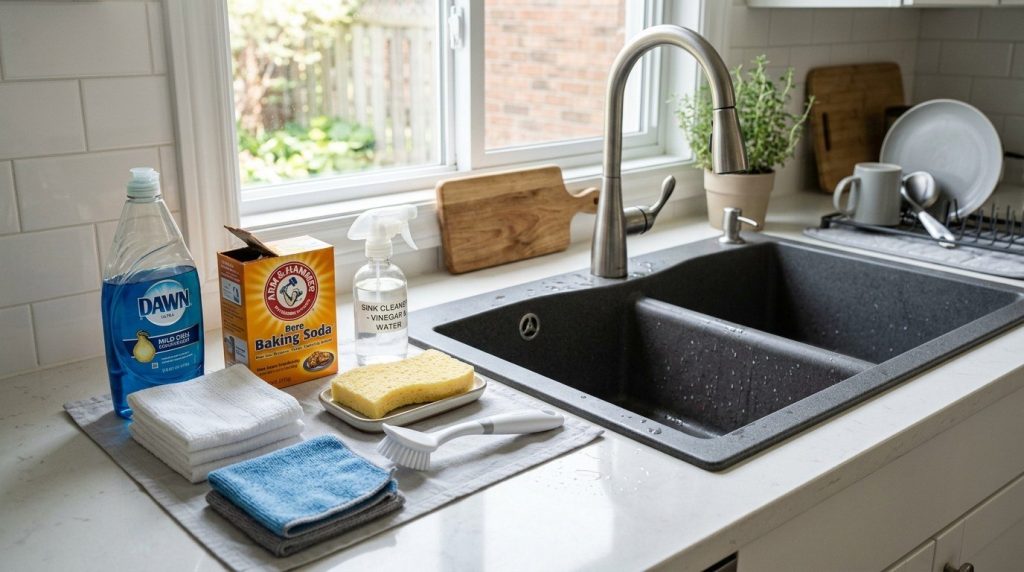
Understanding Granite Composite Sinks
Granite composite sinks combine quartz stone and acrylic resin. Manufacturers usually blend about 80% stone with 20% resin. This creates a strong, scratch-resistant surface. Unlike pure granite or metal sinks, composite ones are less likely to chip or dent. They also resist heat and most household chemicals.
But, the material has unique needs. Acidic cleaners, scouring pads, and even some soaps can dull the finish. Hard water can leave white spots. Understanding these facts helps you avoid mistakes and clean efficiently.
Key Properties
- Durability: Resists scratches better than stainless steel, so you can use your sink for years without seeing lots of marks. However, even though it’s tough, dragging heavy pans or sharp objects directly across the surface can eventually wear it down.
- Heat Resistance: Can handle up to 530°F, but sudden changes can cause cracks. For example, pouring boiling water straight into a cold sink might create enough stress to damage the surface. Always let the water cool a bit or run the tap first.
- Stain Resistance: Less likely to absorb stains but still needs regular care. The resin helps block stains, but coffee, tea, and oil can still leave marks if not wiped up quickly.
- Appearance: Matte, stone-like texture that hides small marks but can highlight water spots. Darker colors especially can show soap scum or limescale more than you expect.
Common Brands
Popular brands include Blanco, Elkay, and Kraus. Each has its own care recommendations, but the basics are similar. Some brands offer their own cleaning products made just for their sinks. It’s a good idea to check your sink’s manual or website for any special advice.
Non-obvious Insight
Many homeowners believe granite composite sinks are “no maintenance. ” In reality, regular care is needed to prevent dullness and keep the surface strong. Also, unlike pure stone, the composite can react to some chemicals because of the resin.
Daily And Weekly Cleaning
Routine cleaning is the secret to keeping your granite composite sink looking sharp. The right habits prevent buildup and make deep cleaning easier.
Daily Cleaning Steps
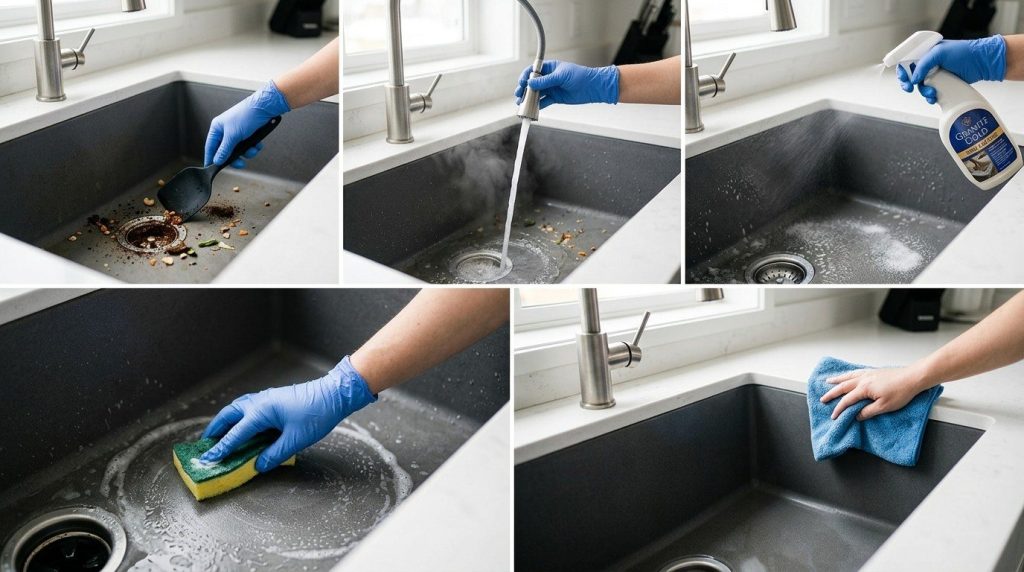
- Rinse debris: Use warm water to wash away crumbs, soap, and food bits after every use. If food dries on the surface, it can be harder to remove, so a quick rinse makes a difference.
- Mild detergent: Mix a small amount of gentle dish soap with warm water. Avoid harsh chemicals. Strong detergents can eat away at the resin, making the sink look dull.
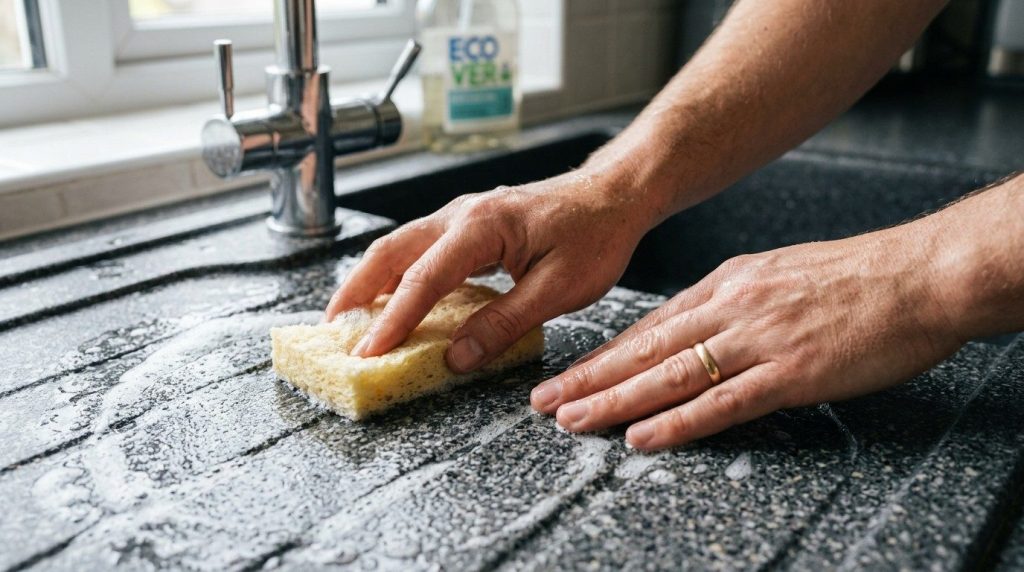
- Soft cloth or sponge: Wipe the sink gently. Never use steel wool or rough pads. Even though the surface is tough, constant abrasion will eventually create tiny scratches that catch dirt.
- Rinse thoroughly: Soap residue can leave streaks. Rinse with clean water. Try to rinse all corners, including around the drain and faucet.
- Dry completely: Use a soft towel to dry. Water spots are less likely to form if the sink stays dry. In areas with hard water, minerals in droplets will leave white marks unless wiped away.
Bonus Tip
If you use your sink for lots of food prep, try to clean and dry it after each meal. This habit takes less than two minutes but makes a big impact on how the sink looks over time.
Weekly Cleaning Routine
- Baking soda paste: Once a week, sprinkle baking soda over the surface. Add a little water to make a paste. Baking soda is gentle and lifts grime without scratching.
- Scrub gently: Use a soft sponge to scrub in circles. Baking soda is non-abrasive, so it’s safe for the finish but still effective on stains.
- Rinse and dry: Wash away all residue and dry with a towel. Baking soda left behind can become gritty if it dries.
Pro Tip: For dark sinks, mineral deposits show up as white spots. For light sinks, food stains can be more obvious. Adjust cleaning frequency based on your sink color.
Extra Example
In busy households, children may leave sticky messes in the sink. Teaching everyone to rinse and wipe the sink after use not only keeps it clean but also prevents bacteria from building up.
Deep Cleaning And Stain Removal
Sometimes, daily cleaning isn’t enough. Coffee, tea, grease, or rust can leave behind stubborn marks. Deep cleaning solves these problems without harming your sink.
Deep Cleaning Process
- Prepare a paste: Mix baking soda and a few drops of water. The paste should be thick enough to stick to vertical surfaces.
- Apply paste: Spread the mixture over stains. Let it sit for 5–10 minutes. This gives the baking soda time to break down stuck-on grime.
- Scrub gently: Use a soft-bristle brush to work the paste into the stain. Use light pressure—let the paste do the work.
- Rinse: Wash away all residue. If any paste remains, it may make the surface feel gritty.
- Dry: Always dry with a soft towel. This not only prevents water spots but also helps you spot any remaining stains.
Practical Example
If you spill tomato sauce or red wine, blot up as much as possible right away. Then, use the baking soda paste method to handle any leftover color.
Tough Stains
- Hard Water Spots: Mix equal parts white vinegar and water. Spray on spots, wait 5 minutes, then rinse. Do not leave vinegar on too long—it can damage the finish. Always follow up by rinsing thoroughly with water and drying.
- Grease: Use mild dish soap and warm water. For stubborn grease, add a drop of lemon juice, but rinse quickly. Lemon can help cut grease, but don’t let it sit, as acid can harm the resin.
- Rust Marks: For light rust, sprinkle baking soda and scrub gently. For heavy rust, call a professional. Rust often comes from old pans or metal utensils left in the sink—avoid leaving wet metal items in contact with the surface.
Second Non-obvious Insight
Many people don’t realize that hard water minerals can build up inside tiny scratches and pits, making stains seem impossible to remove. Regular use of baking soda and careful drying helps prevent this buildup.
Case Study: Removing Hard Water Deposits
A homeowner in Phoenix struggled with white spots on their black granite composite sink. After trying several cleaners, they used a mix of baking soda and diluted vinegar. They scrubbed gently, rinsed well, and dried the sink. The spots disappeared.
The key was not to let the vinegar sit too long—just 5 minutes, then thorough rinsing.
Extra Detail
If you live in an area with very hard water, consider installing a simple faucet filter. This can reduce deposits and make cleaning easier.
What Not To Use
Many people make cleaning mistakes that can ruin their sinks. Here are products and tools to avoid:
- Bleach: Strong chemicals like bleach can discolor the surface. Even diluted bleach can cause white marks, especially on dark sinks.
- Ammonia: Can break down the resin, causing dullness. Many “all-purpose” cleaners contain ammonia—always check the label.
- Scouring pads: Rough pads scratch the finish. Even one use can leave visible marks.
- Oven cleaner: Highly alkaline, can damage the sink.
- Undiluted vinegar: Prolonged exposure can etch the surface. Vinegar is safe only when diluted and used briefly.
- Lime removers: Often too harsh. They can strip away the smooth finish, leaving the sink rough and more likely to stain.
Common Mistakes
- Using rough sponges for quick cleaning. Even if you’re in a hurry, always reach for a soft cloth or sponge.
- Leaving acidic foods (like lemon slices) on the sink for hours. Acidic liquids can leave faint etch marks that only show up under certain lighting.
- Pouring boiling water directly without letting the sink adjust. This can cause thermal shock, especially in cold weather.
- Forgetting to dry the sink after washing. Water left to air dry will almost always leave marks, especially if your water is hard.
If you’re unsure, test any new product on a small, hidden area first. Wait a few hours to see if there’s any change before using it on the whole sink.
Protecting Your Granite Composite Sink
Cleaning is just one part. Protecting your sink from damage means fewer repairs and a longer lifespan.
Simple Protection Tips
- Use sink mats: They cushion heavy pots and reduce scratches. Choose rubber or silicone mats that don’t have suction cups, which can trap water and cause spots.
- Avoid sharp tools: Don’t chop food directly in the sink. Always use a cutting board.
- Don’t let water stand: Constant moisture can cause mineral deposits. After washing dishes, always drain and dry the sink.
- Rinse after harsh foods: Tomato sauce, coffee, and wine can stain if left too long. Rinsing right away prevents long-term stains.
- Polish occasionally: Use a granite composite polish every few months. Follow manufacturer’s instructions. Polishing helps fill in tiny scratches and restore shine.
Helpful Example
If you do a lot of baking, flour and dough can stick to the sink. Using a mat makes cleanup much easier and stops dough from getting into the drain.
Comparison Of Sink Materials
Here’s how granite composite compares to other common sink materials:
| Material | Durability | Maintenance | Stain Resistance | Heat Resistance |
|---|---|---|---|---|
| Granite Composite | High | Moderate | Good | Excellent |
| Stainless Steel | Moderate | Easy | Fair | Good |
| Ceramic | Low | Moderate | Good | Poor |
| Cast Iron | High | Difficult | Excellent | Excellent |
Extra Insight
Granite composite sinks are a good middle ground for most kitchens: not as noisy as stainless steel, less prone to chipping than ceramic, and easier to keep looking clean than cast iron.
Dealing With Scratches And Chips
Granite composite sinks are tough, but not invincible. Occasionally, scratches or chips can appear. Here’s what to do:
Minor Scratches
- Clean the area thoroughly. Use gentle soap and water to remove any dirt.
- Use a granite repair kit (sold at hardware stores). These kits usually include a filler, a coloring agent, and a finishing pad.
- Follow instructions: Usually involves applying a filler and buffing. For best results, match the color as closely as possible.
Example
If you see a faint scratch from a dropped fork, most kits can make it almost invisible. Just be patient and follow each step in the instructions.
Chips
- For small chips, use a repair kit. Some kits come with a putty you can shape to fill the chip.
- For larger chips or cracks, call a licensed plumber or sink specialist. DIY fixes may not hold. Large cracks can let water seep into your counter or cabinet.
Safety Precautions
- Wear gloves when using repair kits. Some fillers can irritate skin.
- Ventilate the area if working with chemicals. Open a window or use a fan.
- Don’t attempt repairs on deep cracks—these may need a full replacement. Water can leak into the countertop and cause bigger problems.
Second Example
A homeowner tried fixing a deep chip with glue instead of a kit. The repair lasted only a few weeks, and the chip grew. Professional repair was needed to avoid further damage.
Deodorizing And Preventing Odors
Granite composite sinks rarely smell, but food waste or bacteria can cause odors.
Preventing Odors
- Clean the drain regularly. Use a brush or bottle cleaner to scrub around the drain.
- Use baking soda to neutralize smells. Sprinkle some in the drain, let sit for 10 minutes, then rinse.
- Rinse with diluted vinegar, then rinse again with water. This helps kill bacteria.
- Avoid leaving food waste overnight. Even small bits can rot and smell by morning.
Extra Advice
If your sink doesn’t have a garbage disposal, place a fine mesh strainer in the drain to catch food particles.
Non-obvious Insight
If you notice persistent odors, check for food trapped under a sink mat or in the drain collar. These areas often get missed during regular cleaning.
Cleaning Around Faucets And Drains
The area around faucets and drains often collects grime and mineral deposits. These spots need special attention.
Steps
- Use an old toothbrush with mild soap. The small bristles reach tight spaces.
- Scrub gently around the base of the faucet and drain. Move in small circles.
- Rinse and dry. Use a microfiber cloth for a streak-free finish.
- For tough deposits, use diluted vinegar for 2–3 minutes, then rinse. Always dry after rinsing to stop new spots from forming.
Example
If you have hard water, check around the faucet weekly. Even a thin ring of minerals can make the faucet look dirty and cause slow leaks.
Cleaning Tools Comparison
Let’s compare common cleaning tools for granite composite sinks:
| Tool | Abrasiveness | Suitable for Granite Composite? | Typical Use |
|---|---|---|---|
| Soft Sponge | Low | Yes | Daily Cleaning |
| Microfiber Cloth | Low | Yes | Drying, Polishing |
| Toothbrush | Low | Yes | Detail Cleaning |
| Steel Wool | High | No | Heavy Duty Scrubbing |
| Scrub Pad | Medium | No | Removing Stains (not for granite composite) |
Extra Insight
Some people use “magic eraser” sponges. These are safe for tough marks, but always test in a small area first—some brands can be slightly abrasive.
Maintaining Sink Color And Finish
Granite composite sinks come in many colors—black, gray, white, beige. Over time, color can fade or become uneven. Here’s how to keep your sink looking vibrant.
Color Protection Tips
- Avoid harsh sunlight; UV rays can fade color. If your sink is under a window, consider a curtain or shade.
- Use recommended granite composite sink polish. Some brands sell color-restoring polishes that brighten faded spots.
- Never use bleach or ammonia-based cleaners. These strip color and weaken resin.
- Dry after every cleaning. Water left to dry can create rings or streaks, especially on dark sinks.
Example
A homeowner in Chicago noticed their gray sink fading after years of exposure to sunlight and harsh cleaners. Switching to baking soda, gentle soap, and a specialty polish restored much of the color.
Second Example
If you notice a chalky or whitish film, it’s likely from hard water. Polishing after deep cleaning can help restore the rich, original color.
When To Call A Professional
Some problems need expert help. If you notice deep cracks, major chips, or persistent stains that won’t come out, call a licensed plumber or sink repair specialist. DIY repairs are fine for small scratches, but structural damage can lead to leaks or water damage in your cabinets.
Safety Tip: If you ever need to remove the sink or disconnect plumbing, turn off the water supply first. If you’re unsure, hire a professional.
Bonus Insight
Professionals have color-matching fillers and specialized tools that make repairs last longer and look seamless. Attempting a big repair yourself can sometimes void your sink’s warranty.
Granite Composite Sink Cleaning Products: What To Buy
Not all cleaning products are safe for granite composite sinks. Here’s what to look for:
- PH-neutral cleaners: These won’t harm the finish. Check labels for “safe for stone surfaces.”
- Granite composite-specific polishes: Restore shine and protect the surface. Use sparingly; too much can cause buildup.
- Soft sponges and microfiber towels: Reduce scratches. Never use anything rougher than a soft kitchen sponge.
What To Avoid
Avoid “multi-surface” or “antibacterial” sprays unless they specifically say they are safe for granite composite. Many contain ammonia or acids.
Popular Granite Composite Sink Cleaners
| Product Name | Type | Safe for Granite Composite? | Typical Price |
|---|---|---|---|
| Weiman Granite Cleaner | Spray | Yes | $8–$10 |
| Bar Keepers Friend (Soft Cleanser) | Cream | Yes | $7–$9 |
| Blanco Sink Cleaner | Powder | Yes | $12–$15 |
| Generic Dish Soap | Liquid | Yes | $4–$6 |
| Bleach | Liquid | No | $5–$7 |
Second Example
Some brands also sell “color enhancer” sprays for black or dark sinks. These are like a polish and help hide tiny scratches.
Real Homeowner Experience: Case Study
Linda, a homeowner in Dallas, bought a black granite composite sink for her remodeled kitchen. After six months, she noticed white spots and some dullness. She tried scrubbing with a rough pad and even used bleach—both mistakes.
After reading expert advice, Linda switched to baking soda, soft sponges, and a pH-neutral cleaner. She dried the sink after each use. Within two weeks, the white spots disappeared, and the sink regained its shine. Linda learned that avoiding harsh chemicals and drying the sink made all the difference.
Extra Detail
Linda also discovered that using a silicone sink mat helped protect the surface from heavy cookware, preventing new scratches.
Granite Composite Sink Maintenance Schedule
Creating a schedule makes upkeep easier and prevents big problems.
Weekly
- Wipe sink daily with mild soap and water.
- Dry with a soft towel. This simple step prevents most water spots.
Monthly
- Deep clean with baking soda paste. Focus on areas near the drain and faucet.
- Polish with granite composite-specific polish. Only a small amount is needed.
Every 6 Months
- Check for scratches or chips. Repair if needed.
- Inspect plumbing for leaks. Look under the sink for any signs of water.
Yearly
- Have a plumber inspect for hidden damage (especially if the sink is heavily used).
- Replace sink mats and cleaning tools as needed. Worn-out mats or sponges can actually scratch the sink.
Bonus Tip
Set reminders on your phone or calendar. Regular attention saves time and money in the long run.
Environmental Impact And Sustainability
Granite composite sinks are more eco-friendly than pure granite, as they use crushed stone and resin. However, the resin component is not biodegradable. When cleaning, avoid dumping harsh chemicals down the drain—they can harm the environment.
Tip: Baking soda and vinegar (used in moderation) are safe for both your sink and the planet.
Extra Insight
If you want to be greener, use microfiber cloths instead of paper towels for drying. They last longer and reduce waste.
Frequently Asked Questions
How Do I Remove Hard Water Stains From My Granite Composite Sink?
Mix equal parts white vinegar and water. Spray onto stains, let sit for 5 minutes, then rinse thoroughly. Dry with a soft towel. Do not let vinegar sit longer, as it can damage the finish.
Can I Use Bleach On A Granite Composite Sink?
No. Bleach can discolor and damage the resin. Use gentle dish soap or a pH-neutral cleaner instead.
What Should I Do If My Sink Gets Scratched?
Clean the area, use a granite composite repair kit, and follow instructions. Deep scratches or chips should be handled by a professional.
How Often Should I Polish My Granite Composite Sink?
Polish your sink every 2–3 months using a granite composite-specific polish. This keeps the finish vibrant and protects against stains.
Are Granite Composite Sinks Safe For Hot Pots And Pans?
Yes, they resist heat up to 530°F. However, avoid sudden temperature changes. Never pour boiling water directly; let the sink adjust to room temperature first.
If you want more advice or product recommendations, check out Home Depot’s granite composite sink guide.
Granite composite sinks can last many years if you care for them properly. With the right cleaning habits and products, your sink will stay beautiful and functional—no matter how busy your kitchen gets. Stay proactive, avoid common mistakes, and don’t hesitate to call a professional when needed.