Your Trusted Source for Home Fixes & Guides

How Do You Remove Bleach Stains from Carpet: Expert Solution

Spilling bleach on carpet is a homeowner’s nightmare. You see a pale spot, and your heart sinks. Unlike food stains or mud, bleach stains aren’t just “dirty”—they’re damage. If you’re wondering How Do You Remove Bleach Stains from Carpet, it’s important to understand that bleach removes color from carpet fibers rather than leaving a traditional stain. With the right approach, you may be able to make bleach spots much less noticeable or, in some cases, nearly invisible.
As someone who’s remodeled bathrooms, cleaned up after plumbing disasters, and tackled more carpet mishaps than I’d like to admit, I know how frustrating bleach stains can be. This guide will walk you through everything you need to know to handle bleach spots on carpet.
We’ll cover why bleach stains happen, what your realistic options are, step-by-step DIY fixes, when to call a pro, and tips to prevent future accidents. Plus, you’ll see a case study of a real carpet rescue and get answers to common questions.
Let’s get your carpet looking its best again.
What Happens When Bleach Hits Carpet
Bleach is a strong chemical. It’s used to disinfect and whiten, but on carpet it doesn’t “clean”—it strips color. Most carpets are made of nylon, polyester, or wool fibers, which are dyed during manufacturing. When you spill bleach, it breaks down the molecules that give your carpet its color. The result is a spot that looks lighter, white, or even yellow depending on the carpet and how long the bleach sits.
Unlike most stains, this isn’t a surface problem. The color is gone. That means traditional cleaning won’t work. You can’t just blot or wash away a bleach spot. To fix it, you need to either hide the damage, recolor the spot, or replace the affected area.
Why Bleach Stains Are So Difficult
Most household stains—wine, coffee, mud—are removable because they sit on or just under the surface. Bleach actually changes the fiber itself. Once the color is stripped, there’s nothing to “lift” out. This is why people often get frustrated trying different cleaners or carpet shampoos with no luck.
Immediate Steps After A Bleach Spill
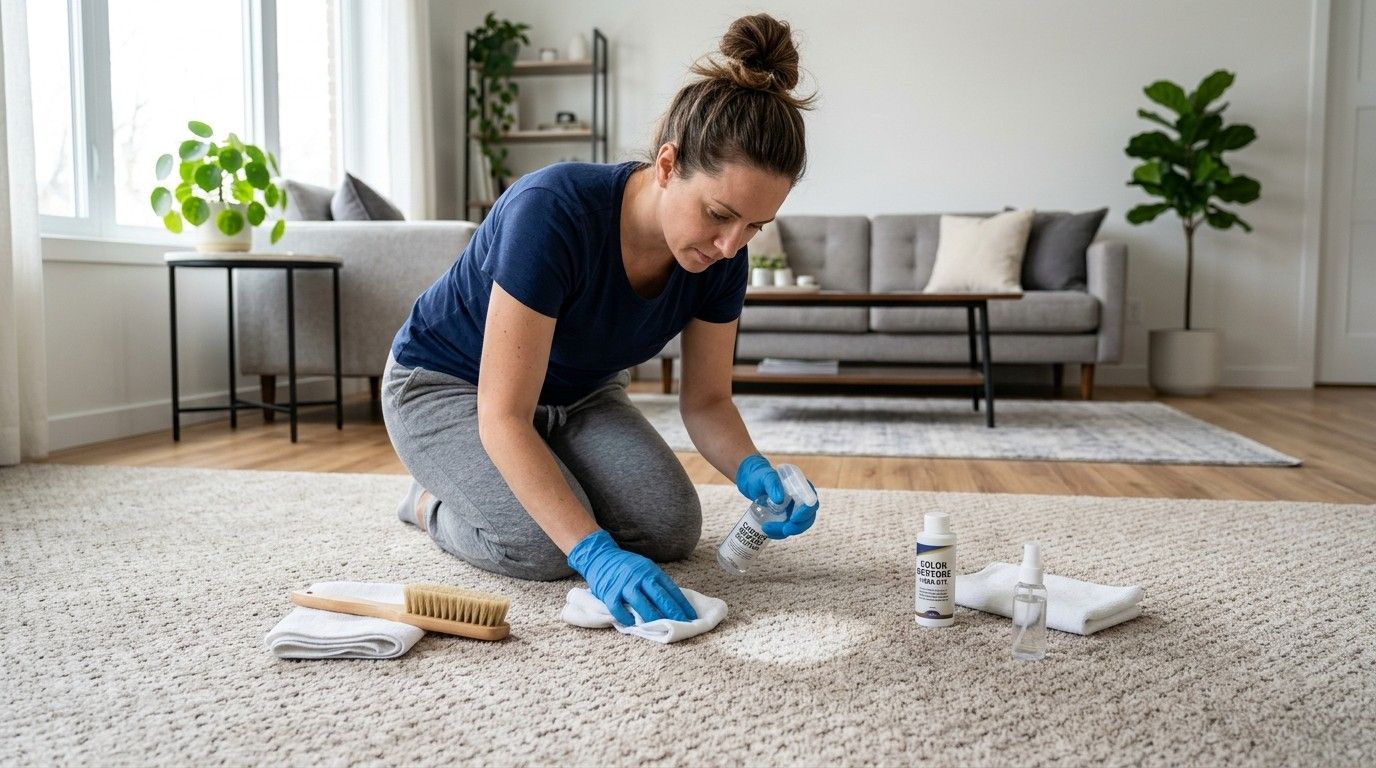
Acting fast can reduce the size and intensity of a bleach stain. If you spill bleach on carpet, follow these steps right away:
- Blot, Don’t Rub: Use a clean white cloth or paper towel to blot up as much of the liquid as possible. Do not rub—you’ll spread the bleach and damage more fibers.
- Neutralize the Bleach: Mix one tablespoon of baking soda into one cup of water. Lightly dampen a cloth with the solution and gently dab the area. This helps stop the bleach from continuing to work.
- Rinse with Water: Use a damp cloth (just water) to blot the area, removing as much bleach as you can. Don’t soak the carpet—too much water can damage the pad underneath.
- Dry the Area: Press a dry towel over the spot to absorb moisture. Place a fan nearby if possible.
These steps won’t restore color, but they can prevent the stain from getting bigger or more noticeable.
Common Mistakes To Avoid
- Rubbing the spot spreads the bleach and damages the fibers.
- Using hot water can set the bleach and make the spot worse.
- Pouring vinegar or other acids directly on the bleach spot can cause a chemical reaction and further damage.
Assessing The Damage: Is The Stain Repairable?
Before you try any fix, take a good look at the stain. Here’s what you should check:
- Size of the spot: Small stains (under 2 inches) are easier to hide or repair.
- Location: Stains in high-traffic areas or right in the middle of the room are harder to disguise.
- Carpet color and type: Solid color carpets show repairs more than patterned or multi-colored ones. Wool can be trickier to dye than nylon or polyester.
If the spot is large, on white carpet (where bleach doesn’t show), or the carpet is old and worn out, sometimes replacement is the better choice.
When To Call A Professional
- The bleach stain is very large or there are multiple spots.
- The carpet is expensive, delicate (like wool), or custom-dyed.
- DIY repairs haven’t worked and you want the spot to be truly invisible.
A professional carpet repair technician can patch, dye, or even re-tuft damaged areas. For high-end or insurance-covered carpets, this is a smart move.
Diy Methods To Fix Bleach Stains On Carpet
If you’re dealing with a small or medium bleach spot, there are several DIY methods you can try. Each has its pros and cons, and not every method works on every carpet. Here are the most effective options:
1. Using A Carpet Crayon Or Marker
Carpet dyes in crayon or marker form are made for spot repairs. They come in many colors and are easy to use.
Steps:
- Choose a color that matches your carpet (test on a hidden spot first).
- Gently color in the bleached area, working from the outside in.
- Blend the color with your finger or a clean cloth.
- Allow it to dry, then brush the fibers to blend.
Pros: Quick, cheap, no mess.
Cons: May not match perfectly. Can wear off in high-traffic areas.
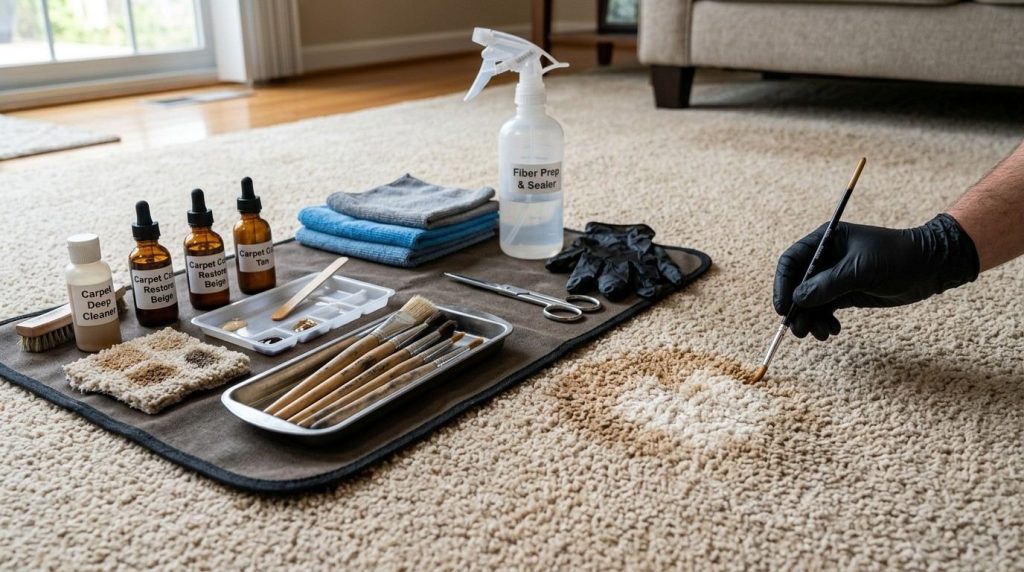
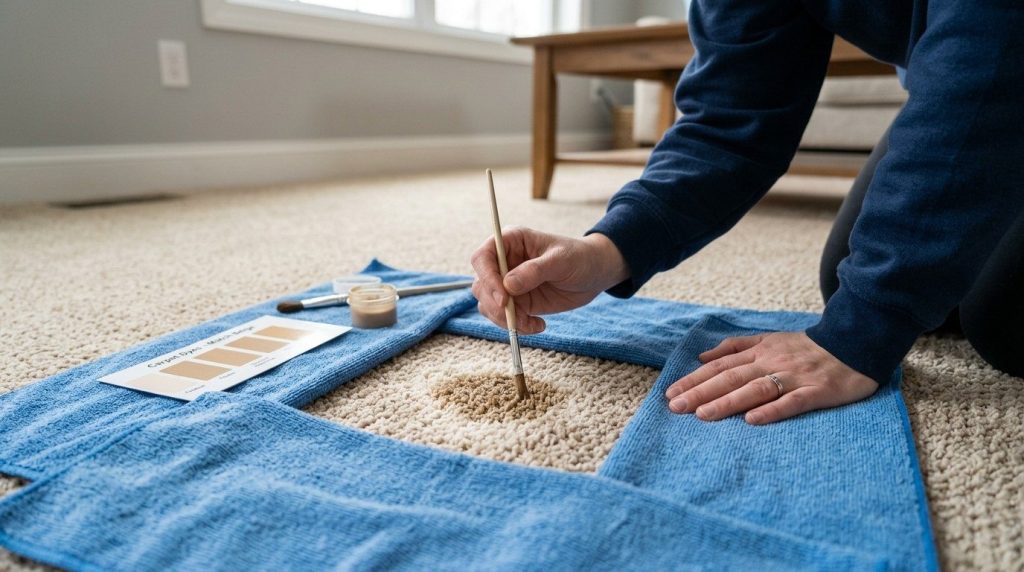
2. Applying Liquid Carpet Dye
Carpet dye kits are available online and in home improvement stores. They work best on nylon or wool carpets.
Steps:
- Mix dye per instructions and test on a hidden spot.
- Apply dye with a small brush or cotton swab to the bleached area.
- Dab gently and build up color in layers.
- Let it dry completely between coats.
Pros: More permanent than markers, can achieve a closer match.
Cons: Matching color is tricky. Over-dyeing can make the spot too dark.
3. Camouflaging With Fabric Paint
For small spots, some people use fabric paint (designed for upholstery) to tint the bleached fibers.
Steps:
- Choose a paint that matches the carpet.
- Use a tiny brush to paint the tips of the fibers.
- Let dry thoroughly.
Pros: Good for tiny spots. Paint is flexible and won’t crack.
Cons: Not as durable as carpet dye. May wear off with vacuuming.
4. Carpet Patch Repair
For larger stains, a patch repair is often the best DIY solution. You’ll need some leftover carpet or a matching piece from a closet.
Steps:
- Cut out the damaged section with a sharp utility knife.
- Cut a matching piece from extra carpet.
- Place double-sided carpet tape or carpet adhesive in the hole.
- Insert the patch, pressing fibers to blend the seam.
- Trim any long fibers to match.
Pros: Nearly invisible if done well. Permanent fix.
Cons: Hard to match pile direction and color if carpet is faded.
5. Professional-grade Carpet Recoloring Kits
Some kits include multiple dye colors, mixing trays, and application tools so you can custom-match your carpet.
Steps:
- Mix colors to match your carpet (test first).
- Apply with a fine brush, layering until the spot matches.
- Allow to dry and blend.
Pros: Best for experienced DIYers. Can get a very close match.
Cons: Time-consuming. Requires patience and skill.
Safety Tips For Diy Repairs
- Always wear gloves and work in a well-ventilated area when using dyes or chemicals.
- Test any product on a hidden area of carpet first.
- Keep children and pets away until repairs are dry.
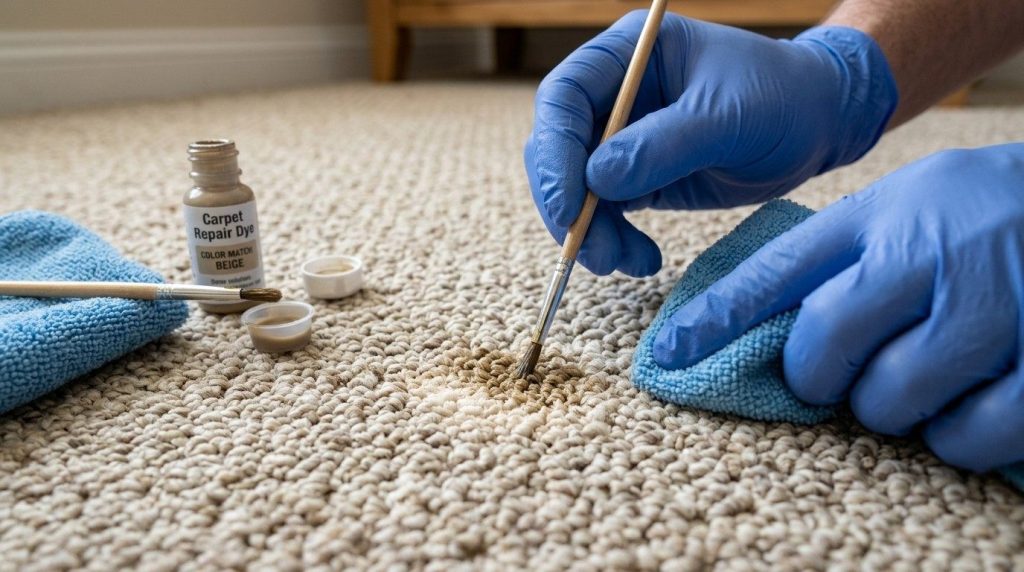
Case Study: Bleach Spill Rescue In A Family Room
Let’s look at a real-world example. Jenna, a homeowner in Ohio, spilled a splash of bleach while cleaning a pet accident. The result: a pale, 3-inch spot on her medium-brown nylon carpet, right next to the couch.
What Jenna Tried
- First, she blotted and rinsed the area, following immediate steps.
- She tested a carpet marker, but the color didn’t match well.
- Next, she bought a liquid carpet dye kit. Mixing brown and a touch of gold, she carefully dabbed the spot with a fine brush.
- After two layers and a day of drying, the spot was barely noticeable—only if you knew where to look.
Lessons Learned
- Testing colors is crucial. Jenna tried her mix on an old scrap first.
- Patience pays off. Rushing the job led to a darker ring at first, which she blended out with water and more dye.
- For high-traffic spots, finish with a fabric protector spray to help the repair last.
Jenna’s repair saved the cost of a full carpet replacement and kept her family room looking great. Not every bleach stain can be fixed perfectly, but blending and patience can make a huge difference.
Comparing Diy Methods For Bleach Stains
Here’s a quick look at how the most common repair options compare:
| Method | Cost | Difficulty | Best For | Durability |
|---|---|---|---|---|
| Carpet Marker/Crayon | Low ($5–$15) | Easy | Small spots, renters | Temporary |
| Liquid Carpet Dye | Moderate ($15–$40) | Moderate | Medium stains, nylon carpet | Long-lasting |
| Carpet Patch | Free to Moderate | Challenging | Large stains, spare carpet | Permanent |
| Professional Repair | High ($75+) | Expert | Big, visible stains | Permanent |
How To Match Carpet Color: Practical Tips
Color matching is the hardest part of bleach stain repair. Here’s how to get it right:
- Lighting matters: Always match colors in the same light as your room. Sunlight, lamps, and overhead lights can all make carpet look different.
- Mix slowly: Add dye or paint in tiny amounts. It’s easier to add more than to lighten a color that’s too dark.
- Use fibers from a hidden spot: If you need to patch, take a piece from inside a closet or under furniture where the carpet hasn’t faded.
- Test blends: Always try your color mix on an out-of-sight scrap first.
The Two Most Common Matching Mistakes
- Going too dark: People often overshoot, ending up with a spot that’s the wrong shade.
- Ignoring carpet fade: Carpets fade with age and sunlight. A new dye or patch may look too “fresh” unless you match this subtle difference.
When Bleach Stains Mean Replacement
Sometimes, no repair will look right—especially with older, heavily faded, or patterned carpets. Here’s when replacement makes sense:
- The stain is larger than a dinner plate.
- Multiple spots are scattered across the room.
- The carpet is worn, torn, or smells musty from old water damage.
If your carpet is under warranty, check if professional repair or replacement is covered. For valuable or antique rugs, always consult a pro.
Replacement Options
| Replacement Type | Estimated Cost (per sq. ft.) | Pros | Cons |
|---|---|---|---|
| Full Room Carpet | $3 – $7 | Uniform look, warranty available | Expensive, time-consuming |
| Patch Replacement | $10 – $35 (for small areas) | Quick, cheap for small spots | May not match perfectly |
| Professional Color Restoration | $75 – $200 (per service) | Expert color match, seamless finish | Costly for large stains |
How To Prevent Bleach Stains On Carpet
The best way to fix bleach stains is not to get them in the first place. Here are smart prevention tips:
- Never use bleach for carpet cleaning. Stick to carpet-safe cleaners.
- Keep bleach in closed containers, away from carpeted areas.
- Lay down towels or plastic sheets when using bleach in bathrooms, kitchens, or laundry rooms near carpet.
- Clean up spills immediately—even diluted bleach can damage fibers fast.
- Train family members and guests about the dangers of bleach on carpet.
Extra tip: Store all strong cleaners in a designated, non-carpeted area.
Long-term Carpet Care After A Bleach Spill
Once you’ve repaired or camouflaged a bleach stain, a few extra steps help your carpet stay looking its best:
- Vacuum regularly to lift dirt and prevent fiber matting.
- Use a carpet protector spray on the repaired area (after it’s dry) to help seal in color and resist new stains.
- Schedule professional cleaning every 12–18 months. Make sure to tell the cleaners about any repaired spots.
Be aware: Even well-repaired spots can fade faster than the rest of the carpet. If you notice changes, touch up the color as needed.
When To Bring In A Licensed Carpet Professional
Some carpet problems require an expert touch. Here’s when it’s smart to call a pro:
- The carpet is Berber, wool, or a high-end custom rug.
- The stain covers a large area, or you’re worried about making it worse.
- You want a perfect match for resale value or rental inspection.
- The carpet is still under warranty.
Professionals have tools and dyes you can’t buy as a homeowner. They can patch, re-dye, and blend repairs so they’re nearly invisible. For large bleach stains, a licensed tech can often restore your carpet for less than the cost of replacement.
If you’d like more info on professional carpet repair, check out this trusted guide from Angi.
Frequently Asked Questions
What Household Items Can I Use To Fix A Bleach Stain?
You can try using a carpet marker, crayon, or fabric paint for small spots if you don’t have access to carpet dye. These won’t restore the original color perfectly but can disguise the spot. For best results, use products made for carpet fibers.
Will Baking Soda Or Vinegar Remove A Bleach Stain?
No. Baking soda can neutralize active bleach (if used immediately after a spill) but it won’t restore color. Vinegar can make the damage worse and should be avoided. Once the color is gone, you need to recolor or patch the spot.
Are Bleach Stains On Carpet Permanent?
In most cases, bleach stains are permanent because the color is stripped from the fibers. However, with the right repair techniques—dyeing, patching, or professional help—the spot can be made much less noticeable or nearly invisible.
Is It Safe To Dye Carpet Myself?
Yes, for small spots on synthetic carpets, using a DIY dye kit or marker is generally safe if you follow instructions and test your color first. Always wear gloves and ventilate the area. For wool or large areas, consider professional help.
How Much Does It Cost To Repair A Bleach Stain On Carpet?
DIY repairs can cost as little as $5–$40 (for markers or dye kits). Professional repairs typically range from $75 to $200 or more depending on the size of the stain and type of carpet. Full replacement costs $3–$7 per square foot.
Bringing It All Together
Bleach stains on carpet are one of the toughest cleaning challenges for any homeowner. While you can’t “clean out” bleach damage, you have real options for making spots disappear—or at least blend in. Quick action limits the damage, and careful repairs can save you from expensive carpet replacement.
DIY approaches like markers, dye kits, or patching work well for small stains and everyday carpets. For bigger or high-value carpets, a professional is worth every penny. Most important, prevent bleach stains by keeping harsh cleaners far from carpet and cleaning up spills right away.
With patience and the right tools, your carpet can look good again—even after a bleach mishap. If you’re ever unsure, don’t hesitate to call a pro. Your carpet (and your peace of mind) are worth it.