Your Trusted Source for Home Fixes & Guides

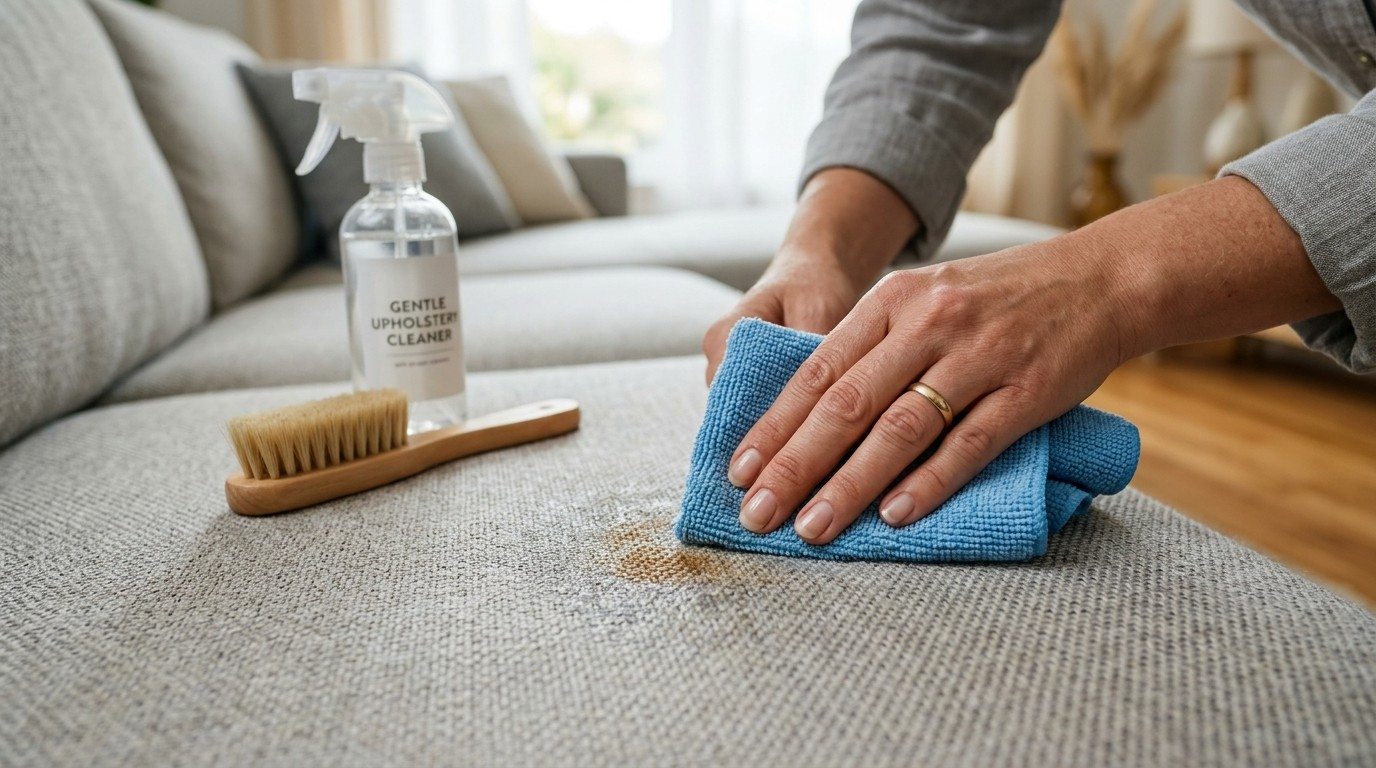
How to Clean a Polyester Couch: Easy Steps for a Fresh Sofa

Keeping your polyester couch clean isn’t just about looks—it’s about comfort, air quality, and making your furniture last. Polyester is one of America’s favorite couch fabrics because it’s affordable, tough, and resists wrinkles and fading. But even a couch like this can collect stains, pet hair, and everyday grime.
If you’ve ever wondered how to clean a polyester couch without ruining it or spending a fortune, you’re in the right place.
I’ve spent years remodeling homes and tackling cleaning challenges, both big and small. Polyester is a forgiving fabric, but mistakes can lead to watermarks, persistent odors, or even damage. Let’s go step by step to make your couch look and feel fresh again—using safe, practical methods you can trust.
Why Polyester Couches Get Dirty
Polyester is a synthetic fabric, made from long-lasting plastic fibers. It doesn’t absorb spills as quickly as cotton or linen, which is great news if you have kids or pets. But it can still pick up:
- Dust and crumbs from daily use
- Body oils and sweat, especially on armrests and cushions
- Food and drink stains
- Pet fur and dander
- Odors trapped in the fabric
Over time, these build-ups can dull the color and make your couch feel less inviting. Regular cleaning keeps your home healthier and your furniture in top shape.
Safety First: What To Know Before You Start
Don’t rush in with soap and water. Polyester is tough, but improper cleaning can cause:
- Water stains
- Shrinking
- Fading
- Deterioration of fabric backing
Here are smart steps to protect your couch:
- Check the care label. Look for a tag under the cushions or on the frame. You’ll see codes like:
- W: Water-based cleaners are safe.
- S: Use solvent-based cleaners only (no water).
- WS: Water or solvent-based cleaners are safe.
- X: Vacuum only—no liquid cleaning.
- Test every cleaner (even homemade) on a hidden spot first. Wait 15 minutes to check for color changes.
- Ventilate the area if you’re using solvents. Open windows or use a fan.
- Wear gloves to protect your hands, especially if you have sensitive skin.
Essential Tools And Supplies
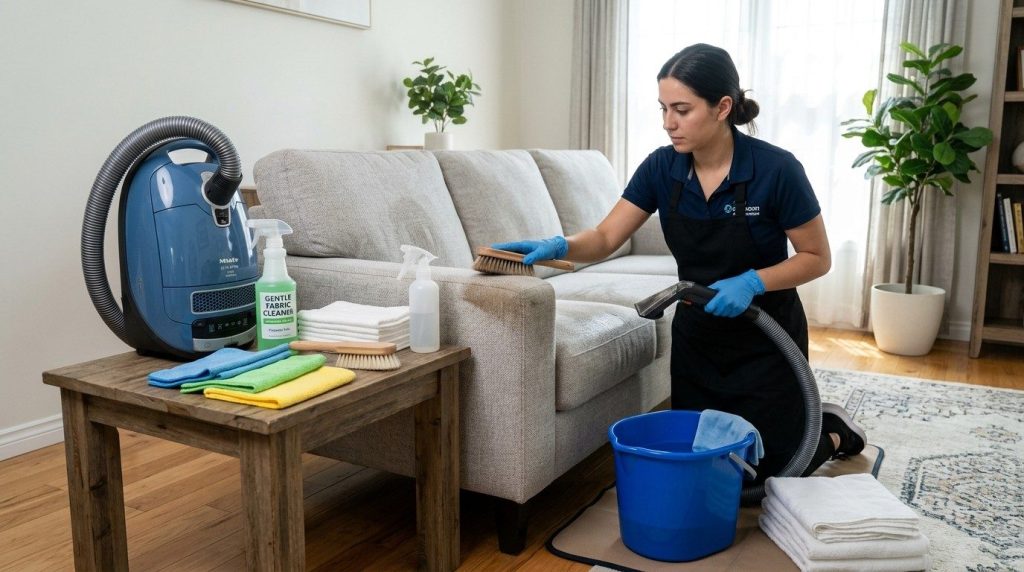
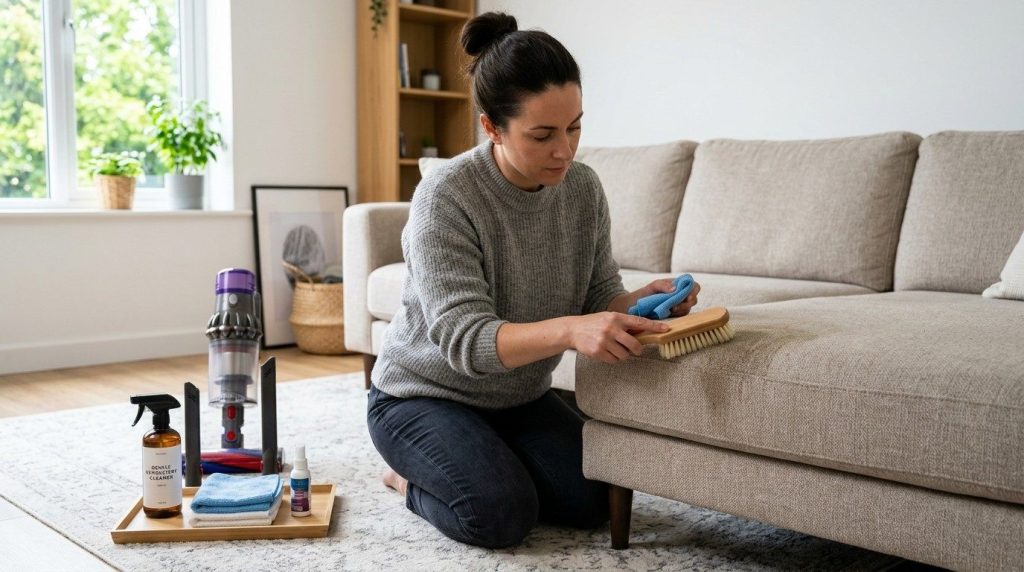
Here’s what you’ll need for most polyester couches:
- Vacuum with upholstery attachment
- Clean white cloths or microfiber towels
- Soft-bristle brush
- Mild dish soap (for “W” or “WS” labels)
- Isopropyl alcohol or dry-cleaning solvent (“S” or “WS” labels)
- Spray bottle
- Bowl for mixing
- Measuring spoons
- Distilled water (helps prevent water stains)
- Baking soda (for odor removal)
- Lint roller or pet hair remover
Optional but helpful:
- Upholstery cleaning machine (for deep cleaning)
- Fan or hair dryer (for quick drying)
Step-by-step: How To Clean A Polyester Couch
Cleaning a polyester couch is a process. Here’s a clear roadmap, whether you’re doing a quick refresh or tackling deep stains.
1. Remove Loose Dirt And Debris
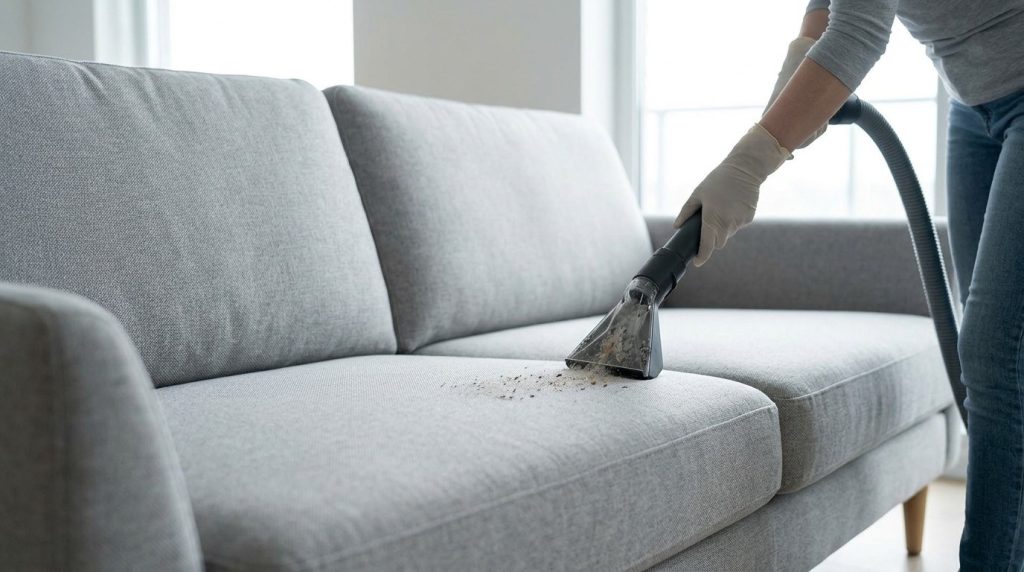
Start with a thorough vacuum. Use the upholstery attachment to get into seams and under cushions. This lifts crumbs, dust, and pet hair, making later cleaning more effective. For stubborn pet hair, a lint roller works wonders.
Pro tip: Run a slightly damp (not wet) microfiber cloth over the fabric after vacuuming to catch fine dust.
2. Tackle Odors And Freshen Up
If your couch smells musty or stale, sprinkle baking soda over the surface. Let it sit for 30–60 minutes. Baking soda absorbs odors without damaging polyester. Vacuum thoroughly to remove all the powder.
3. Spot Cleaning Stains
Act fast on stains for the best results. The right method depends on your couch’s care label.
For “w” Or “ws” Labels (water-safe)
- Mix a solution of one teaspoon mild dish soap to two cups distilled water.
- Dampen a clean white cloth with the solution—never soak the fabric.
- Blot the stain gently. Don’t rub; this can push the stain deeper.
- Rinse the cloth, blot again with clean water to remove soap.
- Blot dry with a towel.
For “s” Or “ws” Labels (solvent Only)
- Dampen a white cloth with isopropyl alcohol or a solvent-based upholstery cleaner.
- Blot the stain—never pour solvent directly on the couch.
- Let it air dry completely.
Common mistake: Rubbing too hard or using colored towels can cause dye transfer or damage the polyester fibers.
4. Deep Cleaning The Whole Couch
If your couch needs more than spot cleaning, here’s how to deep clean safely.
For Water-safe Polyester
- Mix a gentle soap solution as above.
- Lightly spray the solution onto one section at a time (avoid soaking).
- Use a soft brush to gently scrub the fabric.
- Wipe away soap with a clean, damp cloth.
- Blot with a dry towel to remove excess moisture.
- Let air dry—open windows or use a fan for faster results.
For Solvent-only Polyester
Use a solvent-based upholstery cleaner as directed. Always work in a well-ventilated area and test a small area first.
Important: Never use steam cleaners on “S” labeled couches. Steam can weaken the glue that holds polyester fibers and backing together.
5. Dealing With Tough Stains
Some stains need extra effort. Here’s how to handle common tough spots:
- Grease or oil: Sprinkle baking soda over the spot, let sit 20 minutes, then vacuum. Blot with a little isopropyl alcohol.
- Coffee or wine: Blot immediately, then use the soap solution for “W”/“WS” or solvent for “S”.
- Ink: Dab carefully with isopropyl alcohol.
If a stain won’t budge, call a professional upholstery cleaner. Trying harsh chemicals can ruin your couch.
Case Study: Real-world Polyester Couch Rescue
Let me share a true story from a recent bathroom remodel project. The homeowners had a light gray polyester sectional in their open-concept living room. Their toddler spilled orange juice, and they tried to clean it with regular tap water and a colored kitchen towel.
The result? A bigger stain and a faint blue dye mark.
Here’s how we fixed it:
- Identified the care code (“WS”) under the cushion.
- Tested a mild soap solution on an unseen corner—no fading.
- Blotted with distilled water and white microfiber towel to remove the kitchen towel dye.
- Used dish soap solution for the juice stain, working in small circles.
- Rinsed with a damp towel, then air-dried with a fan.
The result: The stain faded by 90%, and the blue dye was gone. The homeowners learned to always use white towels and distilled water for spot cleaning. This case shows how the right tools and patience can save a couch from a costly mistake.
Comparison: Polyester Vs. Other Couch Fabrics
Polyester is popular, but how does it stack up against other materials? Here’s a quick look:
| Fabric | Stain Resistance | Durability | Cleaning Difficulty | Cost |
|---|---|---|---|---|
| Polyester | Good | High | Easy to moderate | Low to moderate |
| Cotton | Fair | Moderate | Moderate to hard | Moderate |
| Leather | Excellent | High | Easy (wipe clean) | High |
| Linen | Poor | Low | Hard | High |
Insight: Polyester’s low cost and easy maintenance make it a winner for busy households, but it can attract static and pet hair. Regular vacuuming is key.
Mistakes To Avoid When Cleaning Polyester Couches
Many people damage their couches by making these common errors:
- Using too much water. Polyester dries slowly, and excess moisture can cause mildew or watermarks.
- Skipping the spot test. Even “safe” cleaners can cause color loss.
- Scrubbing aggressively. This damages the fibers.
- Using harsh chemicals. Bleach, ammonia, or strong degreasers can weaken the fabric and fade colors.
- Ignoring drying. Leaving cushions damp can lead to musty smells or mold.
If you’re ever unsure, less is more. Blot, don’t rub, and always let the couch dry completely before using it.
How Often Should You Clean A Polyester Couch?
Routine maintenance saves you headaches later. Here’s a smart schedule:
- Weekly: Vacuum and use a lint roller.
- Monthly: Spot-clean stains and freshen with baking soda.
- Every 6 months: Deep clean, especially if you have kids, pets, or allergies.
If you notice fading, persistent odors, or stains you can’t remove, it’s time for a professional cleaning.
When To Call A Professional
Some couch cleaning jobs are DIY-friendly, but others need expert help. Call a licensed upholstery cleaner if:
- The care label says “X” (vacuum only) or you’re not sure what the fabric is.
- Stains won’t come out after gentle cleaning.
- There’s a musty or moldy smell.
- The couch is very expensive or has sentimental value.
Pros have the right equipment and solvents to clean without risk.
Comparing Upholstery Cleaning Machines
Thinking of buying a home upholstery cleaner? Here’s a look at popular types:
| Machine Type | Best For | Pros | Cons | Average Cost |
|---|---|---|---|---|
| Portable Spot Cleaner | Small stains, quick jobs | Easy to use, affordable | Small water tank | $80–$150 |
| Full-Size Upholstery Cleaner | Entire couches, deep cleaning | More power, larger tanks | Bulky, more expensive | $200–$400 |
| Steam Cleaner | Hard surfaces, some upholstery | Sanitizes, no chemicals | Not for “S” label; can damage fabric | $100–$250 |
Tip: Always check your couch’s care label before using any machine. Not all polyester is steam-clean safe!
Addressing Pet Hair And Allergens
If you have pets, polyester can attract hair and dander. Here’s how to manage it:
- Vacuum regularly with a brush attachment.
- Use a lint roller for quick cleanups.
- Pet hair remover tools (rubber brushes or gloves) can lift hair from seams.
- For allergies, consider a HEPA filter vacuum—it captures finer particles.
Insight: Even if your couch looks clean, regular vacuuming reduces allergens and extends fabric life.
Quick Fixes For Common Problems
Sometimes, you need a fast solution:
- Wrinkles or sagging: Lightly mist with distilled water, then stretch the fabric by hand. Let it dry naturally.
- Static electricity: Wipe with a slightly damp cloth or use a dryer sheet.
- Pilling: Use a fabric shaver to remove pills, but test first to avoid snags.
If you notice a rip or tear, fix it with a patch kit or call an upholstery pro before it gets worse.
Eco-friendly Cleaning Options
Want to keep things green? Many homemade cleaners work well on polyester:
- Vinegar solution: Mix one part white vinegar to three parts water for odor removal. Test first—vinegar has a strong smell, but it fades as it dries.
- Plant-based soaps: These are gentle and biodegradable.
- Baking soda: Safe for freshening, stain pre-treatment, and deodorizing.
Skip harsh chemicals and look for products labeled “biodegradable” or “non-toxic.” For more on eco-friendly cleaning, visit the EPA’s Safer Choice Program.
How To Keep Your Polyester Couch Clean Longer
Prevention is the best cleaning strategy. Here’s how to maintain your couch:
- Rotate cushions regularly for even wear.
- Use washable covers if possible.
- Keep food and drinks away (or use trays).
- Train pets to stay off, or cover the couch with a throw.
- Spot-clean spills right away—don’t let stains set.
If your couch is in a sunny spot, close blinds during the brightest part of the day to prevent fading.
Frequently Asked Questions
What’s The Safest Way To Clean A Polyester Couch?
The safest method depends on your couch’s care label. For most polyester, a mild dish soap and distilled water solution works well. Always spot-test first and avoid over-wetting the fabric.
Can I Use A Steam Cleaner On A Polyester Couch?
Only if the care label says “W” or “WS. ” Never use steam on “S” labeled polyester couches—it can damage the adhesive backing and cause puckering.
How Do I Remove Pet Odors From My Couch?
Sprinkle baking soda generously on the fabric, let it sit for at least 30 minutes, then vacuum thoroughly. For strong odors, repeat or use a vinegar-water solution.
What Should I Do If My Couch’s Care Label Is Missing?
Test a small, hidden area with a mild soap and water solution. If you see color transfer or texture changes, stop and consult a professional. When in doubt, vacuum only.
How Do I Dry A Wet Polyester Couch Quickly?
Blot with dry towels to remove as much moisture as possible. Use a fan or open windows to speed up drying. Avoid direct heat, which can shrink or damage the fabric.
A clean polyester couch isn’t just about looks—it’s about comfort, health, and protecting your investment. With the right approach, you can keep your furniture fresh for years. Remember, when in doubt, less is more. If a stain won’t budge or your couch is valuable, don’t hesitate to call a pro.
Happy cleaning!