Your Trusted Source for Home Fixes & Guides

How to Create a Steamy Shower: Guide for Spa-Like Bliss

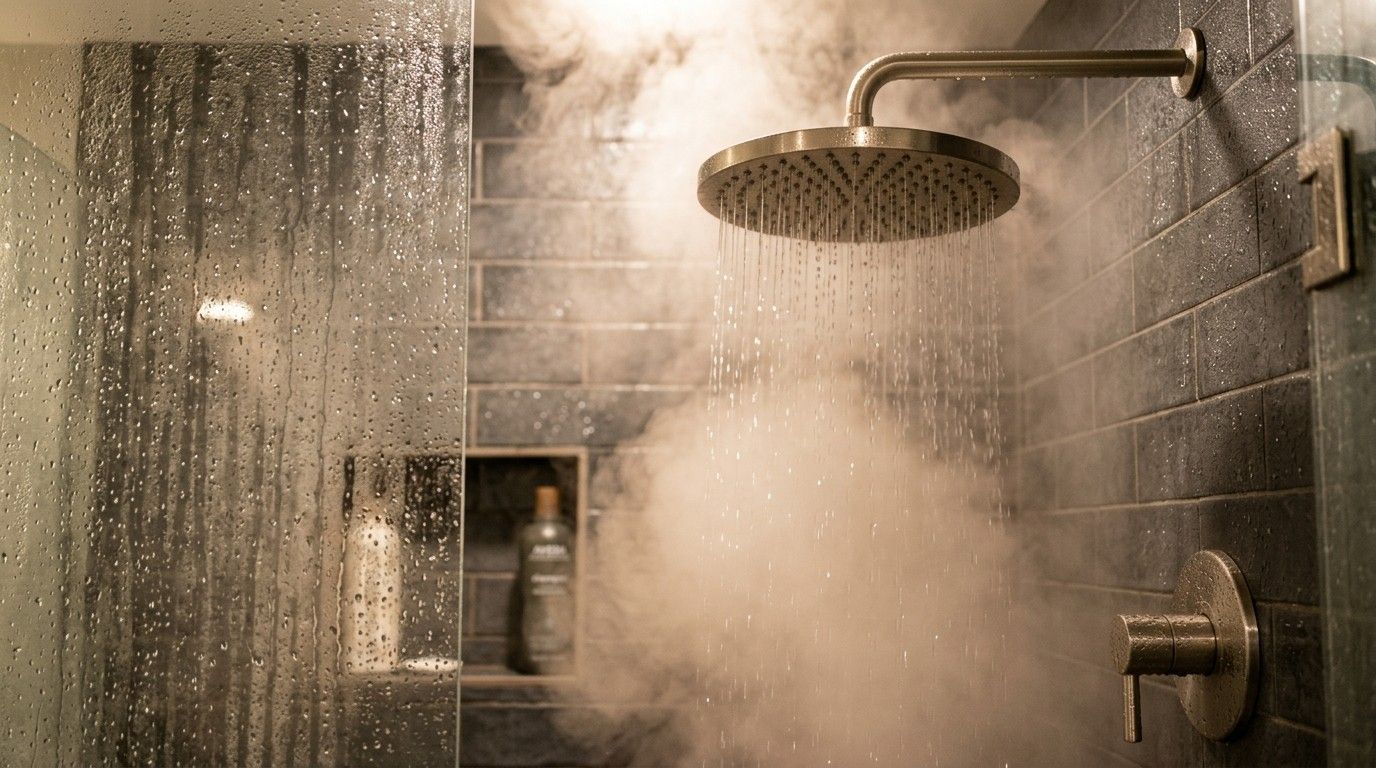
There’s something special about stepping into a steamy shower. The warm mist relaxes your muscles, clears your mind, and even helps open your airways. Whether you’re looking to enjoy a spa-like escape or simply want to boost your daily routine, making your shower steamy is easier than you might think.
As an experienced home improvement enthusiast, I’ll guide you through every step—from basic tricks to advanced upgrades, safety tips, and even a real-life case study. By the end, you’ll know exactly how to create a steamy shower that feels luxurious, safe, and tailored to your home.

Why Create A Steamy Shower?
A steamy shower isn’t just about comfort. It offers several practical benefits:
- Relief for sore muscles: Warm steam helps loosen tight muscles and joints.
- Improved respiratory health: Steam can ease congestion and soothe throat irritation.
- Better skin hydration: Moist air helps keep skin soft and hydrated.
- Stress reduction: The calming atmosphere can reduce anxiety.
Studies show that steam can increase skin hydration by up to 20% and improve breathing for people with mild respiratory issues. Many homeowners are now upgrading their showers to get these benefits at home. In addition, a steamy shower can help with sinus pressure, especially during allergy season or when you’re feeling unwell. The warmth and humidity can also be comforting on cold days, making your bathroom a cozy retreat during winter months.
Some people report improved sleep after a steamy shower because the heat helps your body relax before bedtime. This is one reason spas and hotels often feature steam showers as a premium amenity. The soothing effects go beyond just the physical—steam can help quiet your mind, making it easier to disconnect from daily stress.
Understanding Steam In Showers
What Makes A Shower Steamy?
A steamy shower happens when hot water vapor fills the enclosed space. The more humidity and heat, the denser the steam. Key factors include:
- Water temperature: Higher temps produce more vapor.
- Shower enclosure: Smaller, sealed spaces trap steam.
- Ventilation: Less airflow means more steam stays inside.
The science behind steam is simple: when water is heated above its boiling point, it turns into vapor. In a bathroom, this vapor mixes with the air and creates the foggy, humid environment you associate with a steam room. But if your shower is open or has lots of airflow, much of that steam escapes before you can enjoy it. That’s why a well-sealed shower area is so important.
Common Shower Types Compared
Let’s look at how different shower setups affect steaminess:
| Shower Type | Steam Potential | Typical Enclosure | Upgrade Difficulty |
|---|---|---|---|
| Standard Shower | Medium | Partial glass/curtain | Easy |
| Walk-in Shower | Low | Open, less sealed | Medium |
| Steam Shower | High | Fully sealed | Hard |
If your shower isn’t fully enclosed, some upgrades can help trap steam and make the space feel warmer. For example, you can add a second shower curtain to overlap the first, use weatherstripping on the door edges, or even install a temporary partition.
People with walk-in showers often use tension rods and extra curtains to create a more enclosed area. These small changes can make a big difference in how much steam you experience.
Basic Tips For Creating A Steamy Shower
You don’t need fancy equipment or major renovations to enjoy steam in your shower. Here are practical steps any homeowner can try:
- Turn Up the Water Temperature
- Aim for 104°F–110°F (40–43°C), which is safe for most adults.
- Avoid temperatures above 120°F to prevent burns.
- For extra comfort, try starting with a slightly lower temperature and increasing it as your body adjusts.
- Seal the Shower Space
- Close doors and windows.
- Use a thick shower curtain to block drafts.
- If you have a glass enclosure, make sure it seals tightly at the edges.
- For bathtubs with a shower, tuck the curtain inside the tub to prevent air leaks.
- Block Air Vents Temporarily
- Cover bathroom air vents with a towel during your shower.
- Remove the cover after you finish to avoid moisture buildup in the room.
- If you have a vent close to the floor, use a bath mat for a better seal.
- Run the Shower for 2–3 Minutes Before Entering
- Let hot water create steam before you step in.
- This helps fill the space with mist.
- If your bathroom is large, extend this time to 4–5 minutes for extra steam.
- Add a Towel at the Door Gap
- Place a rolled towel at the bottom of the shower door or curtain.
- This blocks cold air and keeps steam from escaping.
- For sliding doors, use a bath mat to cover both tracks.
- Use a Shower Cap or Head Cover
- For those who don’t want hair to get wet, a shower cap lets you enjoy more steam without moisture on your hair.
- Cotton headbands can also keep your hairline dry and comfortable.
Common Mistakes
- Using water that’s too hot: This can cause burns and dry out your skin.
- Leaving windows open: Cold air escapes, and steam dissipates quickly.
- Ignoring ventilation after the shower: Always air out the bathroom to prevent mold and mildew.
- Overcrowding the shower with accessories: Too many shelves or baskets can block airflow and make it harder for steam to build up.
Many people overlook the importance of pre-heating the shower space and forget to block small gaps that let steam escape. Even half-inch cracks can lower humidity inside the shower, so pay attention to details.
Upgrading Your Shower For More Steam
If you want consistent steam or a spa-like experience, consider some upgrades. These range from simple DIY fixes to professional installations.
Install A Sealed Shower Door
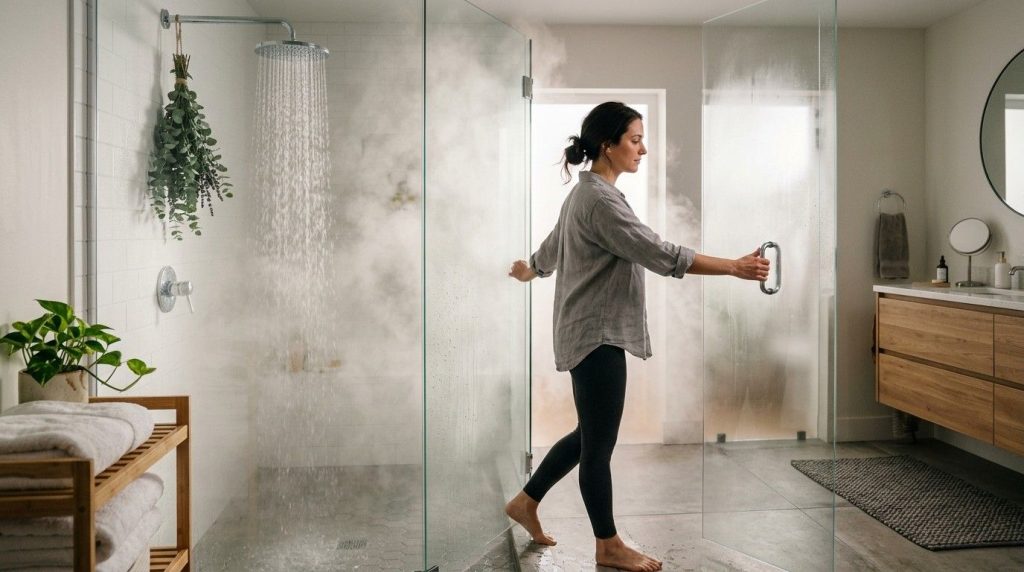
A sealed glass door can make a big difference. It traps steam and prevents drafts. Look for doors with magnetic seals and tight frame edges.
- DIY level: Medium; basic tools required.
- Cost: $200–$900 depending on size and material.
- For best results, choose tempered glass. It’s safer and easier to clean.
- Magnetic strips help close small gaps and stop steam from leaking out.
Improve Showerhead Performance
High-flow showerheads produce more mist, which boosts steam. Some models also have a “steam spray” setting.
| Showerhead Type | Steam Production | Water Usage | Price Range |
|---|---|---|---|
| Standard | Moderate | 2.0–2.5 GPM | $20–$60 |
| Rainfall | High | 2.5–3.5 GPM | $60–$200 |
| Steam Spray | Very High | 2.0–2.5 GPM | $80–$250 |
Some rainfall models have wide heads that distribute water gently, mimicking the feeling of rain—perfect for relaxation and more even steam. Steam spray heads create a fine mist, which fills the space quickly and uses less water.
Upgrade To A Steam Generator
If you want true steam, install a steam generator. This device heats water and releases vapor directly into your shower.
- Installation: Requires plumbing and electrical work.
- Cost: $1,500–$4,000 including labor.
- Safety: Always hire a licensed plumber and electrician.
- Steam generators are programmable—you can set timers, temperature, and even aroma options on some models.
- Some newer generators have self-cleaning features, making maintenance easier.
Add Insulation
Insulating walls around your shower keeps heat inside, making steam last longer. Use moisture-resistant insulation and finish with tile or waterproof panels.
- DIY level: Advanced; may require removing drywall.
- Cost: $150–$400 for materials.
- Focus on exterior walls first, since these lose heat faster.
- Insulation also helps reduce noise, making your shower even more relaxing.
Upgrade Exhaust Fans
Install a fan with a timer or humidity sensor. Run the fan after your shower to remove moisture and prevent mold.
- DIY level: Medium; check electrical safety.
- Cost: $80–$250.
- Some models turn on automatically when humidity is high.
- Timers prevent the fan from running too long, saving energy.
Enhancing The Spa-like Atmosphere
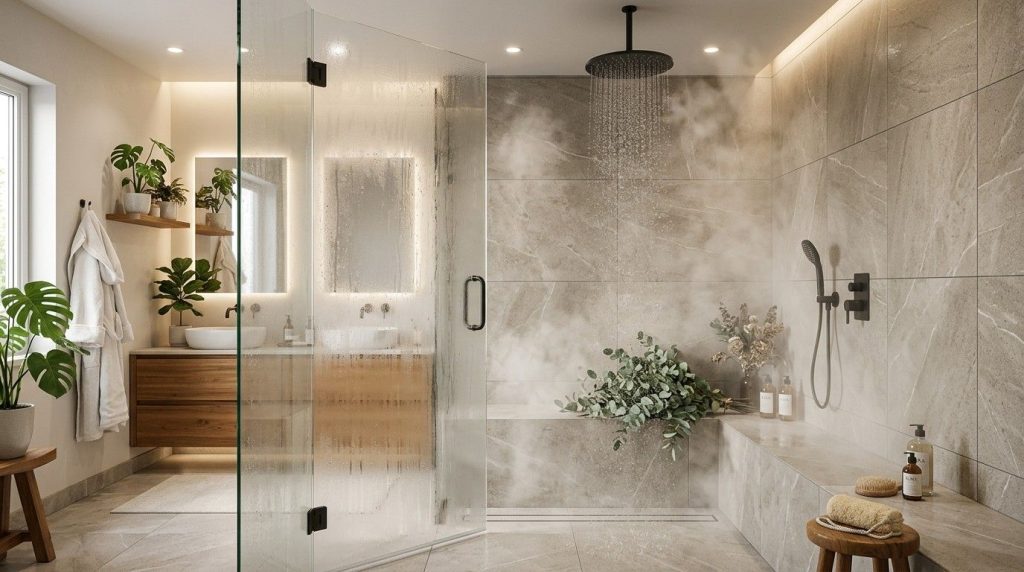
A steamy shower is just the beginning. You can add touches to make your bathroom feel like a spa.
Aromatherapy
Use essential oils like eucalyptus, lavender, or peppermint. Add a few drops to a shower diffuser or hang a sachet near the showerhead.
- For a simple method, place a few drops of oil on a washcloth and hang it away from direct water.
- You can also buy shower bombs or tablets that release fragrance as they dissolve.
Soft Lighting
Install dimmable LED lights or use battery-powered candles. Soft lighting helps relax your mind.
- Smart bulbs let you change color and brightness from your phone.
- Warm white or amber tones are more calming than cool white light.
Music
Bluetooth speakers designed for bathrooms can play calming tunes. Look for waterproof models.
- Play nature sounds, spa playlists, or gentle acoustic music.
- Some showerheads come with built-in speakers for a seamless experience.
Comfortable Accessories
- Non-slip mats: Prevents slips on wet floors.
- Plush towels: Wrap up in warmth after your shower.
- Shower stool: Great for relaxing or shaving legs.
These small upgrades make your shower more enjoyable and safer. You can even add a heated towel rack for an extra touch of luxury.
Safety Precautions
Steam is soothing, but it’s important to stay safe.
Temperature Control
- Set your water heater below 120°F to prevent accidental burns.
- Use anti-scald devices in your plumbing.
- Check water temperature by hand before getting in, especially for children or older adults.
Prevent Mold And Mildew
- Run the exhaust fan for 20–30 minutes after each shower.
- Wipe down walls and glass doors to remove moisture.
- Leave the door or curtain open after your shower to let air circulate.
Electrical Safety
- Keep all electrical devices away from wet areas.
- Install GFCI outlets (ground-fault circuit interrupters) in the bathroom.
- Never use extension cords in the bathroom.
When To Call A Professional
- If you notice leaks, water stains, or mold, contact a licensed plumber.
- Electrical work for steam generators or fans should be handled by an electrician.
- Major remodels may need permits and inspections.
- If you experience persistent humidity issues, a professional can check for hidden leaks or ventilation problems.
Cleaning And Maintenance For Steamy Showers
A steamy shower needs regular care to stay safe and fresh.
Daily Maintenance
- Wipe glass doors and walls after each use.
- Hang towels to dry outside the bathroom.
- Shake out bath mats and let them air dry.
Weekly Cleaning
- Use a mild cleaner for tiles and grout.
- Clean the showerhead with vinegar to prevent mineral buildup.
- Wash shower curtains or liners to remove soap scum.
Monthly Checks
- Inspect seals on doors and windows.
- Check ventilation fans and clean filters.
- Look for any loose tiles or grout cracks.
Preventing Common Issues
- Don’t let water pool on the floor; use a squeegee.
- Watch for signs of mold—black spots, musty smell, peeling paint.
- If you see early signs of mildew, clean with a solution of vinegar and water.
Non-obvious Insight: Many homeowners forget to clean behind and under removable accessories like benches or soap holders. Mold often starts in these hidden spots, so move items regularly when cleaning.
Case Study: Transforming A Standard Shower Into A Steamy Retreat
Let’s look at a real-life example from a homeowner in Portland, Oregon.
Background: The family wanted a steamy shower for relaxation and to help with allergies. Their bathroom had a standard shower with a curtain and basic tiles.
Step 1: Sealing the Space
- Installed a glass door with magnetic seals.
- Used weather stripping along the edges.
- Checked for drafts and sealed small cracks with silicone.
Step 2: Upgrading the Showerhead
- Swapped the old showerhead for a rainfall model with high mist output.
- Adjusted water pressure for more consistent flow.
Step 3: Improving Atmosphere
- Added dimmable LED lights and a waterproof Bluetooth speaker.
- Hung eucalyptus near the showerhead for aromatherapy.
- Placed plush towels and a small bench nearby.
Step 4: Safety and Maintenance
- Set the water heater at 115°F.
- Installed a humidity-sensing exhaust fan.
- Cleaned glass doors and tiles weekly.
Results: The shower reached full steam in under three minutes. The family reported better sleep, fewer allergy symptoms, and a noticeable drop in stress.
Non-obvious Insight: They learned that sealing tiny gaps around the door made a huge difference. Even a quarter-inch opening let steam escape, so they used silicone caulk for a perfect seal. They also found that cleaning seals monthly stopped mold from forming in hidden spots.
Comparing Diy Vs. Professional Steam Shower Installation
If you’re thinking about a permanent steam shower, it helps to compare your options.
| Factor | DIY Installation | Professional Installation |
|---|---|---|
| Cost | $1,000–$2,000 | $2,500–$5,000 |
| Skill Required | Advanced | Minimal (hire pro) |
| Time Needed | 2–5 days | 1–2 days |
| Warranty | Limited | Full/extended |
| Safety | Risk of leaks/electrical issues | Certified installation |
| Customization | Flexible | Standard packages |
Practical Advice: If you have plumbing or electrical experience, DIY is possible, but most homeowners will benefit from professional installation. Mistakes can be costly and dangerous. One non-obvious tip: some manufacturers only honor warranties if a pro does the install, so check before starting.
Steam Shower Myths And Facts
Some ideas about steamy showers aren’t true. Let’s clear them up.
- Myth: You need a steam generator to get steam.
- Fact: Hot water and a sealed space can create plenty of steam.
- Myth: Steam showers use a lot more water.
- Fact: Steam generators use less water than a regular shower—often 1–2 gallons per session.
- Myth: Steamy showers always cause mold.
- Fact: Good ventilation and cleaning prevent mold.
- Myth: Only large bathrooms can have steamy showers.
- Fact: Small bathrooms are often better for steam, since there’s less air to heat up.
Optimizing For Different Bathroom Sizes
Not every bathroom is the same. Here’s how to make the most of your space.
Small Bathrooms
- Use thicker curtains or glass doors to seal the area.
- Install compact steam generators designed for tight spaces.
- Keep accessories minimal to avoid clutter.
- Use shelving instead of floor baskets to maximize usable area.
Large Bathrooms
- Use partitions to create a smaller, steam-friendly zone.
- Consider dual showerheads for more coverage.
- Add extra insulation to keep steam from dissipating.
- Use rugs or mats outside the shower to reduce floor moisture.
Non-obvious Insight: Even in a big bathroom, you can create a “mini steam zone” by using a portable partition or curtain around the shower area. This saves on heating costs and makes steam easier to control.
Health Benefits And Risks
Steam has clear health perks, but it’s not for everyone.
Benefits
- Eases muscle pain and stiffness.
- Opens nasal passages and improves breathing.
- Enhances skin hydration.
- Can help reduce stress and promote better sleep.
Risks
- Can worsen asthma or heart conditions.
- High temperatures may cause dizziness or burns.
- Prolonged exposure can dry skin or cause headaches.
Advice: If you have health concerns, talk to your doctor before using steam showers. Children and elderly people should use lower temperatures. Limit sessions to 10–15 minutes and drink water after to stay hydrated.
Environmental Considerations
Steamy showers can be eco-friendly if done right.
- Use a low-flow showerhead to save water.
- Limit steam sessions to 10–15 minutes.
- Choose LED lighting and energy-efficient fans.
- Reuse towels to reduce laundry water use.
According to the EPA, showers account for 17% of indoor water use in U.S. homes. By optimizing your setup, you can enjoy steam and still protect the environment. Look for WaterSense labeled products—they meet EPA standards for efficiency without sacrificing performance.
Troubleshooting Steam Shower Problems
Sometimes, things don’t go as planned. Here’s how to fix common issues.
Steam Not Building Up
- Check for gaps in doors or curtains.
- Increase water temperature.
- Block air vents temporarily.
- Make sure the showerhead is not clogged.
Excess Moisture
- Run the exhaust fan longer.
- Use a dehumidifier if needed.
- Open windows after the shower is over.
Water Leaks
- Inspect seals and caulking.
- Call a plumber for major leaks.
- Check grout lines for cracks.
Mold Growth
- Clean regularly with a mold-killing solution.
- Improve ventilation.
- Remove and wash shower curtains or liners monthly.
Common Mistake: Ignoring small leaks or moisture buildup. Fix problems early to avoid expensive repairs. Another overlooked issue is failing to replace worn-out seals—these can let water escape and damage walls over time.
Frequently Asked Questions
Can I Create A Steamy Shower In A Bathroom With A Window?
Yes, but keep the window closed during your shower to trap steam. Afterward, open the window to air out the space and prevent moisture problems. Frosted glass or window coverings can also help retain heat.
How Hot Should The Water Be For A Steamy Shower?
Aim for 104°F–110°F. This is hot enough for steam but safe for most people. Never use water above 120°F, as it can cause burns. Test with your hand before stepping in.
Will A Steamy Shower Damage My Bathroom?
Not if you maintain good ventilation and clean regularly. Use exhaust fans, wipe surfaces, and check for mold. Proper sealing prevents water damage. Reseal grout or caulk every year for best results.
Is A Steam Generator Worth The Cost?
If you want a true spa experience and use steam often, a steam generator is a smart upgrade. It saves water and creates consistent steam. Professional installation is best for safety and warranty. For less frequent use, basic sealing and a high-quality showerhead may be enough.
Can Steam Showers Help With Allergies?
Yes. Steam can open nasal passages, ease congestion, and reduce allergy symptoms. Some people hang eucalyptus for extra relief, but always check with your doctor if you have health concerns. Don’t use strong essential oils if you have sensitive skin or asthma.
Creating a steamy shower at home is more than just turning up the heat. It’s about sealing your space, choosing the right accessories, and keeping everything clean and safe. Whether you stick to simple tricks or invest in a steam generator, you can enjoy the benefits of steam without leaving your house.
Remember, safety comes first—especially with hot water and electrical upgrades. If you’re unsure, always call a licensed professional.
Most importantly, enjoy the spa-like comfort and health perks of your new steamy shower. It’s one of the easiest ways to upgrade your daily routine, right in your own home. Small details—like sealing tiny gaps, picking the right showerhead, and cleaning regularly—can make a big difference in your experience.
For more advanced steam shower tips and health information, visit EPA WaterSense.