Your Trusted Source for Home Fixes & Guides

How to Fix a Clogged Toilet With Poop: Quick & Easy Solution

If you’ve ever stood in front of a clogged toilet full of poop, feeling embarrassed or frustrated, you’re not alone. How to Fix a Clogged Toilet With Poop is a common household problem, especially when a toilet backs up at the worst possible time. With the right approach and a few basic tools, you can often clear the blockage safely and restore normal drainage without making the mess worse.
The good news is, you can fix this yourself, safely and quickly, without calling a plumber for most situations. With the right tools, some patience, and a bit of know-how, you can clear a blocked toilet and get things flowing again.
In this guide, I’ll share step-by-step instructions, practical tips, and real-life advice from years of home improvement experience. You’ll learn why toilets clog, what works best for tough blockages, and how to avoid common mistakes. I’ll also highlight safety precautions, when to call a professional, and even a case study from a real homeowner.
By the end, you’ll feel confident tackling this messy—but very fixable—problem.

Understanding Toilet Clogs: Why Do Toilets Get Blocked With Poop?
Toilets are designed to handle waste and toilet paper, but sometimes they get overwhelmed. Most clogs happen when too much material tries to go down at once. Sometimes, the blockage is caused by excessive toilet paper, but often it’s just a large amount of human waste, especially after digestive issues or when kids use too much paper. The shape of the trap (the S-curve inside the toilet) can also make clogs more likely.
Other causes include:
- Low-flow toilets: Older models or cheap low-flow toilets can’t handle big loads as well.
- Hard or thick stool: If the waste is dense, it’s harder to break down.
- Foreign objects: Kids especially might flush toys, wipes, or other items.
- Pipe problems: Rarely, the main drain line is blocked, making the toilet backup.
Knowing the cause helps you choose the right fix. For example, if your toilet is newer but still clogs often, the issue might be the way your family uses toilet paper or the type of waste. If you have young children, always check for hidden objects or accidental flushes.
In some homes, water pressure can play a role—if the tank isn’t filling enough, the flush may not be powerful, leaving waste behind. Even the type of toilet paper can make a difference. “Ultra-thick” or “luxury” brands sometimes dissolve slowly, increasing the risk.
If it’s just poop and paper, you can often solve it yourself. But if you suspect something else—like a toy or a deeper pipe issue—it’s best to call a plumber. Ignoring repeated clogs can lead to water damage, mold, or expensive repairs later.
Safety Precautions: Protect Yourself And Your Bathroom
Fixing a clogged toilet isn’t dangerous, but it can be messy. Here are some simple safety tips:
- Wear gloves: Always use rubber or disposable gloves. Toilet water contains germs.
- Protect your clothes: Wear old clothes or an apron.
- Ventilate: Open a window or turn on the fan to reduce odors.
- Keep cleaning supplies ready: Have disinfectant spray, paper towels, and a trash bag nearby.
- Avoid harsh chemicals: Don’t mix drain cleaners—they can splash and cause burns.
If the water is overflowing, shut off the water supply. Look for the valve behind the toilet and turn it clockwise. This prevents flooding.
Another smart tip: place old towels or newspapers around the toilet base before you start. This protects your floor from splashes or spills. Keep the bathroom door closed, especially if you have kids or pets, to stop them from coming into contact with dirty water or cleaning chemicals.
If you have sensitive skin or allergies, consider wearing a mask. Some cleaning products or even the smell from the toilet can cause irritation. And always wash your hands thoroughly with soap and water after the job is done—even if you wore gloves.
Essential Tools And Materials: What You’ll Need
You don’t need fancy equipment—most fixes require just a few common tools:
- Plunger: The classic tool. Choose a flange-style plunger (with a rubber flap).
- Bucket: For removing excess water.
- Rubber gloves: For hygiene.
- Disinfectant: For cleaning afterward.
- Toilet auger: Also called a snake. Useful for stubborn clogs.
- Plastic wrap or waterproof tape: For a pressure trick.
- Old towels: For cleanup.
You might also use household items like dish soap, hot water, or baking soda and vinegar, which I’ll explain later.
Here’s a quick comparison of common toilet unclogging tools:
| Tool | Best For | Cost Range | Effectiveness |
|---|---|---|---|
| Plunger | Most poop & paper clogs | $5–$15 | High |
| Toilet Auger | Deep or stubborn clogs | $20–$40 | Very High |
| Dish Soap & Hot Water | Soft blockages | $2–$6 | Moderate |
| Baking Soda & Vinegar | Minor clogs | $4–$10 | Low to Moderate |
A good plunger is a smart investment. Cheaper, flat-cup plungers often don’t seal well and make the job harder. If you don’t have a toilet auger, they’re affordable and can save you from a big plumbing bill.
If you live in a multi-story home, keep a small “emergency kit” (plunger, gloves, towels) on each floor. This saves time when clogs happen.
Step-by-step: How To Fix A Clogged Toilet With Poop
Step 1: Assess The Situation
Look at the water level. If it’s rising and close to overflowing, turn off the water supply valve behind the toilet. Remove excess water with a bucket if needed. Don’t flush again—this can make things worse.
Check for foreign objects. If you see a toy, wipe, or anything besides poop and toilet paper, don’t use a plunger. These require a plumber or a toilet auger.
Take a moment to notice any unusual sounds, like gurgling in other drains. This could mean a problem deeper in your plumbing, not just the toilet. If the clog happened right after a heavy flush, it’s likely just a local blockage.
Step 2: Try The Plunger First
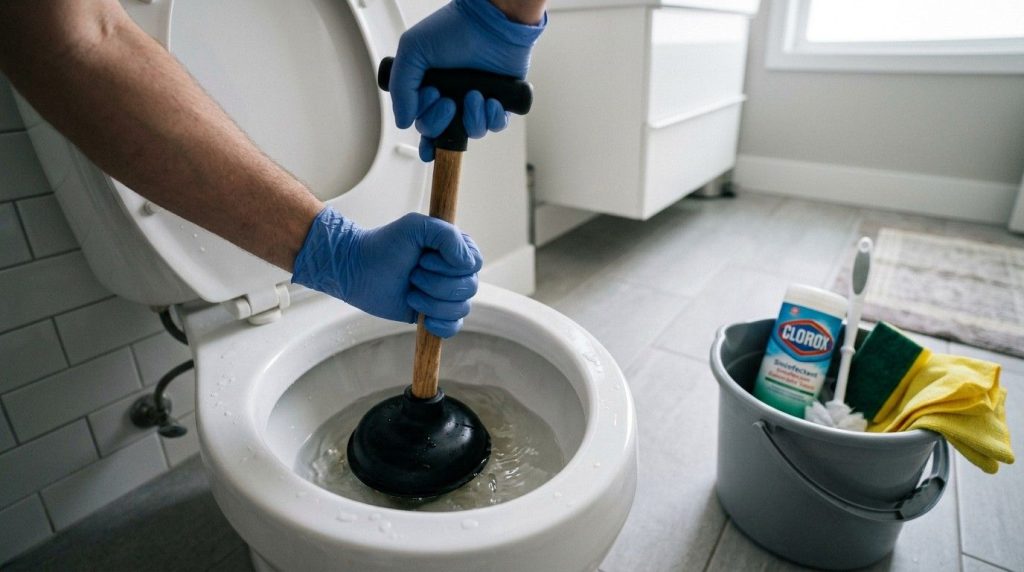
A plunger works in most cases. Here’s how to use it properly:
- Put on gloves.
- Insert the plunger so the rubber flange fits snugly in the toilet drain hole.
- Push down slowly, then pull up sharply. Repeat 10–15 times.
- If water starts draining, flush gently.
- If not, repeat or move to the next step.
Common mistakes:
- Using a cheap cup-style plunger (these don’t seal well).
- Not sealing the plunger tightly.
- Flushing too soon.
A proper technique makes a big difference. Try to keep the plunger covered with water, not air. This helps create suction and pressure. If you don’t see improvement after a few tries, try adjusting the angle for a tighter seal.
If the water level is high, remove some with a small container to avoid splashing. Always flush gently after plunging—if the water drains slowly but doesn’t overflow, you’re making progress.
Step 3: Dish Soap And Hot Water Method
If plunging doesn’t work, try this simple trick:
- Pour about 1/2 cup of dish soap into the toilet bowl.
- Wait 15 minutes—soap breaks down the waste.
- Heat a gallon of water (not boiling, just hot).
- Pour the hot water from waist height.
- Wait again. If the water level drops, flush gently.
This method is safe for pipes and toilets. Avoid boiling water, which can crack porcelain.
For best results, let the dish soap sit long enough to coat the waste. The hot water adds weight and helps push soft blockages through. If you see bubbles or the water slowly recedes, repeat once before moving on.
A tip: Use a funnel or pitcher to control the pour. Pouring too fast can splash or overflow.
Step 4: Baking Soda And Vinegar Solution
For lighter clogs:
- Add 1 cup of baking soda to the bowl.
- Slowly pour in 2 cups of vinegar.
- Wait 30–40 minutes.
- Add hot water and see if the clog loosens.
This natural method fizzes and helps break up organic waste. It’s not as strong as a plunger, but it’s good for minor blockages.
If you don’t see fizzing, the clog may be too deep or dense. In some cases, letting the mixture sit overnight can help for slow drains. This method is also useful for regular maintenance to keep pipes clear.
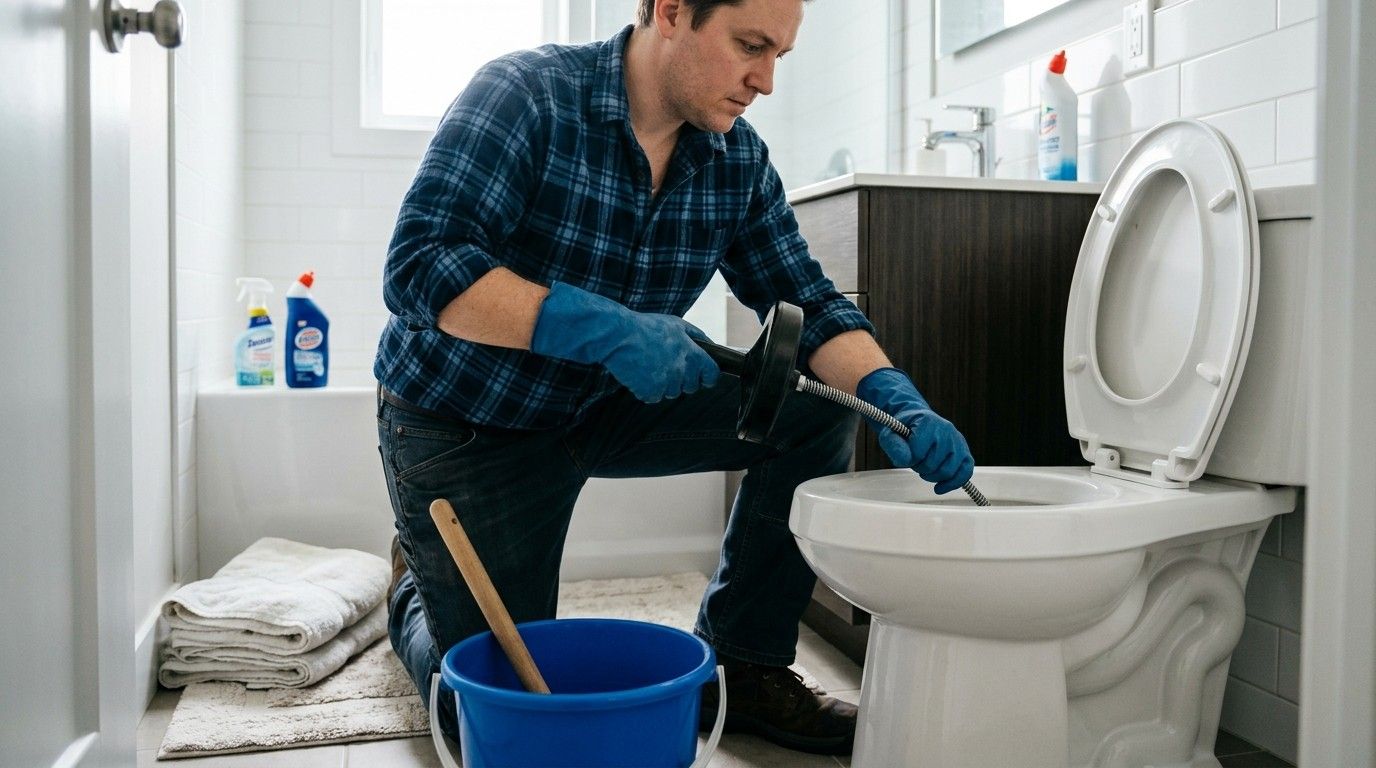
Step 5: Toilet Auger (snake)
If simple methods fail, use a toilet auger:
- Insert the auger end into the drain.
- Turn the handle clockwise, pushing gently.
- When you feel resistance, keep turning—this breaks up the clog.
- Pull the auger out carefully.
- Flush to check flow.
A toilet auger can reach deeper clogs, but don’t force it. Over-twisting can scratch the bowl or damage pipes.
If you don’t have an auger, you can buy or rent one at most hardware stores. Practice using it outside first if you’re nervous—many people avoid augers because they seem complicated, but they’re actually quite simple.
If you pull out material with the auger, dispose of it in a trash bag and disinfect the tool afterward.
Step 6: Pressure Trick With Plastic Wrap
A non-obvious trick is using plastic wrap:
- Cover the toilet bowl rim with plastic wrap, sealing tightly.
- Flush the toilet.
- Press down on the wrap with both hands.
- The air pressure forces the clog through.
This method surprises many people, but it works best for softer waste blockages. Don’t use if the water is too high.
If you don’t have plastic wrap, strong waterproof tape can also work. This trick is popular in Europe and Asia, where pressure is used more often. Make sure the seal is tight, or air will escape and the method won’t work.
Step 7: Manual Removal (last Resort)
If nothing works and the clog is visible, you may need to scoop some waste out. Use a disposable scoop or small bucket. Place removed material in a trash bag. This isn’t pleasant, but sometimes necessary. Always disinfect afterward.
This step is rare, but it can save you from a bigger mess, especially if you can see the blockage. Wear double gloves if you’re worried about germs.
Case Study: Real Homeowner Experience
Let’s look at a real story from a homeowner in Phoenix, Arizona.
Sarah, a mother of three, faced a stubborn toilet clog after her youngest used too much toilet paper and had a bowel movement. The plunger failed, dish soap didn’t help, and baking soda fizzed but didn’t clear the blockage. She tried the plastic wrap trick, but the water level was too high.
Sarah then used a toilet auger, gently working it through the drain. After a few turns, she felt the clog loosen. With gloves on, she flushed gently—and the toilet drained perfectly. Cleaning up afterward, she disinfected the bowl, floor, and tools. The key takeaway: when plunging fails, a toilet auger is worth the investment. Sarah’s story highlights the importance of patience, proper tools, and avoiding panic.
In her words, “I was about to call the plumber, but the auger saved the day. It was easier than I thought, and now I keep one in every bathroom. ” This real-life example shows that the right technique and a calm approach are usually enough, even for tough clogs.
What Not To Do: Common Mistakes And Risks
Many people make mistakes when dealing with clogged toilets. Here are things to avoid:
- Flushing repeatedly: This can flood your bathroom.
- Using chemical drain cleaners: These are harsh, can damage pipes, and splash up.
- Ignoring the water shut-off valve: Always turn it off if water rises.
- Using a wire hanger: This can scratch porcelain and damage pipes.
- Trying to force objects down: If you suspect a foreign object, call a plumber.
Over 20% of U. S. homeowners admit to using drain cleaners, but plumbers recommend against it for toilets. Chemicals can weaken seals and leave harmful residues.
Another mistake is waiting too long to act. If the toilet is slow or partially clogged, deal with it right away. Slow drains can become full blockages quickly—often at the worst time. Also, don’t try to “test” the clog by flushing multiple times.
This usually makes things worse.
When To Call A Licensed Plumber
Most toilet clogs with poop can be fixed at home, but some situations require a professional:
- Water won’t drain even after using a plunger and auger.
- You see foreign objects (toys, wipes, feminine products).
- Multiple toilets or drains are blocked—this could mean a main line issue.
- There’s sewage backing up into the tub or sink.
- You notice leaks at the base or strange noises.
Licensed plumbers have specialized tools like electric snakes, cameras, and high-pressure jets. They can solve deeper blockages quickly and safely. If you’re unsure, better safe than sorry.
If your home is older, or you’ve had repeated clogs in the same toilet, a plumber can check for root intrusion, collapsed pipes, or improper slope in the drain line. These are not DIY fixes and may need excavation or pipe replacement.
Cleaning Up After The Fix: Hygiene Matters
Once you clear the clog, it’s important to clean your bathroom thoroughly:
- Wear gloves and disinfect the toilet bowl and seat.
- Clean the floor around the toilet, especially if splashes occurred.
- Wash tools (plunger, auger) with hot water and disinfectant.
- Remove and dispose of gloves and any waste.
- Wash your hands thoroughly.
This prevents germs from spreading. Most bacteria in toilets are harmless, but some can cause illness. Keeping things clean protects your family.
For added safety, use a disinfectant with at least 70% alcohol or a bleach-based cleaner. Don’t forget to wipe door handles, flush levers, and light switches—these often get touched during the process.
If you use reusable gloves or towels, wash them separately in hot water. Air out the bathroom after cleaning to remove odors and moisture.
Preventing Future Toilet Clogs: Practical Advice
You can prevent most toilet clogs with simple habits:
- Use less toilet paper: Teach kids to use only what’s needed.
- Flush twice for large loads: Don’t try to flush everything at once.
- Don’t flush wipes or feminine products: Even “flushable” wipes cause clogs.
- Maintain your toilet: Check for slow drains or weak flushes.
- Upgrade if needed: Some older toilets clog more often.
Here’s a comparison of toilet types and their clog risk:
| Toilet Type | Flush Power | Clog Risk | Average Price |
|---|---|---|---|
| Standard Gravity | Moderate | Medium | $100–$250 |
| Pressure-Assisted | High | Low | $300–$600 |
| Low-Flow | Low | High | $80–$200 |
Upgrading to a pressure-assisted toilet can reduce clogs, especially in larger households.
Also, consider a regular cleaning routine. Pouring a small amount of dish soap and hot water into the bowl monthly can help keep the trapway slippery. If you have kids, use easy-to-understand signs or reminders to teach them proper toilet habits.
Troubleshooting: If The Toilet Keeps Clogging
If your toilet clogs often, it’s a sign of a deeper problem. Here’s how to troubleshoot:
- Check the flush strength: Weak flushes mean less water and power.
- Inspect for leaks: A leaking flapper or valve reduces flush power.
- Look for slow drains: Pipes may be partially blocked.
- Consider pipe diameter: Some older homes have narrow pipes.
If you’re not sure, a plumber can inspect with a camera. Sometimes, tree roots or collapsed pipes cause repeat blockages.
Another non-obvious issue is hard water deposits. Over time, mineral buildup in the rim jets or trap can slow water flow. You can clean these with a wire or specialized cleaner. Don’t ignore slow drainage—small issues can become big ones if left untreated.
Regular maintenance checks—like lifting the tank lid to check water level, or watching the flush cycle—can reveal small problems before they turn into major clogs.
Environmental Impact: Why Avoid Chemicals
Many people reach for chemical drain cleaners, but these have downsides:
- They can damage pipes and toilet seals.
- Chemicals harm septic systems, killing good bacteria.
- Residue can linger, harming pets and children.
Natural methods (plunger, auger, soap, baking soda) are safer for your home and the environment.
According to the EPA, nearly 15% of U.S. homes use chemical cleaners for clogs, but plumbers recommend mechanical methods first (EPA Septic Systems).
Some cities now restrict chemical drain cleaners for this reason. If you have a septic tank, harsh chemicals can shorten its lifespan and lead to costly repairs. For everyday clogs, plungers and augers are not only safer but just as effective.
Non-obvious Insights: Tips Most People Miss
- Flush with the lid down: This prevents splashback and keeps germs contained.
- Check water level before plunging: Too much water means risk of overflow—remove some first.
- Store your plunger nearby: Don’t hide it in another room; quick access prevents messes.
- Use dish soap regularly: Once a month, add some to the bowl for maintenance.
- Teach kids early: Explain what can and can’t go in the toilet—save yourself future headaches.
A couple more insights:
- When traveling, be aware that toilets in different countries may have weaker flush systems—always check signs or ask before disposing of anything but waste and paper.
- If your home has guests often, leave a small card in the bathroom with a gentle reminder about what not to flush. It’s a subtle way to avoid awkward problems.

Frequently Asked Questions
Why Does My Toilet Clog Only With Poop, Not Urine?
Poop is denser and sometimes sticky, so it’s harder for water to carry it away. Urine is just liquid and flows easily. If your toilet clogs often with poop, try flushing twice or check for weak flush power.
Is It Safe To Use A Plunger After Adding Chemical Cleaners?
No. Plunging can splash chemical-laced water onto your skin and eyes. If you used chemicals, wait several hours, wear goggles, and gloves—or call a plumber.
Can I Use A Regular Drain Snake In The Toilet?
It’s not recommended. Toilet augers are designed for curved traps and won’t scratch porcelain. Regular snakes can damage the bowl and pipes.
How Can I Tell If The Clog Is In The Main Drain, Not Just The Toilet?
If multiple toilets or drains back up at the same time, it’s likely a main drain issue. Sewage odors or water in the tub after flushing are signs you need a plumber.
Will Boiling Water Crack My Toilet?
Yes, it can. Porcelain toilets are sensitive to sudden temperature changes. Always use hot water, not boiling, to avoid cracks.
Should I Use Bleach To Clean Up After Unclogging?
Bleach is effective for killing germs, but use it in a well-ventilated area and never mix it with ammonia or other cleaners. Wipe surfaces, then rinse with water for safety.
Can Toilet Paper Brands Really Make A Difference?
Yes. Some “ultra-soft” or “extra-thick” brands do not break down quickly in water, especially if used in large amounts. Try a few brands to see which flushes best in your system.
Fixing a clogged toilet with poop doesn’t have to be stressful or embarrassing. With the right tools, a calm approach, and a few smart tricks, you can solve most blockages yourself. Remember to stay safe, avoid common mistakes, and clean up thoroughly afterward.
Teaching your family good habits and maintaining your toilet will prevent future problems.
If you ever feel overwhelmed, or the clog won’t budge, don’t hesitate to call a licensed plumber. Your peace of mind—and your bathroom—are worth it. By following these steps, you’ll be prepared for one of the most common home challenges, saving money and stress, and keeping your bathroom running smoothly.
With a little preparation and the advice above, you’ll never have to panic in front of a clogged toilet again. And when unexpected guests arrive, you’ll know your bathroom is ready for anything.