Your Trusted Source for Home Fixes & Guides

How to Remove Hard Water Stains from Tub: Cleaning Hacks

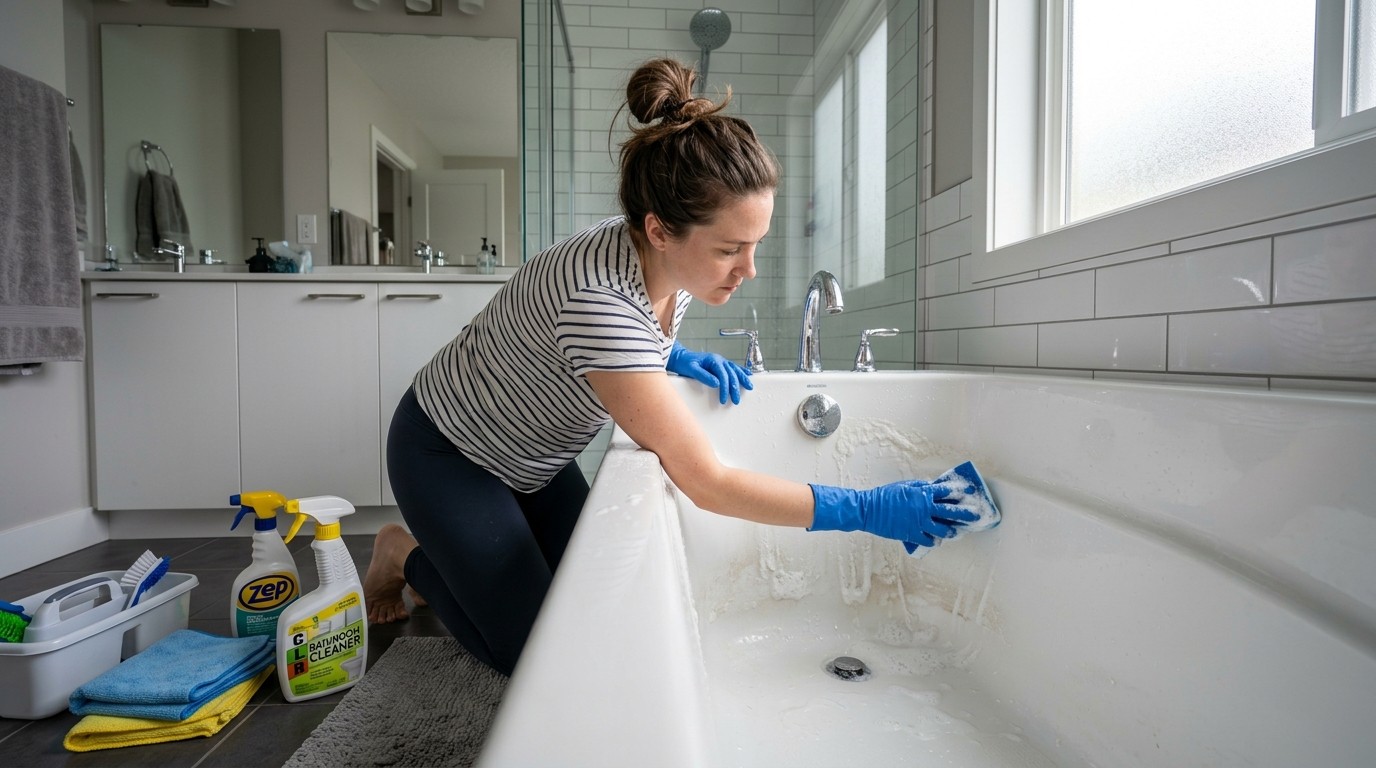
Removing hard water stains from your tub isn’t just about keeping things looking nice. These stubborn white or chalky marks can make your bathroom feel dirty even when it’s clean. For many homeowners, hard water stains are a daily frustration, especially in areas where water contains high amounts of minerals like calcium and magnesium. Learning How to Remove Hard Water Stains from Tub can help you safely tackle mineral buildup and restore a cleaner, fresher appearance.
If you’ve tried scrubbing and still see cloudy spots, you’re not alone. Let’s walk through practical, proven ways to get your tub sparkling again—without damaging the surface, wasting time, or making costly mistakes.
What Are Hard Water Stains?
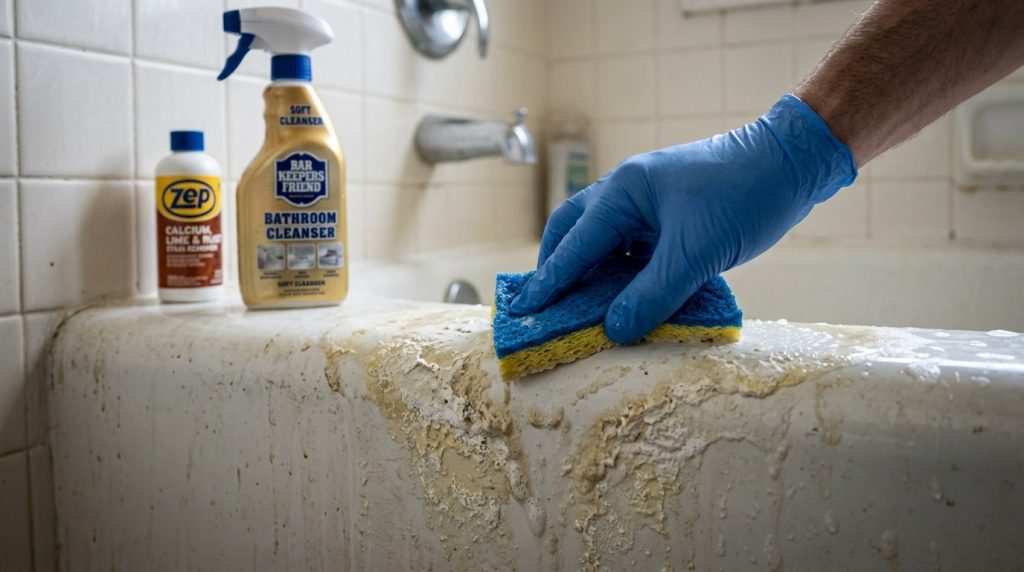
Hard water stains are created when water with high mineral content dries on surfaces. As the water evaporates, minerals—mainly calcium and magnesium—are left behind. These minerals bond to the tub’s surface, forming white, cloudy, or yellowish patches. Over time, these stains can become stubborn, especially if left untreated.
Bathtubs made from porcelain, enamel, fiberglass, or acrylic all react differently to hard water. Porcelain and enamel are tougher, but fiberglass and acrylic can scratch or discolor if you use harsh cleaners or rough tools. Some homeowners don’t realize that using the wrong type of cleaner—even something as simple as a powder cleanser—can actually make future stains stick more easily. That’s because scratches or worn surfaces trap minerals deeper.
Most hard water stains appear around the drain, faucet area, and on the tub walls where water pools or runs down after use. If you notice buildup on shower doors, tiles, or faucets, your tub is likely affected too. These stains can sometimes look like a dull haze, making your tub appear older and less inviting than it really is.
Another detail many people overlook: hard water stains can get worse in homes with older plumbing. As pipes age, they can leach additional minerals into your water supply, making stains appear more quickly.
Why Do Hard Water Stains Form In Tubs?
Hard water stains are more common in certain parts of the country. According to the U. S. Geological Survey, about 85% of homes have hard water. This means millions of Americans face mineral buildup daily.
Here’s why your tub gets these stains:
- High mineral content: Water with lots of dissolved minerals leaves more residue.
- Evaporation: As water dries, minerals stick to surfaces.
- Soap scum interaction: Minerals mix with soap, forming tougher stains.
- Surface type: Some materials trap minerals more easily.
If your tub always looks dull or feels gritty, it’s likely hard water causing the problem. Mineral content isn’t the only factor—how you use your tub matters, too. For example, if you often take long baths or leave water sitting in the tub, you give minerals more time to settle and harden.
Non-obvious tip: Even the temperature of your water can make a difference. Hotter water evaporates faster, leaving minerals behind more quickly. So, if you love hot baths, you may notice stains appear more frequently.
How To Identify Hard Water Stains
You can spot hard water stains by looking for:
- White, chalky patches
- Yellowish or brownish streaks
- Film that won’t wipe away with regular cleaning
- Rough or gritty texture
To check if it’s a hard water stain, try wiping with a damp cloth. If the mark stays, it’s probably mineral buildup. If you see stains on faucets, shower doors, or tiles, these are usually related. Sometimes, hard water stains can feel almost like sandpaper when you run your fingers over them—especially on older tubs.
It’s important to note that hard water stains can also make the tub slippery, as the mineral layer can trap soap and body oils. This is a subtle but important safety concern for families with young children or older adults.
Comparing Hard Water Stains To Other Tub Issues
To help you distinguish hard water stains from other problems, here’s a quick comparison:
| Type of Stain | Appearance | Common Causes | Removal Difficulty |
|---|---|---|---|
| Hard Water | White, chalky, sometimes yellow | Mineral residue (calcium, magnesium) | Moderate to tough |
| Soap Scum | Grayish film, sticky | Soap + minerals | Moderate |
| Mildew/Mold | Black, green, or pink spots | Moisture, poor ventilation | Easy with bleach |
| Rust | Reddish-brown streaks | Metal oxidation, old pipes | Tough |
Knowing the difference helps you choose the right cleaner and method. For example, soap scum often feels greasy, while hard water stains are rougher and more powdery. If you see black or orange stains that spread even after cleaning, you may have mold or rust, which need different solutions.
Essential Safety Precautions
Before you start cleaning, always protect yourself and your tub:
- Wear gloves: Many cleaners can irritate skin.
- Ventilate the bathroom: Open a window or turn on the fan.
- Test cleaners first: Try any new product on a small, hidden spot.
- Avoid mixing chemicals: Never mix bleach with vinegar or other acids—this can create dangerous fumes.
- Check manufacturer guidelines: If your tub has a warranty or special coating, read instructions before using any cleaner.
These simple steps keep you safe and prevent damage to your tub. Even natural cleaners like vinegar can cause irritation with prolonged contact, so gloves are always smart. If you’re cleaning in a small bathroom, propping the door open can help air flow.
Some newer tubs come with a manufacturer’s sticker under the rim or on the side; check here for any warnings.
Non-obvious insight: If your tub is older or has been refinished, it may have micro-cracks or hairline scratches. Strong cleaners can seep into these and cause staining beneath the surface, making future cleaning harder.
Gathering Supplies For Hard Water Stain Removal
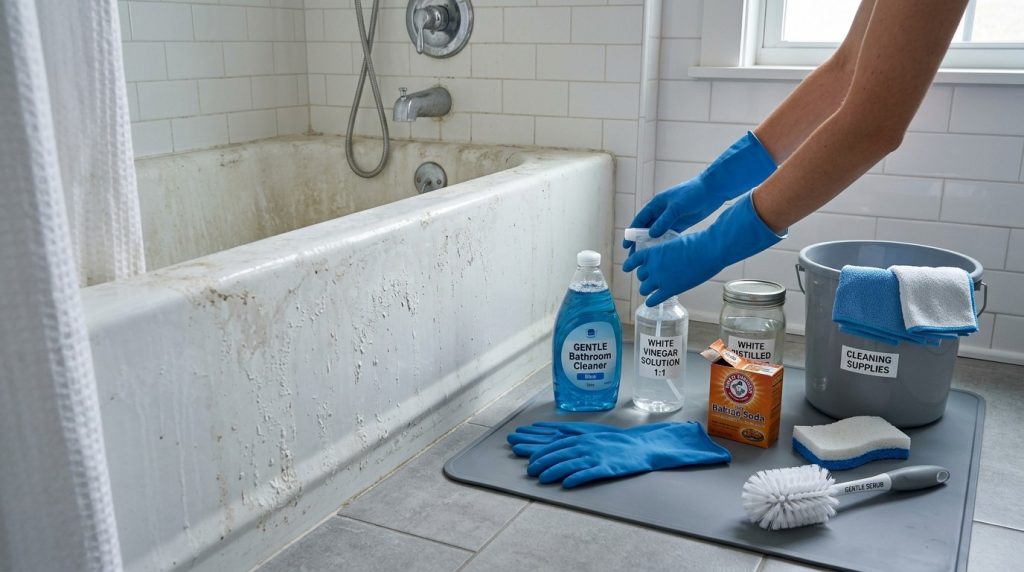
You don’t need expensive products or fancy tools. Most stains can be removed with items you already have at home.
Basic supplies:
- White vinegar
- Baking soda
- Lemon juice
- Non-abrasive sponge or soft cloth
- Old toothbrush
- Spray bottle
Optional supplies:
- Commercial hard water cleaner (look for tub-safe brands)
- Magic eraser
- Microfiber cloth
Never use:
- Steel wool or metal brushes (can scratch the tub)
- Harsh acids (can damage finishes)
Choosing the right supplies is the first step to success. If your stains are light, starting with just vinegar and a sponge might be enough. For deeper stains, having baking soda ready gives you a gentle but effective boost. A microfiber cloth is great for drying and shining the surface afterward.
If you need a commercial cleaner, read reviews online or ask at your local hardware store for a brand that’s safe for your tub’s specific material.
Step-by-step Guide: Removing Hard Water Stains From Tub
Let’s break down the process so you can tackle stains confidently.
Step 1: Dry The Tub
Start with a dry tub. Water dilutes cleaners and makes them less effective. Wipe the tub with a towel or let it air dry. If your tub has deep grooves or textured areas, use a hairdryer on a cool setting to help dry those spots—moisture hiding in these areas can make cleaning less effective.
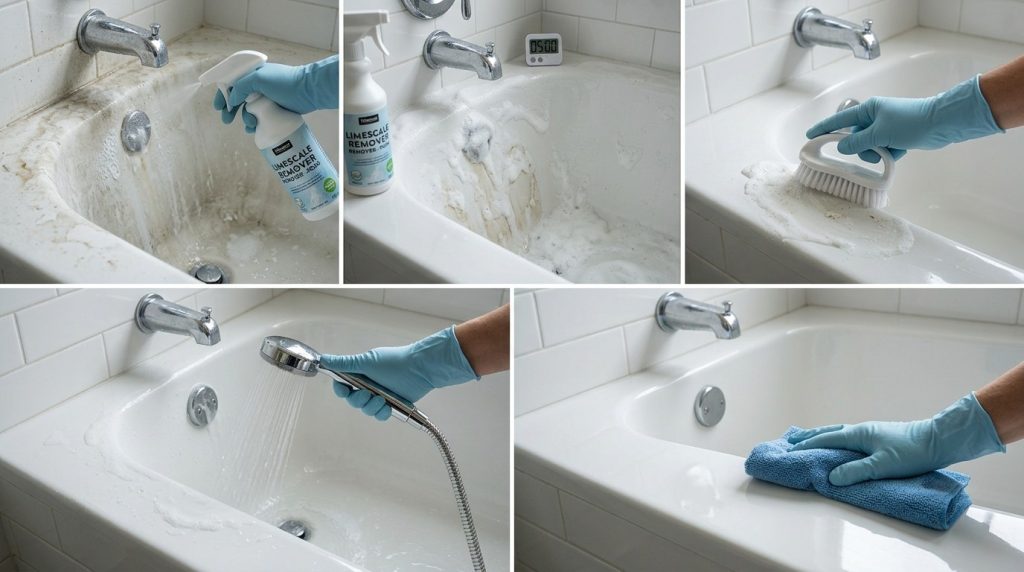
Step 2: Apply Vinegar Solution
Mix equal parts white vinegar and water in a spray bottle. Spray generously on stained areas. Vinegar is mildly acidic and helps dissolve mineral deposits.
Let the solution sit for 15–30 minutes. For tough stains, cover the area with a vinegar-soaked cloth. This “soak” helps loosen minerals so you don’t have to scrub as hard later. If you have a large stain, laying down several vinegar-soaked paper towels can help the solution stay in place.
Step 3: Scrub Gently
Use a non-abrasive sponge or a soft cloth. Scrub in small circles. If stains remain, sprinkle baking soda on the sponge and continue scrubbing. Baking soda adds gentle grit without scratching.
For corners and around the drain, use an old toothbrush. The bristles can reach into tight spaces where stains often hide. Focus on grout lines and around faucet bases, as these spots collect minerals and soap.
Step 4: Rinse Thoroughly
After scrubbing, rinse the tub with warm water. Check for remaining stains. If you have a detachable showerhead, use it to rinse away all residue—this prevents streaks. Otherwise, a large cup or pitcher works well.
Step 5: Repeat As Needed
Some stains need multiple treatments. If you still see spots, repeat steps 2–4. For stubborn stains, try a commercial cleaner designed for hard water. Take your time—sometimes, an extra round of vinegar and baking soda works better than one strong scrub.
Step 6: Dry And Inspect
Wipe the tub dry. Inspect for any missed spots and touch up as needed. Drying is key—if you leave water to air dry, new minerals can start to settle immediately.
Pro tip: Don’t rush. Letting vinegar sit longer works better on tough stains. For deeply set stains, you can repeat the process over several days rather than trying to get it all off in one go.
Using Lemon Juice For Extra Power
Lemon juice is another natural acid that breaks down mineral deposits. It also leaves a fresh scent.
- Squeeze fresh lemon juice onto stains.
- Let it sit 10–15 minutes.
- Scrub gently, then rinse.
Lemon works well for light stains or as a finishing touch after vinegar. For a little extra scrubbing power, mix lemon juice with a bit of baking soda to make a gentle paste. This can be especially helpful on small, stubborn patches around the drain.
Non-obvious tip: Lemon juice can also help remove any lingering odors from the tub area, especially if your bathroom has poor ventilation.
Commercial Cleaners: When To Use Them
If natural methods don’t work, look for a tub-safe cleaner labeled for hard water stains. Always check the label for compatibility with your tub’s material.
Popular brands include:
- CLR (Calcium, Lime, Rust Remover)
- Lime-A-Way
Follow instructions carefully. Use gloves and ventilate well. If you’re sensitive to strong smells, wear a mask or take breaks while cleaning.
Some commercial cleaners work faster but require careful rinsing. If any residue is left behind, it can attract more dirt and minerals. Always read the directions and never leave a commercial cleaner on longer than recommended.
Comparing Natural Vs. Commercial Cleaners
Here’s a quick look at how natural and commercial cleaners stack up:
| Cleaner Type | Effectiveness | Cost | Safety | Best Use |
|---|---|---|---|---|
| Vinegar/Baking Soda | Moderate | Low | Safe for most surfaces | Light to moderate stains |
| Lemon Juice | Moderate | Low | Safe | Finishing touch |
| Commercial Cleaner | High | Medium | Read label | Stubborn stains |
Use natural methods first. If stains persist, move to commercial options. Many homeowners find it helpful to rotate between methods: natural for weekly cleaning, commercial for deep cleaning every few months.
Common Mistakes And How To Avoid Them
Many people damage their tubs or fail to remove stains because of simple mistakes.
Avoid these pitfalls:
- Scrubbing too hard: This can scratch acrylic or fiberglass.
- Using harsh chemicals: Bleach or strong acids can ruin finishes.
- Ignoring manufacturer advice: Some tubs have coatings that react badly to certain cleaners.
- Letting stains build up: The longer stains sit, the harder they are to remove.
- Mixing cleaning agents: Never mix vinegar and bleach—this produces dangerous fumes.
Always start gently and escalate only if needed. Another mistake: forgetting to rinse thoroughly. Even natural cleaners can leave behind residue if not fully removed. This can cause streaks or make the tub feel sticky.
Non-obvious insight: Using hard water to rinse away mineral stains might seem odd, but it’s usually fine if you dry the surface right away. If you leave water droplets, new stains can form almost immediately.
Case Study: Real-life Tub Transformation
Let’s look at a real example from a homeowner in Phoenix, Arizona, an area known for hard water.
Situation:
Sarah had a fiberglass tub with heavy white streaks around the drain and faucet. She tried regular bathroom cleaners, but nothing worked.
Solution:
Sarah switched to a homemade mixture of vinegar and baking soda. She sprayed vinegar, let it sit, then sprinkled baking soda and scrubbed with a soft sponge. For stubborn spots, she used an old toothbrush. After two rounds, most stains were gone.
She finished with lemon juice for a fresh scent.
Result:
Sarah’s tub looked almost brand new. She avoided scratches and saved money by not buying expensive cleaners.
Key takeaway:
Natural methods often work if you’re patient and use the right tools. Sarah also learned to wipe her tub dry after every use, which helped keep new stains from forming.
How To Prevent Hard Water Stains In The Future
Getting rid of stains is great, but keeping them away is even better. Here are practical steps:
- Wipe the tub after each use: This removes water before minerals can settle.
- Install a water softener: This reduces minerals in your home’s water.
- Use a squeegee: Quickly remove water from walls and tub surfaces.
- Apply a protective coating: Some products create a barrier against stains.
- Clean regularly: Weekly cleaning prevents buildup.
Pro insight:
Water softeners can reduce hard water stains by up to 80%, according to EPA research. They also help appliances last longer.
A less common but effective prevention method is using a spray bottle filled with diluted vinegar for a quick daily spritz after showers. This neutralizes minerals before they can settle, especially in very hard water areas.
Quick Comparison: Prevention Methods
Here’s a look at prevention methods and their effectiveness:
| Method | Ease | Cost | Effectiveness |
|---|---|---|---|
| Wiping after use | Easy | Free | Moderate |
| Water softener | Moderate | High | High |
| Squeegee | Easy | Low | Moderate |
| Protective coating | Moderate | Medium | High |
| Regular cleaning | Easy | Low | High |
You don’t need to do everything—choose what fits your lifestyle and budget. Even just drying the tub with a towel after use can save you hours of scrubbing later.
When To Call A Licensed Professional
Sometimes, stains are too tough or your tub is delicate. If you notice:
- Deep discoloration that won’t budge
- Cracks or chips in the tub
- Strange smells or rust
- Stains spreading to tiles or grout
It’s time to call a licensed plumber or a tub restoration specialist. They have professional-grade tools and can fix underlying issues. Never risk damaging your tub or exposing yourself to harsh chemicals.
Professionals can also test your water and recommend permanent solutions, like a whole-house water softener or specialized coatings. If your tub is under warranty, some manufacturers require professional cleaning to keep coverage valid.
Extra Tips For Different Tub Materials
Every tub is a little different. Here’s how to clean based on material:
Porcelain And Enamel
These surfaces are tougher. You can use vinegar and baking soda, but avoid metal scrubbers. For older tubs, check for chips—these can collect minerals. If you notice any dull spots after cleaning, a small amount of car wax can help restore shine and add a protective layer.
Acrylic
Use only non-abrasive cleaners and soft sponges. Acrylic scratches easily. Avoid strong acids or bleach. If you’re unsure, look for cleaners specifically labeled for acrylic tubs.
Fiberglass
Like acrylic, fiberglass needs gentle care. Vinegar works well, but don’t scrub too hard. If the tub is old, stains may be deeper—try a commercial cleaner if needed. For extra caution, rinse all cleaners thoroughly, as fiberglass can stain if residue remains.
Pro tip:
If you’re unsure about your tub’s material, look for the manufacturer’s label or ask a professional. Using the wrong cleaner can void warranties or cause lasting damage.
Troubleshooting: If Stains Won’t Come Off
Sometimes, stains are stubborn. If you’ve tried everything and stains remain:
- Switch to a commercial cleaner (follow instructions closely)
- Let the cleaner sit longer (but not more than recommended)
- Use a magic eraser for small patches
- Try a second round with vinegar and baking soda
If stains still won’t budge, call a professional. Persistent stains can indicate deeper problems—like water quality or tub damage.
Another little-known tip: check your water heater temperature. If it’s set too high, minerals are more likely to come out of solution and settle in your tub. Lowering the temperature slightly may help reduce future staining.
Environmental Impact: Cleaning Choices Matter
Many cleaners contain chemicals that can harm the environment. Vinegar, baking soda, and lemon juice are eco-friendly and safe for most tubs. Commercial cleaners should be used sparingly and disposed of properly.
If you use a commercial product, follow disposal instructions. Never pour unused chemicals down the drain—they can affect water quality.
Non-obvious insight:
Some commercial cleaners release fumes that linger in small bathrooms. Always ventilate well and use eco-friendly options if possible. Choosing reusable cleaning cloths instead of paper towels also reduces waste.
Realistic Expectations: How Clean Can Your Tub Get?
Not every tub can look brand new. Older tubs may have permanent discoloration. If you’ve cleaned thoroughly and stains remain, it may be time to consider refinishing or replacing the tub.
Refinishing costs between $300–$700, depending on the material and size. Replacing the tub is a bigger project, but worth considering if stains are severe.
Friendly advice:
Celebrate progress—even if some stains remain, a clean tub feels better and lasts longer. Don’t be discouraged by a little discoloration—most guests won’t notice what you see every day.
Frequently Asked Questions
How Often Should I Clean My Tub To Prevent Hard Water Stains?
Clean your tub at least once a week. Wipe it dry after every use if you live in a hard water area. Regular maintenance prevents buildup and keeps stains from getting tough.
Can I Use Bleach To Remove Hard Water Stains?
No, bleach isn’t effective for hard water stains and can damage certain tub materials. It’s better for mold or mildew. Stick to vinegar, baking soda, or tub-safe commercial cleaners.
Will A Water Softener Eliminate Hard Water Stains Completely?
A water softener reduces minerals and prevents most stains. However, some buildup may still occur, especially if water isn’t wiped away. Water softeners also help appliances last longer and improve overall water quality.
What Should I Do If My Tub Is Scratched After Cleaning?
Stop using abrasive tools immediately. For minor scratches, try a tub repair kit (available at hardware stores). If scratches are deep or widespread, call a professional for refinishing.
Is It Safe To Use Commercial Cleaners On All Types Of Tubs?
No, always check the label before using any cleaner. Some products can damage acrylic or fiberglass tubs. Test in a small area first and follow manufacturer’s guidelines.
Cleaning hard water stains from your tub doesn’t have to be frustrating. With the right approach, patience, and a few household supplies, you can restore your tub’s shine and prevent stains from returning. Remember to protect yourself, choose cleaners wisely, and call a professional if needed.
A clean tub isn’t just about looks—it’s about feeling good in your home every day.