Your Trusted Source for Home Fixes & Guides

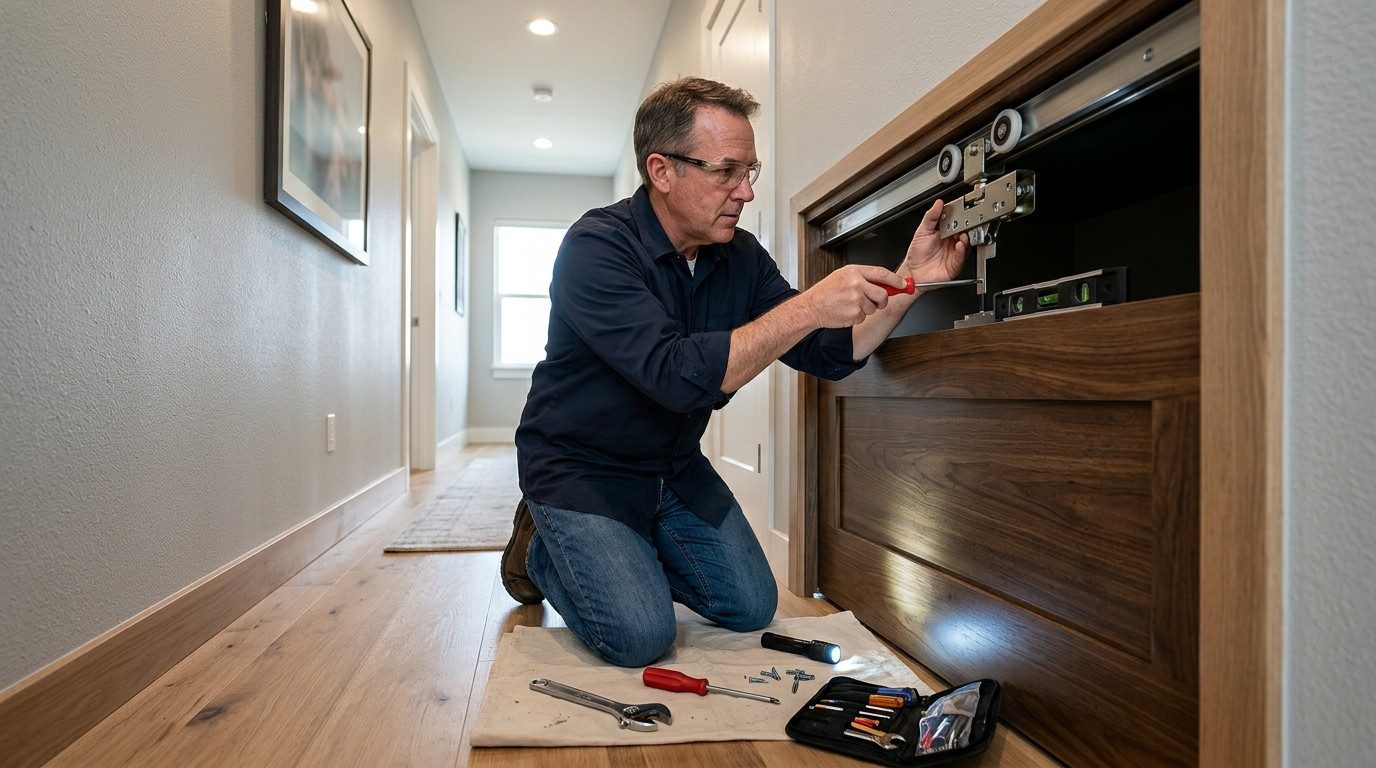
How to Fix a Pocket Door off Track: Step-by-Step Guide

A pocket door can add space and style to any home, but when it jumps off its track, frustration follows. If your bathroom or closet pocket door is stuck, scraping, or refuses to slide, you’re not alone. Learning How to Fix a Pocket Door off Track can help you identify common roller, track, and alignment problems and get the door sliding smoothly again. These issues are common in older homes and can also occur in newer constructions when installation or hardware alignment isn’t quite right.
Fixing a pocket door off track might seem intimidating, but with the right tools and guidance, most homeowners can handle it themselves—and save on repair costs.
As a longtime home improvement writer and hands-on remodeler, I’ve fixed dozens of pocket doors, from 1940s bungalows to modern condos. In this guide, I’ll walk you through diagnosing the problem, gathering tools, removing the door, repairing or adjusting the track, and putting everything back together.
I’ll also share expert tips, common mistakes to avoid, and when to call in a pro. By the end, you’ll feel ready to restore that smooth, silent slide your pocket door once had.
Why Pocket Doors Go Off Track
Pocket doors are designed to glide quietly into a hidden compartment inside your wall. But over time, things can go wrong. The most common reasons a pocket door comes off track include:
- Loose or broken rollers: The wheels that ride inside the track can wear out, break, or detach.
- Misaligned track: If the track becomes bent or loose, the door can’t stay in place.
- Obstructions: Debris or screws inside the pocket cavity can block smooth travel.
- Structural movement: Settling or shifting walls can pinch the track or door.
- Improper installation: Sometimes the track or hangers weren’t set up squarely from the start.
Each of these issues has its own fix. The first step is figuring out what’s wrong with your door.
Diagnosing The Problem
Before grabbing a screwdriver, take a few minutes to observe. Slide the door slowly and listen for scraping, binding, or rubbing. Does the door drop down or tilt as you move it? Is it stuck partway in the wall, or does it fall off completely when you try to open it?
Here’s a quick comparison of common pocket door symptoms and what they usually mean:
| Symptom | Likely Cause |
|---|---|
| Door drags or scrapes | Track misaligned or debris inside |
| Door wobbles or falls off | Roller off track or broken hanger |
| Door won’t close fully | Track blockage or door warped |
| Door stuck in wall | Major track damage or hanger disconnected |
If you’re dealing with a heavy solid wood door or one that’s jammed very tightly, you may need help. For most hollow-core or standard-size doors, though, you can handle this on your own with care and patience.
Tools And Materials You’ll Need
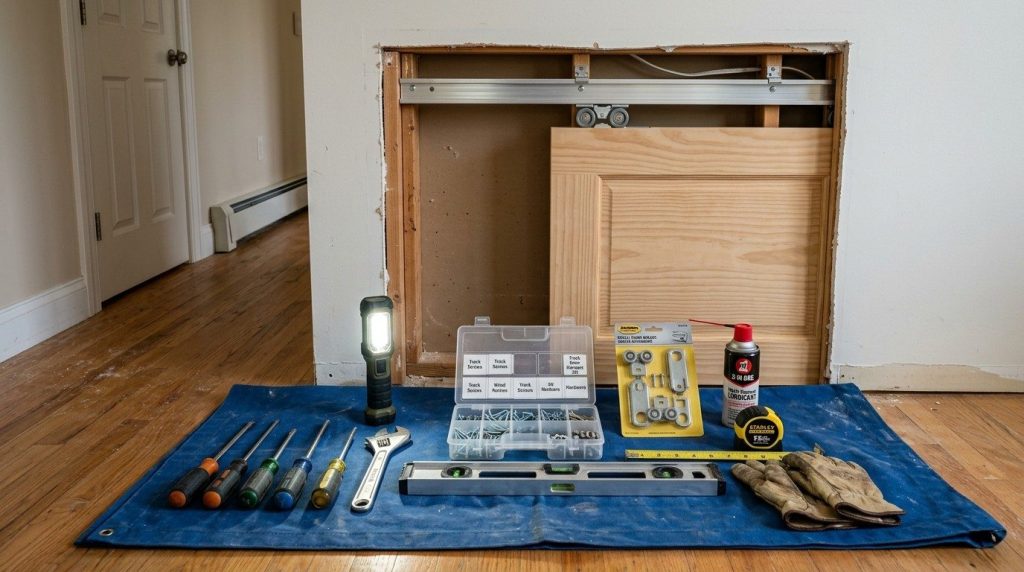
Having the right tools ready makes the repair smoother and safer. Here’s what I recommend for most pocket door fixes:
- Flathead and Phillips screwdrivers (medium size)
- Pry bar or sturdy putty knife (for trim removal)
- Utility knife
- Flashlight or headlamp
- Needle-nose pliers
- Replacement rollers or hangers (if needed)
- Level
- Cordless drill (optional, for stubborn screws)
- Wood shims or cardboard (for adjustments)
- Painter’s tape
- Safety glasses
You probably won’t need power saws or advanced carpentry tools unless the track is severely damaged or you discover rot. Most repairs involve removing trim, lifting the door, and adjusting or replacing hardware.
Safety Precautions
Working with pocket doors means handling heavy objects and sometimes sharp tools. A few important safety reminders:
- Wear safety glasses to protect your eyes from dust or debris when removing trim.
- Keep fingers clear of pinch points—rollers can snap into place quickly.
- Support the door’s weight when removing it from the track. Pocket doors are heavier than they look.
- Check for wiring before drilling or cutting near the wall cavity, especially in bathrooms.
- If you’re not confident or notice signs of wall damage or mold, stop and call a professional.
Removing The Pocket Door
Getting the door out is usually the hardest part. Here’s a step-by-step guide:
1. Remove The Door Stops And Trim.
Use a sharp utility knife to score the paint or caulk along the edge of the door trim (also called casing or stops). Gently pry the trim away with a putty knife or small pry bar. Go slowly to avoid cracking the wood or damaging the drywall.
2. Locate The Hardware Access Panel.
Many modern pocket doors have a removable panel or small cutout at the top of the door frame, especially near the side that opens. If your door doesn’t, you may need to remove a section of trim above the door.
3. Release The Door From The Hangers.
Look for small nuts, screws, or clips attaching the door to the rollers inside the track. Hold the door steady, then loosen or remove these fasteners. If you can’t see them, gently lift the door upward—it may pop off the rollers.
4. Slide The Door Out Of The Pocket.
Angle the bottom of the door toward you, then pull it out and set it aside safely. For heavy doors, get help.
Pro tip: Tape screws and small hardware to a piece of painter’s tape or put them in a labeled cup. Pocket door parts are easy to lose.
Inspecting And Repairing The Track
With the door out, you can finally see what’s happening inside the pocket. Shine a flashlight inside and check the following:
- Are the rollers bent, broken, or missing?
- Is the track straight and securely attached?
- Any screws, nails, or debris inside the cavity?
Repairing Or Replacing Rollers
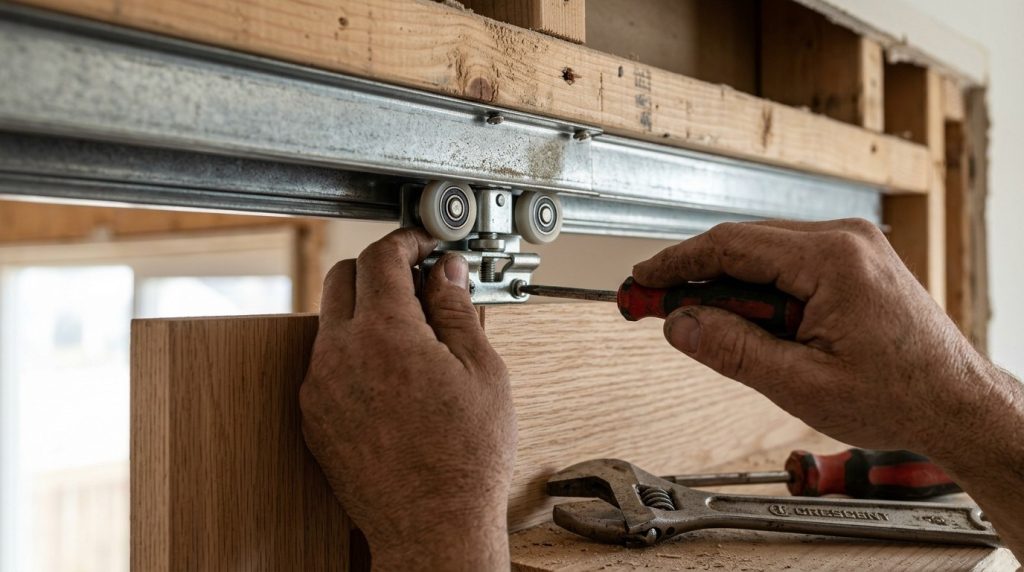
Most pocket doors ride on two rollers attached to metal hangers. If one roller is off the track or broken, the door won’t stay upright.
- Check the rollers for flat spots, cracks, or missing parts.
- If damaged, buy a matching replacement at a hardware store. Bring the old roller for comparison.
- Install the new roller by sliding it into the track and reattaching the hanger to the door.
Fixing Track Alignment
A bent or sagging track is a common cause of pocket doors coming off track. This usually happens from years of use, moisture, or sloppy installation.
- Use a level to check if the track is straight.
- Tighten any loose screws with a screwdriver or drill.
- If the track is bent, you may be able to straighten it gently with pliers.
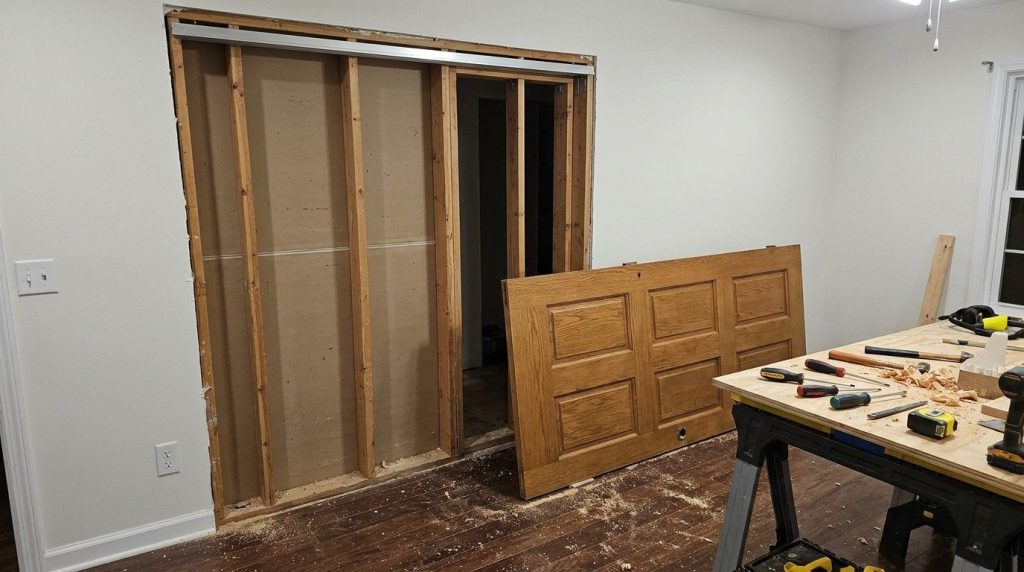
- For tracks that are badly damaged or detached from the framing, you’ll need to remove more drywall or trim. This is where many DIYers decide to call a pro.
Clearing Obstructions
Sometimes, drywall screws or nails from trim get driven into the pocket cavity. Remove any visible debris or fasteners. Never force the door over an obstruction—you’ll damage the rollers or track.
Example: Case Study
A homeowner in Denver noticed their bathroom pocket door was scraping and wouldn’t close fully. After removing the trim, they found a drywall screw had fallen into the track and wedged under a roller. Once the screw was removed, the door slid perfectly again—no new parts required.
This shows how minor obstructions can cause big headaches.
Adjusting Or Rehanging The Door
With hardware repairs complete, you’re ready to put the door back in place.
1. Check The Bottom Guide.
Pocket doors need a guide at floor level to keep them from swinging. Make sure it’s secure and lines up with the door’s bottom edge.
2. Hang The Door On The Rollers.
Lift the door into the opening, tilt the bottom toward you, and hook the top hangers onto the rollers. Most systems will “snap” in when the door is raised slightly.
3. Test The Movement.
Slide the door back and forth. It should glide smoothly, with no scraping or wobbling. Use a level to check the door is plumb (vertical).
4. Adjust The Hangers.
Most pocket door hangers have an adjustment screw. Turning it raises or lowers the door slightly. Adjust both sides until the door is level and closes flush with the jamb.
5. Replace Trim And Hardware.
Nail or screw the trim back in place, then reattach any locks or pulls. Use a dab of caulk or paint to finish nail holes for a clean look.
Common Mistakes To Avoid
Fixing a pocket door off track is straightforward—if you avoid some classic errors:
- Rushing trim removal.
Forcing trim off can split the wood or tear drywall. Take your time and use sharp tools.
- Losing hardware.
Pocket door screws and clips are easy to drop inside the wall cavity. Work over a tray or tape them nearby.
- Forcing the door.
If the door won’t move, don’t yank or pry. This can bend the track or crack the frame.
- Skipping the bottom guide.
Without a floor guide, the door will swing and rub. Always check it’s present and secure.
- Ignoring track alignment.
If the track is even slightly out of level, the door will keep jumping off.
- Not checking for wall damage.
If you see water stains, soft spots, or mold, stop and repair the wall first.
When To Call A Professional
While most pocket door repairs are DIY-friendly, some situations call for expert help:
- The door is extremely heavy or made of solid wood.
- The track is hidden behind finished tile or custom millwork.
- There is major wall or water damage.
- You’re uncomfortable working with electrical wiring or plumbing (common near bathroom doors).
- The door or track is antique or custom-sized.
A skilled carpenter or door specialist has special tools and experience to handle tricky repairs. In some cases, replacing the entire track is easier than repeated patchwork.
Upgrading Pocket Door Hardware
If your pocket door is more than 20 years old, consider upgrading the hardware. Newer rollers use smoother ball bearings, and soft-close systems are available for a luxury feel.
Here’s a quick comparison of standard vs. upgraded hardware:
| Feature | Standard Rollers | Upgraded Ball-Bearing |
|---|---|---|
| Noise | Moderate | Very Quiet |
| Durability | 10–15 years | 20+ years |
| Weight Capacity | Up to 100 lbs | Up to 200 lbs |
| Price | Low | Medium–High |
Swapping to better rollers can make your door feel brand new, and reduce the need for future repairs.
Preventing Future Pocket Door Problems
Once your pocket door slides smoothly again, a few simple habits can extend its life:
- Clean the track regularly.
Use a vacuum and damp cloth to remove dust and hair.
- Check hardware yearly.
Tighten loose screws and lubricate rollers with a silicone spray.
- Avoid slamming.
Gentle use reduces wear on all moving parts.
- Watch for sticking.
If the door starts to drag, fix it early—before damage gets worse.
Real-world Example: Bathroom Remodel
During a bathroom remodel in a 1960s ranch house, the pocket door kept popping off track. The homeowner discovered that the wall framing had shifted slightly, pinching the track. After adjusting the framing with shims and reinstalling the door, it glided smoothly.
This case highlights that structural movement is sometimes the culprit—not just the door hardware. If you notice cracks or out-of-square openings, look beyond the door itself.
Diy Vs. Professional Repair Cost Comparison
Wondering if it’s worth fixing the pocket door yourself? Here’s a comparison of typical costs:
| Repair Type | DIY Cost | Pro Cost |
|---|---|---|
| Roller replacement | $15–$40 (parts) | $80–$200 (labor + parts) |
| Track realignment | $0–$10 (tools) | $150–$400 |
| Full track replacement | $30–$80 (parts) | $300–$700 (includes drywall work) |
DIY is much cheaper if you’re comfortable with basic tools. For complex repairs or high-value doors, a pro ensures a perfect finish.
Troubleshooting Unusual Pocket Door Issues
While most pocket door problems trace back to rollers or track, sometimes you’ll encounter less common issues:
- Warped door panels.
High humidity or leaks can twist the door itself. Replace the door or dry it out, then sand and refinish.
- Stuck locks or pulls.
If hardware is jammed, remove and clean or replace it. Lubricate moving parts.
- Noise from inside the wall.
Rattling means loose hardware. Open up and tighten everything.
If you’re stumped, searching for your door brand and model number can help. Many manufacturers offer repair guides or videos. For more on pocket door parts and standards, the Wikipedia Pocket Door page has a helpful overview.
Frequently Asked Questions
How Do I Know If My Pocket Door Track Is Damaged?
If your door wobbles, drags, or falls off repeatedly, the track may be bent or loose. Remove the door and inspect the track. Look for bends, missing screws, or sagging. A straight, firmly attached track is essential for smooth operation.
Can I Fix A Pocket Door Without Removing Trim?
In most cases, you need to remove at least some trim to access the hardware. Some newer doors have removable panels, but older doors require trim removal. Use a sharp utility knife and go slowly to avoid damage.
What Lubricant Should I Use For Pocket Door Rollers?
Use a silicone-based spray or a dry lubricant designed for sliding doors. Avoid oil-based products—they attract dust and can gum up the track.
Is It Worth Upgrading To Soft-close Pocket Door Hardware?
If you want a quieter, smoother door (especially in bathrooms or bedrooms), soft-close kits are a great upgrade. They cost more but last longer and reduce wear on the track.
When Should I Replace The Whole Pocket Door System?
Replace the system if the track is severely bent, the wall framing is damaged, or you want a modern look. Full replacement often requires drywall repair but solves persistent issues.
Pocket doors can be tricky, but with patience and the right tools, you can restore their smooth, space-saving magic. Take your time, follow these steps, and your door will glide as good as new—sometimes even better than before.